

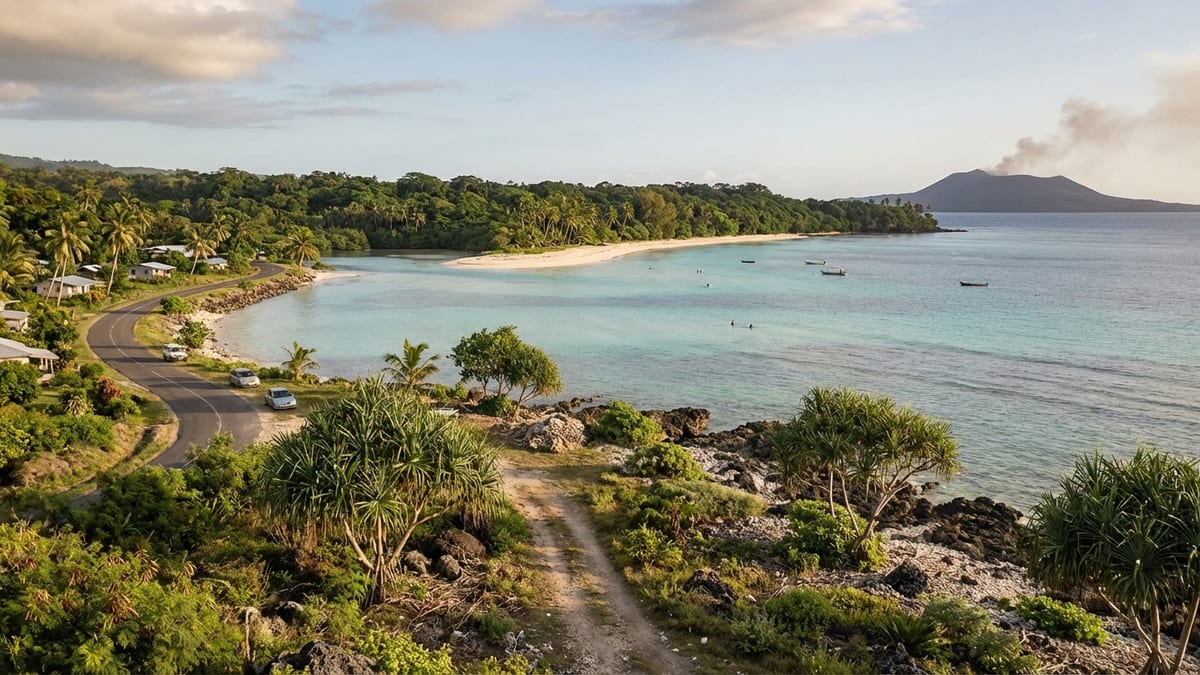
Vanuatu’s scattered South Pacific archipelago is made for island-hopping, yet three islands consistently stand out for first-time and repeat visitors alike: Efate, Espiritu Santo and Tanna.
Together they capture the country’s contrasts, from laid-back lagoons and coral reefs to cathedral-like blue holes and the fiery rim of one of the world’s most accessible active volcanoes. Planning a trip around these three islands offers a compact but rich introduction to Vanuatu’s nature, kastom culture and easygoing island life.
Why Efate, Espiritu Santo and Tanna Are Vanuatu’s Essential Trio
With more than 80 islands, choosing where to spend limited vacation days in Vanuatu can be daunting. Efate, Espiritu Santo and Tanna form a logical core itinerary because they combine convenient access, developed tourism services and some of the country’s most iconic experiences, without losing the authenticity that defines Vanuatu.
Efate, home to the capital Port Vila, tends to be the gateway. It offers the widest range of accommodation, restaurants and tour operators, along with easy day trips to waterfalls, blue lagoons and offshore islands. Espiritu Santo, usually shortened to “Santo,” is the country’s adventure and beach star, famous for Champagne Beach, the SS President Coolidge wreck and freshwater blue holes hidden in rainforest. Tanna, far to the south, draws travelers with Mount Yasur, a volcano in near-constant eruption, and with traditional villages where customary ways of life remain strong.
Together, these three islands can fill anything from a one-week getaway to a three-week deep dive into Vanuatu. They are also well connected by domestic flights from Port Vila, which makes it realistic to combine all three within a single trip.
Efate: Best for First-Time Visitors, Easy Day Trips and Coastal Road Trips
Efate is where most international visitors arrive, via Port Vila’s Bauerfield International Airport and the calm waters of Mele Bay. The island wraps around a mountainous interior with a sealed ring road that makes self-drive exploration straightforward. Many visitors base themselves in or around Port Vila for several nights, then build a loose rhythm of lagoon dips, waterfall hikes, cultural villages and harbour sunsets.
Travelers should be aware that Efate and Port Vila were affected by a significant offshore earthquake in December 2024, and by periodic cyclones in recent years. Tourist infrastructure, however, has largely rebounded and many operators have rebuilt or upgraded, so current information from your accommodation or local tourism office is advisable before you travel.
Port Vila: Harbourfront Hub and Cultural Gateway
Port Vila is one of the South Pacific’s most scenic small capitals, hugging a deep natural harbour and backed by green hills. It functions as Efate’s transport, dining and shopping hub, with small-scale resorts scattered along the waterfront and on nearby islands.
A day in town might start at the waterfront promenade and Port Vila Market, where stalls are piled high with pineapples, taro, island cabbage and colourful flowers. Women from outer islands sell woven bags and mats, while simple food counters dish up curries, island stews and fresh fish. A short walk or taxi ride away, the Vanuatu Cultural Centre offers insight into kastom, sand drawing and Vanuatu’s complex colonial history, which is invaluable context before venturing to more remote islands.
Mele Cascades and Waterfalls
One of Efate’s most photographed natural sites, Mele Cascades lies a short drive from Port Vila. A trail follows the river upstream through lush gardens and secondary jungle, passing a series of swimming holes before reaching a broad limestone cascade where cool water fans over travertine terraces. The walk is not long but can be slippery, so reef shoes or sturdy sandals are advisable.
Nearby, the Lololima Waterfalls offer a slightly wilder alternative, with river caves, smaller falls and fewer crowds. Several local operators run guided canyoning and hiking trips that combine rainforest walking with swims through clear pools. Both waterfall areas are typically accessible year-round, though heavy rains can affect trail conditions.
Blue Lagoon and the East Coast
Efate’s eastern coastline is dotted with small villages, coconut plantations and inlets where freshwater mixes with the sea. The most popular stop is the Blue Lagoon, a striking pool of milky-turquoise water framed by tropical trees. At high tide, rope swings launch swimmers into the lagoon, while low tide reveals rock ledges ideal for sunbathing between swims.
The ring road makes it easy to visit the Blue Lagoon independently in a rental car or on a full-day island tour that might also include nearby beaches such as Eton, famous for its white sand and calm shallows. Basic facilities, small entrance fees managed by local landowners and a few roadside stalls contribute to the relaxed, community-led feel of these spots.
Hideaway, Iririki and Other Offshore Islets
Efate’s harbour and nearby bays shelter several small islands that make rewarding half-day escapes. Hideaway Island, a short boat ride from Mele, is known for excellent off-the-beach snorkelling and the novelty of an underwater post office where you can mail waterproof postcards. The shallow reef is accessible to confident swimmers and is often used for first-time scuba dives.
Iririki Island sits close to the Port Vila waterfront, visible from many hotels and restaurants. It functions primarily as a resort enclave with beaches, pools and water sports, but even day visitors can take advantage of its views over town and harbour. Erakor and other small islands around the bay offer similar combinations of calm water, snorkelling and low-key resort facilities.
Cultural Villages and Local Life
Just beyond Port Vila, several cultural villages welcome visitors for structured experiences that introduce traditional practices. Places such as Ekasup and Pepeyo Cultural Village typically combine demonstrations of food preparation, hunting techniques, weaving and fire walking with dance performances and the sharing of kava, the mildly narcotic ceremonial drink enjoyed throughout Vanuatu.
These visits can feel theatrical, yet they are also an important source of income for local communities and a chance to understand the kastom systems that still underpin social life outside the capital. Asking questions, listening and buying locally made handicrafts can help ensure your visit has a positive impact.
Espiritu Santo: Best for Beaches, Blue Holes and World-Class Diving
Espiritu Santo, often simply “Santo,” is Vanuatu’s largest island and a magnet for travelers who prioritize nature and outdoor adventure. The main town of Luganville is functional rather than polished, but only a short drive away you find coconut-fringed beaches, translucent rivers and some of the South Pacific’s most revered dive sites.
Santo’s climate is tropical and humid, with a wetter season typically from November to April. Conditions for beach-going and diving are generally good year-round, though visibility and road access to more remote areas can be affected by heavy rain. Domestic flights from Port Vila to Santo are frequent, and local guesthouses, boutique resorts and dive lodges cater to a wide range of budgets.
Champagne Beach and Nearby Shores
Champagne Beach, on Santo’s east coast, regularly appears on lists of the world’s most beautiful beaches. A broad arc of fine white sand meets a lagoon in improbable shades of blue and green, backed by forest and simple local stalls. The name “Champagne” comes from the fizz of tiny bubbles that sometimes rise through the sand at low tide due to volcanic activity offshore.
On days without cruise ship calls, Champagne Beach can be remarkably quiet, with only a handful of visitors sharing the water with local children. A modest entry fee contributes to community management. Nearby Lonnoc Beach offers a similar palette of powdery sand and calm sea, with basic bungalows and small eateries that lend themselves to slow, multi-day stays.
Blue Holes of Santo
Santo’s interior conceals several freshwater springs known as blue holes, where mineral-rich water emerges from underground in pools so clear that canoes appear to float in midair. Popular blue holes such as Matevulu and Nanda are accessible by road and often paired with beach visits in a single outing.
At these sites, boardwalks and simple facilities allow easy access for swimming and kayaking. Sunlight filtering through jungle canopy onto electric-blue water creates an otherworldly atmosphere, especially in the early morning when conditions are still. Local landowners usually manage entry and canoe rentals, so carrying cash is important.
Diving the SS President Coolidge and Million Dollar Point
For divers, Santo ranks among the South Pacific’s premier destinations. Just offshore from Luganville lies the SS President Coolidge, a massive American troopship that sank in 1942 after hitting friendly mines. It now rests on its side within recreational diving depths, accessible from shore, and is covered in coral growth with abundant marine life weaving through its cargo holds.
Several established dive operators in Luganville offer guided dives on the Coolidge for a range of experience levels, from introductory wreck explorations to technical penetrations. Conditions are typically good, with warm water and relatively low current, but the sheer scale of the wreck means even experienced divers benefit from local guides.
Nearby at Million Dollar Point, surplus Allied military equipment was dumped into the sea at the end of the Second World War. The result is a surreal underwater junkyard of vehicles, machinery and crates now fused with coral and fish life. It can be explored by snorkellers and divers alike, though visibility varies with conditions.
Rivers, Caves and Inland Adventure
Beyond the coast, Santo’s interior offers adventurous river trips and caving for travelers willing to trade comfort for immersion in rainforest landscapes. Guided tours range from gentle paddles along slow-flowing rivers in outrigger canoes to more strenuous treks that involve scrambling over rocks and wading through streams.
Village-based operators often combine outdoor activities with cultural elements such as traditional food, local legends and kastom ceremonies. Infrastructure is simple and conditions can be muddy, so flexibility and a sense of adventure are essential. The reward is access to landscapes and communities that see comparatively few visitors, even by Vanuatu’s modest tourism standards.
Tanna Island: Best for Volcano Encounters and Kastom Culture
Tanna, in Vanuatu’s southern group, captures many travelers’ imaginations long before they arrive. The island’s signature attraction, Mount Yasur, is among the world’s most accessible active volcanoes, where controlled visits to the crater rim allow visitors to witness regular eruptions at relatively close range. Yet Tanna is more than its volcano, with highland villages, coral coastlines and strong kastom traditions that give the island a distinct identity.
Flights from Port Vila arrive at Whitegrass Airport on Tanna’s west coast. From there, a network of rough roads connects resorts, villages and the eastern volcanic zone. While visitor numbers have been steadily increasing, Tanna retains a frontier feel. Power, water and road conditions can be basic, and weather or volcanic alert levels sometimes disrupt plans, so building flexibility into your itinerary is wise.
Mount Yasur: At the Edge of the Crater
Mount Yasur rises modestly to just over 360 meters, but its low height belies its power. The volcano has been in near-continuous eruption for centuries, typically producing frequent Strombolian bursts of lava and ash that are visible and audible from the surrounding ash plains. Local authorities monitor activity closely, using a five-level alert system that determines how close visitors can safely approach.
Standard tours involve a 4WD journey across the island, passing through dense forest and villages before emerging onto black ash fields. After a short, steep walk, visitors reach viewing areas on the crater rim, where they can watch eruptions send glowing projectiles skyward and hear deep booms from the volcano’s throat. Twilight and night visits are especially dramatic as the lava’s glow intensifies against dark skies.
Tour availability can change with alert levels and weather. At the time of the latest updates in early 2026, multiple local and Port Vila-based operators are again offering day trips and overnight stays tied to Yasur excursions, though conditions are always subject to change. Travelers with respiratory conditions or mobility limitations should consult their doctor and tour operator before committing to a crater visit.
Traditional Villages and Kastom Life
Outside the modest township around the airport, much of Tanna is organized around small villages where kastom dictates social norms, land use and ceremonies. Visitors can join guided visits to selected villages that have chosen to share elements of their way of life, including dance, music, agriculture and spiritual practices linked to the land and volcano.
These experiences vary from more commercialized cultural shows to intimate stays where guests sleep in simple bungalows or guest huts. Respect is essential: photographing people, entering certain areas or asking about sensitive topics may be restricted, and guides help navigate what is appropriate. In return, travelers gain insight into a worldview that sees humans, land and the spirits associated with Mount Yasur as deeply intertwined.
Coastlines, Coffee and Inland Trails
While Yasur tends to dominate itineraries, Tanna also rewards time on its coasts and in its highlands. The west coast near Whitegrass features coral platforms, small sandy coves and a handful of low-rise resorts and guesthouses offering snorkelling, kayaking and reef walks. Sea conditions can vary, but on calm days visibility is excellent and reefs teem with fish, sea cucumbers and occasional turtles.
Inland, cooler highland areas support coffee plantations and food gardens. Some lodges and community groups organize hikes that link ridges, villages and viewpoints looking back towards Yasur or out to sea. These walks are rarely strenuous in terms of altitude, but the combination of heat, humidity and rough paths means a reasonable fitness level is helpful.
Planning an Island-Hopping Itinerary in Vanuatu
Designing a trip that weaves Efate, Santo and Tanna together requires attention to domestic flight schedules and seasonal weather, but the reward is a balanced mix of comfort, adventure and culture. Most visitors begin and end on Efate, with side trips to one or both of the other islands depending on time and budget.
The main practical considerations are how long to spend on each island, in what order to visit them, and how to balance structured tours with independent exploration. The following guidelines provide a starting point.
How Many Days on Each Island
For a compact itinerary of around 10 days, many travelers allocate three to four nights on Efate, three on Santo and three on Tanna. This allows at least two full days on each outer island, which is usually enough to see major highlights such as Champagne Beach and the Coolidge on Santo, and Mount Yasur and a cultural visit on Tanna.
With two weeks or more, consider adding extra days on Santo for beach relaxation and multiple dive days, or staying longer on Tanna to experience both coastal and highland areas as well as the volcano. Efate can also absorb more time if you enjoy day trips to offshore islands, waterfalls and cultural villages while using Port Vila as a comfortable base.
Best Time of Year to Visit
Vanuatu’s climate is warm year-round, with a wetter, cyclone-prone season typically from November to April and a drier, slightly cooler season from May to October. The shoulder periods around May and October often strike a good balance between lush landscapes and relatively stable weather.
Divers may prefer months when water visibility is highest, while walkers and those sensitive to heat sometimes find the slightly cooler dry season more comfortable. Cyclones and heavy rain can occasionally disrupt transport and activities in any month, so comprehensive travel insurance and a little flexibility are sensible.
Getting Around and Domestic Flights
Most inter-island trips involve flying between Port Vila and Luganville on Santo, or between Port Vila and Tanna. Flight frequencies can fluctuate as airlines adjust schedules, so it is prudent to build buffer time into your itinerary, particularly if you are connecting to or from international flights.
On the ground, Efate’s ring road is fully sealed and suitable for self-drive. On Santo and Tanna, road conditions are more varied, with some routes requiring 4WD, especially after rain. Local minibuses and shared trucks operate on busier routes, but for reaching more remote beaches, blue holes or village stays, pre-arranged transfers or tours are usually the most reliable option.
Responsible Travel and Safety on Vanuatu’s Islands
Vanuatu’s appeal rests heavily on its relatively low-impact tourism model and the strong role local communities play in managing land and attractions. Visitors can help maintain this balance by traveling thoughtfully and respecting both the natural environment and kastom norms.
Basic safety considerations are also important, particularly around the active volcano on Tanna, in aquatic environments and in a country that remains vulnerable to cyclones, earthquakes and other natural hazards.
Respecting Kastom and Local Communities
Land in Vanuatu is predominantly under customary ownership, and many waterfalls, blue holes, beaches and trails sit on land managed by villages or extended families. Entry fees are commonly collected at simple roadside huts or gates, and these fees are a critical source of income for local communities. Having small-denomination cash on hand and paying willingly is an important part of being a good guest.
Dress standards are generally relaxed at the beach, but more modest attire is appreciated in villages and around town. Asking before taking photographs, especially of people or sacred sites, shows respect. Following your guide’s instructions on where to walk, sit or swim helps avoid accidental breaches of kastom.
Volcano, Ocean and Weather Safety
On Tanna, always check current volcanic alert levels and follow official and guide instructions about access. Even at lower alert levels, Mount Yasur is an active volcano that can produce ash, gas and volcanic projectiles. Sturdy closed footwear, a light jacket, eye protection and something to cover your nose and mouth are sensible for crater visits, especially on windy days.
Around coasts and rivers, currents and swell can be stronger than they appear from shore. Many popular swimming spots such as the Blue Lagoon or Champagne Beach are well protected, but others are exposed to open ocean. Local advice about where and when to swim is invaluable, especially if you are not a strong swimmer.
Vanuatu sits in a tectonically and meteorologically active region. Cyclones, earthquakes and tsunamis are relatively rare on any given trip, but not unknown. Staying informed through your accommodation, heeding any official warnings and having flexible travel arrangements allows you to adapt quickly if conditions change.
The Takeaway
Efate, Espiritu Santo and Tanna together showcase the breadth of Vanuatu’s appeal. Efate mixes ease and variety, with Port Vila’s harbourfront, offshore islands and accessible waterfalls and lagoons. Santo delivers the beaches and blue holes many travelers picture when they imagine the South Pacific, along with superb diving and freshwater adventures. Tanna adds a different dimension entirely: the visceral experience of standing near an erupting volcano and engaging with communities where kastom remains central to life.
By structuring your trip around these three islands, you gain a rounded impression of Vanuatu in a relatively short time, without needing to rush. Time your visit carefully, remain flexible and travel with respect for the people and places you encounter, and you will find that this corner of the Pacific rewards curiosity with lasting memories and a sense of connection that extends beyond the shoreline.
FAQ
Q1. How many days do I need to visit Efate, Espiritu Santo and Tanna in one trip?
For a balanced itinerary that includes key highlights on each island, around 10 to 14 days is ideal. That typically means three to four nights on Efate, three on Santo and three on Tanna, leaving a little buffer for flight connections and unexpected changes in weather or schedules.
Q2. Which island is best for first-time visitors to Vanuatu?
Efate is usually the best starting point for first-time visitors because it hosts the international airport, has the widest range of accommodation and dining, and offers easy day trips to waterfalls, blue lagoons and offshore islands. From there you can add Santo for beaches and diving, or Tanna for the volcano and kastom culture, as your time and interests allow.
Q3. Is it safe to visit Mount Yasur on Tanna?
Mount Yasur is closely monitored by Vanuatu’s authorities, and visitor access is controlled through a graded alert system. When tours are operating, visits are generally considered safe as long as you follow the guidance of local rangers and guides, keep to designated viewing areas and are prepared for ash, gas and uneven terrain. Conditions can change, so it is important to check current advice before you go.
Q4. Do I need to be an experienced diver to enjoy Espiritu Santo?
No. While Espiritu Santo is famous for advanced wreck dives such as the SS President Coolidge, local dive centers also offer experiences for beginners, including introductory dives on gentler sites and guided snorkelling trips. Even if you never put on a tank, you can enjoy Champagne Beach, blue holes and river excursions.
Q5. What is the best time of year to visit these islands?
The drier season from about May to October usually offers the most stable weather, slightly cooler temperatures and lower humidity, which is comfortable for hiking and exploring. The wetter season from November to April brings lusher landscapes and warmer seas but a higher chance of heavy rain, cyclones and short-notice disruptions to flights and boat trips.
Q6. Can I rent a car and drive myself around the islands?
On Efate, renting a car is straightforward and the sealed ring road makes self-drive trips around the island relatively easy. On Espiritu Santo, main roads are manageable but some routes to remote beaches and villages are rough and may require a high-clearance vehicle. On Tanna, road conditions are more challenging, so many visitors prefer to rely on transfers and tours arranged through their accommodation or local operators.
Q7. What type of accommodation is available on Efate, Santo and Tanna?
All three islands offer a mix of small resorts, guesthouses and family-run bungalows, with Efate having the widest range across all budgets. Santo has beachside lodges, dive-focused properties and simple coastal bungalows, while Tanna tends towards intimate, often rustic lodges and community-based stays, especially away from the airport area. Booking ahead is important in peak periods and for properties near major attractions.
Q8. How should I handle money and payments while traveling between the islands?
The local currency is the vatu, and cash remains important, particularly for entry fees to waterfalls, blue holes, village visits and small roadside stalls. ATMs are available in Port Vila and Luganville but are limited or absent in smaller settlements and on Tanna, so it is advisable to withdraw enough cash before heading to more remote areas. Larger hotels and some tour operators may accept cards, but you should not rely on this everywhere.
Q9. Do I need to book tours in advance or can I arrange them on arrival?
For popular activities such as Mount Yasur visits and organized diving on Santo, advance booking is recommended, especially in high season or if your dates are fixed. Many day trips on Efate can be arranged after arrival through your accommodation or local agencies, although booking at least a day ahead helps ensure availability and allows operators to coordinate transport and guides.
Q10. What are some simple ways to travel responsibly in Vanuatu?
Travel responsibly by supporting locally owned accommodation, guides and restaurants, and by paying community-managed entry fees without bargaining. Dress modestly in villages, ask before taking photos of people, and follow your guide’s lead regarding kastom protocols. Minimize plastic waste, respect marine life when snorkelling or diving, and stay informed about local conditions so that your presence has as light a footprint as possible on both the environment and the communities you visit.