

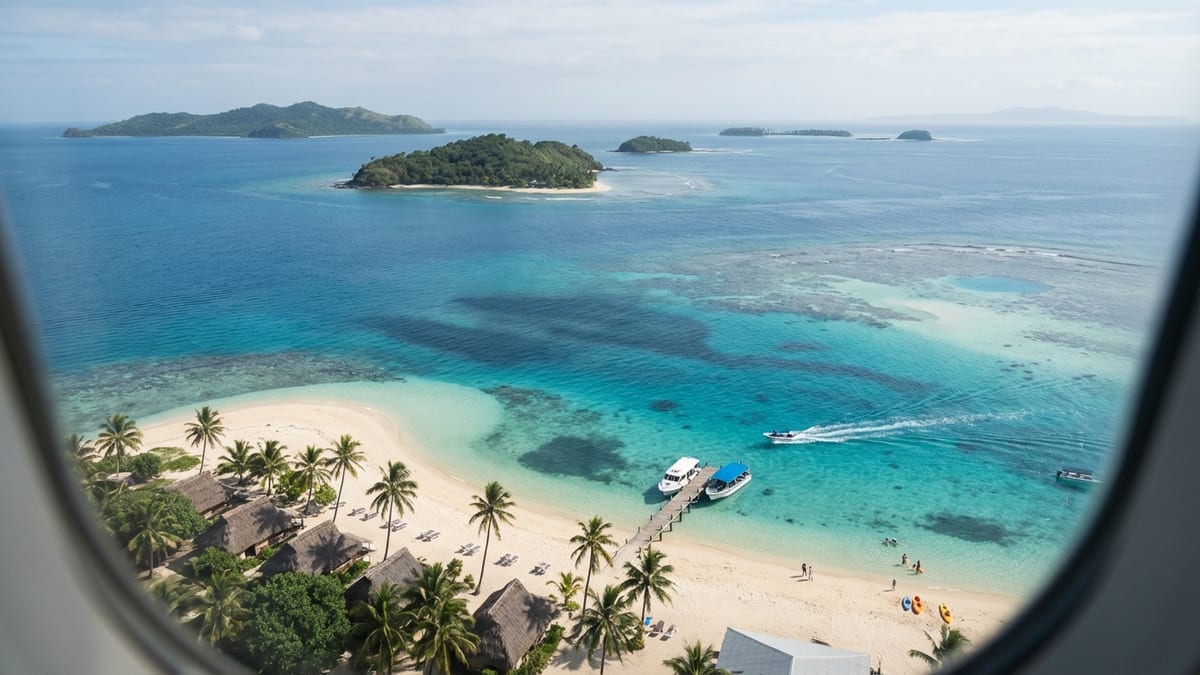
The Mamanuca Islands are the Fiji fantasy many travelers picture before they even touch down in Nadi: tiny green humps in a turquoise sea, ringed with coral reefs and white sand, strung out just offshore from the main island of Viti Levu. With more than a dozen resort islands plus a handful of private cays and sandbars, this region packs a surprising variety of vibes into a compact footprint.
From adults only overwater bungalows to surf shacks near legendary reef breaks and day-trip sandbars anchored by floating bars, the Mamanucas can feel like several different destinations in one. This guide compares the standout islands and resorts, so you can match their beaches, atmosphere and logistics to the kind of Fiji escape you have in mind.
Understanding the Mamanuca Islands
Clustered west of Nadi and easily reached by boat, seaplane or helicopter, the Mamanucas are Fiji’s most accessible island group. That proximity to the international airport means less time in transit and more time in the water. It also means a broad sweep of options, from honeymoon hideaways and sustainability-focused luxury islands to family resorts with kids’ clubs and affordable day-trip destinations that let you sample the archipelago without committing to an overnight stay.
Geographically, the Mamanucas are a mix of larger volcanic islands such as Malolo and smaller low-lying coral cays like Tivua. Some islands host multiple resorts, while others are fully private. Many lie within or beside marine reserves, so snorkeling and diving are a major draw. Legendary surf breaks sit just offshore, including Cloudbreak and Restaurants, accessed by resort launches. Despite their popularity, many Mamanuca islands still feel surprisingly low-key, with traditional villages, hiking trails and conservation projects woven into the visitor experience.
How to Reach the Mamanucas
Most travelers connect through Nadi International Airport, then transfer from Port Denarau by high-speed catamaran, smaller resort launches or private charters. Larger islands such as Malolo are typically around 45 to 60 minutes by boat from the mainland, while more distant private islands and surf reefs may be better reached by seaplane or helicopter. Flight transfers cost more, but they compress travel time to 10 to 15 minutes and double as a scenic tour over reef and sandbanks.
Because several services operate on set schedules, your arrival and departure times in Nadi can influence which islands make the most logistical sense. Early morning or late-night flights may require an overnight near Denarau or Nadi before you continue to the islands. If you are traveling with young children or on a short stay, choosing a resort on an island with frequent scheduled ferries can simplify the journey.
Choosing the Right Island Vibe
Rather than asking which is the single “best” Mamanuca island, it is more useful to think in terms of atmosphere. Some islands lean into romance and total privacy, others into social beach bars, surf boats and barefoot fun, while still others are built around lagoon pools, kids’ clubs and multi-generational stays. Many travelers combine a couple of islands in one trip, starting at a livelier, more family-friendly resort then finishing on a quieter luxury island before flying home.
Below, the islands and resorts are grouped by travel style to help narrow the field: romantic retreats, family favorites, surf-oriented stays, day-trip paradises and sustainability-led luxury. Within each section, standout properties are highlighted along with their beaches, activities, and practical pros and cons.
Romantic Retreats & Adults Only Escapes
For couples looking to spend more time in the water than in a minivan, the Mamanucas are ideal. Several islands specialize in adults only or romance-forward stays, with overwater bures, private plunge pools and quiet beaches where the loudest sounds are usually palm fronds and distant church singing from nearby villages. These resorts tend to be smaller, with more personalized service and a focus on dining, spa rituals and unhurried time on the lagoon.
Likuliku Lagoon Resort, Malolo Island
Likuliku Lagoon Resort on Malolo Island is one of Fiji’s signature adults only escapes, known for being the country’s first resort with authentic overwater bures in a calm natural lagoon. The property sits within a protected marine sanctuary, so the reef right off the beach is alive with tropical fish and coral gardens. Guests stay in a mix of overwater and beachfront bures built in a contemporary take on traditional Fijian style, with handwoven magi magi embellishments and thatched roofs that blend into the landscape.
In 2025 the resort completed a multimillion-dollar revitalization that refreshed all bures, expanded plunge pools on beachfront units and added a conservation hub highlighting local biodiversity, including the critically endangered Malolo Island crested iguana. Dining has been elevated with a new pan-Asian restaurant alongside the main lagoon-front restaurant, reinforcing Likuliku’s reputation as a serious food destination in the islands. Daily life here revolves around the lagoon: snorkeling from shore, sunset cruises, dives on outer reefs and occasional half-day trips to the private nature reserve island of Mociu, which is limited to resort guests for low-impact beach time and conservation activities.
Tokoriki Island Resort, Tokoriki Island
Tokoriki Island Resort is another adults only haven that frequently appears in rankings of Fiji’s top romantic properties. Set on a compact, hilly island north of Malolo, the resort faces a wide sweep of beach looking toward the open ocean, with a striking infinity pool at its heart. Villas and bures are designed for privacy, many with personal plunge pools or sunken outdoor showers screened by lush gardens.
The vibe at Tokoriki balances barefoot informality with polished service. Snorkeling trips leave daily for nearby reefs and to Monuriki, the uninhabited island used as the main filming location for the film “Cast Away.” On land, couples can arrange private picnics on small sand cays, cocktail-making classes or torch-lit dinners on the beach. Because the resort is relatively small, staff quickly learn guest preferences, and long lunches often slide seamlessly into sundowners without anyone keeping a close eye on the clock.
Matamanoa Island Resort, Matamanoa Island
Matamanoa Island Resort occupies a small, dramatically shaped island that rises like a volcanic cone from the sea, ringed by an almost continuous strip of white sand. The property caters to adults and older teens, skewing romantic rather than raucous. Most bures and villas face the ocean, and a handful of beachfront pool villas offer direct sand access combined with plunge pools and daybeds for all-day lazing.
The island’s compact size is part of its charm. You can walk the circumference of the beach at low tide, then climb to a hilltop lookout for sweeping views across the Mamanucas. The reef is close to shore, so snorkeling is excellent right off the beach when tides and visibility cooperate. Evenings tend to be mellow, with acoustic Fijian serenades, kava ceremonies and stargazing from loungers set back from the main pool.
Family Favorites & Multi-Generational Escapes
Many visitors associate the Mamanucas with honeymoons, but the region may be even better suited to families and multi-generational groups. Calm lagoons, short boat transfers, sandy-bottom shallows and structured kids’ programs make it easy for parents to relax while children burn energy in the pool or learn about local culture. The best family resorts balance convenience with a genuine sense of place, blending slides and kayaks with village visits and storytelling.
Malolo Island Resort, Malolo Island
Malolo Island Resort occupies one of the larger inhabited islands in the group, and its layout feels like a relaxed Fijian village by the sea. Colorful timber bures stretch along a wide beachfront, backed by coconut palms and jungle-clad hills. The property is firmly family-focused, with dedicated kids’ and teens’ clubs, a lagoon-style family pool and plenty of easy, ankle-deep water for younger children to splash around safely.
Malolo’s strength is its blend of activity and authenticity. Children can join storytelling sessions and craft workshops that introduce Fijian legends, try spear-throwing and weaving, or visit nearby villages with staff members who have direct family connections. Parents can join in or retreat to the adults only pool and bar area for quiet time while the kids are entertained. Off the beach, the island offers hiking trails to viewpoints, as well as boat trips to nearby reefs, Cloud 9 floating bar (for adults), and famous surf breaks for more experienced board riders.
Castaway Island, Qalito Island
Castaway Island, on Qalito Island, is one of the longest-running resorts in the Mamanucas and has a loyal following among repeat family guests. It occupies a broad horseshoe-shaped bay flanked by rocky headlands, creating a sheltered swimming and snorkeling area. That natural protection, combined with sand-floored shallows and calm conditions in the dry season, makes Castaway a particularly good choice for families with smaller children.
The resort’s thatched bures are spread through lush gardens and along the waterfront, giving a more intimate feel than the total room count might suggest. Multiple dining venues, two pools and a well-developed kids’ club program keep days varied, while older children and teens can try sailing, paddleboarding or introductory scuba lessons. The central location within the Mamanucas means boat trips to nearby snorkel sites, surf breaks and sand cays are easy to arrange without long travel times.
Plantation Island Resort & Lomani Island Resort, Malolo Lailai
Malolo Lailai, sometimes known as Plantation Island, houses several resorts that share the same island but deliver very different vibes. Plantation Island Resort is the most family-oriented, with an emphasis on budget-friendly accommodation, multiple pools, water slides and group activities like mini-golf and beach volleyball. It occupies a generous expanse of flat beachfront and is one of the easiest islands to reach by scheduled ferry from Port Denarau.
On the quieter side of Malolo Lailai, Lomani Island Resort offers an adults only contrast, so multi-generational groups occasionally split their time between the two, with grandparents or couples retreating to Lomani while still being close enough for shared activities. Nearby Musket Cove Island Resort, also on Malolo Lailai, caters to sailing enthusiasts with its marina and yacht club, and offers a more laid-back, village-like feel that suits older children and teens comfortable making their own fun between the beach, bikes and kayaks.
Surf-Focused Islands & Laid-Back Beach Bars
Surfers have long known that some of the South Pacific’s most consistent reef breaks peel just off the Mamanucas. Names like Cloudbreak, Restaurants, Wilkes Passage and Namotu Left draw traveling surfers from around the world, and several island resorts are set up to run dawn patrol boats and all-day wave hunts. Even non-surfers benefit from the energy: surf-focused islands often have livelier bars, more casual dress codes and a constant hum of people comparing waves over beers at sunset.
Tavarua Island Resort, Tavarua
Tavarua Island Resort is the original surf camp turned polished all-inclusive, set on a heart-shaped island just a short boat ride from Cloudbreak. Numbers are tightly controlled, which keeps lineups from becoming unmanageable and maintains an intimate, club-like atmosphere among guests. Accommodation is in simple but comfortable bures with fans or air-conditioning, surrounded by lawns that run directly to the sand.
In addition to Cloudbreak, resort boats shuttle guests to nearby breaks such as Restaurants and Tavarua Rights, matching conditions to skill levels. Off the surf, there is stand-up paddling in the lagoon, tennis and fishing, but the real draw is the feeling of being at the epicenter of a surf universe, where most conversations start and end with “How was it out there today?” Non-surfing partners and friends are welcome, and can spend lazy hours by the pool or on snorkel trips while others chase swells.
Namotu Island Resort, Namotu
Namotu Island Resort sits close to a cluster of renowned breaks including Namotu Left, Swimming Pools and Wilkes Passage. Where Tavarua leans slightly more toward surf history, Namotu has evolved into a broader waterman’s resort that also caters to kitesurfers, foilers, anglers and freedivers. The vibe is social and sporty, with guests often packing several different board sports into a single day depending on the wind and tide.
The island itself is small and flat, with a fringing reef and soft-sand beach. Accommodation is in low-slung bures and villas oriented toward the ocean. Boat shuttles operate constantly when conditions allow, and the on-island bar becomes a natural gathering place in the evenings. Because surf and wind conditions can change quickly, Namotu tends to suit guests who are flexible and energized by the idea that tomorrow’s plan will be dictated by the forecast pinned up after dinner.
Funky Fish Beach & Surf Resort, Malolo Island
Funky Fish Beach & Surf Resort sits on a quieter section of Malolo Island, facing the surf breaks of the outer reef. It offers a more budget-conscious alternative to dedicated surf islands, with a mix of dorm beds, basic bures and small villas. The atmosphere is decidedly laid-back, with hammocks, simple beachfront barbecues and an emphasis on shared experiences rather than polished luxury.
Surf transfers go to breaks such as Wilkes, Cloudbreak and Restaurants when conditions permit, and non-surfers can snorkel, kayak or simply wander the broad beach in front of the resort. This is a good choice for younger travelers, solo guests and couples who want surf access without the higher price tag of the smaller, fully private islands.
Day-Trip Paradises & Floating Bars
You do not need to stay overnight in the Mamanucas to experience their water clarity and reef life. Several small islands and man-made platforms operate as day-trip destinations from Port Denarau and the larger resorts. These are particularly appealing for travelers on short stopovers, cruise passengers or those who prefer to base themselves in larger mainland hotels but still want that classic “picture on the sand with nothing else around” moment.
Tivua Island
Tivua is a small coral cay wrapped by a broad reef platform, typically visited via day cruises that include snorkeling, beach time and island-style barbecues. The island itself is tiny enough to walk around in about 15 minutes at low tide, with simple bures used for shade and occasional overnight stays. Because Tivua is ringed by coral and sand rather than mangroves, the water clarity can be excellent on calm days, and families appreciate the shallow sandy entry points.
Day cruises generally depart Port Denarau in the morning, spend several hours anchored off Tivua, and return by late afternoon. Snorkel gear, guided reef tours, kayaks and stand-up paddleboards are often included. While it lacks the secluded luxury feel of private-resort islands, Tivua delivers the essential ingredients many visitors want on a first Fiji outing: palms, white sand, coconut demonstrations and a safe reef experience with supervision.
Cloud 9 Floating Platform
Cloud 9 is a purpose-built two-level pontoon anchored near Ro Ro Reef in the Mamanuca group, surrounded by cobalt water and shallow coral gardens. It operates as a day venue with a full bar and wood-fired pizza oven, playing a mix of relaxed electronic beats and island tunes. Guests arrive by speedboat from Port Denarau or nearby resorts and typically stay for several hours, alternating between sunbathing on daybeds and jumping into the sea to snorkel or swim.
For many travelers, Cloud 9 is less about hard partying and more about reveling in the surreal experience of being in the middle of the ocean with no land in sight. The platform’s multi-level design provides shade and sun in equal measure, and numbers are capped to avoid overcrowding. It is often combined with morning snorkeling stops or used as a lunch break on broader island-hopping itineraries.
Malamala Beach Club
Although technically situated on its own islet just outside the main Mamanuca cluster, Malamala Beach Club is often grouped with the region’s day-trip offerings. It bills itself as a “beach club on an island,” with cabanas, infinity pool, a restaurant and bar program that leans into contemporary cocktails and shared plates. Transfers from Port Denarau are frequent, and visitors can opt for half- or full-day passes that include return boat rides.
The island’s small footprint and careful landscaping give it a polished, almost Mediterranean feel, with white loungers arrayed along the shoreline and curated playlists rather than live bands. For travelers who want comfort and a social scene more than wilderness, Malamala can be a practical way to enjoy clear water and soft sand without committing to an overnight stay offshore.
Eco-Luxury & Conservation-Focused Islands
Several Mamanuca resorts have moved beyond conventional sustainability pledges and built conservation into the core of their identity, from reef restoration and mangrove planting to on-site water bottling and endemic species protection. These islands appeal to travelers who want high-end comfort but also care about the footprint of their holiday. Many encourage guests to participate in conservation activities, turning reef walks and iguana talks into trip highlights.
Six Senses Fiji, Malolo Island
Six Senses Fiji, on the western side of Malolo Island, is a flagship for renewable energy and regenerative tourism in the Mamanucas. The resort combines pool villas and multi-bedroom residences with extensive solar arrays and battery storage, aiming for high levels of energy self-sufficiency. Rainwater harvesting, on-site bottling and organic gardens further reduce import needs, while waste management emphasizes composting and recycling where infrastructure allows.
Guest experiences reflect this focus without sacrificing indulgence. There are guided reef snorkels that explain coral bleaching and recovery, tree-planting sessions, and visits to the property’s own nursery and gardens. At the same time, villas feature large private pools, shaded decks and breezy indoor-outdoor bathrooms, and dining draws heavily on local seafood, tropical produce and wellness-focused menus. Families appreciate the well-equipped kids’ club and the ability to book larger residences for extended family groups.
VOMO Island Resort, Vomo Island
VOMO Island, sitting between the outer edge of the Mamanucas and the Yasawa chain, operates as an upscale private island with a strong conservation ethic. The island is relatively large by Mamanuca standards, with hiking trails over jungle-covered hills, quiet coves and a long main beach. Accommodation ranges from beachfront villas to multi-bedroom residences that work well for families or groups celebrating milestones.
Conservation initiatives include reef monitoring and coral planting, beach cleanups and guest-participation projects such as “Loloma Hour,” a dedicated time where visitors can join simple tasks that support the island’s environment and community outreach. The resort positions these efforts as an enriching part of the stay rather than an obligation. Between yoga sessions, spa treatments and leisurely meals at its two main restaurants, guests can choose how involved they want to be, while children absorb lessons about reef health almost by osmosis during guided snorkels.
Likuliku & Malolo’s Iguana and Reef Projects
Back on Malolo Island, Likuliku Lagoon Resort and Malolo Island Resort are closely linked through their shared ownership and conservation programs. They have played a central role in the rediscovery and protection of the Malolo Island crested iguana, a species once thought extinct. Dedicated habitat restoration, predator control and education initiatives have led to a small but growing population of these striking green reptiles, which guests occasionally glimpse during guided walks.
Marine conservation is equally prominent. Parts of the coastal waters around Malolo and nearby private islets have been designated traditional no-take zones, providing safe nurseries for fish and coral. Resorts collaborate with marine biologists to monitor reef health, implement mooring systems that avoid anchor damage and run guest programs on responsible snorkeling and diving. For travelers who want their holiday spending to support long-term environmental resilience, these islands offer a chance to see tangible outcomes alongside clear water and soft sand.
Planning Your Mamanuca Itinerary
With so many islands in a relatively compact area, the biggest challenge is often choice. The right itinerary balances travel time, budget and activities with a realistic sense of how much you actually want to move around once you have sunk into island time. Many visitors underestimate how quickly the days will fill with simple pleasures: long breakfasts, reef swims, naps in hammocks and lingering dinners broken up by song and kava.
How Long to Stay and How Many Islands
For most travelers flying in from North America, a minimum of five to seven nights in the islands is sensible once you account for travel time to and from Fiji. Within that, splitting your stay between two islands works well if transfer times are short and you choose properties with distinct personalities. For example, you might combine three nights at a family-friendly resort on Malolo Lailai with four nights at an adults only retreat such as Tokoriki or Matamanoa, or balance a surf-focused island like Namotu with a more conventional resort on Malolo.
If your trip is shorter, prioritizing a single island and minimizing transfers is wiser. The same is true if you are traveling with small children, who may find multiple boat rides tiring. In that case, choosing an easily accessed island with varied activities, such as Malolo Lailai or Malolo itself, gives room for spontaneity without complicated logistics.
Budgeting for the Mamanucas
Costs vary widely across the region. All-inclusive surf islands and top-tier private islands command higher nightly rates but include many activities and meals, which can simplify budgeting. Midrange family resorts often work on a room-only or half-board basis, with optional meal plans and à la carte activities. Day-trip islands and floating bars charge per excursion, which can add up if you plan several outings from a mainland base.
To manage costs without sacrificing too much magic, consider:
- Traveling in shoulder seasons, typically around May–June and September–October, when room rates and airfares can be lower.
- Choosing a resort that includes non-motorized watersports and snorkel gear in the room rate.
- Booking a meal plan if you are staying somewhere with limited independent dining options.
- Splitting time between a more affordable resort and a few nights of higher-end luxury to cap the trip.
Seasonality, Weather and Crowds
The Mamanucas are warm year-round, with a drier, cooler period typically from May to October and a hotter, more humid wet season from November to April. The drier months tend to offer more consistent sunshine and slightly cooler nights, which many visitors find more comfortable, although prices can be higher and popular resorts book up well in advance for school holidays.
The wet season brings higher humidity and a greater chance of rain showers and tropical storms, but also lush vegetation and fewer crowds. Sea temperatures are warm throughout the year, and surf conditions on the outer reefs often peak during the southern hemisphere winter. Whenever you travel, it is worth building some flexibility into your plans, as boat transfers and certain activities can be delayed or rescheduled during periods of rough seas.
The Takeaway
The Mamanuca Islands distill many of Fiji’s most seductive qualities into a small, easily navigated patch of ocean. They are close enough to Nadi to be practical for families and short breaks, yet varied enough to satisfy honeymooners, surfers, conservation-minded travelers and those simply craving a beautiful beach where the agenda begins and ends with the tide. Rather than searching for a single “best” island, the smarter approach is to understand the strengths of each: Malolo’s village feel and conservation projects, Malolo Lailai’s easygoing family fun, Tokoriki and Likuliku’s focus on romance, the surf scene around Tavarua and Namotu, and the playful, photogenic thrill of day-trip spots like Tivua and Cloud 9.
Pick the island whose everyday rhythm most closely matches your own, then let the small details fall into place: the sound of a lali drum calling you to dinner, the shock of neon fish on a first snorkel, the quiet moment when a Fijian staff member shares a piece of their own story over kava. In the Mamanucas, those simple, human-scale encounters are what turn a collection of beautiful beaches into a place you will want to return to, long after the sand has shaken out of your suitcase.
FAQ
Q1. How do I choose which Mamanuca island is right for me?
Start by deciding your priorities: romance, family amenities, surfing, budget or eco-luxury. Adults only overwater stays point toward Likuliku, Tokoriki or Matamanoa. Families often gravitate to Malolo, Castaway or Malolo Lailai’s Plantation Island, while dedicated surfers target Tavarua or Namotu. If you mainly want a taste of the islands without changing hotels, look at day trips to Tivua, Cloud 9 or Malamala Beach Club.
Q2. Are the Mamanuca Islands suitable for young children?
Yes. Many resorts have shallow lagoons, kids’ clubs and family pools designed for younger guests. Malolo Island Resort, Castaway Island and Plantation Island Resort are particularly well set up for families, with structured activities, flexible dining and easy access to calm water. Always check age limits, as some islands and room types are adults only.
Q3. What is the best time of year to visit the Mamanucas?
The drier months from roughly May to October usually bring more stable sunshine, slightly cooler temperatures and lower humidity, which suits most visitors. These months can be busier and more expensive, especially around school holidays. The wetter months from November to April see higher humidity and a greater chance of showers, but also fewer crowds and often better value. Surf conditions on outer reefs are often strongest during the southern winter.
Q4. How long should I stay in the Mamanuca Islands?
If you are flying from North America or Europe, aim for at least five to seven nights to justify the long journey. Within that, many travelers split their time between two contrasting islands, such as a family-friendly resort followed by a quieter adults only retreat. For shorter regional breaks, three to five nights on a single island combined with a night near Nadi can still deliver a satisfying dose of island time.
Q5. Do I need to be an experienced swimmer or snorkeler?
No. Many resorts have sandy-bottomed shallows where you can simply stand in waist-deep water and watch fish, and most offer life jackets, flotation devices and guided snorkeling tours for beginners. If you are not confident in open water, choose a resort in a naturally sheltered bay with a pool as an alternative swimming option.
Q6. Are the Mamanuca resorts all-inclusive?
Only some are. Surf islands like Tavarua and Namotu tend to operate on an all-inclusive or near-all-inclusive basis, covering most meals and activities. Many mainstream resorts offer room-only rates with optional meal plans and paid activities. When comparing prices, factor in the cost of boat transfers, meals, drinks and extras such as dives, spa treatments and private excursions.
Q7. How far are the Mamanuca Islands from Nadi International Airport?
The islands lie roughly 25 to 35 kilometers offshore. From the airport it is about a 20-minute road transfer to Port Denarau, then typically 45 to 60 minutes by high-speed catamaran to major islands like Malolo or Malolo Lailai. Helicopter or seaplane transfers cut total travel time to around 10 to 15 minutes of flying directly from the airport to resort.
Q8. Can I visit the Mamanuca Islands just for the day?
Yes. Several operators run daily trips from Port Denarau to islands and floating platforms including Tivua, Malamala Beach Club and Cloud 9. These usually include boat transfers, use of facilities, some non-motorized watersports and the option to buy food and drinks. This is a good choice for cruise passengers, business travelers with limited time, or anyone who prefers to stay in a mainland hotel.
Q9. Are there cultural experiences available in the Mamanucas?
Many resorts integrate aspects of Fijian culture into daily life, from meke dance performances and church visits to kava ceremonies and storytelling sessions. On inhabited islands such as Malolo, guided village visits provide insight into everyday life, while craft activities teach skills like weaving or tapa cloth decoration. Respectful dress and behavior are expected when visiting villages, and resorts will brief guests on local etiquette.
Q10. Is it easy to combine the Mamanucas with other parts of Fiji?
It is straightforward to pair a Mamanuca stay with time on the mainland around Nadi or the Coral Coast. Combining the Mamanucas with the more remote Yasawa Islands or with other regions such as the northern islands is also possible, but requires more planning and sometimes overnight stops in Nadi between transfers. If your trip length is limited, focusing on one island group and exploring it in more depth often leads to a more relaxed, rewarding experience.