

California rewards travelers who choose their base carefully. From the sprawling neighborhoods of Los Angeles to the granite cliffs of Yosemite Valley, where you sleep can shape your entire experience. This guide moves north along a classic route from Los Angeles through the coast and big cities to Yosemite National Park, highlighting the best areas to stay, what each offers, and who each one suits best.
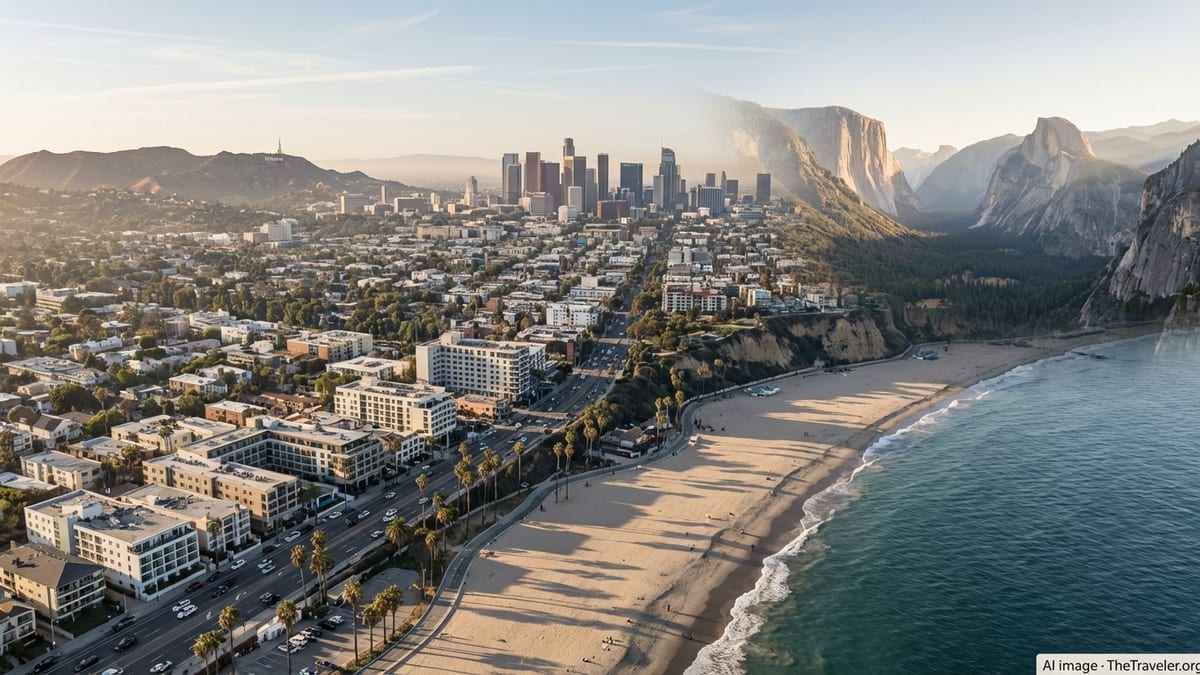
Understanding the Route: From Cityscapes to Granite Peaks
Many visitors tackle California as a road trip, starting in Southern California and working north toward the Sierra Nevada. That makes the question of where to stay especially important, because each overnight stop sets the tone for the following day. In the same week you might be navigating the freeways of Los Angeles, watching Pacific surf in Santa Barbara, riding cable cars in San Francisco, and waking to sunrise on Yosemite’s granite walls.
Rather than focusing on individual hotels, it is often more useful to choose the right neighborhood or area first. Within each district you will find a mix of large chains, independent boutiques, and vacation rentals across different price brackets. Picking the right “home base” determines whether you walk out your door to the beach, to nightlife, or to a quiet forest trailhead.
This overview focuses on well established areas that have remained popular into 2026, incorporating recent changes where they affect visitors. Neighborhood character is drawn from a blend of local reporting, tourism boards, and park authorities, with an emphasis on practical details and realistic expectations.
Los Angeles: Choosing Your Urban Base
Los Angeles is less a single city than a patchwork of mini cities. Locals and recent travel reporting describe it as a mosaic of distinct zones, from the beach communities of the Westside to the dense streets of Koreatown and the vertical skyline of Downtown. Where you stay will change how you experience the region and how much time you spend in traffic.
On the coast, Santa Monica remains one of the most popular bases for first time visitors. The neighborhood centers on a walkable downtown, the beach, and the Third Street Promenade, a pedestrian shopping and dining zone that has drawn visitors since the 1960s. You can step out of many hotels and reach the sand, cafes, and bike paths without driving, and light rail connects Santa Monica to Downtown Los Angeles for day trips.
Further south, Venice offers a more bohemian, arts focused flavor, with small guesthouses and design forward hotels near the canals and boardwalk. It tends to appeal to visitors who prioritize independent shops, coffee bars, and nightlife over polished resort amenities. North along the coast, Malibu has a limited number of inns and boutique properties spread along the Pacific Coast Highway, ideal if you prefer quieter evenings, coastal hikes, and access to beaches rather than city attractions.
In central Los Angeles, Hollywood remains a convenient if busy base. It places you near major studios and the Walk of Fame, with accommodations ranging from budget motels along Sunset Boulevard to historic properties close to Hollywood Theatre Row and Melrose Avenue. Recent neighborhood guides emphasize that Hollywood is lively and often crowded, so it suits travelers who want to be in the middle of the action rather than those seeking a tranquil base.
San Diego: Gaslamp, Bayfront, and Beach Communities
San Diego often serves as either the true starting point of a California itinerary or a detour from Los Angeles. The city’s lodging options cluster in three main zones: the historic downtown core, the coastal neighborhoods, and the resort areas around Mission Bay. Each area offers a different balance of nightlife, family activities, and access to the wider region.
Downtown’s Gaslamp Quarter is a compact historic district of brick facades, bars, and restaurants, anchored by late nineteenth century buildings such as the Keating Building. Many of these structures now house boutique hotels and rooftop bars. Staying here places you within walking distance of the convention center, Petco Park, harbor tours, and transit connections. The atmosphere is lively at night, which can be a plus for some and a drawback for those seeking quiet.
For a calmer city break, consider the bayfront along the Embarcadero or the waterfront districts just north of downtown. Hotels here typically trade some nightlife for harbor views, waterfront walking paths, and easy access to attractions like the Maritime Museum. Families and couples who want to stroll rather than bar hop often find this area a better fit than the Gaslamp.
Beach neighborhoods such as Pacific Beach, Ocean Beach, and La Jolla deliver the classic Southern California feel: surf shops, taco stands, and sunset walks. La Jolla skews more upscale, with clifftop hotels and ocean view rooms, while Pacific Beach and Mission Beach draw a younger crowd and can be energetic well into the evening. If your California journey is built around time in the water and coastal scenery, choosing one of these communities can be more rewarding than staying downtown.
Santa Barbara and the Central Coast: Relaxed Coastal Stays
Driving north from Los Angeles, many travelers break their journey in Santa Barbara or one of the Central Coast towns. These stops are less about efficiency and more about slowing down: sipping local wine, walking under palm trees, and watching the light shift over the ocean and nearby hills.
In Santa Barbara itself, the central waterfront and the streets around State Street make a convenient base. Here you will find Spanish Revival style hotels, smaller inns, and a growing number of contemporary boutique properties in converted older buildings. Most are within walking distance of the beach, the harbor, and the compact downtown, which has been gradually reoriented toward pedestrians and outdoor dining.
Further north, towns such as Pismo Beach, San Luis Obispo, and Morro Bay offer a straightforward, small town experience. Pismo and Morro Bay provide cliffside motels and family owned inns overlooking the water, often at lower prices than Santa Barbara, especially outside peak summer and holiday periods. San Luis Obispo, slightly inland, mixes a historic mission area with a college town energy, with lodging that ranges from traditional chain hotels to quirky retro motels.
For those driving the full coastal route, the stretch near Big Sur is one of the most scenic but has limited accommodations and high demand. A realistic approach is to treat Big Sur as a daylong drive or hike from bases in Monterey, Carmel by the Sea, or San Simeon rather than expecting to find affordable last minute rooms among the cliffs.
San Francisco: Neighborhoods With Distinct Personalities
San Francisco is compact compared to Los Angeles, but its neighborhoods feel dramatically different from one another. Current local guides for 2026 still highlight Union Square, Fisherman’s Wharf, the Marina District, and the Mission as the main areas visitors consider when choosing where to stay, each with clear advantages and tradeoffs.
Union Square sits in the heart of downtown and remains the city’s central hotel district. Upscale towers, business oriented properties, and boutique hotels cluster around the square itself and along nearby streets. This area is ideal if you want direct access to shopping, theaters, and transit, including BART and classic cable cars. The tradeoff is that it can feel busy and commercial, and some blocks climb steep hills back toward Nob Hill.
Fisherman’s Wharf appeals to travelers who prioritize waterfront scenery and family friendly attractions such as Pier 39 and bay cruises. Hotels here tend to be larger and often include suites suitable for groups. While some critics consider the area touristy, its convenience for Alcatraz tours, harbor views, and flat promenades makes it practical for short stays and for visitors who value easy walking over neighborhood authenticity.
For a more residential feel, the Marina District draws repeat visitors. Local tourism resources note that it combines relative safety, access to the Presidio and Golden Gate Bridge, and a main commercial corridor along Chestnut Street. Low rise motels and smaller hotels offer parking, which is limited in many other parts of San Francisco, and you are a short ride share or bus journey from most major sights.
Travelers seeking nightlife, food culture, and a younger vibe often base themselves in or near the Mission District. This neighborhood is known for its murals, diverse dining, and late night bars, as well as a growing collection of small design driven hotels and guesthouses. It sits slightly farther from the bayfront but offers a strong sense of place and ready access to other neighborhoods via transit and ride share.
Gateway Towns: Approaching Yosemite From the West
As you leave the coast and head inland toward Yosemite, your choice of gateway town matters. Yosemite Valley accommodations book far in advance, especially from spring through autumn, so many visitors stay just outside the park and drive or take shuttle services in each day. The main western approaches are via Highways 120, 140, and 41, each passing through a different community with its own character.
Approaching from the northwest on Highway 120, Groveland functions as a traditional gateway town with a compact main street. Motels, lodges, and vacation rentals serve travelers who want a lower elevation base and do not mind a longer daily drive into the valley. This route also connects to the high country near Tuolumne Meadows when the Tioga Road is open, typically in the warmer months, though exact opening dates vary year to year depending on snowpack.
Highway 140 follows the Merced River through the foothills, with El Portal providing one of the closest out of park bases to Yosemite Valley. Properties here are set among steep canyon walls, and you can usually reach the valley floor in a relatively short drive compared with more distant towns. Mariposa, farther down the same highway, offers more services, museums, and dining options, making it a comfortable base if you appreciate having a small town center to explore in the evenings.
To the south, Highway 41 rises from the town of Oakhurst toward the park’s southern entrance and the road to the Mariposa Grove of giant sequoias. Oakhurst has a broad range of midscale hotels, cabins, and vacation rentals, along with supermarkets and restaurants that make it convenient for longer stays. From here you should budget substantial driving time into and out of Yosemite Valley, especially in summer when traffic and parking pressures are heaviest.
Staying Inside Yosemite: Lodges, Cabins, and Tent Camps
Securing a place to stay inside Yosemite National Park is a highlight for many travelers. The National Park Service and its concessionaire manage a spectrum of lodging types, from historic hotels to basic tent cabins, and reservations are strongly recommended, particularly between spring and fall when demand peaks. Some key in park areas provide very different experiences despite being only a few miles apart.
In Yosemite Valley, The Ahwahnee and Yosemite Valley Lodge anchor the more traditional hotel options. The Ahwahnee, a grand stone and timber structure, is considered the park’s signature luxury property, with high ceilings, large public rooms, and views of the surrounding cliffs. Yosemite Valley Lodge, closer to Yosemite Falls, offers more straightforward rooms in several low rise buildings, suiting visitors who want hotel style comfort and immediate access to valley trails and shuttle stops.
Curry Village, also historically known as Camp Curry, sits beneath Glacier Point and offers a village like layout of wood cabins, canvas sided tent cabins, and a few standard rooms. Official park lodging information emphasizes its long history, range of simple accommodations, and communal facilities such as a large dining pavilion, guest lounge with Wi Fi, and seasonal pool. It is one of the most popular spots for visitors who prefer a rustic yet serviced experience, with reservations often needed many months in advance.
Housekeeping Camp, located on the banks of the Merced River, provides another semi rustic option. It is typically open from roughly April through October, with units that blend elements of camping and basic lodging. Each site includes three concrete walls, a canvas roof, and simple furnishings, appealing to travelers who enjoy the feeling of sleeping nearly outdoors without needing to bring their own tent. Park history notes that these camps were originally designed to give visitors a camping like experience without the equipment, and they continue to book up quickly when reservations open.
Beyond the valley, seasonal lodges and tent camps such as White Wolf Lodge, Tuolumne Meadows Lodge, and the High Sierra Camps offer access to the quieter high country when roads and facilities are open. Availability, opening dates, and operating details can shift year by year, so travelers planning to stay in these areas should rely on current park announcements and consider backup options in case of late snow or operational changes.
Planning and Practical Tips for Booking Stays
Because California’s most popular destinations draw visitors year round, a measured approach to booking can significantly improve your experience. Coastal cities such as Los Angeles and San Francisco have large hotel inventories, which means you can often find a room even at shorter notice, but the best located or best value properties in sought after neighborhoods still tend to fill early for major holidays, conventions, and large events.
Yosemite is different. Park service guidance notes that reservations for Yosemite Valley lodgings, including tent cabins and semi rustic camps, may sell out as soon as they go on sale, particularly for peak summer and certain spring and autumn dates. It is wise to treat Yosemite reservations as the anchor dates for your entire California itinerary, building city and coastal stays around whichever nights you can secure inside or near the park.
When comparing neighborhoods, factor in more than the nightly rate. Parking fees, resort charges, and transportation costs can add up, especially in San Francisco and Los Angeles, where central districts may levy high daily parking rates. A slightly higher nightly price in a walkable area with included parking or transit access may be more cost effective than a cheaper, car dependent location.
Seasonality also plays a role. Coastal cities maintain relatively mild weather year round, though winter storms and summer marine layers can affect beach plans. Yosemite’s high elevation brings snow, road closures, and limited winter accommodations balanced by quieter trails and the possibility of seeing the valley under a dusting of snow. Checking recent updates on road and lodging conditions shortly before you travel is advisable, particularly in shoulder seasons.
FAQ
Q1. What is the best month to combine Los Angeles, San Francisco, and Yosemite in one trip?
Many travelers find late May through early October offers the best balance, with Yosemite’s higher elevation roads more likely to be open and coastal cities enjoying longer days and generally mild weather.
Q2. Should I book Yosemite lodging before my city hotels?
Yes. In park rooms, cabins, and camps often sell out quickly. It is usually wise to secure Yosemite dates first, then arrange Los Angeles, San Diego, and San Francisco stays around those confirmed nights.
Q3. Is it better to stay in Santa Monica or Hollywood when visiting Los Angeles?
Santa Monica suits travelers who prioritize the beach, walkability, and a relaxed atmosphere, while Hollywood works better if you want short drives to studios, nightlife, and classic tourist sights.
Q4. How far in advance should I reserve accommodations inside Yosemite Valley?
Availability varies, but aiming to book many months ahead is prudent, especially for summer and holiday periods, as popular options can fill soon after reservations open.
Q5. Is staying at Fisherman’s Wharf in San Francisco too tourist oriented?
Fisherman’s Wharf is undeniably tourist focused, but it offers flat waterfront walking, family friendly attractions, and convenient access to bay cruises, which many short stay visitors appreciate.
Q6. Which San Diego neighborhood is best for a first visit?
The Gaslamp Quarter works well if you enjoy nightlife and dining, while bayfront or beach neighborhoods are better for travelers who prefer quieter evenings and coastal scenery.
Q7. Are gateway towns like Mariposa and Oakhurst good alternatives to staying inside Yosemite?
Yes. They offer more lodging choices, services, and often lower prices than in park options, at the cost of a longer daily drive into Yosemite Valley.
Q8. Do I need a car to enjoy these California destinations?
Public transit covers parts of Los Angeles and San Francisco, and shuttles run inside Yosemite, but a car or carefully planned ride share budget provides the greatest flexibility, especially between regions.
Q9. Is it realistic to visit Yosemite as a day trip from San Francisco?
It is technically possible but involves several hours of driving each way. Most visitors find at least one or two nights near or inside the park far more rewarding and less tiring.
Q10. How should I split my time between cities and Yosemite on a 10 day trip?
A common pattern is three nights in Los Angeles, two in San Diego or the Central Coast, three in San Francisco, and two in or near Yosemite, adjusting for your interests and pace.