

Georgia rewards visitors who look beyond the basics when choosing where to stay. From Atlanta’s skyline views and thriving intown neighborhoods to Savannah’s moss-draped historic streets and the calm barrier islands of the Atlantic coast, your home base shapes how you experience the state. This guide highlights the most appealing areas and accommodation styles in Atlanta, Savannah, and along the Georgia coast, with practical insight into who each area suits best and what kind of stay you can expect.
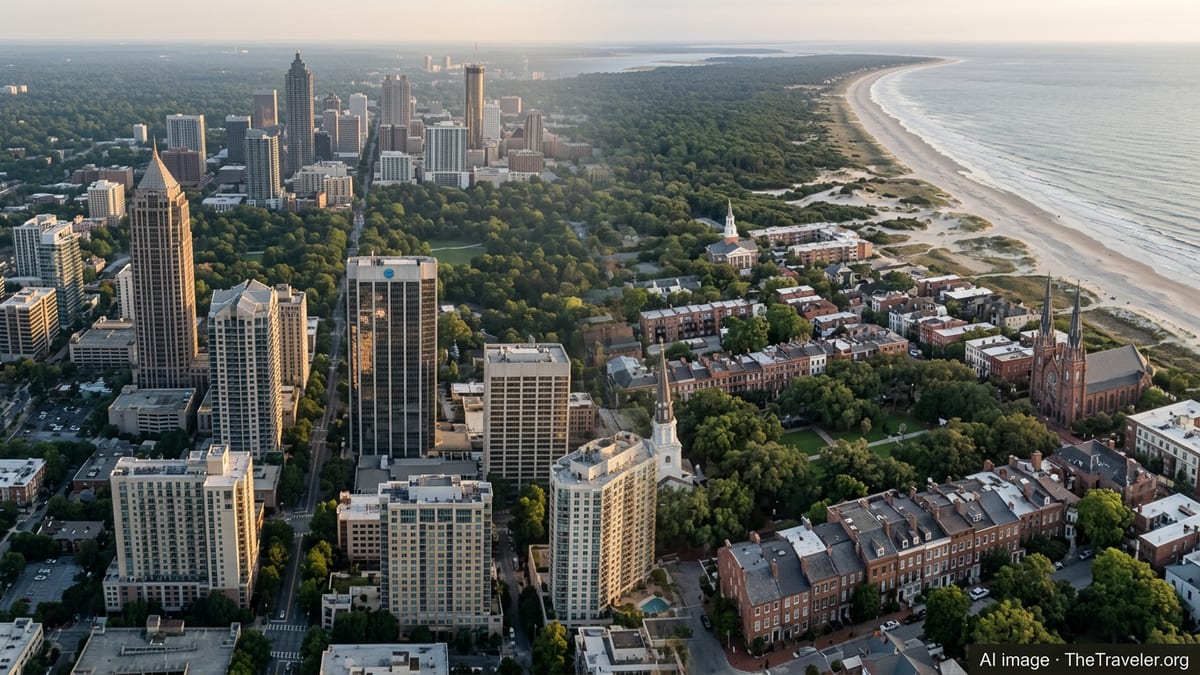
How to Choose Where to Stay in Georgia
Planning a trip to Georgia often starts with deciding between city, small-city charm, or the coast. Atlanta delivers big-city energy, major attractions, and a fast-growing restaurant scene. Savannah leans into historic architecture, walkable streets, and a slower pace, while the barrier islands and mainland coast focus on beaches, maritime forests, and water-based activities. Each region offers distinct neighborhoods and lodging styles, from high-rise hotels to cottages and historic inns.
When weighing options, think first about your priorities. Travelers who value museums, professional sports, and nightlife tend to favor Atlanta. Visitors drawn to architecture, history, and a deeply walkable core often prefer Savannah. For beach time, birding, and bike-friendly islands, the coast is the natural choice. It is very feasible to combine two or even all three in one itinerary, but where you stay in each destination will influence how much time you spend commuting versus exploring.
Budget and transport also matter. Atlanta’s most central neighborhoods can command higher nightly rates, particularly around major conventions or events, while coastal islands vary from budget-friendly motels to some of the South’s most luxurious resorts. Savannah’s prices shift with festival calendars and the peak spring and fall seasons. If you plan to rely on public transportation or rideshares, aim for areas with strong transit or walkability; if you will have a car, factor in parking costs and availability, especially in central Atlanta and the heart of Savannah’s Historic District.
Georgia’s climate is generally mild, but heat and humidity in summer can be intense, especially away from the coast. That makes shaded parks, air-conditioned museums, and access to pools or breezy waterfronts especially valuable during warmer months. Considering the season, your tolerance for heat, and whether you prefer a lively scene or a quieter retreat will help narrow down the best neighborhood for your stay.
Best Areas to Stay in Atlanta
Atlanta is a city of neighborhoods, and first-time visitors often underestimate distances and the role of the car. The main visitor-friendly areas tend to cluster along the spine of the MARTA rail system and around major attractions. Downtown’s Hotel District, centered on Peachtree Street and bounded by landmarks such as Centennial Olympic Park and Georgia World Congress Center, concentrates many of the city’s largest hotels and is popular with convention travelers. You are within walking distance of the Georgia Aquarium, World of Coca-Cola, the College Football Hall of Fame, and State Farm Arena, which simplifies sightseeing even if the atmosphere feels more businesslike in the evenings.
Just north, Midtown is widely considered the best all-around base for a mix of culture, nightlife, and walkability. It offers direct MARTA rail links to the airport, Downtown, and Buckhead, and it is anchored by Piedmont Park, the High Museum of Art, and the historic Fox Theatre. Streets like Peachtree, Juniper, and Crescent are lined with restaurants and bars, and there is frequent street-level activity both day and night. Accommodation here ranges from upscale towers to smaller boutique properties, making it versatile for couples, solo travelers, and business visitors who want more of a neighborhood feel than Downtown provides.
Farther north, Buckhead serves as Atlanta’s upscale business and shopping district. It is known for high-end retail at Lenox Square and Phipps Plaza, corporate offices, and a concentration of full-service hotels that appeal to business travelers and visitors who prioritize polished amenities. While pockets around the malls and Buckhead Village are walkable, the area as a whole is more oriented to drivers, with heavy traffic at rush hour. Travelers who enjoy mall shopping, fine dining, and quieter evenings often find Buckhead a comfortable fit, especially if they do not mind relying on MARTA and rideshares to reach Midtown or Downtown.
For a more local, residential experience, intown neighborhoods like Old Fourth Ward, Inman Park, Virginia-Highland, and parts of West Midtown are increasingly popular. Old Fourth Ward and Inman Park hug the Atlanta BeltLine Eastside Trail and place you near food halls such as Ponce City Market and Krog Street Market, as well as street art, independent coffee shops, and tree-lined side streets. Virginia-Highland offers bungalow-lined blocks, small commercial nodes, and quick access to Piedmont Park, appealing to families and those seeking a quieter base. West Midtown, sometimes called the Westside, has an industrial-chic vibe with acclaimed restaurants and nightlife in converted warehouses. In these areas, lodging leans more toward boutique hotels, small inns, and short-term rentals, and visitors should be comfortable using rideshares or bikes since direct rail access is less common.
Where to Stay in Savannah: Historic District and Beyond
Savannah’s compact size and grid of oak-shaded squares make it one of the South’s most walkable cities, and most visitors stay within or near the Historic District. The northern portion of the district, near Bay Street and the riverfront, offers the densest cluster of hotels. Bay Street sits atop a bluff above the Savannah River, with restaurants and bars at street level and historic cotton warehouses converted into shops and eateries below along River Street. Staying here places you between the riverfront and City Market, within easy reach of nightlife and sightseeing, although traffic and crowds can mean more street noise and busier sidewalks.
Just inland, around City Market and Broughton Street, the vibe is central and lively but somewhat less chaotic than the immediate riverfront. This core area provides straightforward access to trolley tours, museums, restaurants, and boutiques, and it suits first-time visitors who want a simple, car-free stay. Many hotels in this zone offer valet parking due to the scarcity of dedicated lots, so factor parking fees into your budget if you are driving. Streets here remain very walkable, and stepping a block or two off the main thoroughfares quickly leads into quieter residential squares.
Farther south in the Historic District, near Forsyth Park, the mood shifts to leafier and more residential. Historic homes and smaller inns line the streets, and the canopy of live oaks around the park makes this area especially atmospheric. Travelers who want to be close to the main sights but value calm evenings, morning walks, and a more local feel often favor this end of the district. You will still be able to reach the riverfront on foot, though the walk is longer, and many visitors use rideshares in the heat or after dark.
Beyond the Historic District, neighborhoods like the Victorian District and Starland District draw return visitors and those seeking emerging food and arts scenes. Lodgings here range from restored mansions and guesthouses to contemporary boutique properties. You will trade some convenience to the most popular tourist attractions for quieter streets and potentially more space for the money. In all of Savannah, consider the age and layout of historic buildings: older properties may feature stairs instead of elevators, smaller rooms, and the creaks and quirks that come with preserved architecture, which many guests find part of the charm.
Georgia’s Coast: Golden Isles, Tybee Island and Cumberland
Georgia’s Atlantic coastline is relatively short but varied, with barrier islands and marshlands that feel far removed from the state’s urban centers. The Golden Isles, a cluster that includes St. Simons Island, Sea Island, Jekyll Island, and Little St. Simons Island along with the mainland city of Brunswick, offer a balanced blend of resorts, historic sites, and family-friendly beaches. St. Simons Island is known for its village area, lighthouse museum, and popular East Beach, with a mix of hotels, vacation rentals, and inns that suit families and couples. Sea Island is home to some of the state’s most upscale resorts, attracting travelers seeking golf, spa facilities, and highly serviced stays in a gated environment.
Jekyll Island tends to feel quieter and more nature focused, with a state-managed character, broad beaches, extensive bike paths, and access to beloved spots such as Driftwood Beach, where the weathered remains of a former maritime forest create striking scenery. Lodging here ranges from historic properties near the Jekyll Island Club’s former grounds to modern oceanfront hotels and modest inns, and there are fees to access the island by car. Little St. Simons Island, accessible only by boat and limited to a small number of guests at a time, caters to visitors seeking all-inclusive, conservation-oriented stays with guided nature activities and minimal development.
Closer to Savannah, Tybee Island functions as the city’s primary beach escape. It has a laid-back, unpretentious feel, with low-rise buildings, a historic lighthouse, and wide sands that attract families and day trippers. Accommodation options here include simple motels, vacation rentals, and a few small hotels, with most properties within a short drive or walk of the beach. Tybee suits travelers who want a casual base for swimming, sunbathing, and kayaking, and who are comfortable driving or using rideshares to make occasional trips back into Savannah for dining and sightseeing.
Farther south, near the Florida line, Cumberland Island stands apart as a largely undeveloped National Seashore characterized by wild horses, expansive beaches, and a mix of dune systems, marshes, and maritime forest. Access is limited by passenger ferry and private boat, and overnight stays are mostly in designated campgrounds or at a single historic inn that operates with an emphasis on seclusion and conservation. The infrastructure here is minimal compared with Tybee or the Golden Isles, which appeals to hikers, birders, and travelers who prioritize privacy and nature over conventional hotel amenities. If you plan to include Cumberland Island in your itinerary, you will typically stay the night before and after in mainland communities such as St. Marys to coordinate ferry schedules.
Matching Neighborhoods to Different Travel Styles
Georgia’s variety means that nearly every type of traveler can find a natural fit, provided they choose carefully. Families traveling with children often prioritize convenience and access to outdoor space. In Atlanta, Midtown and Virginia-Highland work well for this group, thanks to their proximity to Piedmont Park, playgrounds, and family-friendly restaurants, while Buckhead’s larger hotels may offer pools and connecting rooms. In Savannah, staying near Forsyth Park or the quieter southern Historic District combines walkability with calmer evenings, and on the coast, St. Simons Island, Jekyll Island, and Tybee Island all provide easy beach access and relaxed atmospheres that suit multi-generational trips.
Couples and cultural travelers might favor areas with strong dining, arts, and nightlife. Midtown Atlanta, Old Fourth Ward, and Inman Park offer dense clusters of restaurants, galleries, and entertainment venues, while still allowing for easy daytime exploration of museums and landmarks. In Savannah, the blocks around City Market and Broughton Street supply a steady rhythm of live music, outdoor seating, and cocktail bars, balanced by quiet squares for late-night strolls. Along the coast, St. Simons village area and Sea Island’s resort complexes provide opportunities for sunset dinners, live music, and waterfront walks.
Outdoor enthusiasts and those seeking slower-paced trips gravitate toward the islands and coastal refuges. Jekyll Island’s extensive bike trails, marsh overlooks, and beaches invite low-key exploration, and Little St. Simons and Cumberland Island cater to travelers who enjoy guided nature walks, birding, and stargazing. Even in Atlanta and Savannah, however, choosing a neighborhood near major green spaces such as Piedmont Park or Forsyth Park can make a big difference during hotter months or for visitors who like to start the day with a walk or run.
Travelers on tighter budgets might prioritize value and transit links over address prestige. In Atlanta, areas just beyond the most central hotel clusters, or near MARTA stations that are one or two stops from Midtown or Downtown, can offer savings while keeping commute times manageable. In Savannah, mid-range chain hotels on the edges of the Historic District often cost less than boutique properties on the most popular squares, yet remain a short walk or shuttle ride away. On the coast, choosing accommodations a few blocks back from the waterfront, or opting for shoulder-season travel in spring and fall, can significantly lower nightly rates without sacrificing the experience.
Practical Tips for Booking in Atlanta, Savannah and the Coast
Timing is one of the most important factors in finding suitable lodging in Georgia. Large conventions and sporting events can quickly fill central Atlanta hotels, particularly in the Downtown Hotel District and Midtown. Checking city event calendars before locking in dates can help you avoid price spikes and limited availability. In Savannah, popular festivals, spring garden season, and holiday events draw heavy crowds, so booking early is essential if you want a specific inn or square. Coastal destinations see their busiest periods in summer and around school breaks, as well as during regional events and holiday weekends.
Parking and transportation should not be afterthoughts. In central Atlanta, daily parking fees at hotels can add a substantial amount to the cost of your stay, and some intown neighborhoods rely on street parking with time limits. If you plan to use MARTA frequently, staying within a short walk of a station in Midtown, Downtown, or Buckhead simplifies airport transfers and trips to major venues. In Savannah’s Historic District, many visitors park their car once and get around on foot or via rideshares, but overnight parking is often in garages or small lots with additional fees. On the islands, parking is typically more straightforward but can still be limited near the most popular beach access points.
Accommodation type strongly shapes the feel of your trip. High-rise hotels in Atlanta’s core deliver predictable amenities, loyalty program benefits, and on-site dining, while smaller boutique hotels and historic inns in Savannah and along the coast offer more distinct character at the expense of standardized layouts. Vacation rentals and cottages, common on the islands and in some intown neighborhoods, provide extra space and kitchens, which can be useful for families or longer stays. Before booking, it is wise to review recent traveler feedback for information about noise levels, maintenance, and neighborhood conditions, since development patterns in Atlanta and coastal erosion or restoration projects on the islands can alter the on-the-ground experience over time.
Finally, consider how many bases you truly need. Some visitors try to split short trips between multiple cities and islands and end up spending more time packing and driving than exploring. For a long weekend, choosing a single base in either Atlanta, Savannah, or one coastal cluster often leads to a more relaxed experience. With a week or more, you can comfortably combine Atlanta with either Savannah or the Golden Isles, or pair Savannah with Tybee Island and maybe a day trip toward Cumberland. Giving each destination enough time helps you appreciate the distinct character of its neighborhoods rather than just skimming the surface.
The Takeaway
Georgia’s diversity of places to stay is one of its greatest strengths, from Atlanta’s skyline-framed neighborhoods to Savannah’s historic streets and the windswept sands of its barrier islands. Choosing the right base is less about finding a single “best” area and more about matching your priorities to the strengths of each neighborhood. Midtown, Buckhead, and the city’s intown districts provide very different flavors of Atlanta, just as Savannah’s riverfront, central squares, and park-framed streets each offer their own rhythm and level of activity.
Along the coast, the contrast between relaxed Tybee Island, resort-focused Sea Island, family-friendly St. Simons, state-managed Jekyll Island, and remote Cumberland Island means there is a shoreline setting for nearly every style of traveler. Whether you are seeking a packed cultural weekend, a quiet retreat under live oaks, or a week of biking and beachcombing, the right accommodation choice will anchor your experience and shape your memories of the state.
By thinking clearly about your budget, transportation, season, and preferred pace, you can narrow the options to a few neighborhoods that truly fit. From there, exploring specific hotels, inns, or rentals becomes a matter of fine-tuning rather than guesswork. With a thoughtful approach, your stay in Atlanta, Savannah, and along Georgia’s coast can feel less like a string of hotel nights and more like a series of distinct but connected chapters in a single, memorable journey.
FAQ
Q1. What is the best area to stay in Atlanta for first-time visitors?
For most first-time visitors, Midtown Atlanta is a strong choice thanks to its central location, MARTA rail access, cultural institutions, restaurants, and walkable streets.
Q2. Is it better to stay in Downtown or Midtown Atlanta for sightseeing?
Downtown puts you closest to major attractions like the Georgia Aquarium, while Midtown offers a broader mix of nightlife, dining, and parks. Many visitors prefer Midtown for overall atmosphere.
Q3. Where should I stay in Savannah to be within walking distance of most sights?
Anywhere within the main Historic District works well, but streets between the riverfront and Forsyth Park provide the best balance of walkability, amenities, and atmosphere.
Q4. Is it noisy to stay near Savannah’s riverfront?
Staying close to Bay Street and River Street offers convenience but can come with traffic and nightlife noise. Light sleepers may prefer locations a few blocks inland or closer to Forsyth Park.
Q5. Which Georgia island is best for a family beach vacation?
St. Simons Island, Jekyll Island, and Tybee Island are all family friendly, with wide beaches, casual dining, and a range of accommodations at different price points.
Q6. Are there luxury places to stay on the Georgia coast?
Yes. Sea Island is known for upscale resorts with golf and spa facilities, and some properties on St. Simons Island and Little St. Simons Island also cater to higher-end stays.
Q7. Do I need a car to enjoy Atlanta, Savannah, and the coast?
In Atlanta, a car can be helpful outside core transit corridors, while Savannah’s Historic District is very walkable. The islands generally require a car, except for more self-contained resorts or guided stays.
Q8. How far in advance should I book accommodation in Georgia?
For peak seasons, major events, and popular coastal weekends, aim to book several months ahead. For off-peak weekdays, there is usually more flexibility, especially in larger cities.
Q9. Can I combine Atlanta, Savannah, and the Golden Isles in one trip?
Yes, but you will want enough time. Many travelers dedicate at least a week to comfortably include Atlanta plus either Savannah and Tybee or the Golden Isles, with additional days for Cumberland Island.
Q10. What is the most budget-friendly way to stay on the Georgia coast?
Staying slightly inland on the mainland, choosing properties set back from the beachfront, or visiting during shoulder seasons can all help reduce lodging costs while keeping you close to the islands.