

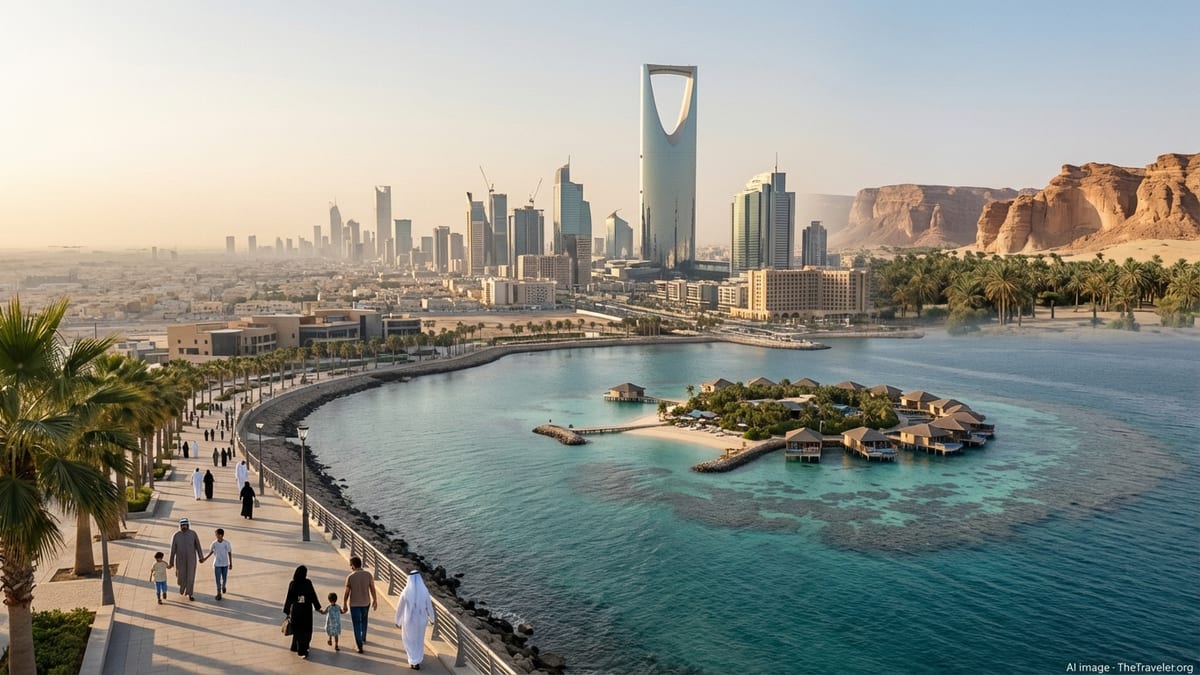
Saudi Arabia is evolving rapidly as a destination, with new hotels, heritage stays, and Red Sea resorts reshaping how and where visitors choose to base themselves. Whether you are in the kingdom for business, culture, desert landscapes, or coastal relaxation, choosing the right area to stay can transform your experience. From Riyadh’s glassy business towers and Jeddah’s waterfront promenades to AlUla’s sandstone canyons and newly opened island retreats on the Red Sea, each region offers a distinct flavor of contemporary Saudi travel.
Understanding Saudi Arabia’s New Hotel Landscape
Saudi Arabia’s accommodation scene is in the middle of a generational shift. Vision 2030, the country’s long-term transformation plan, has prompted a wave of investment in hotels, resorts, and serviced apartments aimed at both international tourists and a growing domestic travel market. Major global brands are expanding in established cities such as Riyadh and Jeddah, while new destinations on the Red Sea coast and in the northwest are gradually opening to guests. As a traveler, this means more choice across price points, from familiar business chains to design-led desert retreats and ultra-luxury island getaways.
In practical terms, visitors will notice that hotel quality and style can vary sharply by neighborhood. In the capital, sleek high-rises cluster around key commercial arteries, while in Jeddah the atmosphere shifts between historical quarters, modern corniche districts, and family-oriented suburbs. In AlUla, the focus is on low-rise resorts that blend with the ochre landscape, often emphasizing privacy and outdoor living instead of towering lobbies. On the coast, resorts are increasingly designed around regenerative tourism principles, highlighting coral reefs, marine life, and dark skies.
Most international visitors arrive via Riyadh or Jeddah, often combining urban stays with a side trip to AlUla or the Red Sea. Domestic flights link the main hubs with newer destinations such as Umluj, Tabuk, and the islands where flagship Red Sea Global projects are taking shape. With tourism infrastructure still developing, it can be worth booking key stays well in advance, especially during major events, school holidays, and winter, when the country’s climate is at its most pleasant.
When choosing where to sleep, consider not only hotel ratings but also transport links, traffic patterns, and proximity to the experiences you care about. Commuting across cities during rush hours can be slow, and some resort areas are deliberately secluded. By matching your location to your priorities, you can spend less time in transit and more time exploring Saudi Arabia’s emerging cultural and natural highlights.
Best Areas to Stay in Riyadh
Riyadh is the kingdom’s political and corporate capital, and its hotel scene reflects that status. For many visitors, Al Olaya and the King Fahd Road corridor are the natural starting points. This central spine of towers, malls, and offices is home to several of the city’s flagship properties, including high-end international hotels that cater to business travelers with club lounges, extensive meeting facilities, and skyline-view rooms. The area offers easy access to major roads and the growing metro network, which can significantly cut down on journey times across the city.
Travelers seeking a quieter, greener atmosphere often gravitate toward the Diplomatic Quarter, also known as Al Safarat. This district is characterized by embassies, landscaped parks, and a more residential feel, with upscale hotels and serviced apartments set among walking paths and cafes. It is especially appealing for families, long-stay guests, and those who value evening strolls in a secure environment. While it sits slightly apart from Riyadh’s historical core, taxis and ride-hailing apps make it straightforward to reach museums, the National Museum Park, and older districts to the south.
Cultural travelers increasingly look to the area around Ad Diriyah on the northwestern edge of Riyadh. This restored mud-brick settlement, recognized as a UNESCO World Heritage Site, has become one of the country’s most atmospheric places to stay, with heritage-inspired boutique hotels and new luxury properties built in a contemporary Najdi style. Guests here can walk between traditional alleyways, performance venues, and restaurant terraces that overlook the palm-lined Wadi Hanifah. It is an evocative base for those who want to pair modern comforts with a strong sense of place, especially in the cooler winter months.
Elsewhere in the capital, newer neighborhoods in North Riyadh have grown into entertainment hubs, particularly during Riyadh Season, when large-scale events, concerts, and pop-up attractions animate venues across the city. Staying in these districts can be convenient if your visit coincides with major festivals, though the energy is more fast-paced and oriented toward nightlife and shopping. At the other end of the spectrum, budget-conscious travelers sometimes choose simple hotels near Old Riyadh and the traditional markets, accepting basic facilities in exchange for street life, local eateries, and proximity to historic souqs.
Best Places to Stay in Jeddah
Jeddah, long known as the gateway to the holy cities and the country’s Red Sea port, has developed into Saudi Arabia’s most relaxed big city, with an accommodation map defined by its waterfront and historic center. For many visitors, the Ash Shati district along the corniche is the most appealing place to stay. Here, modern towers and villas line the Roshn Waterfront, a redeveloped promenade with parks, jogging tracks, and sea views. Hotels in this area tend to be contemporary and family-friendly, often with pools and direct access to the seafront, making it an ideal base for travelers who prioritize outdoor space and sunsets over the Red Sea.
Closer to the city’s commercial core, central districts such as Al Rawdah offer a practical mix of mid-range and upscale hotels near restaurants, clinics, gyms, and shopping avenues. This is a convenient choice for travelers who want to balance business appointments with easy access to the corniche and airport. Even if you base yourself inland, the drive to the waterfront is usually manageable outside peak traffic times, and many properties arrange transfers or can help coordinate taxis and car services.
For visitors keen on heritage and culture, staying near Historic Jeddah, known locally as Al Balad, can be particularly rewarding. In recent years, traditional coral-stone and wooden-latticed houses have been restored and reimagined as guesthouses and boutique hotels. Nights here have a distinct character, with lantern-lit alleys, restored merchant homes, art spaces, and street vendors. While facilities may be more intimate than in the tower hotels of the corniche, the trade-off is proximity to one of the most atmospheric quarters in the kingdom, especially during cultural festivals and Jeddah Season.
Jeddah is also evolving as a hub for marine leisure. Around the northern corniche and the Jeddah Yacht Club & Marina, new properties target yachters, divers, and visitors in search of resort-style stays without leaving the city. These hotels often emphasize sea views, water sports access, and contemporary design. When choosing where to stay in Jeddah, consider how you plan to spend your days: a heritage base in Al Balad will feel very different from a high-rise on the corniche or a modern hotel near the marina, even though all lie within the same metropolitan area.
Immersive Desert Stays in AlUla
AlUla, in the northwest of Saudi Arabia, has emerged as one of the country’s most remarkable destinations, attracting travelers with its combination of Nabataean tombs, sandstone canyons, and stargazing-friendly night skies. The accommodation model here differs significantly from Riyadh or Jeddah. Instead of tall towers, most stays are low-rise or tented, blending into the ochre and rust-red landscape. Resorts typically prioritize privacy, outdoor decks, and framed views of rock formations, with architecture that uses earth tones and natural materials to minimize visual impact.
Luxury-focused resorts in AlUla often sit a short drive from the main heritage sites, offering villas, desert pavilions, and tented suites. Many feature private plunge pools, spa facilities, and curated experiences such as guided hikes, hot-air balloon excursions in season, and astronomy sessions under the unpolluted sky. These properties tend to appeal to couples, small groups, and travelers drawn to wellness and design. Stays can be more expensive than in major cities, reflecting both the remoteness of the region and the experiential nature of the product.
More modest hotels and guesthouses are clustered closer to AlUla’s town center and oasis farms. These provide a practical base for visitors focused on full-day excursions to sites such as Hegra, Dadan, and Jabal Ikmah, who may spend relatively little time on property. They can be a good fit for independent travelers who prefer to organize their own touring or who plan longer stays and need to manage budgets. Facilities are improving year by year, but it is still worth checking recent guest feedback on aspects like heating in winter nights and air-conditioning in hotter months.
Regardless of where you stay in AlUla, logistics matter. Distances between sites can be significant, and some experiences, including certain canyons and lookouts, are only accessible with guides or shuttle systems. Many of the higher-end resorts include transportation as part of their packages or work closely with approved operators. If you are renting a car, confirm access rules to specific areas in advance, as restrictions can change with conservation measures and major events such as the AlUla Moments festival season.
Emerging Red Sea and Coastal Resorts
The Red Sea coast is central to Saudi Arabia’s tourism ambitions, and the accommodation picture here is changing rapidly. Traditional coastal cities such as Jeddah remain important, but newer resort clusters are drawing attention further north. In areas like Umluj and the Tabuk region, lagoons, islands, and coral reefs have prompted the development of beach resorts that market themselves as the kingdom’s answer to classic Indian Ocean getaways. Properties typically highlight white-sand beaches, snorkeling, and boat trips to nearby islands known for clear water and marine life.
Flagship projects developed by entities such as Red Sea Global are gradually opening in phases. On islands including Ummahat and Sheybarah, early resorts have focused on low-density, high-luxury footprints, often with overwater and beachfront villas, private pools, and extensive spa and wellness facilities. Design tends to foreground the surrounding environment, from coral-friendly infrastructure to lighting schemes that protect night skies. Some of these properties have already attracted international attention for their architecture and approach to regenerative tourism, positioning the Red Sea as a future rival to more established luxury resort destinations.
Further along the coast, destinations such as King Abdullah Economic City offer a different style of coastal stay. Here, hotels and resorts sit near marinas, promenades, and family entertainment zones, catering to both business events and weekenders from nearby cities. Upcoming projects, including large all-inclusive resorts with water parks and golf facilities, signal how the Saudi coastline is being diversified to appeal to a wide range of visitors, from families and conference groups to wellness seekers and active travelers.
When choosing a coastal stay, it helps to be clear about how remote you want to be. Some island resorts are accessible only via dedicated boat or seaplane transfers and are designed for guests who plan to remain on property for the duration of their stay. Others, such as beach hotels in Umluj or along accessible stretches of coast, allow for self-drive exploration and day trips. Weather is also a factor. Summer temperatures on the Red Sea can be intense, so many international visitors prefer to come between roughly November and March, when sea breezes and milder conditions make outdoor activities more comfortable.
Practical Tips for Choosing Your Base
Because Saudi Arabia’s tourism infrastructure is evolving quickly, the experience of staying in a particular neighborhood or resort can change over a relatively short period. Before finalizing a booking, it is useful to check how recently a property has opened or been renovated, as service teams and facilities may still be finding their rhythm during early months. Newly launched hotels often offer attractive opening rates, but travelers who value predictability might prefer properties that have been operating for several seasons and have an established track record with international guests.
Connectivity should be near the top of your checklist. In Riyadh and Jeddah, look at how your hotel connects to main roads and, where applicable, metro lines. Traffic can be heavy at peak times, so staying closer to your primary activities can save significant time. In AlUla and coastal areas, ask about transfer options from airports and the availability of shuttles or private cars to key sites. If you plan to rent a car, confirm parking arrangements in advance, as some city-center hotels and older districts have limited space.
Cultural considerations also matter. While the kingdom has introduced various social reforms and relaxed some rules, visitors are still expected to dress modestly, particularly outside resort settings, and to respect local customs around prayer times and public behavior. International hotels are accustomed to guiding guests on what is appropriate in different contexts, from city malls to heritage sites and beaches. If you are staying in smaller guesthouses or more traditional neighborhoods, a bit of extra sensitivity to local norms will help you feel comfortable and welcomed.
Finally, consider how you want to combine destinations. A classic first-time itinerary might pair a few nights in Riyadh’s business core or Ad Diriyah with a stay in Jeddah’s corniche or Al Balad, then add time in AlUla or on the Red Sea. Domestic flights are generally the quickest way to link these hubs, though flight schedules can vary by season. Building in an extra day at the end of your trip in a major city, rather than in a remote resort, can provide a buffer in case of delays and ensures easy access to international departures.
The Takeaway
Saudi Arabia’s accommodation landscape now spans glass-fronted city towers, restored heritage homes, minimalist desert lodges, and secluded island resorts. Each of the country’s key regions offers distinct advantages: Riyadh excels for business, contemporary culture, and proximity to landmark developments such as Ad Diriyah; Jeddah balances history and waterfront living; AlUla delivers high-impact landscapes and experiential stays; and the Red Sea coast is emerging as a serious contender for travelers in search of beach and marine-focused escapes.
As the kingdom continues to expand its tourism offering, the most rewarding stays are those that align your base with your interests. If you want to immerse yourself in Saudi’s modern transformation, a high-rise hotel in central Riyadh or a marina-side property in Jeddah may be ideal. For travelers more drawn to silence and scenery, a desert villa in AlUla or a villa on a Red Sea island will feel more compelling. With careful planning and an eye on how quickly projects are coming online, it is increasingly possible to craft an itinerary that samples each of these worlds in a single journey.
Above all, the decision of where to stay is part of the broader story of Saudi Arabia’s reinvention. New properties are designed not only to provide a place to sleep, but to embody different facets of the country’s identity, from traditional architecture and local craftsmanship to marine conservation and contemporary art. By selecting stays that reflect the experiences you value, you are likely to come away with a richer and more nuanced sense of this complex and fast-changing destination.
FAQ
Q1. What is the best time of year to visit Saudi Arabia for city and desert stays?
The most comfortable months for Riyadh, Jeddah, and AlUla are generally from roughly November to March, when daytime temperatures are milder and evenings can be pleasantly cool, especially in the desert.
Q2. How many days should I plan for Riyadh, Jeddah, and AlUla?
A balanced first-time itinerary might allow two to three nights in Riyadh, two to three nights in Jeddah, and at least three nights in AlUla, with additional time if you plan to include Red Sea resorts.
Q3. Do I need a car to get around these destinations?
In Riyadh and Jeddah, taxis and ride-hailing apps are usually sufficient, especially in central areas. In AlUla and some coastal regions, having a car or pre-arranged transfers can make it easier to reach dispersed sites.
Q4. Are there mid-range options, or is everything luxury-focused?
While many headline projects emphasize luxury, established cities such as Riyadh and Jeddah offer a wide range of mid-range business hotels and serviced apartments, and AlUla’s town center has more modest guesthouses alongside higher-end resorts.
Q5. How far in advance should I book hotels in AlUla and Red Sea resorts?
For peak months and major events, it is sensible to book several months in advance, as room inventories in desert and island resorts can be relatively small compared with big-city hotels.
Q6. Is it better to stay on Jeddah’s corniche or in the historic center?
Staying on the corniche suits visitors who prioritize sea views, promenades, and contemporary facilities, while basing yourself near Historic Jeddah offers more immersion in heritage architecture and traditional markets.
Q7. Can I combine a Red Sea beach stay with a visit to AlUla in one trip?
Yes, many travelers combine AlUla with coastal areas by using domestic flights and then arranging transfers to resorts. It requires some planning around flight schedules, but it is increasingly practical.
Q8. Are Saudi hotels suitable for families with children?
Most major hotels and resorts are geared toward families, often offering connected rooms, kids’ pools, and children’s clubs, especially along the coast and in larger urban properties.
Q9. What should I consider regarding local customs when choosing where to stay?
International hotels and resorts are generally well-versed in hosting foreign guests and can advise on dress codes and etiquette. In more traditional neighborhoods and smaller guesthouses, modest dress and awareness of prayer times are particularly important.
Q10. Is English widely spoken in hotels in Saudi Arabia?
In international-standard hotels and most established resorts, English is commonly spoken by front-desk, concierge, and restaurant staff, making it relatively straightforward for visitors to communicate and arrange services.