

Georgia stretches from the Appalachian foothills to a shore of wild barrier islands, packing an impressive variety of landscapes and experiences into one state. Whether you are drawn to music and museums, marshes and sea islands, or cool mountain trails and waterfalls, Georgia’s mix of cities, coast, and mountains offers year-round reasons to visit. This guide highlights the standout destinations that show the state at its most compelling, from Atlanta’s skyline to the Golden Isles and the Blue Ridge ridgelines in the north.
Atlanta: Dynamic Capital of the New South
For most visitors, Atlanta is the gateway to Georgia and an essential stop in its own right. The state capital has grown into a major hub for film, music, and tech while retaining its role as a key site in U.S. civil rights history. Neighborhoods such as Midtown, Old Fourth Ward, and the Westside mix glassy high-rises with historic streets, making it easy to move between museums, green spaces, and a serious dining scene. Even on a short stay, Atlanta’s blend of Southern hospitality and urban energy is immediately apparent.
Culture and history anchor any visit. The Martin Luther King Jr. National Historical Park preserves the leader’s boyhood home and the Ebenezer Baptist Church where he preached, while the National Center for Civil and Human Rights connects that past to global struggles for freedom today. Families and first-time visitors tend to gravitate toward the cluster of big attractions around Centennial Olympic Park, where major museums and entertainment venues sit within walking distance of downtown hotels and restaurants.
Atlanta also puts a surprising emphasis on outdoor space. The Atlanta BeltLine, built along former rail corridors, has become a signature walking and cycling route linking parks, public art, and neighborhoods. Piedmont Park provides skyline views, running paths, and a popular setting for festivals. Food trucks, patios, and brewery beer gardens spill outside much of the year, thanks to the city’s generally mild climate. For a wider trip through Georgia, Atlanta’s international airport and central highways make the city a practical base at the beginning or end of a journey.
Savannah and Tybee Island: History Meets the Atlantic
Savannah is one of the most atmospheric cities in the American South, known for its live oaks draped in Spanish moss, 19th-century row houses, and a grid of shaded squares. Walking here feels less like moving through a modern downtown and more like wandering a living museum. The Historic District covers several square miles and rewards slow exploration, whether you are visiting house museums, pausing at monuments, or simply people-watching from a park bench. Riverfront warehouses now hold inns, galleries, and restaurants that look over the busy Savannah River.
The city’s appeal comes from its layers. Restored mansions open their doors for tours that reveal stories of wealth and hardship, while modest neighborhoods and churches speak to Gullah-Geechee heritage and the long presence of Black communities. Art and design play an outsize role, thanks in part to the Savannah College of Art and Design, whose students and graduates contribute to galleries, indie shops, and film festivals. Evenings tend to be lively, especially on weekends, but Savannah retains a slower, more walkable feel than many peer cities.
Just east of downtown, Tybee Island serves as Savannah’s beach playground. Within roughly a half-hour drive, pine forests give way to marshland, dunes, and wide Atlantic-facing sand. Tybee keeps an unpretentious, low-rise character, with cottage-lined streets, casual seafood joints, and an emphasis on simple pleasures such as sunrise walks, shell collecting, and bike rides. The historic Tybee Island Light Station and its neighboring battery provide rare elevated views of the coastline, while nearby Fort Pulaski National Monument, on the way from the mainland, tells the story of Civil War-era coastal defenses.
The Golden Isles: Barrier Islands and Marshland Beauty
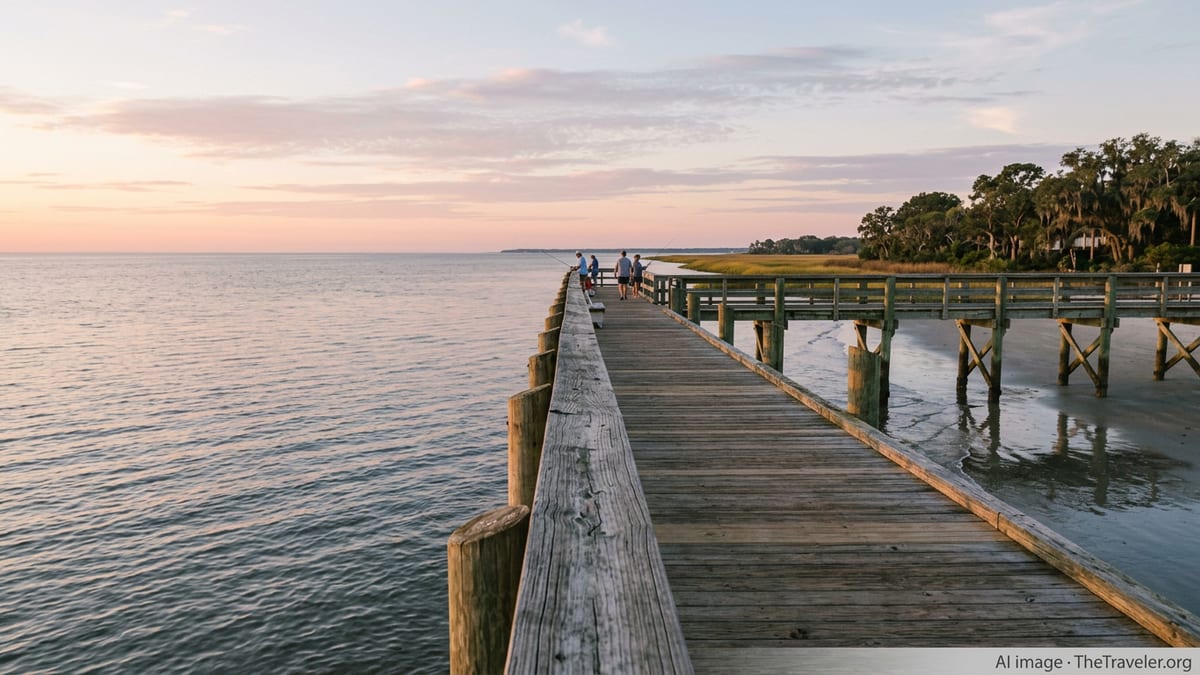
South of Savannah, Georgia’s Golden Isles have emerged as one of the state’s marquee coastal destinations. This group of barrier islands and mainland communities, including St. Simons Island, Sea Island, Jekyll Island, Little St. Simons Island, and the small port city of Brunswick, is frequently cited in national travel rankings for its combination of natural beauty and relaxed pace. Salt marshes, tidal creeks, and mossy oaks define the scenery, with long beaches on the ocean side and quiet waterways between the islands and the mainland.
St. Simons Island stands out for its year-round community and classic beach-town feel. Visitors find a walkable village area near the historic lighthouse, with inns, local restaurants, and shops radiating out toward residential streets shaded by centuries-old oaks. Biking is a favored way to get around, with paved paths and flat terrain connecting neighborhoods, golf courses, and beaches. The island’s shoreline is popular but rarely feels overwhelming, especially if you plan your visit outside of peak holiday weekends.
Jekyll Island offers a slightly different experience, with a state-managed approach to development that preserves much of its maritime forest and dune system. The Jekyll Island Historic District, once an exclusive winter retreat for wealthy industrialists, now houses hotels, a museum, and preserved cottages that can be toured. Driftwood-strewn beaches, a sea turtle rehabilitation center, and miles of hiking and cycling trails provide low-key ways to explore. Nearby Cumberland Island, largely protected as a national seashore, remains one of the more remote-feeling barrier islands on the U.S. East Coast, reachable only by passenger ferry and prized by visitors seeking wild beaches, maritime forests, and a sense of solitude.
North Georgia Mountains and Blue Ridge: Cool Air and Curving Trails
At the opposite end of the state, the North Georgia Mountains rise in forested waves toward the border with North Carolina and Tennessee. Here the climate is cooler, the air drier, and the pace even slower than along the coast. Towns such as Blue Ridge, Dahlonega, Helen, Clayton, and Blairsville act as gateways to hiking, waterfalls, and scenic drives. Atlanta residents flock here on weekends to trade city streets for overlooks and fire pits, but the area still feels relaxed and rural for much of the year.
Blue Ridge in particular has become a favored small-town base for cabin stays and outdoor adventures. From its historic downtown, where a heritage railway departs for short scenic rides, visitors can reach Lake Blue Ridge, fly-fishing streams, and trailheads within a short drive. The surrounding Chattahoochee National Forest holds some of the region’s best-loved routes, including sections of the Appalachian Trail and longer loop hikes that lead to panoramic views. In autumn, hardwood forests turn brilliant shades of red and gold, drawing leaf peepers across the Southeast.
State parks such as Amicalola Falls and Black Rock Mountain showcase the region’s most dramatic landscapes. Amicalola Falls State Park protects Georgia’s highest waterfall and serves as an approach point for hikers heading toward the southern terminus of the Appalachian Trail. Black Rock Mountain State Park, straddling the Eastern Continental Divide, offers far-reaching vistas from roadside overlooks and backcountry trails. Even if you are not an avid hiker, scenic drives along highways that crest ridges and trace valley floors reveal the character of the southern Appalachians without demanding much effort.
Charming Small Towns Between City and Country
While the major cities and well-known coastal and mountain destinations draw the most attention, many visitors find their favorite Georgian moments in the smaller towns that dot the landscape. Places such as Athens, Macon, Augusta, and Thomasville combine historic cores with distinct cultural identities. Each offers a different window into the state, and many can be visited on the way between larger hubs or as overnight stops that break up a longer drive.
Athens, home to the University of Georgia, is best known for its music history and college-town energy. Its compact downtown has long supported a thriving scene of live venues, record stores, and independent restaurants. Victorian homes and tree-lined streets surround campus, and the city’s gardens and historic sites offer quieter diversions. Macon leans into its deep musical roots, with landmarks linked to artists such as Little Richard and the Allman Brothers Band, while its brick downtown core is seeing renewed investment in lofts, galleries, and cafes.
Augusta, on the Savannah River near the border with South Carolina, is widely recognized for hosting a major annual golf tournament each spring. Outside of that high-profile week, the city has a more understated riverfront charm, with walking paths along the levee and warehouses converted into restaurants and event spaces. In the far southwest, Thomasville highlights its long-standing agricultural heritage and Victorian-era downtown, pairing historic homes with a growing roster of boutiques and seasonal food events. Together, these towns add nuance and variety to a Georgia itinerary that might otherwise focus only on Atlanta, the coast, and the mountains.
Lakes, Rivers, and State Parks Across Georgia
Beyond the better-known islands and mountain parks, Georgia’s interior holds a network of lakes, rivers, and protected areas that appeal to campers, paddlers, and families looking for low-cost outdoor escapes. Reservoirs such as Lake Lanier north of Atlanta draw millions of visitors annually for boating, fishing, and lakeside rentals. While these areas can be lively in summer, quieter corners remain where coves, inlets, and less-developed shorelines provide space for swimming, picnicking, and sunsets over the water.
Other large lakes, including Lake Oconee and Lake Hartwell, support a mix of resort communities, golf courses, and simple public campgrounds. These destinations tend to be within a few hours’ drive of the major cities, making them popular for weekend getaways. Even smaller state park lakes, often ringed by forest, offer rental kayaks and canoes, simple hiking trails, and family-friendly picnic areas. These parks provide an accessible way to experience Georgia’s varied ecosystems, from piedmont woodlands to coastal marshes, without the crowds sometimes seen at national parks elsewhere in the country.
Rivers are equally central to the state’s geography and recreation. In warm weather, tubing, rafting, and paddling are common along stretches of the Chattahoochee, Oconee, and other waterways. Some segments pass directly through major cities or just outside their suburbs, underscoring how quickly Georgia’s landscapes can shift from urban to semi-wild. For visitors interested in birding or quiet nature walks, state-managed wildlife areas along these rivers can offer sightings of wading birds, raptors, and migratory species in season.
Planning Your Georgia Itinerary
With so many contrasting regions, planning a trip to Georgia often means choosing which side of the state to emphasize. Many visitors start with two or three nights in Atlanta to adjust to the time zone, explore major museums, and experience the city’s food and music. From there, it is feasible to add a coastal segment around Savannah and the Golden Isles or head north for several days in the mountains. Road travel times can be longer than they appear on a map due to traffic near urban centers and curving mountain roads, so it is wise to build in extra time between stops.
Seasonality also shapes the experience. Summers along the coast bring warm water, busy beaches, and higher humidity, but sea breezes and afternoon storms can offer some relief. In the mountains, summer remains comfortable at higher elevations and is popular for hiking, while spring and autumn stand out for wildflowers and fall foliage. Winter stays relatively mild across much of the state, with occasional cold snaps and light snow in the north. This makes Georgia a viable shoulder-season destination for travelers who prefer fewer crowds and cooler temperatures in cities and on the coast.
Accommodation options range from high-rise hotels in Atlanta and Savannah to restored inns in small towns and cabins in the foothills. On the Golden Isles and certain lakes, resort-style properties offer pools, spas, and golf, while state parks often provide simple cabins and campgrounds. For a more flexible route that combines cities, islands, and mountains, renting a car remains the most practical choice, particularly once you leave the major urban centers. Careful planning allows you to string together contrasting experiences, such as a morning in a civil rights museum, an evening shrimp dinner by the marsh, and a hike to a waterfall a day later.
The Takeaway
Georgia’s appeal lies in its variety. In a single trip you can stand beneath Atlanta’s skyscrapers, stroll through Savannah’s moss-shaded squares, watch shorebirds feeding on a barrier island beach, and breathe cool mountain air on a Blue Ridge overlook. Each region offers its own pace, history, and landscapes, yet they share a common thread of hospitality and a strong sense of place. The state rewards travelers who look beyond a single destination and allow time for both its headline sights and its quieter corners.
Whether you arrive for a long weekend or a multi-week road journey, Georgia invites you to move gradually from one environment to another. Coastal marshes give way to gently rolling farmland, which in turn rises toward mountain peaks. Cities add layers of culture and history along the way. By balancing time between the urban centers, the coast, and the highlands, you can assemble a trip that feels both diverse and cohesive, with moments of discovery that reflect the best of the modern South.
FAQ
Q1. What is the best time of year to visit Georgia’s cities, coast, and mountains?
The most comfortable periods for a multi-region trip are generally spring and autumn, when temperatures are moderate, humidity is lower, and both coastal and mountain areas are pleasant.
Q2. How many days do I need to see Atlanta, Savannah, and the North Georgia Mountains in one trip?
A balanced itinerary typically requires at least 8 to 10 days, allowing two to three nights in each major area plus travel time between regions.
Q3. Do I need a car to explore Georgia beyond Atlanta?
Public transportation covers limited routes outside the major cities, so renting a car is strongly recommended if you want to visit the coast, small towns, or mountain areas.
Q4. Are Georgia’s barrier islands suitable for families with children?
Yes, many of Georgia’s islands have gentle surf, wide beaches, and family-friendly activities such as biking, nature centers, and guided boat tours, especially on St. Simons and Jekyll.
Q5. What should I pack for a trip that includes both the coast and the mountains?
Plan for layers: lightweight clothing for warm days, a light jacket or fleece for cooler mountain evenings, comfortable walking shoes, sun protection, and rain gear for passing showers.
Q6. Are there any safety considerations for hiking in the North Georgia Mountains?
Conditions are generally safe on marked trails, but visitors should carry water, watch the weather, stay on signed routes, and let someone know their plans when attempting longer hikes.
Q7. How busy do the Golden Isles and Tybee Island get in summer?
June through early August is peak season, when beaches, restaurants, and accommodations are busier and prices higher, so booking well in advance is advisable.
Q8. Can I experience Georgia’s highlights without a large budget?
Yes, many of Georgia’s top experiences, such as city parks, historic squares, beaches, and state park trails, are low-cost or free, and budget-friendly motels and rentals are widely available.
Q9. Is Georgia a good destination for food-focused travel?
Georgia has a strong culinary identity, from classic Southern dishes to innovative contemporary restaurants, with notable food scenes in Atlanta, Savannah, Athens, and many coastal and small towns.
Q10. How far in advance should I book accommodations for popular events or holidays?
For major events, summer beach weeks, and fall foliage season in the mountains, it is prudent to reserve lodging several months ahead to secure preferred locations and rates.