

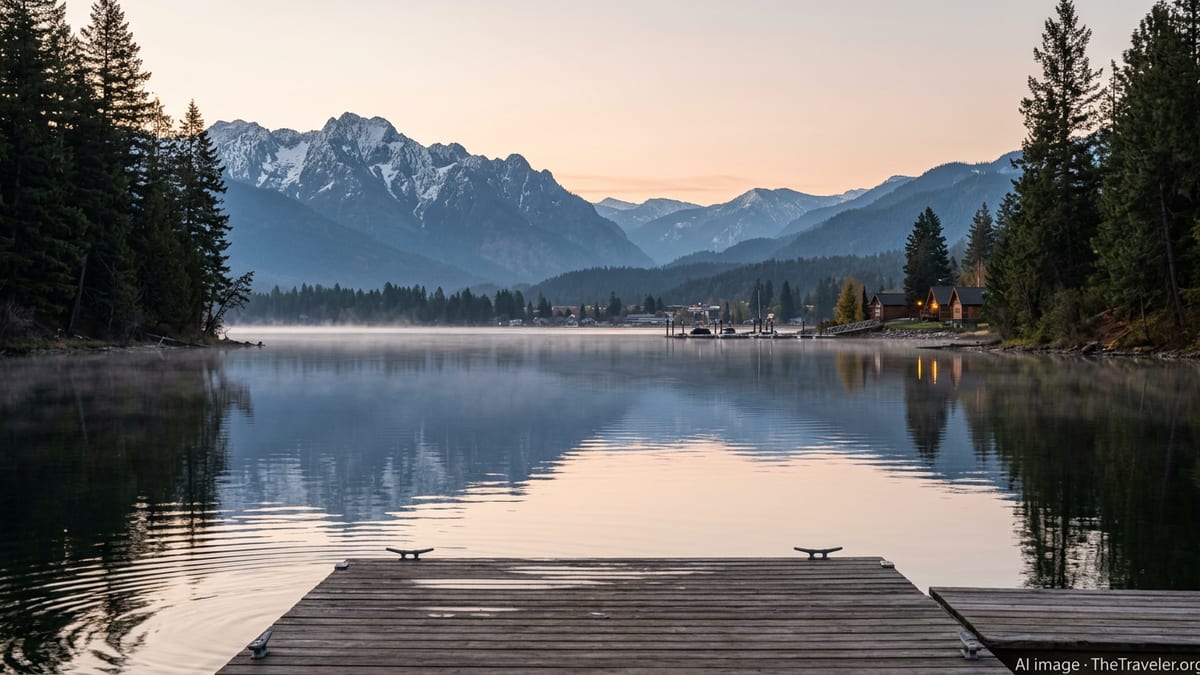
Idaho rarely makes a splashy entrance. It is the kind of place that reveals itself slowly, in glints of lake light between pines, the quiet crunch of snow on a pre-dawn ski run, or the hum of a summer festival under an expansive western sky. For travelers willing to look beyond the clichés, the Gem State offers sophisticated cities, charismatic mountain towns, and some of the most accessible wild country in the American West. The Panhandle, Boise, and Sun Valley form a natural trio for first-time visitors, showcasing different sides of Idaho while fitting neatly into a week or two of exploring.
Idaho at a Glance: Why the Gem State Shines
Idaho stretches from the high desert of the Snake River Plain to a narrow northern corridor of mountains and deep lakes. This geography creates striking contrasts over relatively short driving distances. In the same trip, you can paddle across a glassy alpine lake in the Panhandle, dine at a chef-driven restaurant in Boise, then finish your journey in Sun Valley, where chairlifts and hiking trails climb directly out of town into the peaks. For travelers who like variety without constant flights and time-zone changes, Idaho is unusually rewarding.
Tourism leaders have spent the past several years highlighting the state’s lesser-known regions, and this effort shows on the ground. Visitor centers are well stocked, signage is improving, and small towns from Sandpoint to Stanley are leaning into their roles as gateways to outdoor adventure. The 2025 Official Idaho Travel Guide continues to emphasize road trip itineraries that link iconic landscapes with walkable downtowns and local food, a combination that suits independent travelers and families alike.
Timing your visit is crucial. Summers in the north bring warm lake days and busy marinas, while winter transforms mountain towns like Sandpoint and Ketchum into ski hubs. Boise is genuinely four-season, with outdoor festivals in spring and fall and snow sports within an hour’s drive when winter storms roll through the nearby ranges. Shoulder seasons can offer good value and quieter trails, though some high-mountain passes and facilities may open later in spring depending on snowpack.
However you structure your trip, it helps to think of Idaho not as a single destination but as a collection of regions with distinct personalities. The Panhandle leans into its lakes and forests; Boise combines university energy with a maturing food and arts scene; Sun Valley is about alpine air, active days, and a level of polish that surprises many first-time visitors. Together, they create a compelling first chapter in any traveler’s Idaho story.
The Idaho Panhandle: Lakes, Forests, and Mountain Towns
The Panhandle, the slender northern arm of Idaho, feels like its own compact kingdom of water and woods. Mountains rise quickly from the shores of deep glacial lakes, and thick forest still covers much of the landscape. Coeur d’Alene and Sandpoint are the main hubs, each with a distinct character. Coeur d’Alene, perched on the north shore of the lake that shares its name, has a busy waterfront, an established resort, and a growing dining scene. Sandpoint, farther north on the shores of Lake Pend Oreille, is smaller and a bit more bohemian, with strong ties to the ski community at nearby Schweitzer.
Water is the organizing principle of travel here. On Lake Coeur d’Alene, visitors can book scenic boat cruises, rent kayaks and paddleboards, or simply walk the paved paths around the city’s waterfront park. The Tubbs Hill peninsula, a 165-acre natural area jutting into the lake near downtown, offers short but satisfying hiking loops with viewpoints, pocket beaches, and quick access from hotels and cafes. It is one of the easiest ways for travelers to get a feel for North Idaho’s evergreen shoreline without committing to a full-day backcountry journey.
In Sandpoint, Lake Pend Oreille is the constant backdrop. The town’s compact center sits just a short stroll from City Beach, where visitors can swim in summer, watch trains pass along the shoreline, or simply sit with coffee and views across to the Selkirk and Cabinet mountains. Schweitzer, an all-season resort about 12 miles from town, offers skiing and snowboarding in winter that regularly earns national attention, along with summer chairlift rides, hiking, and mountain biking when the snow melts. Recent resort investments have improved on-mountain amenities, yet the scale feels approachable compared with larger corporate ski areas.
Beyond these hubs, the Panhandle rewards those willing to wander. Priest Lake, tucked close to the Canadian border, offers long, quiet shorelines, canoe routes, and forested campgrounds. The Trail of the Coeur d’Alenes, a rail trail running roughly 70 miles across the Silver Valley and along the chain lakes and Lake Coeur d’Alene, gives cyclists and walkers an accessible way to experience former mining country and wetlands without traffic. Families often add a day at Silverwood, the region’s major theme and water park south of Sandpoint, to balance out long hikes and scenic drives with something more high energy for kids.
Coeur d’Alene and Sandpoint: Culture on the Water’s Edge
Although they are framed by wilderness, Coeur d’Alene and Sandpoint offer more than boat rentals and ski passes. Coeur d’Alene’s downtown has gradually shifted from seasonal resort strip to year-round neighborhood. Art galleries, independent boutiques, and locally owned restaurants line Sherman Avenue, and public art dots the surrounding streets and lakeside paths. In winter, holiday lights reflect on the lake, while summer brings classic small-town events on the waterfront, from concerts to artisan markets.
Sandpoint’s identity is more tightly knitted to its creative and outdoors communities. The town supports a surprisingly active arts scene centered on venues like the restored Panida Theater, which hosts films, concerts, and community events throughout the year. Major annual gatherings include a long-running summer music series and a winter carnival that ties together on-mountain events at Schweitzer with activities in town. Farmers markets operate in the warmer months, showcasing produce from the broader Inland Northwest and the growing number of small producers who have settled in North Idaho’s valleys.
Both towns function as gateways to regional trails and scenic drives. From Coeur d’Alene, mountain bikers can head to Canfield Mountain’s trail network, where viewpoints deliver sweeping looks over the city and lake. The North Idaho Centennial Trail follows the shoreline from near Higgens Point along Lake Coeur d’Alene and the Spokane River, forming part of a larger multiuse trail network that connects with Washington State. Around Sandpoint, short drives lead to trailheads that access the Selkirks and Cabinets, with options ranging from family-friendly lake loops to strenuous summit bids.
Culturally, visitors will notice a blend of long-established logging and mining heritage with newer waves of residents drawn by scenery and remote work opportunities. This mix can produce lively conversations in coffee shops and bars, as well as a strong sense of local pride. Travelers who approach the region with curiosity, support independent businesses, and respect the surrounding national forests and waterways generally find locals welcoming and eager to share recommendations.
Boise: River City with an Outdoor Heart
Boise, the state capital, has matured into a destination in its own right rather than simply a starting point for trips deeper into Idaho. Centered on the Boise River, the city combines a walkable downtown with access to trails, parks, and cultural institutions that punch above its population size. The riverfront Boise Greenbelt, a paved path stretching roughly 25 miles, functions as the city’s main artery for walkers, runners, and cyclists, linking neighborhoods, parks, and the Boise State University campus. On summer days, you will see everything from commuter bikes to families pushing strollers, and in certain stretches, floaters drifting downstream on inner tubes when water levels and regulations allow.
Downtown Boise rewards exploration on foot. The historic core includes brick buildings, repurposed warehouses, and a skyline still modest enough to keep the foothills visible from many corners. Freak Alley, often cited as the largest outdoor mural gallery in the Northwest, provides a vivid snapshot of the local arts scene; its constantly evolving walls have become a staple stop for visitors and a point of pride for residents. Nearby, 8th Street offers a concentration of patios, cafes, and bars that stay lively well into the evening, especially on weekends and during events.
Boise’s Basque Block, a short stretch of downtown anchored by the Basque Museum and Cultural Center, celebrates one of the largest Basque communities in the United States. Here you can sample traditional dishes in long-standing restaurants, learn about Basque immigration and sheepherding in the American West, and occasionally stumble onto street festivals where music, dance, and giant pans of paella take over the pavement. For travelers interested in culture as much as scenery, this district alone can justify an overnight stay rather than treating Boise only as a gateway airport.
The city’s cultural calendar is increasingly dense. Treefort Music Fest, held annually in late March, fills downtown with concerts, art, and satellite “forts” dedicated to film, food, technology, and storytelling. Over the rest of the year, institutions clustered near Julia Davis Park, including the Boise Art Museum, Idaho State Museum, and Zoo Boise, provide a compact district where visitors can move between galleries, exhibits, and riverside lawns in a single afternoon. The presence of the university and state government keeps the audience diverse and engaged, which in turn supports a steady rotation of exhibitions and performances.
From Foothills to Hot Springs: Boise’s Great Outdoors
What sets Boise apart from many similar-sized cities is how quickly the outdoors comes into play. The Boise Foothills rise just north and east of downtown, stitched together by an extensive network of trails that form the Ridge to Rivers system. Within minutes of leaving a coffee shop or hotel, you can be climbing a dusty singletrack path toward viewpoints over the entire Treasure Valley. Popular hikes like the Table Rock Trail or loops near Camel’s Back Park provide introductions to the area’s sagebrush hills, especially in the cooler months of spring and fall.
In winter, Bogus Basin Mountain Recreation Area, located in the Boise National Forest, offers downhill and Nordic skiing, snowshoeing, and tubing less than an hour’s drive from the city center when road conditions cooperate. Recent investments in summer operations, including mountain biking and scenic chairlift rides, mean Bogus has become a four-season draw rather than simply a local ski hill. This proximity allows visitors to split days between mountain activities and downtown dining without lengthy transfers.
Water also shapes the Boise experience. The Boise River itself is a summer playground, with locals and visitors alike floating the river through town on rafts and tubes where outfitters and regulations permit. Downstream and on nearby rivers such as the Payette, whitewater outfitters run rafting trips that range from gentle family floats to more advanced rapids, depending on section and season. Along the Greenbelt, parks like Kathryn Albertson Park and the MK Nature Center create pockets of calm where visitors can watch waterfowl, learn about local fish and wildlife, or simply take a break from urban sightseeing.
For many visitors, the true reward lies in how easy it is to extend a Boise stay into broader southwest Idaho. Scenic drives lead toward the Owyhee Canyonlands, the Snake River Birds of Prey area, and a constellation of hot springs tucked into forested river corridors north and northeast of the city. While many of these destinations require local knowledge, attention to weather, and respect for fragile landscapes, they illustrate why Boise consistently appears on lists of livable cities for people who prioritize year-round access to the outdoors.
Sun Valley and Ketchum: Idaho’s Classic Mountain Escape
Sun Valley occupies a special place in American ski lore. Founded in the 1930s as the nation’s first destination ski resort, it quickly earned a reputation as a glamorous alpine retreat. Today, the Sun Valley and Ketchum area offers a blend of historic charm and modern amenities that feels refined without being aloof. The main resort base sits in Sun Valley village, while the adjacent town of Ketchum functions as the practical and cultural hub, with most of the area’s restaurants, galleries, and shops clustered along its streets.
In winter, the focus is on snow. Bald Mountain, often referred to simply as “Baldy,” is the flagship ski area, known for its consistent pitch, long groomed runs, and panoramic views over the Wood River Valley. Dollar Mountain, a separate hill with gentler slopes, caters to beginners and terrain-park riders, helping balance the needs of families and mixed-ability groups. Nordic skiers have access to extensive cross-country trail systems that run through meadows, along creeks, and into nearby side valleys, making the region a destination for skate and classic skiing as well as alpine pursuits.
Summer and fall reveal a different side of Sun Valley. When the snow recedes, hiking and biking trails fan out from town into the surrounding mountains, including well-marked routes on and around Bald Mountain. The broader region connects southward into the Sawtooth National Recreation Area and north toward higher alpine basins, giving visitors options that range from short wildflower strolls to full-day summit hikes. Biking infrastructure continues to grow, with a mix of paved multiuse paths and dirt singletrack that appeal to everyone from casual riders to committed mountain bikers.
Events fill the calendar year-round. Long-standing fixtures include a writers’ conference that draws national literary figures, a summer symphony series, and heritage celebrations like Wagon Days, which honors the area’s mining and ranching past with parades and community gatherings. Newer events, such as competitive ski races and specialty festivals, keep the region in wider outdoor and cultural conversations. For travelers, this means that almost any week of the year brings some combination of live music, talks, or local celebrations to pair with time on the trails or slopes.
Sawtooth Country and Stanley: Wild Heart of Central Idaho
Just when you think Idaho’s scenery cannot get more dramatic, the Sawtooth Range appears. Jagged granite peaks rise abruptly from forested valleys, mirrored in a string of alpine lakes that line the corridor between Ketchum and the small town of Stanley. The drive over Galena Summit, conditions permitting, is one of the great mountain passes in the American West, with a sweeping overlook that reveals the full sweep of the Sawtooth Mountains and the headwaters of the Salmon River below. Many visitors to Sun Valley choose to add at least a day trip into this region; others plan their entire itinerary around it.
Stanley itself is tiny, with just a handful of streets, seasonal lodgings, and year-round residents. Yet it functions as a major staging point for wilderness adventures. From here, outfitters arrange multi-day rafting trips on the Salmon River and its tributaries, while day-trippers can book guided fishing, scenic floats, or lake paddling on nearby Redfish, Stanley, and Alturas lakes. Trailheads around the valley provide access to well-loved routes into basins such as Alice Lake or Sawtooth Lake, though visitors should be prepared for elevation, variable weather, and increasingly popular parking areas during peak summer weekends.
Despite rising visitation, the region retains a quietly frontier feel. Dirt roads lead to dispersed campsites and hot springs, and outside of the busiest times you can still find stretches of trail or shoreline with little company beyond birds and the sound of rivers. The town and the Stanley-Sawtooth Chamber of Commerce emphasize responsible recreation, urging visitors to pack out waste, respect seasonal closures, and give wildlife plenty of space. In practice, this means planning ahead, traveling with appropriate gear, and embracing the slower pace that comes with operating on mountain time.
For travelers combining Sun Valley and the Sawtooths, it is wise to watch road and weather updates closely, especially in spring and late autumn when conditions can change quickly. Many services in Stanley run on a distinct high season, generally from late spring through early fall, with some businesses closing or reducing hours at other times. Those who time it right, however, are rewarded with some of the most memorable scenery and darkest night skies in the Lower 48.
Planning an Idaho Itinerary: Routes, Seasons, and Practical Tips
Designing a trip that takes in the Panhandle, Boise, and Sun Valley requires a bit of map study and realistic expectations about driving times. Distances in Idaho can be deceptive, and mountain passes or two-lane highways often mean slower travel than mapping apps suggest. Many visitors either choose to focus on the north, building a loop around Coeur d’Alene, Sandpoint, and the surrounding lakes, or on the south and central regions, linking Boise, Sun Valley, and the Sawtooths. Those with two weeks or more can consider stitching the regions together, often flying into one city and out of another to avoid doubling back.
Seasonality is important. Summer, roughly June through early September, is peak time for lake activities in the Panhandle, hiking and biking at Schweitzer and in the Selkirks, and high-country trekking in the Sawtooths. It is also when Boise’s river culture is in full swing and festivals stack up on calendars. Winter transforms the picture: Sandpoint and Schweitzer, Sun Valley and Ketchum, and Bogus Basin above Boise all shift into ski mode, while lake and backcountry access narrows. Shoulder seasons, especially May and October, can offer pleasant weather at lower elevations but lingering snow on passes and high trails.
Renting a car gives the greatest flexibility, particularly for reaching trailheads, ski areas, and smaller towns like Stanley or Priest Lake. In winter, visitors should be prepared for snow and ice, carrying appropriate tires or chains where required and checking road conditions before setting out. Within cities and larger towns, walking and cycling are often convenient, and public shuttle systems in places such as Sun Valley and Sandpoint help connect lodgings with ski areas during the snow season.
Across the state, travelers will find a mix of lodging options, from full-service resorts and boutique hotels to motels, vacation rentals, and campgrounds. Booking ahead is wise during major events, holiday periods, and peak summer weekends, especially in the Panhandle lake towns and in Sun Valley. Food scenes vary by town but increasingly showcase regional produce, craft beer, and small-scale roasters and bakers. As in any rapidly popularizing destination, visitors can lighten their footprint by supporting local businesses, traveling outside the most crowded dates when possible, and following Leave No Trace principles in wild areas.
FAQ
Q1. How many days do I need to see the Idaho Panhandle, Boise, and Sun Valley in one trip?
Most travelers need 10 to 14 days to visit all three regions without feeling rushed, allowing several nights in each main base and time for scenic drives in between.
Q2. When is the best time of year to visit Idaho’s lake country in the Panhandle?
Late June through early September usually offers the warmest water and most reliable sunshine, with marinas, boat tours, and lakefront businesses operating at full strength.
Q3. Is Boise a good destination even if I am not an avid outdoor enthusiast?
Yes. While many visitors come for trails and rivers, Boise also offers museums, live music, a lively dining scene, and neighborhoods that are pleasant to explore on foot.
Q4. Do I need a car to enjoy Boise, or can I rely on walking and rideshares?
You can experience much of central Boise on foot or by rideshare, especially downtown and the Greenbelt, but a car is useful for reaching trailheads, Bogus Basin, and outlying hot springs.
Q5. Is Sun Valley only worth visiting in winter for skiing?
No. Summer and early fall bring excellent hiking, biking, fly-fishing, and cultural events, and many travelers actually prefer the area in warm months when trails and alpine lakes are accessible.
Q6. How challenging are hikes in the Sawtooth Mountains near Stanley?
Many popular routes are moderate but involve elevation gain and altitude, so visitors should be prepared for uneven terrain, changing weather, and longer days than typical city walks.
Q7. Are Idaho’s mountain roads difficult to drive for visitors not used to winter conditions?
They can be. In snowy or icy weather, it is important to check forecasts, carry appropriate tires or chains where required, drive slowly, and consider daytime travel when visibility is best.
Q8. Can I visit both Coeur d’Alene and Sandpoint on a short trip to the Panhandle?
Yes. The towns are roughly an hour apart by car, so many visitors base in one and day-trip to the other, or split their stay to experience both lakefront communities.
Q9. Is Idaho suitable for family travel with younger children?
Idaho works well for families, thanks to safe towns, accessible nature, lake beaches, beginner ski terrain, and attractions such as trails, parks, and kid-friendly museums in cities like Boise.
Q10. How far in advance should I book lodging in popular spots like Sun Valley or the Panhandle in peak season?
Booking several months ahead is sensible for peak summer and major winter holiday periods, particularly if you want specific properties, lakefront locations, or ski-in ski-out access.