

Illinois is often reduced to a single skyline. Yet beyond Chicago’s famous towers lies a surprisingly varied state of river valleys, oak forests, bluff-top vistas, and small towns that still glow with neon from the heyday of Route 66. From big-city neighborhoods to quiet backroads that trace the Mississippi and Ohio rivers, Illinois rewards travelers who are willing to look beyond the interstate and follow slower, more scenic routes.
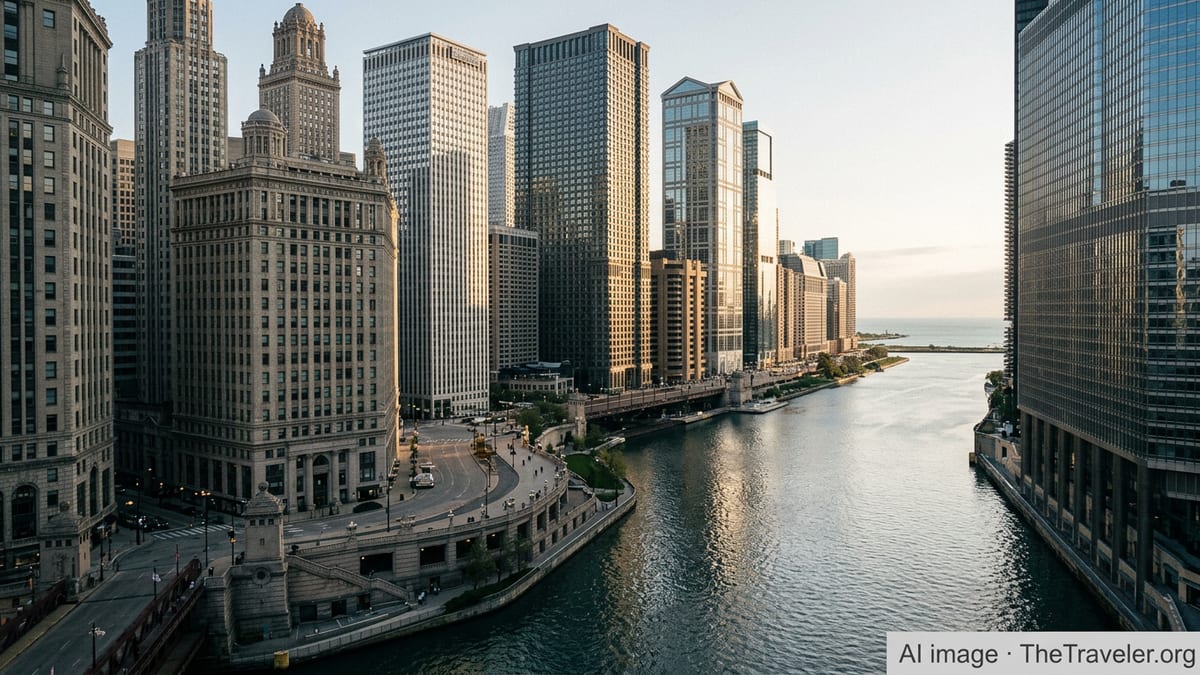
Chicago: Illinois’ Essential Urban Gateway
For most visitors, Illinois begins with Chicago. The city’s lakefront skyline, anchored by glass-and-steel towers, defines the state’s image and serves as a natural starting point for exploring it. The core downtown area, known as the Loop, is compact and walkable, fringed by Lake Michigan to the east and the Chicago River cutting through its heart. On a clear day you can see far up the shoreline, which reinforces that Chicago is as much a great lakeside city as it is a Midwestern metropolis.
Chicago’s cultural pull is strong. Major institutions like the Art Institute of Chicago and the Museum Campus cluster near the lakefront, while Millennium Park and its reflective stainless steel sculpture have become shorthand for the contemporary city. Moving north and west, neighborhoods such as Wicker Park, Pilsen, and Andersonville showcase the city’s more intimate side, with corner taverns, independent galleries, and historic two- and three-flats lining tree-shaded streets.
The architecture alone can justify several days. Chicago’s riverfront is framed by an extraordinary mix of historic skyscrapers and more recent glass towers, best seen from the riverwalk or a boat tour that explains how the city essentially reinvented tall-building design. From higher viewpoints, including observation decks in landmark towers, you can trace the city’s grid stretching toward the suburbs and the broad blue expanse of Lake Michigan.
Chicago also makes logistical sense as a hub. Two major airports, extensive rail connections, and interstate highways radiating in every direction mean that a Chicago stay can easily expand into a broader Illinois itinerary. Once you have seen the classics and taken in the lakefront, it is surprisingly simple to leave the dense urban core behind and drive into farmland, forest, and small-town main streets within an hour or two.
Tracing History and Neon Along Illinois Route 66
Few roads capture the imagination like Route 66, and some of its most accessible miles run through Illinois. The route officially begins in downtown Chicago and travels roughly 300 miles southwest across the state before crossing the Mississippi River near St. Louis. Along the way are towns that embraced their Route 66 heritage with restored gas stations, diner signs, and larger-than-life roadside figures.
Close to Chicago, communities such as Joliet and Berwyn introduce the mix of history and Americana that defines the drive. Museums, restored movie palaces, and classic neon welcome signs highlight the early years of automobile travel. Farther along, small towns including Wilmington, Dwight, Pontiac, and Atlanta preserve original brick stretches of the highway and host murals, vintage service stations, and quirky fiberglass figures that have become unofficial mascots of the route.
Springfield, the state capital, is one of Route 66’s marquee stops in Illinois. Here, travelers find a concentration of nostalgic diners, a large Route 66–themed museum scene, and roadside attractions that lean into midcentury car culture. The city’s drive-in style eateries, retro motels, and neon parks are complemented by interpretive centers that explore how the road shaped communities, including exhibits that address the experiences of Black travelers during the segregation era.
The Illinois stretch of Route 66 ends at the Mississippi River near Madison, where the road’s legacy connects with the broader story of midwestern river towns. Rather than racing to the highway’s western states, many travelers now treat the Illinois segment as a self-contained road trip, taking two or three days to follow older alignments, detour through town centers, and experience a slower, more personal version of American road travel.
Springfield and the Heart of the Prairie
Springfield stands at the crossroads of state politics, Abraham Lincoln history, and Route 66 nostalgia. As the Illinois capital, it is home to the State Capitol building and a dense cluster of government offices, yet the city retains the feel of a mid-sized prairie town. Wide streets, low-rise brick buildings, and an easy pace distinguish it from Chicago’s intensity.
For many visitors, Springfield is synonymous with Lincoln. Sites associated with his life in Illinois, including his preserved home, law offices, and presidential library and museum, draw history enthusiasts year-round. These attractions trace his evolution from a frontier lawyer to a national figure and help put the state’s “Land of Lincoln” identity into context. Many are set within walkable historic districts that can be explored in an afternoon.
Beyond politics and presidential history, Springfield has built a lively identity around comfort food and roadside culture. Locally loved dishes such as the open-faced “horseshoe” plate, casual diners, and long-running drive-ins echo both the city’s working-class roots and its Route 66 connections. Vintage signage and car-centric businesses along the old highway corridors create a sense that part of the city is permanently paused in the mid-twentieth century.
Springfield also works well as a base for exploring central Illinois. Within a short drive are small farming communities, state parks with lake access, and quieter sections of old Route 66 alignments. Travelers who linger for a second or third night often find that the combination of statehouse, Lincoln sites, cozy diners, and easy day trips gives this “metropolis on the prairie” a depth that exceeds its modest skyline.
Scenic Drives Along the Mississippi and Illinois Rivers
Illinois is framed by rivers, and some of its most satisfying scenic drives follow the Mississippi and Illinois waterways. Along the western edge of the state, the Great River Road traces the Mississippi River across bluff country and through river towns that predate the interstate era. The route passes limestone cliffs, wide river views, and floodplain fields, with frequent pullouts where you can step out and listen to barge traffic laboring upstream.
Near the city of Alton, the river corridor compresses between soaring bluffs and the broad Mississippi channel, giving drivers a sense of traveling through a natural gateway. Small riverside towns feature nineteenth century brick storefronts and modest marinas, while seasonal events and riverfront festivals draw visitors from across the region. Bald eagle viewing, especially in colder months, adds a wildlife component to the drive as the birds gather near open stretches of water.
To the north, the Illinois River Road National Scenic Byway links communities and protected areas along the Illinois River valley. This route, which roughly follows the river between the Peoria area and points farther north and south, highlights wetlands, backwater lakes, and forests that support migratory birds. Boardwalks, observation towers, and small nature centers along the corridor help travelers understand how this waterway shaped trade, agriculture, and settlement in the state.
Both river corridors offer an appealing contrast to the state’s flatland stereotypes. Rolling hills, forested ravines, and exposed rock outcrops punctuate the view, especially where the rivers have carved into older bedrock. For many travelers, a day or two spent on these river byways provides a quieter, more contemplative experience than the faster interstate routes, while still allowing for comfortable overnights in mid-sized towns with lodging and dining options.
Southern Illinois: Shawnee National Forest and the Ohio River
At the southern tip of Illinois, the landscape changes dramatically. Here, the Shawnee National Forest spreads across a patchwork of hills, hardwood forests, and sandstone formations that look more like neighboring Kentucky than the open cornfields farther north. The forest is laced with scenic drives that wind between trailheads, campgrounds, old farmsteads, and small communities serving hikers and anglers.
Among Shawnee’s best-known areas are its rock gardens and bluff-top overlooks, where erosion has sculpted sandstone into pillars, ledges, and balanced stones. Short trails lead to natural viewpoints with far-reaching panoramas over forested ridges, especially striking when autumn color peaks. Other routes drop into cool ravines with seasonal waterfalls and shaded streams, offering relief from summer heat.
On the eastern edge of this region, the Ohio River Scenic Byway follows the river as it separates Illinois from Indiana and Kentucky. This multistate route enters Illinois near small river towns that still orient their lives around barge traffic, commercial fishing, and the seasonal moods of the Ohio. The road alternates between high bluffs and low floodplain, with occasional side trips to historic sites, overlooks, and wildlife-rich bottomlands.
Travelers often combine Shawnee National Forest drives with sections of the Ohio River route, creating a loop that samples both interior forest and riverfront communities. Lodging in this part of the state ranges from simple motels and family-run cabins to campgrounds situated under large oaks or along quiet lakes. The slower pace suits visitors who prefer trailheads and scenic pullouts to crowded attractions, and who are comfortable navigating with paper maps or offline directions in areas where mobile coverage can be inconsistent.
State Parks, Bluffs, and Quiet Getaways
Illinois’ state parks provide some of the most accessible scenery in the state, especially for travelers who want short hikes and family-friendly amenities rather than more extensive backcountry routes. Many parks center on dramatic river valleys where erosion has carved sandstone cliffs, canyons, and waterfalls out of otherwise gentle topography. These areas feel almost hidden until you step onto the trail and descend into narrow ravines or emerge at overlooks.
In north-central Illinois, parks along the Illinois River and its tributaries feature high bluffs with far views over wooded islands and bottomland fields. Trails often lead to rock ledges that serve as natural balconies, particularly impressive during fall color or when fog settles into the river valley at sunrise. Boardwalks and stairways make some of these viewpoints reachable for casual hikers, while more rugged side trails offer quieter experiences.
Scattered across the state, smaller parks protect pockets of original prairie, old-growth forest, and glacial features such as moraines and kettles. These preserves can feel worlds away from nearby highways, especially on weekdays when visitation drops. Birdwatching is a year-round draw, with spring and fall migrations bringing a surge of songbirds, waterfowl, and raptors along river corridors and wetland complexes.
Because many of these parks sit near small towns, they can easily anchor a short escape from Chicago, St. Louis, or Springfield. A typical weekend might include a morning hike, an afternoon spent in a historic downtown or at a local museum, and an evening meal at a family-run restaurant. For travelers used to viewing Illinois as a place to cross quickly, these low-key getaways reveal a state that excels at quiet, incremental pleasures rather than big, dramatic gestures.
College Towns, Arts Communities, and Small-City Surprises
Between Chicago and the southern forests, Illinois is dotted with mid-sized cities and college towns that add cultural texture to a road trip. Places such as Champaign-Urbana, Bloomington-Normal, Peoria, and Carbondale mix university life, historic neighborhoods, and local food scenes in ways that feel distinctly different from both Chicago and small farming communities. Their compact downtowns are natural stops on longer drives, especially for travelers seeking coffee shops, galleries, or live music after a day on the road.
University communities typically offer a surprising range of performances, lectures, and exhibitions for their size, driven by campus calendars and visiting artists. Art walks, local festivals, and seasonal farmers markets turn streets into temporary gathering places, giving visitors a chance to experience the social side of these towns. Architecturally, many retain late nineteenth and early twentieth century commercial buildings, often repurposed as restaurants, record stores, and independent bookstores.
Smaller destinations across the state have also leaned into distinctive local identities. Some towns celebrate literary connections, others emphasize outdoor recreation, while a few have gained attention for collections of oversized roadside sculptures or intricately painted murals. This patchwork of themes means that even relatively short detours off the main highway can lead to something unexpected, whether it is a restored theater marquee, a microbrewery in a former hardware store, or a neighborhood of carefully preserved Victorian homes.
These communities are particularly rewarding for travelers who enjoy talking with locals. Bartenders, baristas, and museum staff in these towns are often enthusiastic ambassadors for their home places, quick to recommend a favorite park, neighborhood, or backroad overlook that rarely appears in glossy brochures. In a state known for its expanses of farmland, these pockets of creativity and conversation provide an engaging counterpoint.
The Takeaway
Illinois is far more layered than a quick glance at the map suggests. Chicago’s skyline and lakefront deserve their international reputation, yet they are just one expression of the state’s character. Inland, a web of historic highways, river roads, and scenic byways links small towns, forests, and bluffs that reward unhurried exploration.
By tracing Route 66 from downtown Chicago to the Mississippi, following the Mississippi and Illinois River valleys, and looping through the hills of the far south, travelers can experience a full cross-section of Illinois in a single extended journey. Along the way, state parks, college towns, and unassuming roadside diners add texture to the trip, revealing a place where understated landscapes and everyday stories take center stage.
Whether you come for the skyline or the sandstone cliffs, the Lincoln history or the neon glow of a restored motel sign, Illinois invites you to slow down and look more closely. The most memorable places here are rarely the loudest. Instead, they are the ones that quietly shift the way you picture the Midwest, one scenic drive and small-town main street at a time.
FAQ
Q1. What is the best time of year to visit Illinois for scenic drives?
The most popular months for scenic drives are late spring and fall, when temperatures are moderate and foliage is either bright green or turning color. Autumn in particular highlights bluff-top views along the Mississippi and Illinois rivers, as well as the hardwood forests of southern Illinois.
Q2. How many days should I plan for an Illinois Route 66 road trip?
For the Illinois portion alone, most travelers allow two to four days. This pace lets you explore Chicago briefly, stop in several small Route 66 towns, spend time in Springfield, and still detour onto older road alignments without feeling rushed.
Q3. Is Chicago a good base for exploring the rest of Illinois?
Yes. Chicago’s airports, rail hubs, and rental car options make it an efficient starting point. Within a two- to three-hour drive you can reach Route 66 communities, state parks, river towns, and several college cities, then return to the city for a final night if desired.
Q4. Are the scenic byways in Illinois suitable for first-time winter drivers?
Conditions vary by year, but winter in Illinois can bring snow, ice, and reduced visibility, especially near rivers and in the hills of the south. Drivers unfamiliar with winter travel may prefer late spring through fall, or should be prepared to adjust plans if conditions worsen.
Q5. Do I need a four-wheel-drive vehicle for Shawnee National Forest and river byways?
Most major routes and scenic byways are paved and can be driven in a standard car. However, some side roads and trailhead access points may be gravel or narrow. Checking recent conditions locally before heading onto lesser-used roads is wise, especially after heavy rain.
Q6. Can I combine Chicago sightseeing and outdoor activities in one trip?
Yes. Many visitors spend several days in Chicago for museums and neighborhood exploring, then add a few days of hiking or scenic driving in state parks or Shawnee National Forest. This combination offers both urban culture and time in nature within a single itinerary.
Q7. Are small towns and byway areas in Illinois easy to navigate without reservations?
Outside of holiday weekends and major events, many small towns have capacity for last-minute travelers. Still, booking ahead is recommended in peak fall foliage season or when major festivals, university events, or large sports weekends are scheduled in nearby cities.
Q8. What should I know about driving distances across Illinois?
Illinois is larger than it may appear on a map. Driving from Chicago to the southern tip can take seven hours or more depending on traffic and stops. Building in extra time for side roads, small-town visits, and unexpected viewpoints results in a more relaxed trip.
Q9. Is public transportation available for visiting places outside Chicago?
Intercity buses and passenger rail connect some larger cities, but many scenic byways, small towns, and state parks are easiest to reach by car. Travelers who do not wish to drive can sometimes join organized excursions, though options may be limited outside popular seasons.
Q10. How can I experience local culture while road tripping through Illinois?
Stopping in downtown districts, eating at non-chain restaurants, and visiting local museums or festivals are effective ways to connect with Illinois communities. Conversations with staff and residents often lead to recommendations for viewpoints, backroads, and small attractions that are not widely advertised.