

Indiana is often dubbed the Crossroads of America, but travelers who only pass through miss a surprisingly rich mix of lakeshore beaches, forested hills, college towns, and quietly vibrant cities. From dune-swept shores on Lake Michigan to sandstone ravines and covered bridges in the west, the state offers a compact but varied set of destinations that reward both quick weekend trips and longer regional journeys. This guide focuses on some of the best places to visit in Indiana, highlighting major cities, standout state and national parks, and scenic regions that show the state at its most memorable.
Indianapolis: Cultural Capital and Urban Trails
Indiana’s largest city is far more than a famous racetrack. Indianapolis blends walkable cultural districts with one of the country’s most extensive urban greenway networks, making it a natural starting point for exploring the state. The compact downtown core centers on Monument Circle and radiates outward along the Cultural Trail, an eight-mile path that links museums, stadiums, and neighborhoods with dedicated space for cyclists and pedestrians. Visitors can walk or bike between sites while taking in public art and restored warehouse districts that now house restaurants, galleries, and boutique hotels.
Culture-focused travelers are drawn to institutions such as the Indianapolis Museum of Art at Newfields, which combines galleries with sculpture gardens and wooded walking paths, and the children’s museum, often cited as one of the largest of its kind in the world. Sports remain an essential part of the city’s identity, from professional football and basketball to racing heritage woven throughout events and exhibits. Seasonal happenings, including the Indiana State Fair each August, add another layer of local flavor and draw visitors from across the Midwest.
Indianapolis also works well as a hub for day trips. Within roughly 90 minutes’ drive, you can reach Indiana Dunes National Park on Lake Michigan, the forested hills of Brown County State Park, and the university towns of Bloomington and West Lafayette. This central location, combined with an international airport and steady investment in trails and riverfronts, makes Indianapolis a convenient base for sampling multiple corners of the state in a single visit.
Indiana Dunes National Park and Lake Michigan’s South Shore
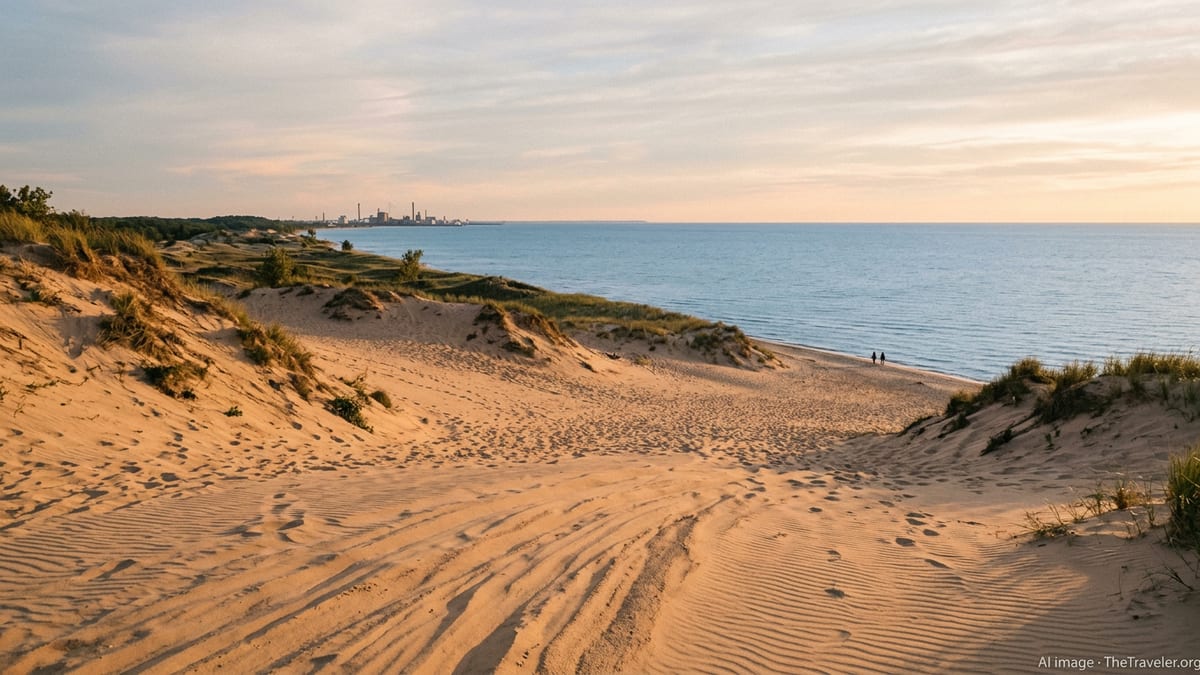
On Indiana’s short but striking Lake Michigan shoreline, Indiana Dunes National Park has become one of the state’s marquee outdoor destinations. The park protects about 15 miles of sandy coast and roughly 15,000 acres of dunes, wetlands, prairies, and oak savanna, forming a rare pocket of biodiversity just an hour or so from Chicago’s skyscrapers. Visitors come for the classic experience of climbing steep dunes and descending to wide, freshwater beaches, but they often linger for the quieter inland trails that wind through woods and marshes.
The national park wraps around Indiana Dunes State Park, which has its own entrance and fee structure but shares the same dune landscape. Together, they offer options ranging from short boardwalk strolls and accessible overlooks to more demanding routes that climb multiple ridges in deep sand. Popular challenges, such as summiting a series of tall dunes in a single loop, reward hikers with expansive views across Lake Michigan and, on clear days, the distant Chicago skyline. In warmer months, swimming, paddling, and beach picnics dominate the lakeshore.
Beyond the sand, the dunes region appeals in every season. Spring brings migrating birdlife and emerging wildflowers in bogs and fens. Summers are busy and energetic, with full parking areas and lively beaches. Autumn thins the crowds and adds color to the oak and maple canopies, while winter reshapes the shoreline with ice formations and offers stark, photogenic views of dune grass and snow. For many travelers, the most surprising element is how little the dunes feel like the flat farmland stereotype often associated with Indiana, offering instead a landscape of rolling hills that verge on mountainous by Midwest standards.
Brown County and the “Little Smokies” of Southern Indiana
Far from the Lake Michigan shore, southern Indiana’s Brown County delivers a different kind of scenery: layered ridges, forested hollows, and winding roads often compared to a compact version of the southern Appalachians. Brown County State Park, near the town of Nashville, anchors the region with more than 16,000 acres of woods, overlooks, and multi-use trails. The park is built around the Knobstone Escarpment, a series of hills and ridgelines that make this one of Indiana’s most rugged and photogenic landscapes, especially in autumn when hardwood forests blaze with color.
Within the park, scenic drives lead to overlooks that reveal long-distance views over undulating hills, especially near some of the highest elevations in the region. Trail networks cater to hikers, horseback riders, and mountain bikers, with routes ranging from short loops suitable for families to longer, more strenuous treks. Campgrounds and rustic inns give travelers the option to stay inside the park and wake up amid the morning fog that often settles in the valleys below the ridgetops.
Beyond the park boundaries, the broader Brown County area offers small-town charm and creative energy. The village of Nashville has long attracted painters, potters, and craftspeople drawn to the light and landscapes of the hills, and its galleries and studios blend with cafes and music venues. Scenic byways, including stretches of State Road 46 and quiet county roads, provide classic Midwestern drives that reveal new vistas around nearly every bend, especially during peak fall foliage. For travelers planning a longer Indiana itinerary, pairing Brown County with Indiana Dunes offers a striking contrast between lakeshore dunes and inland highlands.
Bloomington and the Limestone Country of South Central Indiana
Home to Indiana University, Bloomington combines the energy of a Big Ten college town with easy access to rolling hills, lakes, and karst topography. Streets near the campus bustle with restaurants, music venues, and bookstores, yet a short drive in nearly any direction leads to countryside marked by limestone quarries, forested ridges, and reservoirs that attract boaters and paddlers. The university itself, with its limestone buildings and wooded campus, feels almost park-like and is designed for wandering.
South and east of town, Hoosier National Forest and nearby state recreation areas provide miles of hiking and horseback riding trails. Monroe Lake, one of the state’s largest reservoirs, offers opportunities for sailing, kayaking, fishing, and lakeside camping, and its coves and fingers are especially scenic when autumn colors spread across the surrounding hills. This combination of outdoor access and cultural life makes Bloomington a rewarding base for travelers who want both live music and trailheads on the same trip.
Bloomington is also a good jumping-off point for exploring Indiana’s limestone heritage. Many of the quarries that supplied stone for landmarks across the United States lie in the surrounding counties, and the region’s architecture reflects that material history. Driving the back roads reveals historic courthouses, bridges, and farmsteads built from local stone, set against a backdrop of woods and fields. For visitors, the appeal lies less in any single landmark than in the overall sense of place that comes from this blend of geology, culture, and landscape.
Fort Wayne and the Northeastern Lake and River Country
In northeastern Indiana, Fort Wayne has reinvented itself as a riverfront city with a growing arts and culinary scene. Historically a transportation and manufacturing hub, it sits at the confluence of three rivers, a fact that long shaped its development and now underpins extensive revitalization efforts. Promenades, parks, and mixed-use developments along the water offer spaces for walking, cycling, and outdoor events, giving visitors new ways to experience the city beyond its traditional attractions.
Museums and family-friendly sites remain central to Fort Wayne’s appeal. Longstanding institutions highlight regional history, science, and art, while events such as the Three Rivers Festival each summer showcase local culture in parks and public spaces. Neighborhoods around the downtown core have seen renewed investment, resulting in clusters of independent restaurants, breweries, and creative spaces that make the city feel increasingly vibrant and livable.
Fort Wayne also serves as a gateway to a broader region of lakes, wetlands, and small towns in northeastern Indiana. Within an easy drive, travelers can find chains of natural and man-made lakes popular for boating, fishing, and summer cabin stays. Birding areas and nature preserves protect remnants of the wetlands that once dominated parts of the region, offering quiet trails and boardwalks. For road trippers circling the state, combining a stop in Fort Wayne with visits to the Amish country of northern Indiana or the lake country near the Michigan border creates a rewarding loop.
Scenic State Parks and Natural Corridors Beyond the Big Names
While Indiana Dunes and Brown County State Park attract much of the attention, the state’s broader network of parks and natural corridors provides many of its most memorable experiences. Places such as Turkey Run State Park and Shades State Park in western Indiana preserve deep sandstone ravines, cliffs, and hemlock-lined creeks that feel unexpectedly wild. Narrow gorges, suspension bridges, and ladder-like stairways offer a sense of adventure that appeals to hikers and families alike, especially in cooler seasons when streams run clear and crowds are thinner.
Elsewhere, state recreation areas and reservoirs offer a mix of water-based recreation and wooded shorelines. Many are close enough to cities such as Indianapolis, Bloomington, and Fort Wayne to work as day trips, yet they retain a quieter, more relaxed character. Trails loop through second-growth forests, around coves, and along bluffs, while campgrounds and cabins cater to both tent campers and travelers seeking more comfort. In many of these parks, you are more likely to encounter resident wildlife and regional plant communities than large groups of visitors.
Indiana is also home to a network of scenic byways and rural routes that link these natural areas. Drives through the Wabash River valley, rolling Amish farm country, and the hills of south central Indiana highlight the landscape’s subtler charms: old barns, covered bridges, and river bluffs rising unexpectedly from flat fields. For travelers who enjoy exploring at a slower pace, combining overnight stays in small towns with unhurried drives between parks, preserves, and historic districts can offer a particularly satisfying view of the state.
South Bend, Notre Dame, and the Northern Corridor
Near the Michigan state line, South Bend blends industrial history, collegiate atmosphere, and riverfront revival. The city grew around the St. Joseph River and a now-legendary automobile manufacturer, and reminders of that heritage appear in museums and restored factory buildings. Today, the downtown core features a mix of historic architecture and newer developments, while riverfront paths and light installations draw residents and visitors to the water’s edge.
Just to the north, the University of Notre Dame dominates the local landscape with its expansive campus, lakes, and golden-domed administration building. The university’s architecture, chapels, and sports venues attract alumni and tourists alike, especially during football season when the entire region takes on a festival mood. At other times of year, the campus feels quieter and more contemplative, well suited to leisurely walks that take in quads, lakeside paths, and iconic buildings.
South Bend also fits naturally into broader itineraries across northern Indiana and southern Michigan. Travelers can combine visits to the city and campus with trips to nearby lake resorts, Amish communities, and the dune landscapes along Lake Michigan. Rail and highway connections make it relatively easy to pair South Bend with Chicago and the Indiana Dunes, allowing visitors to experience a wide range of urban and natural settings within a compact geographic area.
The Takeaway
Indiana’s appeal lies less in a single bucket-list landmark than in the cumulative effect of its varied landscapes and cities. The state’s best destinations showcase a surprising diversity: dune-fringed freshwater beaches, layered forested hills, sandstone ravines, rejuvenated riverfronts, and vibrant university towns. Travelers willing to look beyond stereotypes of flat farmland discover a subtle but rewarding mix of outdoor recreation, culture, and small-scale charm.
For many visitors, the most satisfying approach is to treat Indiana as a series of regions to be linked into broader road trips. Combine Indianapolis with the dunes and Brown County, or pair Bloomington and Monroe Lake with Fort Wayne and northeastern lake country. Add in side trips to state parks, historic districts, and scenic byways, and the result is a journey that feels richer than the state’s modest size might suggest. Whether you are seeking a weekend escape or planning a longer exploration of the Midwest, Indiana offers enough variety to fill multiple itineraries without ever feeling rushed.
FAQ
Q1. When is the best time of year to visit Indiana Dunes National Park?
The dunes are most popular from late spring through early fall, when lake temperatures rise and beach facilities are fully open. Summer offers the warmest swimming conditions but also the largest crowds, while late spring and autumn can provide pleasant weather, active wildlife, and fewer visitors.
Q2. Are Indiana’s state parks suitable for first-time hikers?
Yes, most major parks, including Brown County, Turkey Run, and Indiana Dunes State Park, offer a range of trails from short, relatively flat loops to more strenuous routes. Trail maps typically indicate difficulty levels, so it is easy to choose paths that match your experience and fitness.
Q3. Can I visit both Indiana Dunes National Park and the state park in one day?
Many travelers do, since the two parks sit side by side along the same stretch of shoreline. With an early start, you can hike or swim in one park and then explore viewpoints or additional trails in the other, keeping in mind that each has its own entrance arrangements and parking areas.
Q4. Is Indianapolis a good base for exploring other parts of Indiana?
Indianapolis works well as a hub because many top destinations are within about a one- to two-hour drive. From the city, you can reach Indiana Dunes, Brown County, Bloomington, and several state parks as day trips, while returning to a wide choice of hotels, restaurants, and cultural attractions each evening.
Q5. What makes Brown County State Park special compared with other Midwestern parks?
Brown County stands out for its rolling hills, long-distance views, and dense hardwood forests that produce particularly vivid fall color. The park’s overlooks, winding roads, and extensive trail system create a landscape that many visitors compare to a smaller version of the Great Smoky Mountains.
Q6. Are there good options for travelers who prefer small towns over large cities?
Yes, Indiana offers numerous small towns near major attractions, including Nashville near Brown County State Park and several communities along Lake Michigan and the Wabash River. These places often provide bed-and-breakfasts, local diners, galleries, and easy access to nearby parks and scenic drives.
Q7. Do I need a car to see Indiana’s main attractions?
Having a car makes it much easier to reach state parks, rural byways, and smaller communities, since public transportation between regions is limited. Within cities such as Indianapolis, Bloomington, and Fort Wayne, you can often rely on walking, rideshares, and local transit, but a vehicle is helpful for linking destinations across the state.
Q8. How many days should I plan for an introductory trip to Indiana?
With three to four days, you can combine a city stay in Indianapolis or Bloomington with a visit to at least one major park such as Indiana Dunes or Brown County. A week allows time to add a northern city such as South Bend or Fort Wayne and explore a wider range of parks, lakes, and small towns.
Q9. What should I pack for outdoor activities in Indiana?
Pack comfortable walking shoes with good traction, weather-appropriate layers, sun protection, and insect repellent, especially for wooded or wetland areas. For visits to the dunes or reservoirs, bring swimwear, a hat, and footwear suitable for sand or rocky shorelines, along with plenty of water for warm-weather hikes.
Q10. Are Indiana’s parks and attractions open year-round?
Many parks and urban attractions are open throughout the year, though some facilities, campgrounds, and concessions operate on seasonal schedules. Winter can be an appealing time for quiet hikes, scenic drives, and indoor museums, but it is wise to check current hours, road conditions, and any weather-related advisories before you travel.