

Iowa rewards unhurried travelers. Follow the curves of the Mississippi, wander high above prairie in the Loess Hills, or settle into a historic town where the weekend agenda is simply coffee, conversation, and a slow walk by the river. From bluff-top overlooks to glacial lakes and European-influenced villages, the Hawkeye State offers far more variety than many visitors expect. These are some of the best places to visit in Iowa when you are craving river towns, scenic regions, and memorable weekend getaways.
Dubuque and the Upper Mississippi River Bluff Country
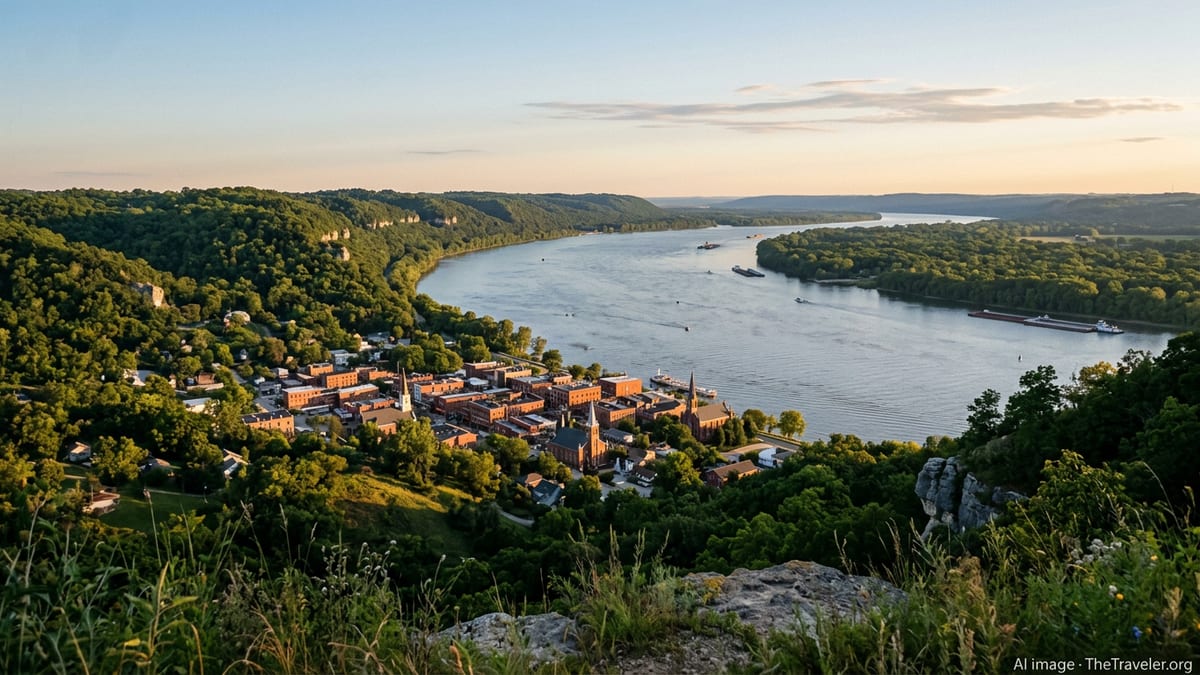
Dubuque is one of Iowa’s most atmospheric river cities, wedged between steep limestone bluffs and a broad, working stretch of the Mississippi River. Its historic downtown preserves 19th century brick warehouses and church spires, while a redeveloped waterfront offers parks, public art, and riverfront dining. The city balances its blue-collar maritime past with a growing arts and culinary scene, which makes it an appealing weekend base for travelers who want both history and modern comforts.
A centerpiece of any visit is the National Mississippi River Museum and Aquarium, which explores river ecology, navigation, and culture through interactive exhibits and live animal encounters. Families can easily spend half a day here learning how the river shaped the interior of North America. Nearby, the city’s cable car, the Fenelon Place Elevator, climbs an exceptionally steep bluff to a hilltop neighborhood, rewarding riders with sweeping views across Iowa, Illinois, and Wisconsin.
Beyond downtown, Dubuque’s surroundings invite slow exploration. The Mines of Spain Recreation Area on the south edge of the city preserves wooded ravines, prairie, and river overlooks linked by hiking trails and scenic drives. A short drive west leads to rolling countryside dotted with small farms and roadside produce stands in summer and fall. Travelers often pair Dubuque with side trips north along the Great River Road, where each bend in the highway reveals another bluff, backwater, or river town.
Great River Road: Marquette, McGregor, Guttenberg, and Bellevue
North of Dubuque, the Great River Road threads along the Mississippi through some of Iowa’s most photogenic small towns. Marquette and neighboring McGregor sit beneath tall, wooded bluffs, with historic brick storefronts facing the river or tucked along narrow streets that still feel anchored to the steamboat era. These river towns work well as a home base for travelers who want quick access to both the water and high viewpoints.
Pikes Peak State Park rises above McGregor, protecting forested bluffs and a famous overlook where visitors can look out across the confluence of the Mississippi and Wisconsin Rivers. Well-maintained trails lead to waterfalls, rock outcrops, and quiet picnic areas, making the park an ideal half- or full-day outing. Farther south, Effigy Mounds National Monument near Marquette preserves ancient Indigenous earthworks shaped like animals and geometric forms. Trails here combine significant cultural history with peaceful forest walks and river vistas.
Continue downstream and you arrive in Guttenberg, a town known for its stone architecture and a long riverfront park with walking paths, playgrounds, and frequent barge traffic gliding by. It is a particularly relaxed place to spend an afternoon watching the lock and dam in action or launching a kayak into backwaters when conditions allow. Farther south again, Bellevue hugs a narrow strip between bluffs and water. Its riverfront park stretches nearly the length of town, offering picnic tables, shade trees, and close views of the main channel, especially lively during bird migrations and summer boating season.
Travelers often combine several of these communities into a single weekend route, driving from town to town on two-lane highways that hew closely to the river. Lodging ranges from family-run motels and historic inns to cabins and campgrounds in nearby state parks. The overall rhythm is unhurried: morning coffee overlooking the river, midday hikes to bluff-top overlooks, and evenings strolling past weathered brick facades that glow in the low light.
Loess Hills Scenic Byway and the Western Missouri River Valley
On the opposite side of the state, the Loess Hills form one of Iowa’s most distinctive landscapes. These steep, wind-deposited ridges rise along the Missouri River valley in western Iowa and contain some of the deepest loess soil deposits in the world. Much of the region can be explored along the Loess Hills National Scenic Byway, a signed driving route that weaves between small towns, prairies, and protected parks.
Drivers quickly notice that this part of Iowa feels different from the rest of the state. Instead of broad, flat fields, the byway climbs and dips along narrow ridges with sweeping views and sudden vistas of farmsteads tucked into sheltered hollows. In several places, gravel spurs lead to prairie preserves and wildlife areas where visitors can hike through native grasses, watch for raptors riding thermals, and, in late summer, walk among wildflowers buzzing with insects.
State and county parks provide anchor points along the route. Waubonsie State Park near the state’s southwest corner offers wooded ravines, ridge-top trails, and scenic overlooks that are especially striking at sunrise and sunset. Campgrounds and cabins make it an appealing overnight stop for road trippers who want to break up the drive. Other segments of the byway pass through communities where travelers can find local cafes, small museums, and seasonal events that celebrate the region’s agricultural heritage.
Because many sections of the Loess Hills are narrow and occasionally steep, it is wise to check road conditions and potential detours before setting out, especially after heavy rain or winter storms. The byway rewards slow driving and unplanned stops, and it is often at its most beautiful during shoulder seasons, when the hills shift from spring green to summer gold and, later, to muted browns under a wide sky.
Decorah, the Driftless Area, and the Upper Iowa River
Northeast Iowa’s Driftless Area, a region that escaped the flattening effects of the last glaciers, is defined by rugged hills, deep valleys, and clear streams. Decorah serves as the informal capital of this landscape, combining a lively college town atmosphere with easy access to outdoor recreation. Its historic downtown blocks are filled with independent shops, breweries, and cafes, while quiet residential streets climb into the surrounding bluffs.
Visitors are often surprised by the variety of natural attractions clustered around Decorah. Dunning’s Spring Park, located only minutes from downtown, features a picturesque waterfall fed by a hillside spring, with stairs and short trails offering several vantage points. Further afield, the Upper Iowa River winds through a corridor of limestone cliffs and wooded banks, popular for paddling trips in warmer months. Outfitters in the area can provide rentals and shuttle services, and conditions are typically calm enough for beginner and intermediate paddlers when water levels are normal.
Decorah is also known for its strong Nordic heritage, which is celebrated at a regional museum and through annual festivals. This cultural layer adds depth to a weekend stay, especially for visitors who want more than just outdoor activities. Local breweries and farm-to-table restaurants draw travelers from across the Midwest, particularly on summer weekends and during autumn color season, when the surrounding hills become a patchwork of reds and golds.
The broader Driftless Area extends beyond Decorah toward small towns, state forests, and lesser-known scenic byways. Yellow River State Forest, for example, provides miles of hiking and horseback trails, rustic campgrounds, and some of the most rugged hiking terrain in Iowa. Drivers who follow the Driftless Area Scenic Byway encounter riverside hamlets, high overlooks, and roadside pullouts that highlight how different this part of the state feels compared with the open prairie further south and west.
Clear Lake, Okoboji, and Iowa’s Lake Country
While rivers shape much of Iowa’s travel identity, its lakes offer an equally appealing change of pace. Clear Lake in north-central Iowa has long been a classic Midwestern summer resort town, with a walkable main street, lakeside parks, and marinas. In warmer months, visitors fill outdoor patios, rent pontoon boats, and gather for concerts and festivals that make the town feel like a summer-long celebration.
Clear Lake’s sandy public beaches, especially near the main city park, make it a straightforward destination for families. The shoreline offers playgrounds, picnic areas, and a paved path popular with walkers and cyclists. The community is also known for its music history, with a long-running ballroom that hosted many major performers in the mid-20th century and continues to draw touring acts and regional favorites to this day.
Farther northwest, the Iowa Great Lakes region around Okoboji and the neighboring communities in Dickinson County forms the state’s best-known concentration of natural lakes. Here, a series of interconnected glacial lakes host marinas, fishing piers, state parks, and a cluster of seasonal attractions. In summer, the area feels like a classic resort corridor, with visitors boating, paddleboarding, biking around the lakes, or relaxing in lakeside cabins.
Both Clear Lake and the Okoboji area work well either as stand-alone weekend getaways or as refreshing stops on longer road trips across the state. Shoulder seasons can be appealing for travelers who prefer quieter streets and lower lodging rates, though some seasonal businesses may have limited hours outside of the peak summer months. Winter brings its own set of experiences, including ice fishing, snowmobiling, and small-town holiday events when conditions permit.
Historic Heartland Towns: Amana Colonies, Pella, and Beyond
In central and eastern Iowa, a string of culturally distinct towns offers a different kind of scenic travel. The Amana Colonies, a cluster of seven villages founded by German religious settlers in the 19th century, preserve communal-era architecture and traditions. Today the area is known for its stone buildings, heritage museums, craft shops, and hearty, family-style restaurants that serve central European inspired dishes.
Walking through the main village streets, visitors find wineries, bakeries, and artisans working with textiles, woodworking, and metal. Many buildings date back more than a century and have been carefully adapted for modern uses while retaining their original character. The surrounding countryside, with its farm fields and timbered creek valleys, is especially appealing in late summer and fall, when roadside stands sell produce and the villages host seasonal festivals.
South and slightly east, the town of Pella reflects a strong Dutch heritage visible in its architecture, bakeries, and seasonal celebrations. Downtown squares feature carefully landscaped gardens, decorative windmill elements, and brick streets. During the spring tulip season, thousands of flowers bloom in public beds and private yards, drawing visitors from across the region for parades, performances, and cultural demonstrations. Even outside festival days, Pella’s cafes, pastry shops, and lakeside parks create an inviting atmosphere.
Other central Iowa communities can round out a heritage-focused itinerary. Towns such as Winterset, with its famous covered bridges and rolling farm country, and smaller communities with well-preserved main streets provide easy access to scenic drives, wineries, and farm stays. Many of these places are within a two-hour drive of Des Moines or Cedar Rapids, making them convenient options for travelers arriving by air who want to experience smaller-scale Iowa life.
City Breaks With Nature Nearby: Des Moines, Cedar Rapids, and Iowa City
For visitors who prefer a mix of urban comforts and nearby scenic escapes, Iowa’s larger cities can anchor a weekend itinerary. Des Moines, the state capital, offers a compact downtown with a sculpture park, historic neighborhoods, and riverside trails along the Des Moines River. Food and drink options have expanded significantly in recent years, with independent restaurants, breweries, and coffee shops that can hold their own against those in bigger metropolitan areas.
A short drive from Des Moines, travelers find several notable outdoor destinations. Ledges State Park, northwest of the city near Boone, features sandstone cliffs, a wooded canyon, and hiking routes that cross shallow stream fords. The Boone & Scenic Valley Railroad offers seasonal excursions that roll through the Des Moines River valley, crossing high bridges and giving passengers a different perspective on the landscape. South and west of the capital, rolling countryside near Winterset and the Covered Bridges Scenic Byway provides classic rural vistas and quiet backroads.
Cedar Rapids, Iowa’s second-largest city, has invested heavily in recovering and renewing its riverfront after historic flooding. The downtown area and nearby neighborhoods house art and history museums, performance venues, and a growing food scene. Czech Village and the New Bohemia district highlight the city’s immigrant roots and contemporary creativity, with galleries, markets, and small breweries lining walkable streets.
Nearby Iowa City, home to the state’s flagship public university, blends literary history with an easygoing, college-town feel. Pedestrian-friendly streets around the Old Capitol draw visitors to bookstores, music venues, and cafes. Within a short drive, travelers can reach Lake Macbride, the Cedar River, and a constellation of county parks that offer quiet hiking trails, boat launches, and picnic spots. Together, these three cities provide an appealing bridge between Iowa’s rural landscapes and its contemporary cultural life.
Planning Your Iowa River Town and Scenic Getaway
Planning a trip through Iowa’s river towns and scenic regions starts with acknowledging the state’s scale. Driving distances between key areas are manageable, often measured in a few hours rather than a full day. This makes it relatively easy to pair locations: Dubuque and the Great River Road towns to the north, for example, or Des Moines with the Loess Hills, the Amana Colonies, or lake country. Many travelers find it rewarding to focus on one corridor per trip and leave space for unscheduled stops.
Seasonality plays a major role in shaping the experience. Spring brings renewed greenery, returning migratory birds along the Mississippi flyway, and early wildflowers in the Driftless Area and Loess Hills. Summer is the most reliable time for on-the-water activities, outdoor festivals, and long evenings on patios and campground loops. Autumn highlights Iowa’s rolling topography, as trees and prairie grasses shift color, while winter can offer stark beauty along frozen rivers and quiet lake towns, alongside very real cold and snow that require careful planning.
Lodging options vary by region but generally include standard hotels in larger towns, family-run motels, vacation rentals, cabins in or near state parks, and established campgrounds. In popular destinations such as Okoboji, Decorah, or the most scenic Mississippi River stretches, advance reservations are sensible, especially on peak summer weekends or during major festivals. Smaller towns may have limited dining hours outside Friday and Saturday, so it is wise to confirm restaurant schedules or plan to self-cater some meals.
Above all, travel in Iowa rewards flexibility and curiosity. Some of the most lasting memories come from pulling over at an unsigned river overlook, chatting with locals at a small-town cafe, or detouring along a scenic byway that looked intriguing on the map. With its mix of storied river towns, distinctive landforms, and quietly vibrant small cities, Iowa offers more than enough variety to fill a long weekend or a weeklong road trip.
The Takeaway
Iowa’s reputation as a landscape of endless fields obscures a richer truth. The state is threaded with rivers that carve deep valleys, bordered by bluffs that offer wide horizons, and dotted with towns that preserve layers of European, Indigenous, and agricultural history. Whether you gravitate to the dramatic overlooks of the Mississippi, the unusual contours of the Loess Hills, the limestone gorges of the Driftless Area, or the social energy of resort lakes and college towns, there is a corner of Iowa that can match your pace and interests.
For travelers based in nearby states, these destinations are within an easy drive yet feel refreshingly different from daily routines. For those flying in, Iowa’s central cities provide straightforward gateways to a network of byways and small towns that remain relatively uncrowded compared with more famous national parks or coastal resort areas. Thoughtful planning, a flexible schedule, and a willingness to slow down are often all it takes to discover why so many visitors leave saying they experienced a side of Iowa they never knew existed.
FAQ
Q1. What is the most scenic river town in Iowa for a first visit?
Many travelers start with Dubuque, which combines historic brick architecture, bluff-top views, and a revitalized Mississippi riverfront, then add side trips to smaller nearby towns.
Q2. When is the best time of year to drive the Great River Road in Iowa?
Late spring through mid fall usually offers the most pleasant conditions, with peak colors and river views in late September and early October when foliage is changing.
Q3. Are the Loess Hills suitable for a casual scenic drive, or do I need hiking experience?
The Loess Hills National Scenic Byway is primarily a driving route with many paved segments. Hiking is optional, so casual travelers can enjoy the scenery without extensive outdoor experience.
Q4. How many days should I plan for a trip to Decorah and the Driftless Area?
A long weekend of two or three nights allows time to explore Decorah, paddle or hike along the Upper Iowa River, and make at least one side trip into nearby state forest or byway routes.
Q5. Is it possible to visit both the Amana Colonies and Pella in the same weekend?
Yes, many visitors combine these two heritage towns over two or three days, using a central Iowa city such as Des Moines or Iowa City as a travel hub between them.
Q6. Are Iowa’s lake destinations like Clear Lake and Okoboji only worth visiting in summer?
Summer is the busiest season for on-the-water activities, but shoulder seasons can be quieter and more affordable, and winter may appeal to travelers interested in ice fishing or small-town holiday events.
Q7. Do I need a car to explore Iowa’s best river towns and scenic regions?
Yes, a car is highly recommended. Public transportation between smaller communities is limited, and many scenic byways and parks are only accessible by private vehicle.
Q8. How challenging are hikes in places like Pikes Peak State Park and Yellow River State Forest?
State parks often provide a mix of easier and moderate trails with well-marked paths, while state forests and more rugged areas can involve steeper grades and uneven terrain suitable for reasonably fit hikers.
Q9. Can I combine urban experiences with scenic drives on a single Iowa trip?
Absolutely. Many itineraries pair one or two nights in Des Moines, Cedar Rapids, or Iowa City with side trips to nearby byways, state parks, or heritage towns within a short drive.
Q10. Are Iowa’s river towns and scenic areas family friendly?
Yes. Many destinations mentioned here offer playgrounds, easy walking paths, gentle paddling routes, family cabins, and attractions that appeal to children as well as adults.