

New York State is far more than the bright lights of Times Square. From Atlantic beaches to Adirondack peaks and vineyard-draped hills, the state is divided into distinct tourism regions, each with its own character, seasons and signature experiences. Choosing the right base can completely change your trip, whether you are planning a long weekend, a multi-stop road trip or an extended stay. This guide breaks down the best regions to stay in New York State based on your travel style, so you can match your personality with the perfect place.
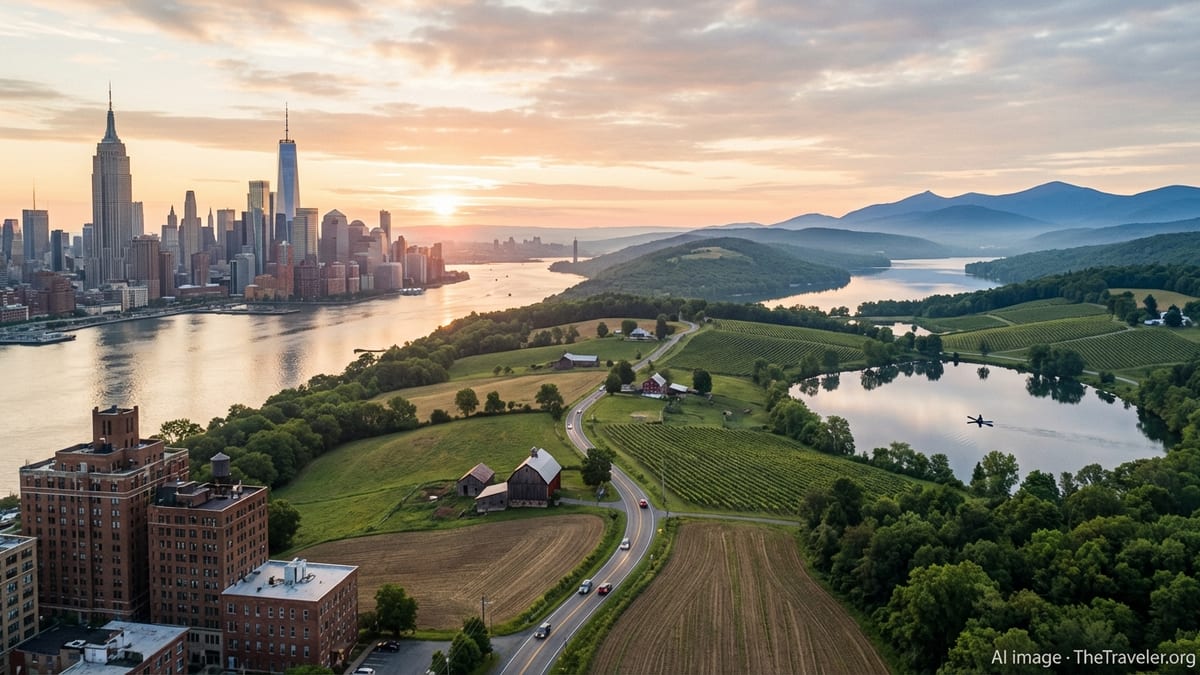
Understanding New York State’s Tourism Regions
New York State tourism is officially organized into 11 vacation regions, ranging from New York City and Long Island to the Adirondacks, Catskills, Finger Lakes, Thousand Islands and beyond. These regions are used in state tourism campaigns and visitor information centers to group destinations with similar landscapes, attractions and travel logistics. In practice, they also provide a useful framework for travelers deciding where to base themselves.
Each region blends cities and small towns with outdoor escapes, so you can often combine multiple interests in a single stay. For example, the Hudson Valley mixes riverfront cities and historic estates with hiking trails and farm-to-table dining, while the Finger Lakes combines lake life, wine touring and college-town culture. Understanding how these regions differ in vibe, pace and seasonality helps you choose where to spend the bulk of your time.
When deciding where to stay, think in terms of hubs rather than specific hotels. Many visitors pick one or two strategic bases and explore within a 60- to 90-minute radius. In the Adirondacks, that might mean staying in Lake Placid or Lake George and taking day trips to smaller communities. In the Finger Lakes, it could be basing in Ithaca, Geneva or Canandaigua to explore vineyards, waterfalls and lakeside villages.
Your travel style should drive your regional choice more than any list of “top attractions.” City lovers can center themselves in New York City or nearby Hudson Valley towns, while outdoor purists may be happier in the Adirondacks or Catskills. Food and wine travelers often choose the Finger Lakes or Hudson Valley, and families may gravitate to regions with easy driving, plenty of kid-friendly activities and relaxed waterfront towns.
New York City & Long Island: For Urban Energy and Coastal Escapes
New York City remains the state’s global gateway and a natural base for first-time visitors, culture seekers and food-obsessed travelers. With five boroughs, it offers iconic attractions, world-class museums, Broadway, diverse neighborhoods and a public transit system that makes car-free travel straightforward. Staying in Manhattan or Brooklyn puts you within easy reach of major sights while also offering quick rail connections to parts of the Hudson Valley and Long Island for day trips.
Travelers who crave a mix of city and sea can extend their base onto Long Island. The region stretches from urban Queens and Nassau County suburbs to the vineyards and farm fields of the North Fork and the Atlantic beaches of the Hamptons and Montauk. Summer brings lively seaside towns, outdoor dining and water sports. Shoulder seasons such as late spring and early fall often mean fewer crowds but still pleasant weather for beach walks and winery visits.
New York City and western Long Island suit travelers who prioritize restaurants, nightlife, cultural institutions and short transit times over quiet and seclusion. It is a strong choice if you are traveling without a car, since trains and buses link major neighborhoods, airports and some beach communities. However, peak summer weekends, holidays and major event periods see high prices and busy streets, so plan farther ahead if your travel style leans toward comfort and convenience.
If your ideal trip mixes galleries, concerts and global cuisine with occasional day trips to beaches or historic sites, using New York City or nearby Long Island towns as your base makes sense. You can add on a few nights in the Hudson Valley or Catskills if you want a contrast of forests and river views after your city stay.
Hudson Valley & Capital-Saratoga: For History, Culture and Easy Getaways
The Hudson Valley runs north from the New York City suburbs toward Albany, following the Hudson River through a corridor of small cities, riverfront villages, farms and forested hills. It is a favorite base for travelers who want a slower pace than the city while keeping easy train or driving access. Historic estates, art museums, farm markets and hiking areas sit within short drives of towns like Beacon, Hudson, Kingston and Rhinebeck.
Just beyond, the Capital-Saratoga region centers on Albany, the state capital, and Saratoga Springs, known for its mineral springs, summer racing season and lively downtown. This area works well for travelers who like a blend of cultural institutions, architecture and nearby nature. Saratoga’s summer calendar fills with performances and events, while Albany offers museums, riverfront parks and access to surrounding countryside.
The Hudson Valley and Capital-Saratoga regions fit travelers interested in American history, river scenery, antiques, small-batch food and drink, and scenic drives. They are ideal for long weekends from New York City, as many towns are reachable by train along the Hudson River, reducing the need for a car. Those with more time can drive country roads to explore orchards, wineries and hiking areas, especially in fall foliage season when the hills turn vivid reds and golds.
If you enjoy boutique inns, farm-to-table restaurants, art galleries and moderate outdoor activity without committing to full backcountry adventures, basing yourself in the Hudson Valley or Capital-Saratoga is a strong choice. These regions also work well for couples’ getaways and relaxed multi-generational trips, offering manageable driving distances and a broad range of comfort-focused lodging.
Catskills & Central New York: For Laid-back Outdoor Enthusiasts and Small-town Charm
The Catskills region, centered on the forested mountains west of the Hudson, appeals to travelers seeking a classic upstate escape with an artsy edge. Mountain towns such as Woodstock, Phoenicia and Livingston Manor offer a mix of hiking, fly-fishing, farm stays and creative communities. The area’s protected parkland and rolling foothills create a sense of retreat, while still placing you within a few hours’ drive of New York City and the Hudson Valley.
For travelers who like a quieter, off-interstate experience, Central New York offers rolling farmland, historic villages and mid-sized cities like Utica and Cooperstown. This region is a microcosm of the state, with lakes, forests and cultural sites, including well-known sports museums and heritage attractions. It works well for road trippers who value open space, scenic backroads and a feeling of discovering less-publicized destinations.
Catskills stays suit travelers who prioritize hiking, river activities, craft breweries and weekends spent sitting by a firepit more than ticking off major attractions. Accommodations range from campgrounds and cabins to renovated motels and design-forward lodges. In winter, several ski areas draw downhill and snowboarding enthusiasts, while summer brings swimming holes and music festivals.
Central New York, by contrast, is ideal for slow-paced travelers, history fans, and those who enjoy combining rural scenery with small-town Main Streets. It is a smart choice for visitors driving across the state who prefer to break up the journey with a few nights in a tranquil setting. If your travel style favors scenic drives, farm stands and local diners over nightlife, either the Catskills or Central New York can be your perfect base.
Adirondacks, Thousand Islands & Chautauqua-Allegheny: For Serious Nature Lovers
The Adirondacks region covers a vast swath of northern New York, including a large park of mountains, forests and countless lakes. It is a prime base for travelers who want hiking, paddling, skiing and time in small resort towns. Communities such as Lake Placid, Lake George, Saranac Lake and Old Forge serve as hubs, offering lodging, restaurants and outfitters while keeping wilderness trailheads and waterways within easy reach.
Further west, the Thousand Islands-Seaway region lines the St. Lawrence River, where hundreds of islands create a scenic boating and fishing destination. Towns like Alexandria Bay and Clayton offer marinas, boat tours and waterfront lodgings. This region suits travelers drawn to life on the water: kayaking, sailing, fishing and island-hopping in a relaxed, small-town atmosphere.
In the far western part of the state, the Chautauqua-Allegheny region mixes forested hills, lakefront communities and cultural institutions. Chautauqua Lake is known for its long-running summer programs and lakeside cottages, while nearby state parks offer hiking, biking and winter recreation. This area attracts repeat visitors who appreciate a quieter, tradition-rich setting and slower pace.
These northern and western regions are best for travel styles centered on nature, cabins, campfires and active days outside. They are more spread out than downstate regions, so having a car is practically essential. Travelers comfortable with longer drives are rewarded with less-crowded trails, dark skies for stargazing and a deep sense of being away from city life. If your ideal trip features full days outdoors, evenings by the water and minimal urban bustle, choosing a base in the Adirondacks, Thousand Islands or Chautauqua-Allegheny will fit you well.
Finger Lakes & Greater Niagara: For Wine, Waterfalls and Family Adventures
The Finger Lakes region takes its name from long, narrow lakes carved by glaciers, surrounded by vineyards, farms and college towns. It is one of the state’s best bases for travelers who love wine tasting, scenic drives and a relaxed, lakeside atmosphere. Towns such as Ithaca, Geneva, Watkins Glen and Skaneateles provide lodging of all types, from waterfront hotels to inns and vacation rentals.
Nature lovers will find a network of gorges and waterfalls accessible via state parks and hiking trails, along with opportunities for boating, fishing and swimming. The combination of university campuses, independent restaurants and wineries gives the region a lively but unhurried feel, making it attractive to couples, groups of friends and multigenerational families.
To the west, the Greater Niagara region centers on Niagara Falls, one of North America’s most famous natural attractions, and the nearby city of Buffalo. This region is well-suited to families and first-time visitors who want a straightforward, iconic stop with plenty of structured activities. Boat tours, observation platforms, illuminated night views and nearby attractions create a full schedule without requiring extensive planning.
Together, the Finger Lakes and Greater Niagara regions offer a balance of laid-back days and big-sight excitement. They are especially appealing to road trippers entering New York from neighboring states or Canada, as highways connect these regions efficiently. If your travel style includes scenic drives, wine or craft beverage tasting, waterfall hikes and easy-to-plan family outings, basing your stay in the Finger Lakes or Greater Niagara can be an excellent choice.
Matching Regions to Your Travel Style
With so many distinct regions, narrowing your options begins with an honest look at your travel style. City-focused travelers who thrive on dense cultural experiences, restaurants and public transit will likely feel most at home basing in New York City, with possible side trips to nearby Long Island beaches or Hudson Valley towns. Those who want a city-country mix but do not need Manhattan’s intensity may prefer smaller cities like Albany, Saratoga Springs or Hudson as their hubs.
Outdoor enthusiasts who are comfortable driving longer distances and value access to trails, lakes and quiet forests above all else should look first at the Adirondacks, Catskills, Thousand Islands and Chautauqua-Allegheny. Each offers a different flavor of nature, from high peaks and ski resorts to island-dotted rivers and tranquil inland lakes. Travelers who are newer to outdoor adventures may gravitate to the Hudson Valley or Finger Lakes, where hikes and water access are abundant but services and restaurants remain close at hand.
For food and wine fans, the Finger Lakes and Hudson Valley stand out for their clusters of wineries, cideries and farm-to-table restaurants, while Long Island’s North Fork adds a coastal twist to wine touring. If you prefer culinary experiences framed by urban energy, New York City and Buffalo offer dense restaurant scenes and easy access to nearby craft producers.
Families may base their decisions on logistics as much as scenery. Regions with short drives, variety of activities and plenty of casual dining, such as Greater Niagara, the Finger Lakes, Lake George in the Adirondacks or beach towns on Long Island, can reduce travel stress. Couples or solo travelers seeking quiet and atmosphere may favor small towns in the Catskills, Hudson Valley or Chautauqua area, where evenings are spent in cozy restaurants or on porches instead of navigating busy streets.
Seasonality should also factor into your planning. Skiers and winter sports enthusiasts will find more options in the Adirondacks, Catskills and certain Finger Lakes and Central New York resorts. Leaf peepers often favor the Catskills, Adirondacks, Hudson Valley and Finger Lakes in late September and October, while beachgoers and lake swimmers target Long Island and lakeside regions in mid-summer. Spring is typically quieter but rewarding in wine country and river valleys, with blossoming orchards and fewer crowds.
The Takeaway
There is no single “best” region to stay in New York State. Instead, there are multiple right answers, depending on how you like to travel and what you hope to remember from your trip. Some travelers will always choose the bright lights and late nights of New York City, while others find their ideal base in a lakeside village, a farm-dotted valley or a town framed by mountain peaks.
Start by listing your top priorities: city culture or quiet landscapes, driving adventures or train-linked towns, wine tastings or waterfall hikes, family attractions or romantic inns. Then match those priorities with the regions that naturally specialize in them. It is entirely possible to combine two or three regions in a single itinerary, but even if you only have a few days, choosing a base that reflects your travel style will make your time in New York State feel richer and more relaxed.
Whether you are planning a first visit or returning to explore beyond familiar favorites, using the state’s diverse regions as your guide can help you design a trip that fits you perfectly. From the Atlantic coast to Great Lakes shores and mountain summits, New York offers a spectrum of stays. The key is choosing the one that feels most like your kind of place.
FAQ
Q1. What is the best region to stay in New York State for a first-time visitor?
For a first-time visitor, New York City is usually the best base, with the option to add a short side trip to the Hudson Valley or Long Island for contrast.
Q2. Which region is best if I want mainly outdoor activities?
Travelers focused on hiking, paddling and skiing often choose the Adirondacks or Catskills, with additional options in the Thousand Islands and Chautauqua-Allegheny regions.
Q3. Where should I stay in New York State for wine and food experiences?
The Finger Lakes and Hudson Valley are top choices for wine, cider and farm-to-table dining, while Long Island’s North Fork offers vineyards paired with coastal scenery.
Q4. What region works best for a family road trip with kids?
Families often enjoy basing in Greater Niagara, the Finger Lakes, Lake George in the Adirondacks or Long Island beach towns, where activities are varied and drives are manageable.
Q5. Which regions are easiest to visit without a car?
New York City is the most car-free friendly, and several Hudson Valley towns along the Hudson River train line are also accessible by rail, making them good options without a vehicle.
Q6. Where should I stay in New York State for fall foliage?
The Catskills, Adirondacks, Hudson Valley and Finger Lakes are especially popular for autumn colors, with peak times varying by elevation and latitude each year.
Q7. What region is best for a quiet romantic getaway?
Couples often choose small towns in the Hudson Valley, Catskills, Finger Lakes or around Chautauqua Lake for cozy inns, scenic drives and relaxed dining.
Q8. Which area is best if I want both city life and quick access to nature?
Staying in New York City with day trips to the Hudson Valley, or basing in smaller cities like Albany, Saratoga Springs or Ithaca, offers an effective city-nature balance.
Q9. Where should I base myself if I am driving through New York from another state?
Central New York, the Finger Lakes and Greater Niagara all make convenient bases for road trippers, with highway access and a mix of small towns and natural sights.
Q10. How many regions can I realistically include in one week?
Most travelers are comfortable focusing on two regions in a week, or three if distances are planned carefully, to avoid spending more time driving than exploring.