

Austria may be a small country in the heart of Europe, but its regions feel remarkably diverse. Rugged Alpine peaks in the west give way to gentle wine hills in the east, grand imperial cities sit beside quiet lake villages, and every province has its own accent, cuisine and traditions. Choosing where to go can be the hardest part of planning a trip. This guide highlights the standout regions across Austria, what makes each one special, and how they fit together into a memorable journey.
Tyrol: Classic Alps and Mountain Adventure
When many travelers picture Austria, they are unknowingly picturing Tyrol. This western province borders Germany, Italy and Switzerland and is defined by jagged Alpine ridges, deep valleys, and resort towns that live for both snow and summer sun. The capital Innsbruck combines pastel townhouses and Habsburg palaces with a dramatic ring of peaks that rise almost straight from the city streets. Just minutes from the center, cable cars carry you up to the Nordkette range where panoramic platforms offer sweeping views of the Inn Valley and the distant Karwendel peaks.
Tyrol is one of Austria’s most developed mountain playgrounds. In winter, skiers and snowboarders spread out across dozens of large ski areas, including famous names such as St. Anton am Arlberg and Kitzbühel, as well as glacier resorts that usually offer long seasons and high-altitude snow. In the warmer months, the same lifts and trails shift into summer mode. Hundreds of kilometers of waymarked hiking routes and mountain bike tracks connect rustic huts, flower-filled meadows and high passes, while valley floors offer easier paths along rivers and through traditional villages.
Base choices in Tyrol depend on your style of travel. Innsbruck works well for those who want urban comforts with quick access to nature, while towns such as Sölden, Ischgl or the Ötztal and Stubai valleys appeal to visitors who plan their days almost entirely around outdoor activity. Family travelers often gravitate toward more low-key bases with dedicated children’s hiking trails, adventure playgrounds and swimming lakes. No matter where you stay, the regional guest cards offered by many Tyrolean towns can provide discounted or sometimes free use of local lifts and buses, making it easier to explore without a car.
Weather and altitude shape the experience here. Even in summer, high trails can be cool and stormy, while valleys can feel surprisingly warm. Shoulder seasons such as late May or October can bring quieter crowds but also changeable conditions. Packing layers is more important than packing formal wear, and flexibility in your daily plans helps you take advantage of clear spells on the peaks.
SalzburgerLand and the Salzkammergut: Lakes, Music and Storybook Villages
East of Tyrol, the province of Salzburg and the adjacent Salzkammergut lake district offer a softer Alpine landscape that blends culture and nature. Salzburg city itself is a world-class destination, known for its baroque skyline, fortress-topped hill, and ties to Mozart and The Sound of Music. Just beyond the city limits, the terrain quickly breaks into rolling foothills, blue lakes and limestone cliffs, an area long used as an imperial holiday playground and later popularized by tourism.
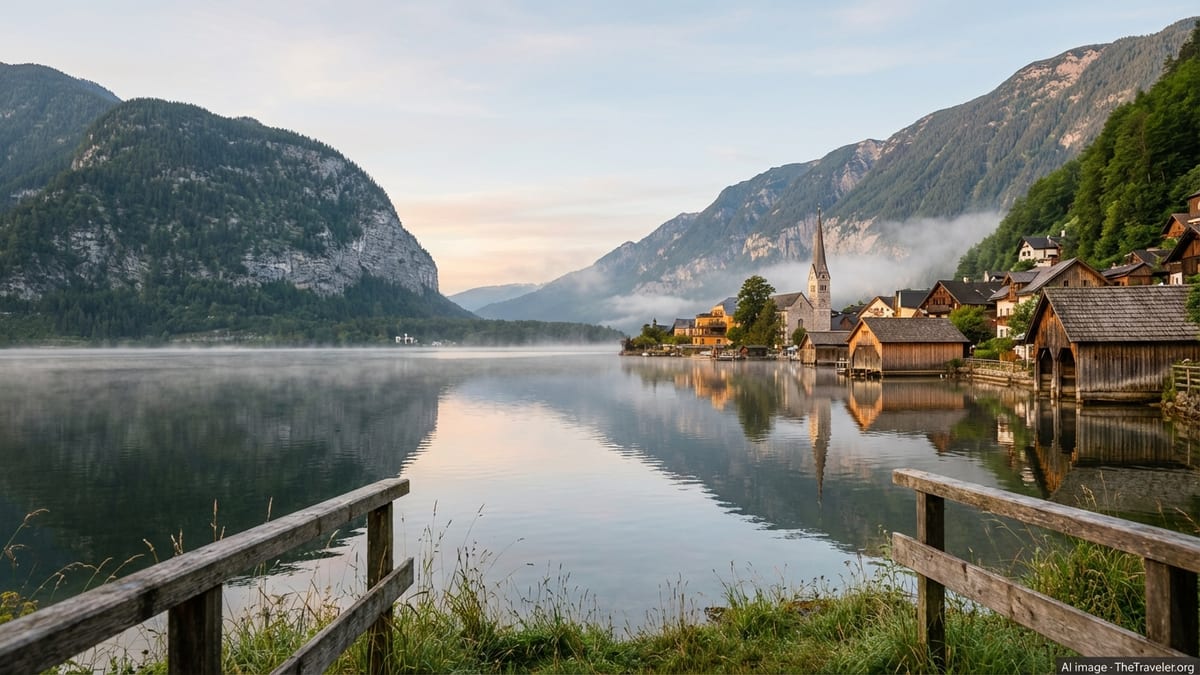
The Salzkammergut region, straddling parts of Salzburg, Upper Austria and Styria, is particularly prized for its lake scenery. Deep, fjord-like Hallstätter See, the clear waters of Wolfgangsee, and the larger Attersee and Traunsee are framed by dramatic rock faces and forested slopes. Lakeside villages such as Hallstatt, St. Gilgen and Traunkirchen combine wooden balconies, boathouses and church spires with easy access to boat rides and hiking trails. Sections of this landscape around Hallstatt and the Dachstein massif are recognized as a UNESCO World Heritage cultural landscape, underscoring their mix of natural beauty and human history.
SalzburgerLand and the Salzkammergut work well in most seasons, provided you know what to expect. In summer, lake swimming, easy mountain walks and long evenings in outdoor taverns are the main draw. Autumn brings colorful foliage in the hills and harvest festivals in the villages, while winter can be surprisingly atmospheric, with quiet lakes, Advent markets in Salzburg, and nearby ski areas operating in the higher mountains. Spring can feel more subdued but is a good time to find lower prices and fewer crowds, though some cable cars or seasonal hotels may still be closed.
Access is one of this region’s advantages. Many lakes can be reached by train or coach from Salzburg city, and short local bus rides link smaller villages. This makes the area attractive to travelers who prefer to avoid renting a car. It also makes it easy to combine Salzburg’s cultural sights with a few days on the water, perhaps staying in a lakeside inn and using boats, shore paths and mountain lifts to explore at a relaxed pace.
Vorarlberg and Lake Constance: Western Peaks and Contemporary Alpine Culture
Tucked into Austria’s far west, Vorarlberg is often overlooked by first-time visitors, yet it rewards those who venture beyond more famous regions. The province stretches from the shore of Lake Constance in the north to high peaks along the borders with Switzerland and Liechtenstein. The scenery is unmistakably Alpine, but the atmosphere feels subtly different, influenced by its proximity to German- and Swiss-speaking neighbors and its own strong regional identity.
Vorarlberg has become known for a distinctive blend of traditional wooden farmhouses and daring contemporary architecture. In the Bregenzerwald area, for example, timber-clad houses and barns sit beside award-winning modern structures, creating open-air showcases of craftsmanship and design. In summer, thousands of kilometers of marked trails invite walkers into meadows and forests, while themed hikes and cultural routes highlight local food producers, historic Alpine dairies and village chapels. On the northern edge of the province, Lake Constance offers a very different landscape of reed-fringed shores, cycling paths and mild breezes.
Winter in Vorarlberg is geared toward skiing and snowboarding just as strongly as Tyrol, but many resorts here are somewhat smaller and feel more intimate. Villages such as Lech and Zürs have long catered to an upscale skiing crowd, while other valleys maintain a quieter, family-oriented feel. In both summer and winter, the region places emphasis on accessible nature, with cable cars staying open into the warm months and a number of nature reserves set aside for gentle outdoor recreation, wildlife watching and educational trails.
Because Vorarlberg sits at a crossroads, it can be easily woven into broader European itineraries. Travelers arriving via Switzerland or southern Germany often use Bregenz or nearby towns as a first stop in Austria, while those doing a longer Alpine circuit may combine Vorarlberg with Tyrol or the Swiss canton of Graubünden. Good public transport connections, especially along the Lake Constance corridor, make it realistic to explore without a car, although a vehicle offers more flexibility for reaching high valleys and trailheads.
Carinthia and Styria: Lakes, Forests and Wine Country in the South
Austria’s southern regions of Carinthia and Styria share borders with Slovenia and, in Carinthia’s case, also Italy. Their landscapes shift from gentle hills to Alpine ridges, but compared to the more dramatic western provinces, the overall feel is softer and more Mediterranean-influenced. Summers tend to be warm, with many hours of sunshine, and this has helped shape a strong culture of lake life, outdoor dining and wine production.
Carinthia is best known for its bathing lakes, which number in the hundreds. Many are relatively shallow and achieve comfortably warm water temperatures in high summer. Wörthersee is among the most famous, lined with Belle Époque villas and grand hotels, as well as promenades and beach clubs that fill up on sunny days. Other lakes such as Millstätter See or Ossiacher See feel less showy and attract families and nature lovers who value swimming, rowing and lakeside walks. In the surrounding mountains, trails traverse forested slopes and connect churches, viewpoints and traditional farmsteads.
Styria, often called the “green heart” of Austria, is one of the most forested provinces in the country. The north is mountainous, offering hiking, winter sports and spa towns, while the south and southeast transition into rolling hills thick with orchards and vineyards. Wine roads wind through villages where local winemakers sell crisp white wines, and small guesthouses offer regional cuisine featuring pumpkin seed oil, seasonal vegetables and hearty meat dishes. The provincial capital Graz, with its preserved medieval core and youthful student population, makes a lively base for combining city experiences with day trips into the countryside.
These southern regions are particularly attractive from late spring to early autumn, when lake temperatures climb and vineyards are at their greenest. They also cater well to slow travelers who prefer a series of longer stays rather than racing between cities. Renting a car opens up many small roads and viewpoints, but main towns usually connect by rail, supplemented by local buses. In shoulder seasons, it is worth checking opening times for outdoor pools, lakeside facilities and wine taverns, which may operate on more limited schedules.
Vienna and the Surrounding Wachau and Lower Austria
Many trips to Austria begin or end in Vienna, the capital and largest city. Famous for its imperial palaces, coffeehouse culture and orchestras, Vienna offers a dense concentration of museums, concert halls and historic streets. Yet just beyond the ring roads lies an underappreciated countryside of woods, vineyards and river valleys that can transform a city break into a broader regional experience, especially for travelers who enjoy wine, cycling and historic monasteries.
The Wachau Valley along the Danube, upstream from Vienna, is arguably the best-known rural pocket of Lower Austria. Between the town of Melk and the small city of Krems, the river carves between terraced vineyards, castle ruins and baroque church towers. This relatively short stretch of valley is protected as a UNESCO World Heritage cultural landscape, celebrated for its combination of scenic beauty and long winemaking history. Visitors can cruise the river, hop between villages by bicycle on well-developed paths, or climb gently into the hills on foot for views over the terraces and water.
Closer to Vienna, the Vienna Woods and nearby wine villages offer easy escapes from the city. Tram and suburban rail lines carry locals and visitors into areas of mixed forest where walking trails connect hilltop lookouts and rustic taverns. In the wine-growing village of Grinzing and neighboring communities, traditional wine taverns known as Heurige serve young local wines alongside cold platters and simple cooked dishes. The atmosphere in these places can be particularly lively on warm evenings, when city dwellers spill into garden courtyards.
Logistically, this broader Vienna region is one of Austria’s simplest to explore. Fast trains connect Vienna with Krems, Melk and other gateways to the Wachau, and organized excursions are easy to arrange if you prefer not to navigate timetables yourself. Cyclists can rent bikes in multiple towns along the Danube and design one-way rides, returning to their starting point by boat or train. For those with limited time, even a single day trip from Vienna into the surrounding countryside can provide a sense of how city and landscape interlock in eastern Austria.
Burgenland and Eastern Austria: Sun, Steppe and Quiet Escapes
Beyond the main tourist corridors, eastern Austria offers a different character altogether. Burgenland, running along the borders with Hungary and Slovakia, is Austria’s easternmost province and among its sunniest. Low-lying hills covered with vines, reed-ringed lakes and open steppe landscapes dominate the scenery. This is one of the country’s most important wine regions, especially for both white wines and characterful reds, and also a major center for birdlife and nature conservation.
Neusiedler See, a large, shallow lake that crosses the border into Hungary, is the focal point for many visits to Burgenland. Its broad reed belts and shallow waters create a unique habitat that has been recognized within a UNESCO World Heritage listing. The area is particularly attractive to birdwatchers and cyclists, with numerous observation points and a network of cycle paths that circle the lake or branch into vineyard-covered hills. Lakeside towns offer small beaches, sailing and windsurfing opportunities in summer, as well as long evenings on terraces overlooking the water.
Away from Neusiedler See, Burgenland’s gentle landscapes appeal to travelers seeking slow, crowd-free itineraries. Wine villages host seasonal festivals and cellar-door tastings, while small castles and manor houses dot the countryside. Thermal spas near the Hungarian border offer warm pools that are especially pleasant in cooler months. Public transport exists but is more limited than around Vienna or in major Alpine valleys, so renting a car or joining organized excursions can help make the most of the region.
For those with extra time, combining Burgenland with the Wachau or southern Styria creates a broader picture of Austria’s wine culture, highlighting how varied the country’s vineyard landscapes can be. Eastern Austria is seldom as dramatic as the Alps, but its horizons, birdlife and relaxed pace leave a lasting impression, particularly on repeat visitors who have already experienced the big-name Alpine destinations.
The Takeaway
Austria’s regions are remarkably varied for such a compact country. The high Alps of Tyrol and Vorarlberg offer classic mountain adventures, while SalzburgerLand and the Salzkammergut mix lakes and culture in postcard-perfect settings. Farther south, Carinthia and Styria invite slow exploration among forests, thermal spas and vineyard hills, and Vienna’s hinterland reveals how quickly city streets give way to river valleys and wine villages. In the far east, Burgenland and its steppe lake show a quieter, sunnier side of the country that many first-time visitors miss.
Rather than trying to see everywhere at once, it is worth choosing two or three regions that fit your interests and season of travel. Outdoor enthusiasts might pair Tyrol with SalzburgerLand, while food and wine lovers could focus on Styria, Wachau and Burgenland. City-focused trips can stay mostly in Vienna and Salzburg with short escapes to nearby lakes and vineyards. With good public transport, well-marked trails and a strong tradition of hospitality, Austria makes it relatively easy to move between regions and tailor an itinerary that balances culture, nature and relaxation.
Whatever combination you choose, paying attention to altitude, weather patterns and seasonal opening times will help you get the best from each region. High Alpine routes may still be snow-covered in early summer, lakeside promenades can be quiet in spring, and wine taverns or smaller cable cars sometimes close between major holiday periods. Checking local information shortly before you travel and staying flexible on the ground will reward you with clear-peak views, uncrowded footpaths and evenings that feel in tune with the landscape and local life.
FAQ
Q1. What is the best time of year to visit Austria’s Alpine regions?
The most popular months for hiking and lake activities are typically June to September, while reliable skiing is usually found from December into early spring at higher-altitude resorts.
Q2. Which Austrian region should I choose for a first visit?
Many first-time visitors combine Vienna with SalzburgerLand or the Salzkammergut for an accessible mix of culture, lakes and gentle mountains, adding Tyrol if they want more dramatic Alpine scenery.
Q3. Do I need a car to explore Austria’s regions?
Major routes between cities, lake districts and some mountain valleys are well served by trains and buses, but a car offers extra flexibility in rural wine areas and smaller side valleys.
Q4. Which regions are best for families with children?
Tyrol, SalzburgerLand and parts of Carinthia are particularly family-friendly, with easy lakeside walks, adventure playgrounds, dedicated children’s hiking trails and many family-oriented hotels.
Q5. Where should I go in Austria if I am more interested in wine and food than mountains?
Consider focusing on southern Styria, the Wachau Valley and Burgenland, where vineyard landscapes, regional cuisine and wine taverns are central to the travel experience.
Q6. Is it possible to combine city sightseeing with nature in a short trip?
Yes. Vienna pairs well with the Wachau and nearby wine villages, while Salzburg can easily be combined with the Salzkammergut lakes or low Alpine foothills on day trips.
Q7. Are Austria’s regions suitable for travelers who do not ski?
Absolutely. Outside winter, the emphasis shifts to hiking, cycling, lake swimming and cultural visits. Even in winter, many resorts offer winter walking paths, spas and non-ski activities.
Q8. How many regions can I realistically visit in one week?
In about seven days, most travelers feel comfortable focusing on one major base and one secondary region, rather than trying to see the entire country, to avoid spending too much time in transit.
Q9. Which regions are quieter and less crowded than the main Alpine resorts?
Vorarlberg outside its flagship ski villages, much of Burgenland, and smaller valleys in Carinthia and Styria often have fewer international visitors than Tyrol’s best-known resorts.
Q10. How far in advance should I book accommodation in popular Austrian regions?
For peak summer and winter periods, it is sensible to reserve several months ahead in well-known resorts and lake districts, while shoulder seasons often allow more last-minute flexibility.