

In Colorado, trains do more than connect point A to point B. They climb through high mountain passes, hug the curves of deep river canyons, and glide past alpine meadows and red rock deserts that remain out of reach from the highway. Whether you are drawn to historic steam locomotives, family friendly day trips, or luxury glass domes rolling between Denver and Utah, Colorado’s scenic railways offer some of the most memorable train rides in North America.
Durango & Silverton Narrow Gauge Railroad
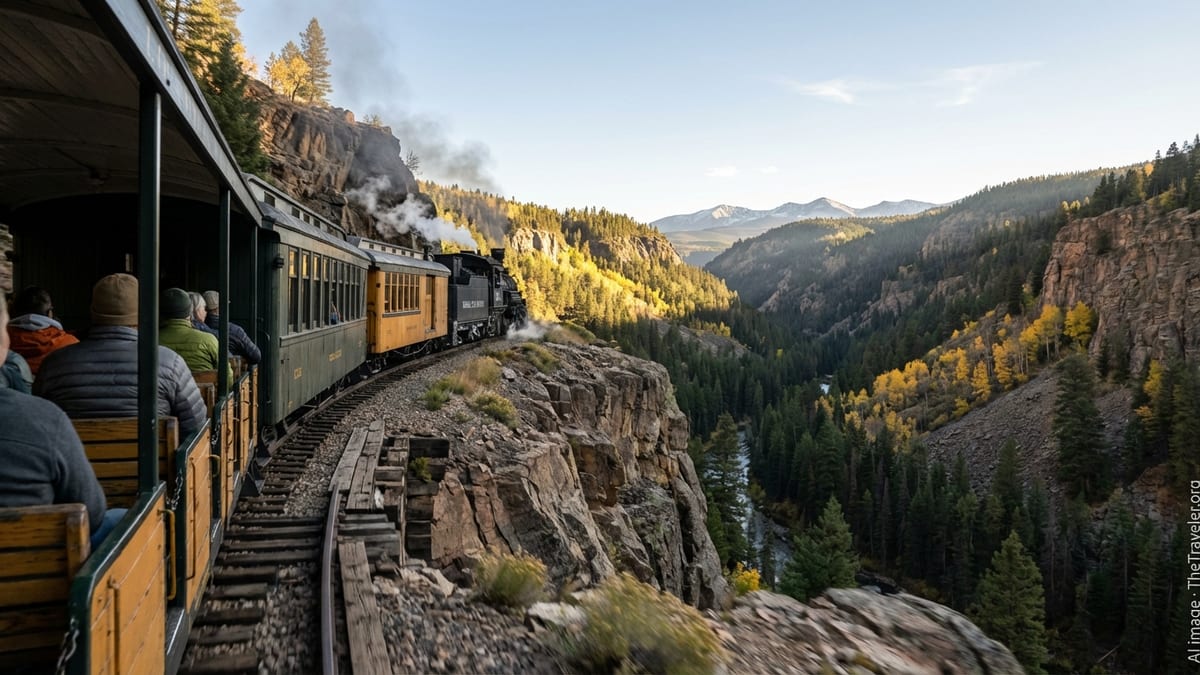
Few train journeys capture the romance of the American West quite like the Durango & Silverton Narrow Gauge Railroad. Operating since the 1880s, this historic line runs between the mountain town of Durango and the former mining outpost of Silverton in southwest Colorado. The route was originally built to haul silver and gold ore through the San Juan Mountains. Today it carries travelers in restored vintage coaches behind coal and oil fired steam locomotives, following a route so dramatic it has been designated a National Historic Landmark.
The line traces the Animas River into a steep canyon, with cliffs dropping to churning water on one side and rising toward forested peaks on the other. As the train climbs higher, views open to snow capped summits, pine covered slopes, and cascading side creeks. The narrow gauge track allows tighter curves and steeper grades than standard rail, which means the train can cling to rocky ledges high above the river in places that would make highway construction nearly impossible.
Most riders choose a full day round trip from Durango, which includes several leisurely hours in Silverton to explore wooden boardwalks, historic saloons, and mining era architecture. Seasonal themed departures add variety, from winter excursions into a snowy backcountry landscape to summer and fall specials that highlight wildflowers or golden aspens. For photographers, the open air gondola cars provide unobstructed views and the chance to feel the cool mountain air as the locomotive works its way up the grade.
Because this route is popular in peak summer and autumn foliage seasons, advance reservations are strongly recommended. Travelers should also be prepared for mountain weather that can shift quickly, packing layers even on sunny days. The reward is a classic Colorado rail experience where the pace is unhurried and the scenery feels timeless.
Royal Gorge Route Railroad
The Royal Gorge Route Railroad offers a different kind of drama. Based in the town of Cañon City, this line travels directly into the Royal Gorge of the Arkansas River, one of the deepest canyons in the state. Towering granite walls rise more than 1,000 feet above the train, while the Arkansas churns through a narrow rock corridor below. It is an intimate way to experience a landscape that can feel overwhelming when viewed only from the rim.
The train follows a route first carved out by competing railroads in the late 19th century, when access through the gorge was seen as crucial to opening up Colorado’s mineral rich interior. Today the focus is on scenery and relaxed dining rather than freight or hard travel. Modern coaches include large windows, bar service, and meals prepared to order in an onboard kitchen for breakfast, lunch, and dinner departures. Many travelers choose to alternate between their reserved seats and the open air cars, where the scale of the gorge feels especially striking.
Highlights include views of the Royal Gorge Bridge far overhead and the so called Hanging Bridge beneath the rails, a unique structure that allows the track to squeeze through the narrowest part of the canyon along the river. Wildlife sightings are common, particularly bighorn sheep that graze the rocky slopes and birds of prey riding thermal updrafts above the cliffs. Trains operate year round, with winter rides offering a quieter, snow dusted version of the canyon and summer departures providing warm temperatures and bright sunlight that illuminates the rock walls.
The Royal Gorge Route is particularly appealing to travelers who want a scenic outing without a full day commitment. Standard departures typically last a few hours and depart from a station close to the town center, making it easy to combine the ride with a visit to nearby state parks, river activities, or a side trip to other Front Range attractions.
Georgetown Loop Railroad
Just west of Denver, the Georgetown Loop Railroad delivers a compact but unforgettable introduction to Colorado’s narrow gauge heritage. The line links the historic towns of Georgetown and Silver Plume in Clear Creek Canyon, climbing more than 600 feet in elevation over a short distance using a series of curves, high fills, and the iconic Devil’s Gate High Bridge. When the loop was originally completed in the 19th century, it was considered an engineering marvel of mountain railroading.
Today, visitors ride in period inspired coaches behind steam and diesel locomotives on a route that winds past pine forests, steep canyon walls, and remnants of old mines. The high bridge is the signature moment. As the train creeps across its steel span, passengers are treated to sweeping views of the valley and the looping track below that gives the railroad its name. The feeling of being suspended between mountain slopes and sky makes the relatively short journey feel much larger than the mileage suggests.
The Georgetown Loop is a favorite for families and first time visitors to Colorado who want a scenic rail experience without committing an entire day or long drive. The railroad also integrates living history elements, including optional tours into a nearby silver mine and seasonal events that range from holiday themed rides to spring “bunny trains.” Because the line is located near Interstate 70 and less than an hour from Denver in normal traffic, it works well as a day trip from the city or as a scenic break on a longer road journey across the Rockies.
Operating seasons vary by year, but the railroad typically launches spring service as snow recedes and runs through the heart of fall foliage. As with most mountain excursions, dressing in layers is wise, even on warm afternoons. Seats in open cars are popular for photography, while enclosed coaches offer more protection from shifting weather at altitude.
Leadville Railroad
Climbing to more than 10,000 feet above sea level, the Leadville Railroad delivers high altitude views over the Upper Arkansas Valley and surrounding ranges. Departing from the historic mining town of Leadville, one of the highest incorporated cities in the United States, this diesel powered excursion train traces an old freight line into forests and meadows where the Continental Divide fills the horizon.
The journey is relatively gentle in pace, typically lasting about two hours round trip, which makes it an appealing option for travelers of varied ages and mobility levels. From the open and enclosed cars, passengers can look out over two of Colorado’s highest peaks, Mount Massive and Mount Elbert, as well as a broad sweep of lesser known summits. In summer, wildflowers dot the hillsides, while autumn rides showcase bright stands of aspen turning gold across the valley.
Leadville’s elevation means weather can shift quickly, with the possibility of sunshine, rain, or even snow in a single afternoon. Operators encourage guests to bring layers and be prepared for cooler conditions than in lower elevation towns nearby. Winter and shoulder season rides offer a particularly atmospheric experience, with snow blanketing the landscape and the train threading through a quiet forest landscape.
Because the railroad departs directly from Leadville’s compact town center, it is easy to combine a ride with a walking tour of Victorian era streets, a visit to local museums, or a stop in one of the historic saloons and cafes. For many travelers, the combination of high mountain scenery and the town’s mining heritage provides a deep sense of place that extends beyond the rails.
Cumbres & Toltec Scenic Railroad
While the Cumbres & Toltec Scenic Railroad crosses the state line into New Mexico, it remains one of Colorado’s most legendary train rides. This narrow gauge steam line runs between Antonito, Colorado, and Chama, New Mexico, over a route that includes the 10,015 foot Cumbres Pass and a succession of dramatic trestles, curves, and rock cuts. It is widely regarded by rail enthusiasts as one of the most authentic examples of Western mountain railroading still in operation.
The journey typically unfolds over a full day, with passengers riding in vintage coaches or open observation cars as the train climbs through high desert, aspen groves, and spruce forests. Long views take in distant peaks and wide meadows, while closer at hand the train works around tight curves where the locomotive and rear cars can sometimes be seen at the same time. The line includes significant historic infrastructure, from water towers and section houses to restored depots that help tell the story of how railroads once linked remote communities.
Because of the route’s length and elevation gain, riders experience a variety of climates and ecosystems in a single trip. Early season runs may encounter lingering snow at higher elevations, while late summer departures see green meadows and grazing livestock. In autumn, the mix of aspens and conifers makes for particularly vivid color as the train threads the high country.
The railroad typically provides motorcoach connections that allow for one way rail travel coupled with a road return, simplifying logistics for visitors. Given the full day commitment and higher elevations, travelers are advised to consider their comfort level with long excursions and thin mountain air. The reward is a deep immersion in both scenery and history that is difficult to match.
Rockies to the Red Rocks and Canyon Spirit Luxury Rail
Colorado’s scenic rail experiences are not limited to heritage lines. Between Denver and Moab, a luxury daytime rail journey known as Rockies to the Red Rocks has, in recent seasons, introduced a modern, glass domed perspective on the region’s landscapes. Operating under the Rocky Mountaineer banner, this route has offered a two day itinerary with an overnight in Glenwood Springs, linking the urban energy of Denver to the red rock country near Utah’s national parks.
The journey follows the Colorado River westward, passing through canyons, ranch country, and the historic Moffat Tunnel under the Continental Divide. Panoramic windows and elevated seating in some cars emphasize wide angle views of peaks, cliffs, and river bends. Instead of sleeper cabins, passengers spend the night in a hotel in Glenwood Springs, which allows for daylight only travel and uninterrupted views during the rail portions.
In recent updates, the company has announced that its United States operations will transition to a new brand, Canyon Spirit, while maintaining the core route through Colorado and expanding service toward Salt Lake City. For travelers, the essential appeal remains the same. This is a leisurely, comfort focused rail journey with meals prepared on board, hosted commentary, and an emphasis on smooth logistics rather than heritage equipment. It serves as a distinctive way to combine Denver with the canyon landscapes, either as a stand alone trip or as the center of a longer itinerary in the Rockies and the Southwest.
Because schedules and branding are evolving, prospective passengers should pay close attention to current season information, including departure dates, service levels, and package options. Availability can be concentrated in spring through fall, when daylight hours are long and weather is generally favorable. For those who appreciate the idea of watching the Colorado landscape unfold from a reclined seat with full service dining, this route offers a markedly different feel from Colorado’s vintage steam lines while still delivering standout scenery.
Planning Your Scenic Train Journey in Colorado
Colorado’s railways cover a wide geographic area and range from quick family outings to full day or multi day adventures. Choosing the right ride often starts with clarifying what type of experience you want. Steam powered narrow gauge lines like Durango & Silverton or Cumbres & Toltec emphasize history and the feel of classic mountain railroading, often at slower speeds with frequent curves and grades. Excursion lines such as the Royal Gorge Route or Leadville Railroad focus on access to dramatic scenery with comfortable, shorter rides that fit easily into a broader vacation. Luxury trains between Denver and Utah emphasize comfort, food, and multi day itineraries.
Seasonality is another key factor. Many of these trains operate primarily from late spring through fall, with peak demand in mid summer and during the autumn foliage period when aspens turn bright yellow. Some, such as the Royal Gorge Route and certain Leadville departures, add winter schedules that showcase snowy canyons and high country landscapes. If your travel is limited to shoulder seasons, check operating calendars closely and book early, as limited departures can fill quickly.
Altitude and weather also deserve attention. Several of these routes climb above 9,000 or even 10,000 feet, where the sun can be intense but air temperatures remain cool. Dressing in layers, staying hydrated, and allowing time to adjust to elevation, especially if arriving from sea level, can make the experience more comfortable. Open air cars are particularly appealing on clear days but can feel chilly when wind or storms move in, so having a jacket or light hat within reach is wise.
Finally, consider logistics such as parking, transfers, and overnight stays. Some lines depart from walkable downtown stations, while others have outlying depots where advance arrival is advised. Longer routes may incorporate motorcoach connections or hotel nights. Reading current season information about check in times, ticketing, and accessibility can help avoid surprises and ensure your time on board is focused on the views outside the window.
The Takeaway
From high passes in the San Juan Mountains to granite walls in the Royal Gorge and red rock canyons near the Utah border, Colorado’s scenic train rides bring travelers into landscapes that highways often only hint at. Each line has its own character, shaped by the history of mining, engineering, and tourism that made rail a lifeline in difficult terrain. Riding these trains is as much about stepping into that story as it is about taking photographs from an open air car.
Whether you are seeking a nostalgic steam powered journey, a short family outing close to Denver, or a glass domed luxury trip between major cities, there is a Colorado railway that fits your style and schedule. Planning ahead, understanding the elevation and weather, and matching your expectations to each route’s personality will go a long way toward turning a simple ticket into a highlight of your time in the Rockies.
FAQ
Q1. What is the most scenic train ride in Colorado for first time visitors?
For many first time visitors, the Durango & Silverton Narrow Gauge Railroad is the top choice thanks to its historic steam locomotives, deep river canyon views, and classic Old West atmosphere along the Animas River.
Q2. Do Colorado scenic trains operate year round?
Operation varies by railroad. Some lines, such as the Royal Gorge Route and portions of the Leadville Railroad schedule, run in winter with snow covered scenery, while others concentrate service from late spring through fall when weather and daylight are more favorable.
Q3. How far in advance should I book tickets for popular trains?
In peak summer and autumn foliage seasons, it is wise to book several weeks or even a few months ahead for flagship routes like Durango & Silverton, Cumbres & Toltec, and luxury Denver to Utah trains, especially if you prefer specific classes of service or dates.
Q4. Are scenic train rides in Colorado suitable for children?
Yes, most of these excursions are family friendly, with relatively gentle speeds, restrooms on board, and the option to move between open and enclosed cars. Shorter rides such as the Georgetown Loop or Leadville Railroad are especially popular with younger travelers.
Q5. What should I wear on a high elevation train ride?
Layered clothing works best. Even in midsummer, temperatures can feel cool at altitude, especially in open air cars. A light jacket, sun protection, and comfortable shoes will cover most conditions you are likely to encounter.
Q6. Can I take scenic trains in Colorado without renting a car?
It is possible but requires more planning. Routes like the Rockies to the Red Rocks or Canyon Spirit packages often include transfers and hotels, while others may be reachable by shuttle or regional bus services from major cities. Many visitors still find a rental car provides maximum flexibility.
Q7. Are there accessible options for travelers with limited mobility?
Most major excursion railroads in Colorado offer some level of accessibility, including assistance with boarding and reserved seating in accessible coaches. Because facilities and equipment vary, it is important to consult current accessibility details and contact the operator before booking.
Q8. Is there food available on board Colorado scenic trains?
Dining options depend on the line. Some trains offer full service meals prepared to order, particularly luxury and Royal Gorge departures, while others provide snacks and drinks or encourage passengers to bring light refreshments within stated guidelines.
Q9. What is the best season for photography on Colorado train rides?
Late summer and early fall are prime for clear skies and vivid colors, especially when aspens turn gold. Spring brings snow capped peaks and emerging greenery, while winter rides can be striking for those who enjoy snow filled scenes and softer light.
Q10. Can I combine multiple scenic train rides in one Colorado trip?
Yes, many travelers build itineraries that link two or more routes, such as pairing Durango & Silverton with the Cumbres & Toltec or combining a Front Range outing on the Georgetown Loop or Royal Gorge Route with a longer luxury or narrow gauge journey elsewhere in the state.