


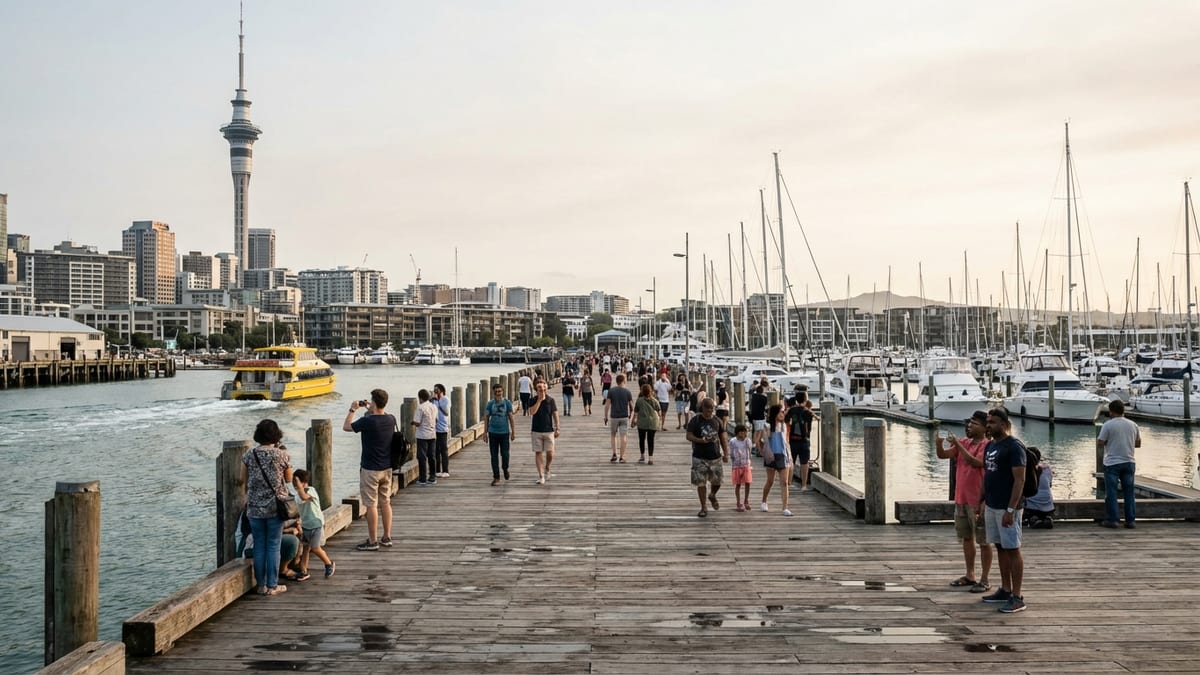
Auckland, known in te reo Māori as Tāmaki Makaurau, is often the first stop for visitors to New Zealand and a destination worth far more than an overnight layover. Built around sparkling harbours and volcanic cones, it mixes urban energy with Pacific culture and easy access to nature.
For first-time visitors, the challenge is rarely finding something to do, but learning how to make sense of all the choices. This guide focuses on the most rewarding experiences for a first trip, from iconic skyline views and island escapes to neighbourhood wanderings, food, and Māori culture.
Getting Oriented: The Lay of the Land in Tāmaki Makaurau
Before you start ticking off attractions, it helps to understand how Auckland fits together. The city is stretched between two harbours and built atop a field of dormant volcanic cones, which explains both the scenery and some of the traffic. Most first-time visitors stay in or near the central business district, within walking distance of the waterfront, ferries, and major sights. From there, day trips fan out easily to islands, beaches, wine country, and coastal walks.
Use your first day to get your bearings, tune into the city’s rhythm, and experience a few of its most recognisable views. This section focuses on vantage points and spots that quickly answer the question many new arrivals have when they step outside the airport: what kind of place is this?
Take in the View from Sky Tower
Sky Tower is Auckland’s most recognisable landmark and one of the easiest ways to get an overview of the city layout. Rising 328 metres in the central business district, it is one of the tallest freestanding structures in the Southern Hemisphere and serves as a telecommunications hub as well as a major visitor attraction.
High-speed lifts whisk you to multiple observation levels, where floor-to-ceiling windows and sections of glass flooring reveal the harbour, volcanic cones, and coastal suburbs. On clear days, the views stretch far beyond the inner city. Visiting at sunset or after dark shows off the city lights and the busy harbour, while daylight hours make it easier to pick out landmarks you will explore later.
Thrill seekers may add a SkyWalk around the exterior ledge or a controlled SkyJump from the tower. Everyone else can settle for a drink or a leisurely meal at one of the tower’s dining venues, which turn slowly to make the most of the panorama.
Stroll the Central Waterfront and Viaduct Harbour
Auckland’s relationship with the sea becomes obvious as soon as you reach the downtown waterfront. Starting near the historic ferry terminal and moving west toward Viaduct Harbour and Wynyard Quarter, you pass marinas filled with yachts, converted warehouses, and a growing collection of bars, cafes, and public spaces.
Viaduct Harbour was redeveloped around New Zealand’s America’s Cup campaigns and remains a focal point for sailing culture. It is one of the best places for jet lagged visitors to stretch their legs, people-watch, and understand why Auckland’s nickname is the City of Sails. Just beyond, Wynyard Quarter features playgrounds, waterfront promenades, and seasonal events that make it especially appealing for families.
The waterfront is also a practical hub. Ferries depart from here to Waiheke Island, Devonport, and Rangitoto, and boat tours explore the Waitematā Harbour. Keeping this area in mind will help you navigate almost any first-time itinerary.
Climb a Volcanic Cone for City and Harbour Vistas
Auckland sits on an extensive volcanic field, and several dormant cones near the city centre provide both history and outstanding views. Two are especially convenient for first-time visitors: Maungawhau / Mount Eden and Maungakiekie / One Tree Hill.
Maungawhau, just south of the central city, is a relatively short but steep walk from the nearest bus routes or a quick ride by taxi or rideshare. At the summit, you see the deep, grassed-over crater as well as a 360-degree panorama of the urban area, harbours, and distant ranges. Interpretive signs explain the site’s significance as a former Māori pā, or fortified village.
Maungakiekie, set slightly further out in Cornwall Park, combines volcanic landscape with rolling parkland, grazing sheep, and tree-lined avenues. It is especially pleasant for picnics and slower walks. Both cones are co-governed with Māori authorities, and vehicle access to the summits has been restricted for cultural and conservation reasons, so expect to walk the final section.
Island Escapes: Waiheke, Rangitoto and Beyond
One of Auckland’s biggest advantages for first-time visitors is the fleet of ferries waiting at its downtown wharves. Within 40 minutes or less, you can trade the central business district for vineyards, walking tracks, or volcanic lava fields. Even a short island day trip offers a change of pace and a contrasting perspective on the city skyline.
For many visitors, a day on the Hauraki Gulf islands becomes the highlight of their Auckland stay. The key is to choose the island experience that suits your interests, whether that is beaches, wine tasting, hiking, or wildlife.
Sip and Swim on Waiheke Island
Waiheke Island is the most popular island day trip for first-time visitors, and for good reason. About a 40-minute ferry ride from the central city delivers you to rolling hills covered in vines, golden-sand beaches, and relaxed coastal settlements. The island is known for its vineyards, olive groves, and creative community.
Many visitors opt for an organised wine tour that includes transport between several of the island’s cellar doors, often paired with vineyard lunches or tasting platters. Independent travellers can use the island’s buses or hire a car, scooter, or e-bike to link wineries with swimming at beaches such as Oneroa, Palm Beach, or Onetangi.
Beyond food and wine, Waiheke offers walking tracks, zipline adventures, and galleries. In summer and on weekends, advance booking for popular eateries and ferries is wise, as the island can be busy.
Walk the Lava Fields of Rangitoto Island
Rangitoto is the youngest and one of the most distinctive volcanic cones in the Auckland field, rising out of the harbour in a symmetrical cone of black lava. Accessible by a dedicated ferry service from the downtown terminal, it is uninhabited and has no shops or cafes, which gives visits a more rugged, outdoorsy feel.
The classic experience is the summit walk, a relatively straightforward climb through regenerating native bush and lava fields that typically takes a couple of hours return. At the top, you are rewarded with sweeping views of the city skyline, the North Shore, and neighboring islands. Side tracks lead to lava caves that can be explored with a torch.
Because there are no services on the island, visitors must bring their own water, snacks, sun protection, and suitable footwear. The conservation status of Rangitoto and its link to nearby Motutapu Island also make it one of the best places near Auckland to see native birdlife.
Ferry Across to Devonport
For an easier, more urban-minded excursion, the short ferry ride to Devonport offers heritage architecture, cafes, and more volcanic viewpoints. The village sits directly across the harbour from downtown and retains a slower, seaside feel.
Stroll along the main street, explore small galleries and bookshops, then walk up Takarunga / Mount Victoria or Maungauika / North Head. Both hills provide views back toward the city and out to Rangitoto, with North Head also featuring old military fortifications carved into the hillside.
Devonport works well for visitors with limited time or those who prefer gentle walks to longer hikes, yet still want to experience the harbour and a different perspective on the central city.
Cultural Highlights and Museums
Auckland is home to some of New Zealand’s most important cultural institutions, from national-scale museums to galleries and maritime collections. Spending time indoors can be a welcome break from sun and wind while also providing context for the landscapes and communities you encounter elsewhere in the country.
For first-time visitors, a blend of Māori and Pacific culture, maritime history, and visual art delivers a rounded introduction to the city’s identity. Most of these institutions are centrally located or easily reached by public transport or short taxi rides.
Explore Auckland War Memorial Museum Tāmaki Paenga Hira
Sitting on a rise in the middle of the Auckland Domain, the Auckland War Memorial Museum is one of the city’s signature cultural attractions. The neoclassical building houses extensive collections on natural history, New Zealand’s military history, and the stories of the peoples who have lived in Aotearoa, including Māori and Pacific communities.
Many first-time visitors focus on the Māori galleries, which include intricately carved meeting houses, canoes, and taonga, or treasured objects. Exhibits explain concepts such as whakapapa (genealogy) and mana (authority or prestige), which surface frequently in conversations across the country. Pacific collections highlight the wider region’s navigation and cultural diversity.
The museum’s position inside the Domain also makes it easy to combine with walks through gardens, including the Wintergarden complex with glasshouses, ponds, and seasonal plantings. On fine days, you can bring a picnic and enjoy the views over the city and harbour from the museum steps.
Visit Auckland Art Gallery Toi o Tāmaki
A short walk from the lower end of the central business district, Auckland Art Gallery Toi o Tāmaki showcases both New Zealand and international art in a combination of heritage and contemporary buildings. Its collection includes historic European works, modern and contemporary New Zealand art, and a strong representation of Māori and Pacific artists.
The gallery’s architecture, with its sweeping wooden canopies and glass, frames views of Albert Park and the city streets. Rotating exhibitions frequently highlight different aspects of New Zealand’s artistic story, from landscape painting to experimental multimedia installations.
For first-time visitors, the gallery offers a chance to see how artists have interpreted the country’s environment, politics, and cultural debates, complementing the historical and natural-science focus of the Auckland Museum. Many exhibitions are free or have modest entry fees, making this a flexible stop even on shorter visits.
Discover New Zealand Maritime Museum Hui Te Ananui a Tangaroa
Given Auckland’s strong connection to the sea, the New Zealand Maritime Museum on Hobson Wharf is a natural fit for many itineraries. The museum traces seafaring history from early Polynesian voyagers who navigated vast Pacific distances using stars and currents through to modern yacht racing and recreational boating.
Exhibitions delve into immigration stories, trade, shipbuilding, and the evolution of New Zealand’s relationship with its coastline. Full-sized boats, historical artifacts, and interactive displays keep the experience varied, and heritage vessels moored alongside the museum sometimes operate harbour sailings.
Located steps from the central ferry terminal and Viaduct Harbour, the museum can be easily paired with a waterfront walk or a cruise, reinforcing the sense that Auckland’s past and present are anchored in the water that surrounds it.
Neighbourhoods, Food, and the Urban Scene
Beyond the central business district and headline attractions, Auckland’s character reveals itself in its neighbourhoods and food. This is one of the most diverse cities in the Pacific, shaped by Māori, European, Pasifika, and Asian communities. For first-time visitors, sampling the food scene and wandering different districts provides insight into how locals actually live.
Plan to set aside at least a day or two for relaxed urban exploration. Rather than trying to see every suburb, pick a few areas with contrasting personalities and make space for unstructured wandering, coffee stops, and conversations.
Eat and Shop Around Britomart and Commercial Bay
Britomart, just inland from the ferry terminal, has transformed from a transport hub and warehouse district into a dense cluster of restaurants, bars, boutiques, and design shops. Cobblestone laneways thread between heritage buildings and contemporary architecture, making it one of the most walkable and atmospheric parts of central Auckland.
Nearby, the Commercial Bay precinct has added more dining and shopping options, with food courts showcasing local and international flavours. Many eateries open from breakfast through late evening, so the area works as well for coffee and pastries as it does for cocktails and shared plates.
For first-time visitors staying nearby, Britomart becomes a default base for meals and evening strolls, and its proximity to transport links makes it an easy place to orient yourself after a day of sightseeing.
Soak Up Local Life in Ponsonby
West of the central business district, Ponsonby blends Victorian villas with a cosmopolitan dining and bar scene. The main strip along Ponsonby Road is lined with cafes, bistros, boutiques, and small galleries, drawing both locals and visitors in the evenings and on weekends.
Come for brunch and you will find a parade of dog walkers, families, and groups of friends. In the evenings, the district shifts toward small-plate restaurants, cocktail bars, and informal eateries. Side streets reveal beautifully maintained wooden houses and leafy residential blocks, which reward slow, observant walks.
Ponsonby’s nightlife tends toward casual sophistication rather than large-scale clubs, making it suitable for most age groups. Several venues host live music or DJ sets, and the area is a focal point for some of Auckland’s LGBTQ+ nightlife as well.
Experience the Creative Edge of Karangahape Road (K Road)
Karangahape Road, usually shortened to K Road, sits along a ridge above the central city and has a long history as a bohemian and nightlife district. Today it remains one of Auckland’s most distinctive streets, home to vintage clothing shops, record stores, small galleries, cafes, bars, and late-night venues.
By day, you can browse independent retailers and grab coffee at cafes that often double as creative studios or performance spaces. Street art, heritage buildings, and views down side streets toward the harbour make the area photogenic and slightly gritty in a way that contrasts with newer, polished precincts.
After dark, K Road becomes a nightlife hub with live music, clubs, and bars that reflect the city’s diversity. Visitors should use basic big-city common sense, but it is an important part of Auckland’s cultural story and a reminder that the city’s personality extends beyond its postcard views.
Sample Auckland’s Multicultural Food Scene
Auckland’s population includes substantial communities with roots in Samoa, Tonga, Fiji, China, India, Korea, and many other parts of the world. This diversity is most obvious in the food, from high-end tasting menus to suburban food courts and night markets.
Within the central city, you will find everything from Pacific-inspired fine dining to contemporary New Zealand bistros and specialist ramen, dumpling, or curry spots. Venture further afield and neighbourhoods such as Sandringham, Dominion Road, and parts of South Auckland offer excellent Indian, Southeast Asian, and Chinese cuisines in more casual settings.
Seasonal night markets, often held in large car parks or malls, bring together food trucks and stalls serving dishes from across the Pacific and Asia. For first-time visitors, seeking out at least one such market or venturing to a suburban strip for dinner can be as memorable as a night at a well-known downtown restaurant.
Nature, Beaches, and Coastal Walks
One of Auckland’s biggest draws for first-time visitors is how quickly you can swap city streets for beaches, coastal cliffs, and native forest. The city stretches between two bodies of water, the Tasman Sea to the west and the Pacific Ocean to the east, with regional parks preserving much of the natural landscape.
If your itinerary allows, dedicate at least one full day to exploring Auckland’s outdoor side. Even short walks and easily accessible beaches offer a powerful sense of place and help explain why many residents would rather spend weekends in the surf or bush than in the city centre.
Head West to Piha and the Waitākere Ranges
Piha Beach, on the wild west coast, is one of Auckland’s most iconic coastal destinations. Black volcanic sand, rugged headlands, and powerful surf create dramatic scenery, and the beach is watched over by Lion Rock, a distinctive rocky outcrop. The drive from central Auckland passes through the Waitākere Ranges, with winding roads, viewpoints, and patches of dense native forest.
Visitors should treat the surf with respect, swimming only between the surf lifesaving flags and paying attention to local advice. Even for those who do not enter the water, walking along the sand, exploring tidal pools at low tide, and watching the waves from safe vantage points are rewarding.
The broader Waitākere region includes walking tracks through regenerating forest, waterfalls, and additional beaches such as Karekare and Muriwai. Some trails have been closed or modified in recent years to protect kauri trees from disease, so check current information before setting out.
Relax on the Eastern Bays
Closer to the central city, the eastern bays provide a softer introduction to Auckland’s coastal life. Suburbs such as Mission Bay, Kohimarama, and St Heliers line the inner harbour with sandy beaches, grassy reserves, and promenades backed by cafes and ice-cream shops.
A popular local activity is to walk or cycle along the waterfront path that runs from the central city toward these suburbs, watching the skyline recede behind you. Mission Bay in particular can be busy on fine weekends, with families, joggers, and groups of friends gathering on the grass or at roadside eateries.
These beaches are generally more sheltered than the west coast, making them friendlier for cautious swimmers and families with small children. They work well as a half-day outing or an evening escape from the central city.
Walk in Native Bush Close to the City
Even within the urban area, pockets of native bush provide short, accessible walks. In addition to tracks in the Waitākere Ranges and on Rangitoto, consider smaller reserves and parks within or near the city limits if your schedule is tight.
Cornwall Park and the adjoining One Tree Hill Domain blend pastoral landscape with stands of native trees and volcanic features. Western Springs offers lakeside paths close to Auckland Zoo, while the Auckland Domain combines sports fields, mature trees, and the Wintergarden complex.
For first-time visitors who will travel elsewhere in New Zealand later in their trip, these urban green spaces provide a gentle introduction to local flora and walking conditions before tackling longer hikes further afield.
Family-Friendly Auckland
Auckland is an easy city to navigate with children, offering a mix of outdoor play, animal encounters, and interactive exhibitions. Many attractions are clustered within a short drive or bus ride of the central city, and the maritime climate means outdoor spaces can be used for much of the year with appropriate clothing.
Families visiting for the first time can build an itinerary that balances structured attractions like zoos and aquariums with unhurried time on beaches, in playgrounds, and on ferries, giving younger travellers a variety of experiences without excessive travel time.
Meet Wildlife at Auckland Zoo
Auckland Zoo in Western Springs is one of New Zealand’s leading zoological parks, home to more than a thousand animals representing over a hundred species across themed zones. Exhibits showcase African savannah animals, South American species, and native New Zealand wildlife in immersive enclosures.
The zoo focuses strongly on conservation and education, with keeper talks, behind-the-scenes experiences, and interactive displays explaining how visitors can support wildlife protection. Sections such as Te Wao Nui highlight native species and habitats, helping visitors link what they see here with the landscapes they might encounter elsewhere in the country.
Large, shaded play areas, picnic spots, and on-site food outlets make it easy to spend a full or half day on site. The zoo pairs well with nearby Western Springs park for additional open space and lake views.
Spend Time on Playgrounds, Pools, and Simple Outdoor Fun
Along Auckland’s waterfront and in its larger parks, you will find modern playgrounds that cater to a range of ages. Wynyard Quarter’s play spaces, for example, integrate climbing structures, water features, and maritime themes, creating an easy stop during a harbour walk or lunch break.
During warmer months, public pools and splash pads around the city become popular with local families. While these facilities are not always the headline attractions featured in guidebooks, they offer first-time visitors with children a way to blend into local routines and give younger travellers a break from sightseeing.
Simple activities such as feeding ducks at Western Springs, chasing waves at Mission Bay, or riding the short ferry to Devonport can be as memorable for children as major attractions, especially when framed as small adventures.
The Takeaway
For a first-time visitor, Auckland is less a single must-see sight than a collection of experiences that reveal different sides of the city. Look up from the Sky Tower or a volcanic cone to understand its layout, then head out on the water to feel how deeply it is tied to the harbours and the Hauraki Gulf. Balance museum and gallery visits with time in neighbourhoods, letting the food and street life communicate the city’s diversity.
If your wider New Zealand itinerary pulls you quickly toward other regions, even two or three well-planned days in Auckland can deliver a satisfying overview: an island excursion, a taste of Māori culture and history, a sunset on the west coast or along the eastern bays, and a couple of memorable meals in the central city or Ponsonby. With more time, you can dive deeper into suburban food scenes, coastal walks, and creative districts.
Auckland rewards curiosity and a willingness to move between its urban core and surrounding nature. For many travellers, it becomes more than just a gateway city. It is the place where a New Zealand journey begins to make sense, where big-sky views, Pacific breezes, and the sound of ferries arriving and departing combine into a first impression that lingers long after the flight home.
FAQ
Q1. How many days should a first-time visitor spend in Auckland?
Most first-time visitors are well served with two to four full days in Auckland, which is enough time to explore the central city, take at least one island or west coast day trip, visit a major museum, and sample the food scene without rushing.
Q2. Is it better to stay in the central business district or in a suburb?
Staying in or near the central business district gives easy access to ferries, major attractions, and public transport, which is ideal for most first-time visitors. Suburbs such as Ponsonby or Parnell offer a more local feel but require slightly more travel time to reach the waterfront and main sights.
Q3. Do I need a car to see the best of Auckland?
You can see many of Auckland’s key attractions without a car by using ferries, buses, and walking, especially around the central city, islands, and nearby suburbs. A car becomes more useful for visiting west coast beaches, some regional parks, and more distant suburbs on a flexible schedule.
Q4. What is the best time of year to visit Auckland?
Late spring, summer, and early autumn from roughly November to March usually offer the warmest weather and the best conditions for beaches and outdoor activities. However, this is also the busiest period, so shoulder seasons like October or April can provide a good balance of milder weather and fewer crowds.
Q5. Is Auckland an expensive city for travellers?
Auckland can feel relatively expensive in terms of accommodation and dining, especially in peak season, but costs can be managed by using public transport, choosing casual eateries and food markets, and combining paid attractions with free walks, parks, beaches, and viewpoints.
Q6. How easy is it to experience Māori culture in Auckland?
Auckland offers several accessible ways to experience Māori culture, including dedicated performances and guided experiences at venues such as the Auckland War Memorial Museum, public artworks and names rooted in te reo Māori, and community events and markets where Māori creators and businesses participate.
Q7. Are Auckland’s beaches safe for swimming?
Many of Auckland’s beaches are suitable for swimming, but conditions vary. Eastern harbour beaches are generally more sheltered, while west coast surf beaches can be powerful and hazardous. Wherever you go, swim between the surf lifesaving flags when present, heed local signage, and ask lifeguards or locals about current conditions.
Q8. What should I pack for a first visit to Auckland?
Pack layers suitable for changeable maritime weather, including a light waterproof jacket, comfortable walking shoes, sun protection such as a hat and sunscreen, and a daypack for water and snacks. If you plan to hike or visit Rangitoto or the west coast, sturdier footwear and quick-drying clothing are useful.
Q9. Is Auckland easy to get around using public transport?
Auckland’s public transport network of buses, trains, and ferries covers most areas that first-time visitors are likely to explore, especially within and near the central city. Services connect key points such as the airport, downtown, major suburbs, and some attractions, though journey times can be longer than using a car in off-peak periods.
Q10. Can Auckland be a good base for wider North Island day trips?
Auckland can serve as a base for some longer day trips to places such as Hobbiton Movie Set, the Waitomo Caves, or the Bay of Islands, but these outings involve several hours of travel each way. If time allows, many visitors prefer to treat Auckland as a distinct stop and then stay overnight closer to those other North Island destinations.