

Bulawayo, Zimbabwe’s second largest city, is often overshadowed by Victoria Falls or Harare, yet anyone who lingers here discovers a place rich in museums, markets, and layered heritage.
Once a key node on the rail line between South Africa and the interior, Bulawayo grew into an elegant, leafy city whose streets radiate from a compact colonial core into historic townships and out to UNESCO listed ruins. For travelers interested in history, culture, and everyday urban life, it offers one of the most rewarding city experiences in Southern Africa.
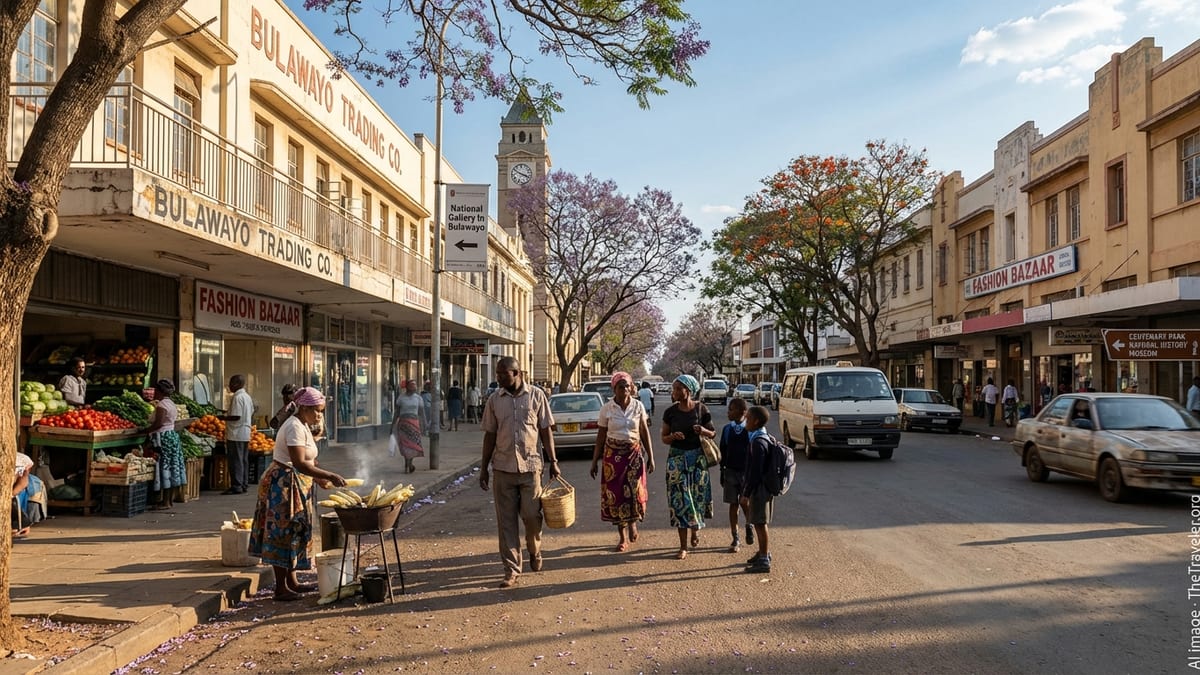
Museums That Bring Matabeleland’s Story to Life
Bulawayo is widely regarded as Zimbabwe’s museum capital, with institutions that cover everything from natural history and archaeology to rail travel and visual art. These museums are not only repositories of objects but also gateways into understanding the region’s past kingdoms, colonial era, and contemporary culture. Allow at least a full day, ideally two, to move between these collections at a relaxed pace.
Natural History Museum of Zimbabwe
Set within Centenary Park just north of the city center, the Natural History Museum of Zimbabwe is often cited as one of the leading natural science museums in Africa. Housed in a circular, multi level building completed in the early 1960s, it contains nine public galleries and extensive research collections that continue to support active scientific work.
Exhibits range from striking dioramas of African mammals and birds to geology, paleontology, and archaeology. One of the highlights is the geology section, which traces the formation of Zimbabwe’s mineral rich landscapes, alongside displays that explain the evolution of wildlife in southern Africa. Archaeological galleries illuminate the rise of early states such as Mapungubwe, Great Zimbabwe, and Khami, tying local sites to wider regional narratives.
Plan to spend two to three hours here. The museum’s scale can be surprising, so it helps to move floor by floor, pausing at sections that connect most strongly with what you plan to see outside the city, such as Matobo Hills or Khami Ruins.
Bulawayo Railway Museum
Bulawayo’s emergence as an industrial and commercial hub is closely tied to the arrival of the railway at the end of the 19th century. The Bulawayo Railway Museum, located near the main train station, documents that story through rolling stock, historic engines, and a trove of memorabilia from the era of steam.
Visitors can walk through old carriages, inspect heavy engineering equipment up close, and step inside the personal coach once used by Cecil John Rhodes. Information panels and photographs help place the railway in the context of colonial expansion, trade, and urban growth, while guides on site often add personal anecdotes about working life on the rails.
The museum is especially atmospheric in the late afternoon when light angles across the stationary locomotives. Allocate at least 90 minutes, more if you have a particular interest in transport or industrial heritage.
National Gallery in Bulawayo
The National Gallery in Bulawayo sits in a handsome building near the city center, operating as a regional branch of Zimbabwe’s national visual arts institution. Its rotating exhibitions highlight contemporary Zimbabwean painters, sculptors, photographers, and mixed media artists, alongside occasional shows of regional and international work.
Beyond the galleries, this is a useful place to get a sense of the city’s creative pulse. There are often workshops, artist talks, and community projects, many of them engaging with themes such as identity, migration, and the environment. The small shop frequently stocks locally produced prints, crafts, and art books that make thoughtful souvenirs.
Even if you are not a dedicated gallery goer, a short visit offers a refreshing counterpoint to more traditional historical sites and introduces you to Bulawayo as a living, evolving cultural center.
Matobo and Khami Interpretation at City Museums
Several Bulawayo museums hold key collections that relate directly to nearby World Heritage sites, in particular Matobo Hills and Khami Ruins. At the Natural History Museum you will find artifacts from Khami, including imported Ming porcelain fragments and other trade goods that point to the city’s global connections centuries ago.
Take note of these exhibits before or after a day trip. Having seen the ceramics, beads, and tools used at Khami or in the Matobo area can deepen your appreciation for the ruins and rock art when you encounter them in situ on later excursions.
Historic Markets and Everyday City Life
Bulawayo’s markets are where the contemporary city comes into focus. Here, residents shop for vegetables and hardware, tailors set up in cramped stalls, and artisans sell hand crafted goods. These spaces combine commerce and sociality, and for visitors they offer one of the most immediate ways to feel the city’s energy and talk with locals.
Makhokhoba and Township Markets
Makhokhoba is Bulawayo’s oldest township and remains a vital center of community life. The name is often linked to an onomatopoeic reference to the sound of walking sticks, recalling early residents and municipal workers. Today, its streets and small markets give glimpses into the daily rhythms of township life.
Local markets in and around Makhokhoba typically feature fresh produce, clothing, second hand goods, and informal food vendors. You may encounter stalls grilling maize, simple eateries serving sadza with relish, and barbers or tailors working directly on the pavement. While not an organized tourist market, this is one of the most authentic spaces to experience Bulawayo beyond the central grid.
Visitors should dress modestly, keep valuables discreet, and ask before taking photographs. Going with a trusted local guide or joining a township walking tour is recommended, as guides can facilitate respectful interactions and explain the area’s political and cultural history.
City Center Produce and Craft Markets
Closer to the city center, Bulawayo’s main produce markets supply residents with fruit, vegetables, and everyday staples. The atmosphere is fast paced, with traders calling out prices, porters weaving through narrow passages, and music spilling from nearby shops. For travelers who like to cook, these markets are the best place to buy seasonal produce before heading back to a self catering guesthouse.
Interspersed among the food stalls, you will often find vendors selling small crafts, baskets, or wood carvings brought in from rural areas. Quality can vary, but with patience you can pick up useful woven items such as mats, fruit bowls, and market baskets that support artisanal livelihoods.
Bargaining is common, though usually conducted with good humor. Taking a moment to greet vendors and ask questions about their goods tends to be appreciated and can lead to more meaningful exchanges than simply hurrying through with a camera.
Mzilikazi Arts and Crafts Centre
On the northern side of the city, Mzilikazi Arts and Crafts Centre has long been a hub for training and producing high quality arts and crafts. Originally set up to nurture skills in ceramics, painting, sculpture, and textiles, it continues to host working studios and workshops that supply galleries and shops across Zimbabwe.
Visitors can often watch artisans at work, shaping clay pots, firing ceramics, or finishing stone sculptures in serpentine and other local stones. The on site shop usually carries a carefully selected range of pieces, from functional tableware to decorative art, at prices that reflect both the quality of work and the time invested.
Purchasing directly here has a number of advantages. You gain access to well made, original pieces, can ask questions about techniques and symbolism, and know that a larger share of the proceeds reaches the artists. It is an excellent stop for travelers looking to take home items that go beyond generic souvenirs.
Street Food, Cafes, and Informal Trading
Many of Bulawayo’s most engaging market experiences take place outside formal structures. Small clusters of vendors congregate near bus ranks and busy junctions, selling roasted maize, fried snacks, or seasonal fruits such as mangoes and guavas. Simple cafes and “takeaways” serve quick plates that reflect local tastes, including beef stews, offal dishes, and variations on chips and fried chicken.
For visitors, this informal economy offers a chance to try everyday foods at very modest prices. Prioritize stalls with a steady stream of local customers, which often indicates freshness and quality. As always, basic precautions help, such as choosing freshly cooked items and carrying hand sanitizer or wipes.
Unmissable Heritage Sites in and around Bulawayo
Bulawayo sits close to some of Zimbabwe’s most important heritage landscapes, from rock art filled hills to stone built city ruins. Many of these sites are recognized on the World Heritage List or protected as national monuments. They reveal complex histories of statehood, spirituality, trade, and resistance that stretch far beyond the colonial period.
Khami Ruins National Monument
Khami Ruins, located about 22 kilometers west of Bulawayo, are the remains of a once thriving capital of the Kingdom of Butua, associated with the Torwa dynasty. The city flourished roughly between the 15th and 17th centuries and was later abandoned after political upheavals and regional power shifts. Today, it is recognized as a UNESCO World Heritage site and is considered the second largest stone built monument in Zimbabwe after Great Zimbabwe.
The ruins spread across a series of low hills and terraces overlooking Khami Dam. Stone retaining walls support artificial platforms on which elite residences once stood, decorated with distinctive chevron and checkered patterns. Narrow passageways, terraces, and stairways connect different levels, giving a clear sense of planned, hierarchical space. Archaeological finds, including Ming porcelain and European ceramics, point to long distance trade links that tied Khami to networks stretching across the Indian Ocean and beyond.
Visiting Khami involves moderate walking over uneven ground, with little shade in some sections. It is best explored in the cooler hours of the morning or late afternoon. A small site museum at the entrance holds some artifacts and contextual displays, and local guides can be hired to explain the layout of the complexes and the social structure of the historical city. Try to combine a guided overview with time on your own to absorb the atmosphere of the hilltop ruins and their surrounding woodland.
Matobo Hills (Matobo National Park)
Roughly 35 kilometers south of Bulawayo, the granite domes and balancing rocks of Matobo Hills form one of southern Africa’s most evocative cultural landscapes. The area has been inhabited for tens of thousands of years and is renowned for its dense concentration of rock art sites, many of them painted in remarkable detail.
Today, Matobo Hills is jointly recognized for both its natural and cultural values. Visitors can explore areas of dramatic scenery where rhinos and other wildlife roam, while also visiting rock shelters that contain ancient paintings of animals, hunters, and ritual scenes. Some hills and caves remain active places of spiritual practice for local communities.
Many travelers base themselves in Bulawayo and join a day tour or self drive excursion into the hills. Guides can provide access to specific caves, explain current community relationships to the landscape, and highlight viewpoints that give sweeping panoramas over the granite domes. For those interested in heritage, Matobo complements Khami by showing how spiritual and artistic traditions persisted across millennia.
Old Bulawayo (Old Bulawayo Village Site)
Old Bulawayo, located a short drive outside the modern city, marks the site of a former royal town established by King Lobengula of the Ndebele in the late 19th century. Though the original settlement was largely destroyed during colonial conflict, it has been partially reconstructed as an interpretive site that explores Ndebele history and statecraft.
Visitors typically find recreated beehive style huts, royal enclosures, and interpretive signage or guided explanations that outline how the town was organized and governed. Cultural groups sometimes perform traditional music and dance here, and craftspeople may demonstrate skills such as beadwork or spear making.
The site offers an important counterbalance to the dominant colonial era architecture in central Bulawayo. It centers indigenous perspectives on sovereignty, diplomacy, and resistance, and helps frame later events such as the fall of the Ndebele kingdom within a longer continuum of regional politics.
Buckingham Palace and Colonial Era Residences
Within Bulawayo itself, a number of early 20th century residences and civic buildings remain, some of them nicknamed by locals and guides in ways that reference British royal architecture. These large houses, often shaded by jacaranda and flamboyant trees, illustrate how Bulawayo evolved into a prosperous urban center anchored by commerce and administration.
While many of these buildings are now private or repurposed, guided city tours can point out houses associated with well known colonial families, early industrialists, or political figures. Seeing them in conjunction with sites such as Old Bulawayo and township neighborhoods provides a more nuanced picture of how wealth and power were distributed across the city during the colonial period.
Walking the City: Architecture, Monuments, and Green Spaces
Bulawayo is one of the most walkable cities in the region, with a clear grid, wide streets, and a compact core. Much of its charm lies not in single attractions but in the accumulative effect of buildings, monuments, and parks that tell the story of a city shaped by both local and global currents.
City Hall and Main Street Grid
The heart of Bulawayo is a carefully planned grid of avenues and streets laid out in the late 19th century. City Hall, with its clock tower and symmetrical façade, anchors this central area. From here, Main Street and the avenues radiate outward, lined with a mix of art deco, Edwardian, and mid century commercial buildings.
Walking this district gives a sense of the city’s historic optimism and ambition. Look up to notice decorative cornices, balconies, and parapets that often escape attention at street level. Many shopfronts have been repurposed countless times, but their underlying architecture still reflects the early decades of Bulawayo’s development as a trading and administrative center.
Self guided walking tours can easily be created by following the avenues and looping through adjacent streets. For a deeper understanding, several local operators offer guided walks that weave in political history, literary references, and personal stories from long time residents.
Centenary Park and Public Gardens
Just north of the central grid, Centenary Park and adjacent green spaces provide a welcome respite from traffic and summer heat. Lawns, flowerbeds, and mature trees create a setting more reminiscent of older Commonwealth garden cities than typical urban sprawl, and families gather here particularly on weekends and holidays.
The Natural History Museum stands within this park, so it is easy to combine time in the galleries with a stroll among the trees before or after your visit. Children can often be seen playing while vendors sell snacks and ice cream at park entrances. Sitting here for a while offers an unhurried way to observe everyday Bulawayo life.
War Memorials and Civic Monuments
Bulawayo’s public spaces feature a range of war memorials and statues, many of them erected during the colonial period to commemorate conflicts such as the two World Wars or earlier campaigns. In post independence Zimbabwe, interpretations of these monuments have become more complex, but they remain important markers in the city’s landscape.
Seeing these memorials in context encourages reflection on how memory is constructed, whose stories were foregrounded in stone and bronze, and how contemporary residents relate to them today. Guides familiar with local debates can explain how some monuments have been reinterpreted or complemented with new forms of commemoration.
Catholic Cathedral Basilica of the Immaculate Conception
Bulawayo’s main Catholic cathedral, formally recognized as a minor basilica, rises from a central site that has served as a place of worship since the early 1900s. Built of stone with a prominent nave and stained glass, it reflects the growth of Christian institutions alongside the expanding colonial town.
Stepping inside, visitors encounter a quieter, contemplative space that contrasts with the traffic and trading activity outside. The building’s history spans missionary efforts, political change, and the maturation of local Catholic communities, and it remains an active parish as well as an architectural landmark. Dress respectfully and avoid photography during services.
Cultural Encounters, Performance, and Contemporary Life
While museums and monuments tell one side of Bulawayo’s story, the city is equally defined by its living cultural scene. Music, theater, festivals, and everyday social spaces such as bars and churches all contribute to a sense of place that is dynamic rather than static.
Local Music and Performance Venues
Bulawayo has long been known as a city of artists and performers. Venues around the center and in the townships host live music, theater, spoken word, and comedy nights that draw diverse audiences. Styles range from traditional Nguni and Shona music to gospel, jazz, and contemporary genres influenced by global trends.
As schedules can change frequently, it is worth asking at your guesthouse or hotel for current recommendations. Some cultural centers and bars host regular jam sessions, while larger events cluster around public holidays or school breaks. Attending an evening performance allows visitors to experience the city’s creativity beyond museum walls.
Churches and Community Gatherings
On Sundays and certain weeknights, churches in Bulawayo become focal points of community life. Services often incorporate powerful choral singing, drumming, and call and response preaching that draw in participants and observers alike. For many residents, these gatherings provide social support and a sense of continuity amid economic and political uncertainty.
Visitors should only attend services when invited or when the church explicitly welcomes guests. Modest dress, attentive listening, and discreet behavior are essential. Even from outside, hearing choirs practice or catching snatches of music can subtly shape your impression of the city’s soundscape.
Cafes, Bookshops, and Creative Hubs
Scattered through Bulawayo’s center are cafes and small bookshops that double as informal meeting points for writers, students, and activists. Here, conversations ripple around local politics, arts projects, and regional news while customers work on laptops or linger over coffee.
Dropping into these spaces between museum visits is a way to connect with residents and learn how they view their city’s trajectory. Brochures and noticeboards often advertise upcoming exhibitions, workshops, or talks that may not appear in standard tourist literature, giving you a pathway into more grassroots events.
Planning Your Visit: Practical Tips for Bulawayo
Spending time in Bulawayo is relatively straightforward, but a few practical considerations can significantly improve your experience. Distances within the city are manageable, though reaching outlying sites such as Khami Ruins or Matobo Hills requires some planning. With the right approach, you can build an itinerary that blends museum visits, markets, and heritage excursions over three to five days.
How Long to Stay and Suggested Itineraries
Bulawayo rewards unhurried exploration. A minimum of two full days is recommended, but three or four allow for a deeper dive into museums and day trips. As a rough guide:
- Day 1: Explore the city center on foot, including City Hall, Centenary Park, the Natural History Museum, and the National Gallery in Bulawayo.
- Day 2: Visit the Railway Museum and markets, then head to Mzilikazi Arts and Crafts Centre in the afternoon.
- Day 3: Take a day trip to Khami Ruins, returning for an evening performance or dinner in town.
- Day 4: Join an excursion to Matobo Hills or Old Bulawayo, depending on your interests and available tours.
Adjust this framework according to your pace and the opening hours of specific sites, which can vary around public holidays.
Getting Around the City and to Outlying Sites
Within central Bulawayo, walking is the most effective way to appreciate the architecture and street life. Taxis and ride services supplement this for trips after dark or to more distant neighborhoods. Always confirm fares in advance if using unmetered taxis, and consider arranging return pick ups when visiting less trafficked areas.
Reaching Khami Ruins, Matobo Hills, and Old Bulawayo typically requires either a rental car, a private driver, or joining a prearranged tour. Roads to Khami include some sections of gravel, and conditions can deteriorate after heavy rains, so vehicles with decent clearance are advisable. For safety and convenience, many travelers prefer organized day trips that include transport, guiding, and sometimes park or site fees.
Safety, Respect, and Responsible Travel
Bulawayo is generally considered calmer and less congested than many cities of comparable size, but standard urban precautions apply. Keep valuables secure, avoid walking alone late at night in quiet areas, and be aware of your surroundings in crowded markets or bus ranks.
Equally important is cultural respect. Always ask before photographing individuals, especially in markets or townships. At heritage sites and rock art shelters, avoid touching ancient walls or paintings, stick to marked paths, and heed any instructions from guides or caretakers. Buying crafts directly from recognized centers and cooperatives, and tipping guides fairly, helps sustain local livelihoods connected to heritage protection.
Season, Climate, and Best Time to Visit
Bulawayo sits at a moderate elevation, giving it relatively pleasant temperatures for much of the year. The dry season, typically from around May to October, brings clear skies and cooler nights, making it ideal for city walks and day trips to Khami and Matobo Hills. The green season, from roughly November to April, sees more rain and lusher landscapes but also higher humidity and occasional storms.
Whenever you visit, carry water, sun protection, and a light layer for evenings. Some sites, particularly Khami Ruins, can feel hot by midday due to minimal shade, so aim for early morning departures where possible.
The Takeaway
Bulawayo stands at a crossroads of histories, where the legacies of ancient stone cities, Ndebele statecraft, colonial planning, and contemporary creativity all intersect. Its museums rank among the region’s most informative, its markets pulse with everyday life, and its heritage sites, from Khami Ruins to Matobo Hills, offer compelling windows into deep time.
For travelers who value substance as much as scenery, Bulawayo is not merely a stopover but a destination in its own right. Give the city several days, move between its galleries and townships, and take time to walk, listen, and talk with those who call it home. You will leave with a richer understanding of Zimbabwe’s past and present, and a strong sense that this is a city whose story is still very much being written.
FAQ
Q1: How many days should I spend in Bulawayo to see the main museums and heritage sites?
Most travelers find that three to four full days is enough to explore the key museums in the city, visit markets, and take at least one day trip to Khami Ruins or Matobo Hills without feeling rushed.
Q2: Is it possible to visit Khami Ruins and Matobo Hills in a single day from Bulawayo?
In practical terms it is difficult to do both justice in a single day, so it is better to dedicate one day to Khami Ruins and another to Matobo Hills, especially if you want to include hikes or multiple viewpoints.
Q3: Do I need a guide to visit Khami Ruins?
You can visit Khami Ruins independently, but hiring a local guide at the entrance is highly recommended, as they can explain the layout, history, and symbolism of the site in a way that signboards alone cannot match.
Q4: Are Bulawayo’s markets safe for foreign visitors?
Bulawayo’s markets are generally welcoming, but like any busy urban area you should keep valuables secure, avoid displaying large amounts of cash, and consider going with a local guide if you are unfamiliar with the environment.
Q5: What is the best way to get around Bulawayo without a car?
Within the central grid walking is very practical, supported by taxis or ride services for longer hops or evening journeys; for outlying sites such as Khami or Matobo Hills, organized tours or prebooked drivers are usually the most convenient options.
Q6: Can I take photographs inside Bulawayo’s museums and at heritage sites?
Photography policies vary by institution and site, so you should always check at the entrance; in many cases non flash photography is permitted in public areas, but restrictions may apply to specific exhibits, rock art, or religious spaces.
Q7: What types of souvenirs are unique to Bulawayo?
Look for stone sculpture, high quality ceramics from Mzilikazi Arts and Crafts Centre, woven baskets, and locally produced artworks from galleries and craft cooperatives, which reflect regional materials and styles.
Q8: Is Bulawayo suitable for family travel with children?
Yes, families often find Bulawayo manageable and engaging, with highlights for children including the Natural History Museum, the Railway Museum’s locomotives, city parks, and short walks at heritage sites such as Khami or Matobo Hills.
Q9: Do I need advance bookings for tours to Matobo Hills or Khami Ruins?
While it is sometimes possible to arrange a tour on arrival, booking at least a day or two in advance is advisable, especially in peak travel periods or if you have specific interests such as rock art, birding, or spiritual sites.
Q10: Are there cultural customs I should be aware of when visiting townships or religious sites?
Dress modestly, greet people politely, ask permission before taking photographs, and follow your guide’s advice; in churches and at sacred sites, maintain a respectful demeanor and avoid activities that might disrupt worship or ceremonies.