

Corfu blends luminous Ionian waters with Venetian elegance, mountain villages and myth-laced ruins. This greenest of the Greek islands offers far more than a beach holiday, from the atmospheric lanes of its UNESCO-listed Old Town to hikes above double-sided coves, vineyard-dotted countryside and boat trips to offshore islets. Whether you are coming for a long weekend or a languid fortnight, it pays to know where to focus your time.
Understanding Corfu: Island Layout and When to Go
Corfu runs roughly north to south, with steep, pine-clad mountains and cliff-backed coves in the north, a broad fertile interior, and long sandy beaches in the south. The east coast faces the Albanian mainland and is generally more sheltered with calm waters and pebble beaches. The west coast opens to the Adriatic side of the Ionian Sea and is home to dramatic cliffs, caves and some of the island’s most photographed bays. Corfu Town sits mid‑east coast and acts as the practical hub for ferries, flights and most organized excursions.
For beach-focused trips, late May to late September generally brings warm seas and long sunny days. July and August are the hottest and busiest months, when resort areas like Sidari, Kavos and parts of Paleokastritsa can feel crowded, and prices rise accordingly. Travelers who prefer hiking, quieter lanes and easier restaurant reservations often target May, June or September, when the sea is still swimmable but crowds and temperatures are more manageable. Outside this window, many coastal businesses close, yet Corfu Town and larger villages remain atmospheric for cultural breaks.
Distances are reasonable but the roads are winding. Driving from Corfu Town to Paleokastritsa, on the northwest coast, usually takes around 45 minutes. Reaching far northern headlands such as Cape Drastis or villages like Kassiopi can take an hour or more. Renting a small car gives the most flexibility, especially if you want to combine historic sights, viewpoints and lesser-known beaches in a single day. Local buses connect major areas but are less convenient for remote coves or sunset viewpoints where returns may be late.
Corfu Town: Venetian Alleys, Fortresses and Museums
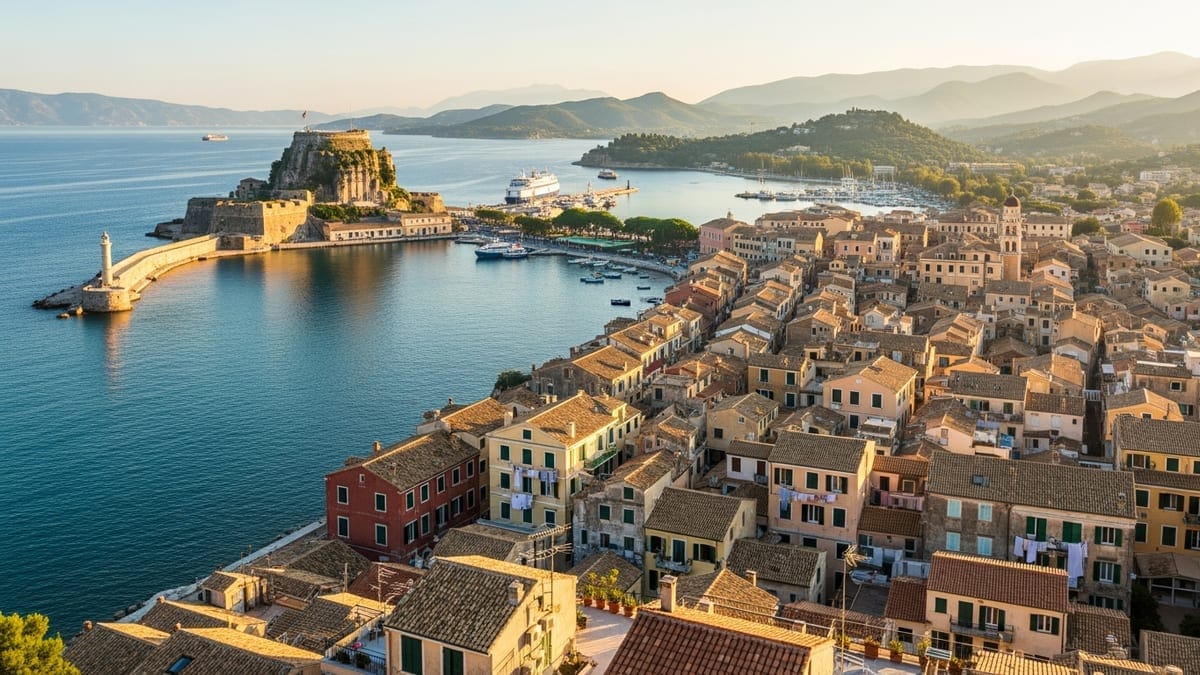
Corfu Town is one of the Mediterranean’s great small cities, a UNESCO World Heritage site where pastel Venetian townhouses rise above a web of alleys known as kantounia. Even dedicated beach travelers should set aside at least half a day here. Begin in the Spianada, the grand central green square, and stroll beneath the French-style Liston arcade, with its arcaded cafés and prime people-watching. From here, most of the main landmarks are reachable on foot in minutes.
To the east, the Old Fortress occupies a sea-girt peninsula. Originally Byzantine, then heavily reinforced by the Venetians, it offers sweeping views across the town’s terracotta rooftops and out to the mountains of the mainland. On the opposite side of town stands the so-called New Fortress, another Venetian stronghold that crowns a hill of stone bastions and tunnels, with photogenic panoramas over the harbor. History-minded visitors often combine both in one circuit, contrasting their designs and vistas.
Cultural travelers should not overlook the museums housed in the neoclassical palaces just behind the Liston. The Museum of Asian Art, installed in the Palace of St Michael and St George, holds an unexpectedly rich collection of Chinese, Japanese and broader Asian artifacts, a legacy of Corfu’s complex overseas connections. Smaller collections explore Byzantine art and island archaeology. Between museum stops, allow time to wander the narrow lanes, where laundry flutters between tall houses and occasional staircased alleyways lead up to hidden squares and local cafés.
When the heat builds, many visitors head south from town to Kanoni, overlooking the runway and the islet of Pontikonisi, better known as Mouse Island. The classic Corfu postcard frames the whitewashed Vlacherna Monastery in the foreground, Mouse Island just beyond, and planes soaring overhead. Short boat hops take you out to the islet itself, while nearby cafés provide cool drinks and a breezy vantage point at sunset.
Iconic Beaches: From Paleokastritsa to Canal d’Amour
Beaches are the centerpiece of most Corfu itineraries, and the island’s variety is part of its appeal. On the west coast, Paleokastritsa has long been one of the island’s star attractions. Set around a cluster of deep, fjord-like bays backed by steep green hills, it offers multiple small beaches of sand and pebbles and water so clear that fish are visible just off shore. In summer the main bays can be busy, but renting a small boat or joining a short coastal cruise reveals quieter coves and sea caves curving away from the main resort.
Above Paleokastritsa, the 13th‑century monastery dedicated to the Virgin Mary occupies a headland with outstanding views over the bays. Even brief visits reward with a cool cloister, small museum of icons and religious objects, and flower-filled terraces. Nearby villages like Lakones provide yet more elevated vantage points, including the popular Bella Vista viewpoint, which surveys the entire crescent of coastline.
Further up the northwest coast, the shoreline becomes more sculptural. Near Sidari, the Canal d’Amour is a celebrated sequence of narrow sandstone channels and inlets carved by the sea. The golden rock layers form natural platforms and ledges, and legend promises luck in love to couples who swim through the main channel. In peak months this is a lively, crowded place, so early morning or late afternoon can be more atmospheric, with softer light on the cliffs and easier access to the small sandy coves.
Even farther northwest, Cape Drastis offers another face of Corfu’s coastal drama. Here, slender fingers of pale rock extend into turquoise seas, separated by narrow channels and backed by high bluffs. Access roads can be rough and parking areas limited, but in calm weather the views from the top lookouts are among the most photographed on the island. Some seasonal boat trips from nearby resorts circle the cape, giving a sea-level perspective on its layered cliffs and tucked-away beaches.
Double Bays and West Coast Sands: Porto Timoni, Glyfada and Beyond
Porto Timoni has rapidly become one of Corfu’s signature images: a narrow peninsula dropping to twin beaches on either side, each washed by a different shade of turquoise. Reached via a steep and rocky path from the hilltop village of Afionas, it is not technically difficult but does require steady footing and good footwear, particularly in hot weather when loose stones can be slippery. The main viewpoint appears before you descend all the way to the sea, and many visitors stop here for photographs before deciding whether to continue to the pebble coves below.
Because there are no facilities at Porto Timoni, planning ahead is essential. Bring plenty of water, sun protection and any snacks you might want, and avoid the midday heat if possible. Early arrivals are rewarded with quieter conditions and flatter light on the water, while those who stay toward evening often see memorable sunsets on the ascent back to Afionas. For some travelers, the hike and relative wildness of the setting make this one of the most rewarding beach experiences on Corfu.
By contrast, beaches like Glyfada and Agios Gordios on the central west coast offer long arcs of sand, shallower entry to the water and full facilities. Glyfada, framed by high green hills, is one of the island’s classic family-friendly shores, with sunbed rentals, tavernas, cafés and watersports. Despite its popularity, the beach is deep enough to accommodate both those who like music and activity near the central sections and those who prefer quieter edges further away from the main access points.
Agios Gordios, slightly to the south, combines a broad sandy bay with a backdrop of cliffs and lush hillsides scattered with villas and small hotels. The village behind the beach retains a laid-back charm, with tavernas that specialize in grilled fish and local dishes such as sofrito and pastitsado. Evening walks along the shoreline often coincide with vibrant sunsets, as the sun disappears behind offshore rock stacks and the cliffs shift through tones of amber and rose.
North and South Coasts: Kassiopi, Barbati, Issos and Halikounas
The northeast coast of Corfu is more indented and pebble-strewn, with clear waters and views across to Albania and the Greek mainland. Kassiopi, once a fishing village and now a small but busy resort, makes a fine base for exploring this stretch. Its harbor remains picturesque, lined with boats and waterfront tavernas, and a modest Byzantine-era castle on the headland above provides a short, rewarding climb with views over the bay. Around Kassiopi, a string of compact coves, including popular pebbly beaches, offer clear snorkelling and a more intimate feel than the big western bays.
South along the same coast, Barbati is another favorite, a long curve of white pebbles shaded by olive trees and backed by wooded slopes running up toward Mount Pantokrator, Corfu’s highest peak. Here the water is exceptionally clear, attracting swimmers and snorkellers. Simple beachfront tavernas and beach clubs line sections of the shore, while boat rentals allow visitors to explore neighboring coves independently. The relative depth of the sea means it can be refreshing even at the height of summer.
In contrast, the southern coast opens into long, sand-fringed bays and wilder landscapes. Issos Beach unrolls as a wide swathe of fine sand bordered by rolling dunes that feel more like desert than Greece. Shallow waters make it suitable for families, and breezes attract windsurfers and kitesurfers in summer. There is usually space to spread out, especially if you walk a short distance away from the main access points. Behind the dunes, a protected lagoon area draws migratory birds, rewarding those who combine a beach day with quiet nature watching.
Nearby Halikounas Beach, another broad ribbon of sand, lies between the open sea and the brackish waters of Lake Korission. Parts of this zone are protected for their birdlife, and walking along the sandbar at sunset can be a peaceful alternative to resort-front promenades. Facilities are more limited than at the central beaches, so it is wise to bring essentials. These southern stretches appeal to travelers who relish space, unspoiled scenery and a slightly more off-grid atmosphere, while still staying within easy driving distance of tavernas and village services.
Mountain Villages, Monasteries and Viewpoints
Leave the coast for a day and Corfu reveals a quieter identity in its hill villages and monastery-topped peaks. Pelekas, west of Corfu Town, is a traditional village perched at around 270 meters above sea level, where lanes twist between stone houses and small cafés occupy leafy squares. Just outside town, a promontory known as Kaiser’s Throne delivers one of the island’s most expansive viewpoints, particularly revered at sunset. From here the eye sweeps across inland hills, coastal plains and the sea beyond.
To the north, the slopes of Mount Pantokrator form Corfu’s backbone, rising to just under 1,000 meters. A road winds to the summit monastery, which has long served as a spiritual and navigational landmark. On clear days the views extend across the narrow channel to Albania, down along the jagged northeast coastline and inland over olive-draped valleys. The summit area has basic facilities, but it is the panoptic perspective and the sense of stepping back from the coastal bustle that make the ascent worthwhile.
Other villages, such as Lakones above Paleokastritsa or Afionas near Porto Timoni, offer their own combinations of vistas, traditional houses and tavernas where you can linger over a late lunch. In many cases, viewing platforms and café terraces have been sited to capture natural amphitheaters of sea and rock below. These elevated settlements also give a sense of Corfu’s older rhythms, when inland farming communities were safer from coastal raids and daily life revolved more around olive groves than beach tourism.
The island’s monasteries, too, reflect this long history. In addition to the well-known cloister above Paleokastritsa, small chapels and hermitages dot the cliffs and hillsides. Reaching some involves short but steep walks, yet the rewards include quiet courtyards scented with jasmine and rosemary, simple frescoed interiors and vantage points that bring home just how wooded and rugged Corfu remains away from its developed waterfronts.
Palaces, History and Cultural Highlights
Beyond its fortresses and monasteries, Corfu holds several grand residences and archaeological sites that speak to its layered past under Byzantines, Venetians, French and British rule. South of Corfu Town in the village of Gastouri, Achilleion Palace stands as one of the island’s most visited monuments. Built in the late 19th century for Empress Elisabeth of Austria, known as Sisi, this neoclassical mansion was designed around her fascination with Achilles and Greek mythology. The terraced gardens are lined with statues and look out toward the sea, while the interior preserves period decoration and artworks.
Closer to town, the Mon Repos estate sits amid gardens and pine groves on the Kanoni peninsula. Constructed as a summer residence for a British high commissioner in the early 19th century, it later became a royal Greek residence and is also associated with archaeological finds from the ancient city of Corcyra. Today, a small museum and walking paths through the estate’s grounds make it a pleasant cultural diversion, especially in the cooler hours of the day.
Within Corfu Town itself, architecture enthusiasts will find details from multiple eras layered together. Venetian loggias, French-style arcades, elegant neoclassical mansions and simple Ionian houses coexist along lanes that sometimes recall Italian port cities more than the stereotypical Greek island village. Churches with distinctive bell towers punctuate the skyline, most notably the red-domed spire of Saint Spyridon, dedicated to the island’s patron saint and housing important relics.
For a different flavor of cultural immersion, some visitors seek out reconstructed or preserved traditional villages used as backdrops for festivals, film shoots or folklore evenings. These atmospheric settings may stage music, dance and communal dinners in cobbled squares, sharing aspects of Corfiot customs with guests. Combined with visits to working villages and local wineries or olive presses, they help round out an understanding of the island beyond its beaches.
On and Around the Water: Boat Trips, Hiking and Active Experiences
Given Corfu’s indented coastline and location among smaller islands, getting out on the water is one of the most rewarding ways to explore. Frequent day trips link Corfu Town and southern ports with the smaller islands of Paxos and Antipaxos, known for their intense turquoise waters and white cliffs. Organized excursions typically include swim stops in sea caves and off beaches that are difficult or impossible to reach from land, making them popular with families and couples alike during high season.
Closer to home, short coastal cruises run from major resorts such as Paleokastritsa, Sidari and Kassiopi, tracing nearby cliffs, caves and coves. Renting a small motorboat for a few hours, where regulations allow, offers the freedom to explore at your own pace, though it is important to observe local safety advice and respect any marked protected areas. In calmer bays along the east coast, kayaking and stand-up paddleboarding are common, particularly in the morning before afternoon winds pick up.
On land, Corfu offers more hiking opportunities than many first-time visitors expect. The Corfu Trail, a long-distance route that runs roughly 220 kilometers from the island’s southern tip to its northern extremes, connects beaches, olive groves, villages and mountain ridges. Even if you do not plan to walk multi-day sections, short stretches provide a rewarding way to experience the island’s interior, with its stone paths, dry-stone walls and wildflowers in spring. Coastal paths, such as those around Porto Timoni or between certain north-coast villages, offer shorter yet scenic walks.
Active travelers can round out their itineraries with diving, snorkeling and other watersports. The rocky seabeds and clear waters around Paleokastritsa and the northeast coast shelter fish, caves and occasional wrecks popular with both beginner and certified divers. Conditions are generally calmest in summer, when water temperatures encourage long swims and surface-based exploration. Combining a few days of activity with more leisurely beach time and cultural visits can make a week in Corfu feel richly varied.
The Takeaway
Corfu’s enduring appeal lies in its ability to combine a classic Greek island beach holiday with a surprisingly sophisticated dose of history, architecture and inland scenery. You can swim in sheltered pebble bays one day, then stand atop a Venetian fortress the next, watching ferries trace routes that have connected this island to the wider Mediterranean for centuries. In between, hilltop villages, monasteries and sunset viewpoints provide gentler yet deeply memorable experiences.
For many visitors, the ideal itinerary pairs a stay near Corfu Town, where evening strolls along the Liston and visits to palaces and museums come easily, with a few nights on the west or northeast coast for beaches and coastal exploration. Renting a car, even briefly, opens up Porto Timoni, Cape Drastis, Issos and other corners that buses barely touch. Boat trips add a final dimension, revealing sea caves and islets that complete the picture of Corfu as an island best appreciated from multiple angles.
In the end, the best things to do in Corfu depend on your pace and priorities. Yet whether you lean toward lazy days on sand, café-hopping through historic streets, or hikes to twin bays and panoramic chapels, the island offers enough depth to reward both first-time visitors and returning travelers who want to go further. With a little planning and a willingness to explore beyond your nearest beach, Corfu readily earns its reputation as one of the Ionian’s most compelling destinations.
FAQ
Q1: How many days do I need in Corfu to see the main highlights?
Most travelers find that four to six days is enough to experience Corfu Town, a few of the best beaches such as Paleokastritsa or Glyfada, and one or two standout viewpoints or villages. With a week or longer, you can add boat trips to Paxos and Antipaxos, hikes to Porto Timoni, and more time exploring the north and south coasts.
Q2: Is it necessary to rent a car in Corfu?
You can visit Corfu Town and some of the main resorts by bus or taxi, but renting a car greatly expands what you can see, especially if you want to reach Porto Timoni, Cape Drastis, mountain villages or southern beaches like Issos and Halikounas. For many visitors, a car for two or three days strikes a good balance between flexibility and cost.
Q3: When is the best time of year to visit Corfu for beaches?
For warm seas and settled weather, late May through late September is ideal. July and August bring the hottest temperatures and largest crowds. Travelers who want beach time without peak-season busyness often choose June or September, when the sea remains pleasant but the island is quieter.
Q4: Are Corfu’s beaches mostly sandy or pebbly?
Corfu offers both. The west and south coasts, including Glyfada, Agios Gordios and Issos, have long sandy stretches, while many northeast beaches such as Barbati and coves near Kassiopi are pebbly with very clear water. Paleokastritsa and Porto Timoni combine sand and pebbles with dramatic rock scenery.
Q5: Is swimming at Canal d’Amour and Cape Drastis safe?
In calm summer conditions, confident swimmers often enjoy the coves and channels at Canal d’Amour and the small beach beneath Cape Drastis. However, currents, waves and underwater rocks can be present, and access paths may be steep or uneven. It is important to assess conditions on the day, follow local advice and avoid risky jumps from cliffs.
Q6: Can I visit Achilleion Palace and Corfu Town in the same day?
Yes. Achilleion Palace lies only a short drive south of Corfu Town, so many visitors combine a morning at the palace and its gardens with an afternoon exploring the Old Town’s fortresses, museums and alleys. Using a rental car or joining an organized excursion makes this combination straightforward.
Q7: Is Corfu a good destination for families with children?
Corfu is well suited to families. Many beaches offer shallow entry, lifeguards and facilities, and resorts provide a wide range of accommodation and dining options. Gentle activities such as boat trips, short hikes to viewpoints, and visits to Corfu Town’s forts and squares can be tailored to different ages.
Q8: How busy is Paleokastritsa, and is it still worth visiting?
Paleokastritsa can be very busy in high summer, especially around the main beaches and harbor. It remains worthwhile for its scenery, multiple small bays, monastery and boat trips. To enjoy it at its best, arrive early or later in the afternoon, consider visiting outside July and August, and explore quieter coves by boat.
Q9: Are there hiking opportunities suitable for casual walkers?
Yes. While the full Corfu Trail is a long-distance route, many sections are accessible as easy half-day walks through olive groves or along coastal paths. The hike to the viewpoint above Porto Timoni, short village-to-village walks in the hills, and gentle paths around Lake Korission near Halikounas all appeal to casual walkers with suitable footwear.
Q10: Do I need to book boat trips and popular activities in advance?
In peak months from late June through August, it is wise to book popular boat excursions to Paxos and Antipaxos, coastal cruises from major resorts and car rentals a few days ahead, especially if your dates are fixed. In shoulder seasons, same-day bookings are often possible, though checking availability the day before still helps avoid disappointment.