

Faliraki has long been synonymous with sunloungers and soft sand, but this lively resort on the east coast of Rhodes offers far more than its famous 5 kilometer beach.
Step a street or a hillside away from the shoreline and you will find historic chapels, pine scented trails, family attractions, and easy access to some of the island’s most fascinating cultural sites.
For travelers who want to balance lazy swims with local flavor and a sense of place, Faliraki is an excellent base for exploring Rhodes beyond the beach towel.
Stroll, People Watch and Explore Around Faliraki Town
The first step to getting beyond the beach in Faliraki is to slow down in the town itself. Away from the main seafront, an older, more local village atmosphere survives in its churches, cafés, and lanes.
Spending time here gives you a sense of everyday life on Rhodes and connects you with the rhythms of the community instead of only its resort strip.
Faliraki Harbour and Agioi Apostoloi Chapel
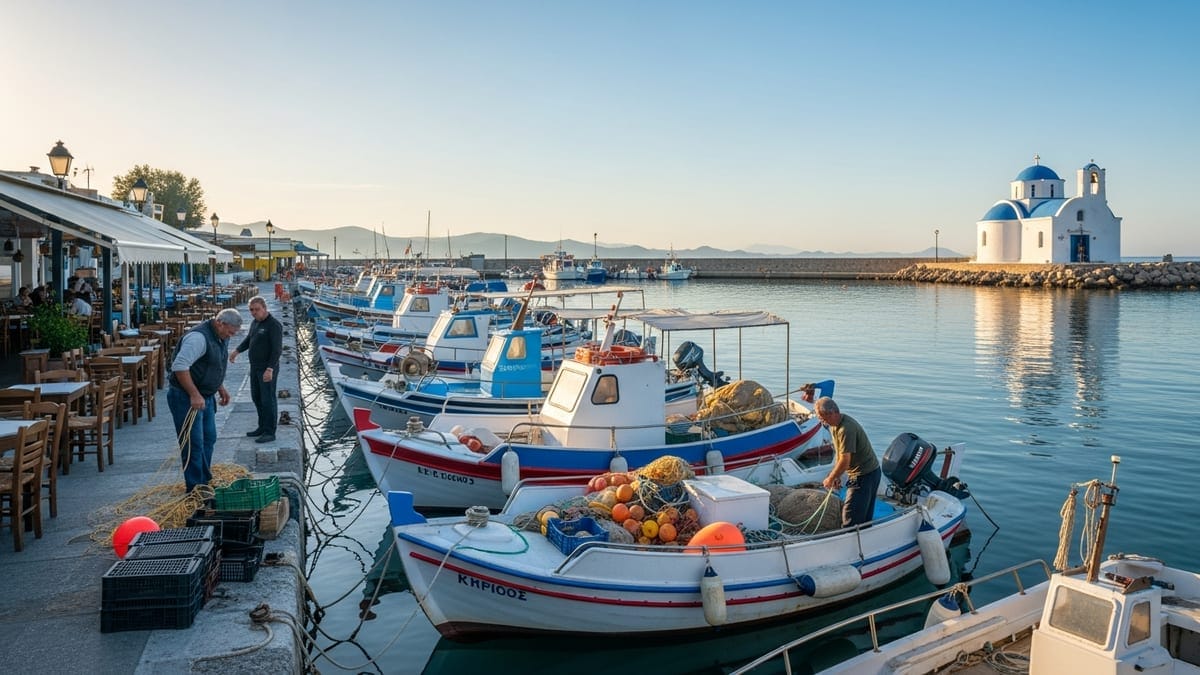
Faliraki Harbour, at the southern end of the resort, is one of the most atmospheric corners of town. In the early morning, fishing boats unload their catch while day-cruise vessels prepare to depart, and locals gather for coffee at waterfront cafés.
The mood is practical and unhurried, offering a glimpse of Faliraki’s seafaring roots rather than its nightlife reputation.
Just above the harbour sits the small whitewashed chapel of Agioi Apostoloi, whose blue dome and simple bell tower are classic Dodecanese features.
It is a quiet place to sit on the rocks, listen to the waves, and watch boats come and go. Even if you are not religious, pausing here for a few minutes gives you a sense of the spiritual and visual traditions that shape Greek island life.
Saint Nectarios Church and the Old Village Feel
Set slightly inland from the main resort streets, Saint Nectarios Church is one of Faliraki’s most striking landmarks. Built in the late 20th century in traditional Eastern Orthodox style, it features arched colonnades, red tiled roofs, and an impressive bell tower rising above a landscaped courtyard.
In the evenings the church is softly illuminated, creating a serene contrast to the neon of nearby bars.
The streets around Saint Nectarios offer a more local atmosphere than the seafront. Here you will find small bakeries, family run tavernas, and cafés where residents linger over coffee.
Visit around sunset, when temperatures ease and families come out for a stroll, to experience Faliraki as more than a resort: as a village with its own community life.
Faliraki Nightlife Beyond Club Street
Faliraki’s nightlife has a long standing reputation for Bar Street and Club Street, where music pulses until the early hours in summer. While these remain the focus for younger partygoers, there is now a more rounded evening scene that appeals to a broader range of visitors.
Cocktail lounges along the harborfront, wine bars on quieter backstreets, and live music at some tavernas draw a more mixed crowd.
If you want to experience Faliraki after dark without diving into the most raucous corners, time your evening carefully. Enjoy dinner at a traditional taverna after sunset, then wander through Bar Street to soak up the atmosphere without necessarily staying all night.
Alternatively, choose a relaxed café bar with sea views, sipping a local wine or ouzo as the resort lights shimmer across the bay.
Family Friendly Adventures and Theme Attractions
Faliraki has worked hard to broaden its appeal in recent years, and that is especially clear in the number of family friendly attractions near the resort.
From the largest water park in Greece to small themed parks and animal farms, these experiences offer full days of fun away from the sunlounger. Many are easy to reach by local bus or a short taxi ride.
Faliraki Water Park
On the northern edge of the resort, Faliraki Water Park sprawls across a hillside with a wide range of slides, lazy rivers, and splash zones.
It is regularly described as the largest water park in Greece, and its size becomes obvious as you climb stairs to one of the towering slide complexes that overlook the bay. Families, couples, and groups of friends all make the pilgrimage here for a change of pace from the beach.
The park has distinct areas for different ages and comfort levels. Young children can enjoy shallow pools and gentle slides, while thrill seekers tackle steep chutes and multi lane racers.
Sunbeds, shaded areas, and casual food stands mean you can easily stay the entire day. For visitors without a hire car, a shuttle bus from Faliraki and Rhodes Town typically operates during the main season, though it is worth checking exact timetables locally.
History Park and Mini Fun Parks
Closer to the resort center, Faliraki features several smaller themed attractions. The History Park introduces visitors to aspects of Greek and island heritage through exhibits and interactive displays.
While compact, it provides an accessible introduction to myths, historical events, and everyday life in earlier centuries, especially useful for families who want a bit of context before exploring Rhodes Town or Lindos.
In the same general area, small fun parks with bumper cars, trampolines, and arcade style games appeal to children in the evening. These parks, often lit with colorful bulbs and music, provide an old fashioned fairground feel.
Spending an evening here can be a welcome change after days of swimming and sightseeing, especially if you are traveling with younger kids who still have energy after sunset.
Farma of Rhodes Animal Park
About a 30 minute drive from Faliraki inland toward the village of Pastida, the Farma of Rhodes offers a different kind of family experience. This open air animal park combines elements of a petting farm and small wildlife center, with both local and exotic species.
Visitors can walk among goats and sheep, feed alpacas and llamas, and observe animals such as ostriches, emus, and deer in spacious enclosures.
The park promotes hands on interaction, making it particularly engaging for children who may be seeing some of these animals for the first time. A café on site uses produce from its own gardens where possible, adding an agritourism element to the visit.
As the park is in the countryside, it is best reached by hire car or organized excursion, but the rural setting and quiet atmosphere make the journey worthwhile.
Cultural Day Trips to Rhodes Town
Faliraki’s location, about 14 kilometers south of Rhodes Town, makes it an ideal base for day trips into one of the best preserved medieval cities in Europe.
Regular buses and taxis connect the resort with the capital, where cobbled streets, stone walls, and Gothic arches reveal centuries of layered history. A day away from the beach here reveals how cosmopolitan and strategically important Rhodes once was.
Exploring the Medieval Old Town
The Medieval City of Rhodes, enclosed by massive stone ramparts, is a UNESCO World Heritage listed site. Within its walls, narrow lanes, fortified gates, and courtyards recall the era when the Knights Hospitaller ruled the island.
Many visitors enter through the marine gate or Liberty Gate and find themselves immediately surrounded by stone facades and arches that feel largely unchanged for centuries.
Wandering without a fixed plan is one of the best ways to appreciate the Old Town. The Street of the Knights, lined with austere buildings that once housed the knights’ different national “langs,” leads toward the Palace of the Grand Master.
Nearby squares host cafés shaded by plane trees, and small churches and synagogues testify to the city’s multicultural past. Comfortable walking shoes and an early start are recommended, particularly in summer when temperatures and tour groups both rise sharply.
Archaeological Museum of Rhodes
Housed in the former hospital of the Knights of Saint John, the Archaeological Museum of Rhodes offers a concentrated overview of the island’s ancient and medieval past.
The building itself, begun in 1440 and completed in the late 15th century, surrounds a central courtyard that is a highlight in its own right, with carved stone details and arcades framing a quiet garden.
The museum’s collections range from prehistoric pottery to Hellenistic sculptures. Notable pieces include the celebrated Crouching Aphrodite statue from the first century BC and finely worked funerary steles from the Classical period.
Explanatory panels help place the artifacts within the broader narrative of Rhodes as a seafaring power, trading hub, and cultural crossroads. Plan at least two hours here to appreciate both the exhibits and the architecture.
Aquarium of Rhodes
On the northern tip of Rhodes Town, where the Aegean and Mediterranean meet, stands the Hydrobiological Station of Rhodes, commonly known as the Aquarium of Rhodes.
Built in the 1930s in an Art Deco style during Italian administration of the island, the building houses a research center, museum, and public aquarium focused on the marine life of the eastern Mediterranean.
Inside, a tunnel like hall is designed to evoke an underwater cave, with tanks on either side displaying fish, crustaceans, and other sea creatures found in the surrounding waters. Exhibits include octopus, moray eels, anemones, and occasionally rehabilitating sea turtles or seals.
The museum section offers information about marine ecosystems, conservation, and the history of oceanographic research in the region. It is a compact but worthwhile visit, especially for families or travelers interested in the natural environment beneath the waves.
Monasteries, Viewpoints and Inland Villages
Only a short drive inland from Faliraki, pine forests, hilltop chapels, and traditional villages offer a very different Rhodes from the busy coast. Exploring this hinterland gives you cooler air, sweeping views, and the chance to encounter local traditions in quieter settings.
Many of these sites can be combined into a leisurely half day tour by car or as part of an organized island excursion.
Filerimos Hill and Monastery
Filerimos Hill rises above the coastal plain west of Faliraki, easily visible from much of the surrounding area. A road climbs through pine trees and cypress groves to a plateau where the ruins of ancient Ialyssos, the church of the Virgin Mary, and remains of a monastery lie scattered among shaded paths.
This hill was the acropolis of one of the island’s three ancient city states, giving it deep historical resonance.
Today visitors come for both the heritage and the atmosphere. A paved path lined with stone reliefs depicting the Stations of the Cross leads to a large concrete cross at the western edge of the hill, from which you can enjoy panoramic views over the countryside and sea.
Peacocks often roam freely around the plateau, adding a surreal touch to the scene. Filerimos is usually included on island tours departing from Faliraki, or can be reached by car in less than 30 minutes.
Butterfly Valley (Petaloudes)
West of Faliraki, the Valley of the Butterflies is a lush ravine that, in summer, becomes one of Rhodes’ most unusual natural attractions.
From June to September, thousands of Jersey tiger moths cluster on tree trunks and rocks along the shaded stream, creating a living tapestry of orange and black wings. Wooden walkways and bridges guide visitors up the valley past small waterfalls and pools.
Even outside peak butterfly season, the valley offers a cooler microclimate and a pleasant forest walk. A small natural history museum at the entrance explains the life cycle of the insects and the ecology of the area.
As this is a fragile habitat, visitors are asked to stay on the paths, avoid loud noises, and not disturb the resting moths. Many organized tours from Faliraki combine Butterfly Valley with stops at villages or monasteries elsewhere on the island.
Wine and Village Life in Embonas and Siana
Further inland on the slopes of Mount Ataviros, villages such as Embonas and Siana showcase the agricultural side of Rhodes. Embonas is known as a wine producing center, with local wineries offering tastings of both dry and sweet styles as well as spirits like souma.
Terrace restaurants here serve hearty mountain dishes and grilled meats, often accompanied by live music during festivals.
Siana, straddling a ridge between two mountains, has a long tradition of beekeeping. Shops in the village sell jars of thyme honey, beeswax products, and more of the strong grape distillate for which the region is famous.
Stopping in these villages on a day trip from Faliraki reveals how deeply vines, olive trees, and hives are woven into the island’s economy and culture, far from the package hotels of the coast.
Short Hikes, Coastal Walks and Scenic Castles
Rhodes is a relatively large island, but around Faliraki you can still find short walks and scenic sites that reward a modest amount of effort.
Old fortifications, small peaks, and rocky capes combine exercise with impressive scenery. Many of these outings can be done in a morning or afternoon, leaving time to cool off with a swim later in the day.
Walking the Headlands around Anthony Quinn Bay
A few kilometers south of Faliraki, the rocky coves of Anthony Quinn Bay and Ladiko Bay are famous for their clear waters, but they also offer short, rewarding walks.
Paths and informal trails lead over the headlands, giving elevated views of the inlets and the open sea. In the early morning or late afternoon, when the light is softer and temperatures are lower, this is a satisfying way to stretch your legs.
The terrain is rugged, with low shrubs, rocks, and occasional pine trees, so sturdy sandals or walking shoes are advisable. As shade is limited, carrying water and wearing a hat are important, particularly in high summer.
While these walks stay close to the road and popular bays, the sense of being surrounded by rock and water provides an uplifting counterpoint to more developed stretches of coastline.
Feraklos Castle above Charaki Bay
About 20 minutes’ drive south of Faliraki, near the small resort of Charaki, the ruins of Feraklos Castle crown an 85 meter high hill above the sea.
Built in Byzantine times and later strengthened by the Knights Hospitaller, this fortress once guarded anchorages along the east coast and was among the order’s earliest possessions on the island. Today its crumbling walls and towers offer a dramatic backdrop to the quiet bay below.
A rough path climbs from the outskirts of Charaki village up to the castle. The ascent takes around 20 to 30 minutes, depending on fitness and heat, but the reward is a sweeping view over the coastline, including nearby Agia Agathi Beach and inland hills.
Within the walls, you can wander among stone foundations, cisterns, and broken ramparts that hint at the strategic calculations of centuries past. Visiting in the cooler hours of the day, particularly around sunset, enhances both comfort and atmosphere.
Short Country Walks near Faliraki
Even without heading deep into the interior, it is possible to find short country walks close to Faliraki. Small roads and dirt tracks behind the resort lead through olive groves and fields toward the villages of Kalythies and Psinthos.
These routes often pass by small chapels, water cisterns, and farmhouses, revealing the patchwork of agriculture that underlies the tourism economy.
There are few waymarked trails, so a basic map or offline navigation app is helpful, and you should be prepared to retrace your steps if needed.
Walking in the cooler morning hours brings the added benefit of birdsong and the sight of locals tending fields or transporting produce. Always carry water and sun protection, as shade can be limited outside the wooded hills.
Taste Local Food, Wine and Everyday Life
Getting beyond the beach in Faliraki is also about what you eat and drink. Rhodes’ cuisine combines classic Greek flavors with local twists, and the resort now offers more options to seek out those traditions.
Taking time for a proper meal, visiting a local market, or trying wines from nearby villages can be as enriching as any excursion.
Traditional Tavernas and Meze
While Faliraki has no shortage of international menus, some of its most rewarding meals are still found in modest, family run tavernas. These establishments, often set back from the seafront or closer to the older part of town, focus on grilled meats, fresh fish, and an array of meze plates.
Dishes such as baked eggplant with tomato, stuffed vine leaves, chickpea fritters, and slow cooked lamb with herbs highlight the island’s reliance on olive oil, vegetables, and aromatic greens.
Ordering a selection of meze to share is a particularly social way to eat and allows you to sample more flavors. House wines, served in simple carafes, are often produced by relatives or acquaintances of the tavern owner.
Do not hesitate to ask for recommendations or daily specials; many kitchens prepare a handful of traditional stews or oven baked dishes each day, written on a chalkboard or simply recited by your server.
Local Products and Markets
Rhodes is known for its honey, olives, citrus fruits, and herbs, and you can encounter these products in shops and markets across the island.
In and near Faliraki, small stores sell jars of thyme or pine honey, local olive oil, and mixtures of dried oregano, rosemary, and other herbs used in everyday cooking.
These items make practical souvenirs that carry the flavors of your trip back home.
For a more immersive experience, consider combining a visit to a village like Siana or Embonas with tasting sessions or tours of small producers. Some wineries and farms now welcome visitors with short presentations on their methods, offering tastings in stone courtyards or shaded verandas.
Even if you only purchase a bottle or two, the stories behind each product deepen your understanding of the island’s landscape and traditions.
The Takeaway
Faliraki’s long stretch of sand will always be an essential part of its appeal, but it is not the whole story. From early morning scenes at the harbor and evening strolls around Saint Nectarios Church to family days at the water park, animal encounters at the Farma of Rhodes, and deeply atmospheric excursions into Rhodes Town, there are many ways to broaden your experience.
Inland hills, monasteries, and villages reveal centuries of history and ongoing rural life, while short hikes and castle ruins satisfy the urge to explore without leaving the east coast far behind.
By setting aside even a few of your holiday days for these activities, you gain a richer sense of Rhodes as a place where past and present coexist.
Faliraki becomes not just a strip of sand and nightlife, but a convenient gateway to an island of layered cultures, varied landscapes, and generous hospitality.
In doing so, you carry home more than a tan: you bring with you stories, flavors, and perspectives that linger long after your flight departs.
FAQ
Q1. Is Faliraki a good base if I am interested in history and culture, not just beaches?
Yes. Faliraki is about 14 kilometers from Rhodes Town, where the medieval Old Town, Archaeological Museum, and Aquarium offer substantial cultural experiences. From Faliraki you can also join island tours that include Filerimos Hill, Butterfly Valley, inland villages, and hilltop castles, making it a practical base for both sightseeing and swimming.
Q2. How easy is it to reach Rhodes Town from Faliraki without a car?
It is straightforward. Regular buses operate along the main road between Faliraki and Rhodes Town, with journey times typically around 25 to 35 minutes depending on traffic. Taxis are also widely available, and some excursions include hotel pickups. Buying a bus ticket on board or at kiosks and checking the latest timetable locally is advisable, especially in shoulder seasons.
Q3. When is the best time of year to enjoy activities in Faliraki beyond the beach?
Late spring, early summer, and early autumn are ideal. From May to June and September to early October, temperatures are warm but not extreme, making it more comfortable to explore the Old Town, hilltop sites, and inland villages. Butterfly Valley is most active from June to September, while water parks and many seasonal attractions operate fully from roughly May through October.
Q4. Are day trips and tours from Faliraki suitable for children?
Yes, many are. Faliraki Water Park, the Farma of Rhodes, short boat cruises from the harbor, and visits to the Aquarium in Rhodes Town are popular with families. When considering longer island tours that include multiple stops, it can help to choose itineraries with frequent breaks and shaded sites, and to bring snacks, water, and sun protection for younger travelers.
Q5. Do I need to rent a car to see monasteries, villages, and castles near Faliraki?
You do not strictly need a car, but having one gives you more flexibility. Filerimos Hill, inland villages like Embonas and Siana, and ruins such as Feraklos Castle are easier to combine on a self drive itinerary. However, many local agencies in Faliraki offer organized bus tours that cover several of these highlights in one day, which can be convenient if you prefer not to drive.
Q6. What should I wear when visiting churches and monasteries around Faliraki and Rhodes?
Modest clothing is appreciated at Greek Orthodox churches and monasteries. As a general guideline, shoulders should be covered and shorts or skirts should reach at least to the knee. Lightweight long trousers or skirts and a loose top are ideal in warm weather. Bringing a light scarf allows you to adjust quickly if you decide to visit a religious site spontaneously.
Q7. Is Faliraki still mainly a party resort, or has it changed?
Faliraki still has an energetic nightlife scene centered around Bar Street and Club Street, especially in July and August, which attracts younger partygoers. At the same time, the resort has diversified, adding family attractions, quieter hotels, and more varied dining options. By choosing accommodation and evening venues carefully, visitors can tailor their experience from low key and family focused to late night and lively.
Q8. Are there hiking trails directly accessible from Faliraki?
There are no long distance marked trails starting in the resort, but you can explore short coastal walks near Anthony Quinn and Ladiko bays, as well as country lanes and tracks leading inland toward villages and chapels. For more substantial hiking, many travelers drive or join tours to areas such as Butterfly Valley, Filerimos Hill, or higher inland terrain, then follow established paths there.
Q9. How crowded are the major attractions in peak season?
In July and August, popular sites like the Old Town of Rhodes, Faliraki Water Park, Butterfly Valley, and nearby coves such as Anthony Quinn Bay can become very busy. To avoid the heaviest crowds and heat, it is wise to visit early in the morning or later in the afternoon, prebook water park or boat tickets when possible, and consider traveling in shoulder months if your schedule allows.
Q10. Can I experience authentic local food in Faliraki, or should I go to villages for that?
You can do both. Faliraki has traditional tavernas that serve classic Rhodes and Greek dishes alongside the more international offerings on the main strip. Seeking out smaller, family run spots away from the busiest streets usually yields more local flavor. At the same time, visiting villages such as Embonas or Siana for a long lunch or tasting can deepen your culinary experience and connect you more directly with producers and regional specialties.