

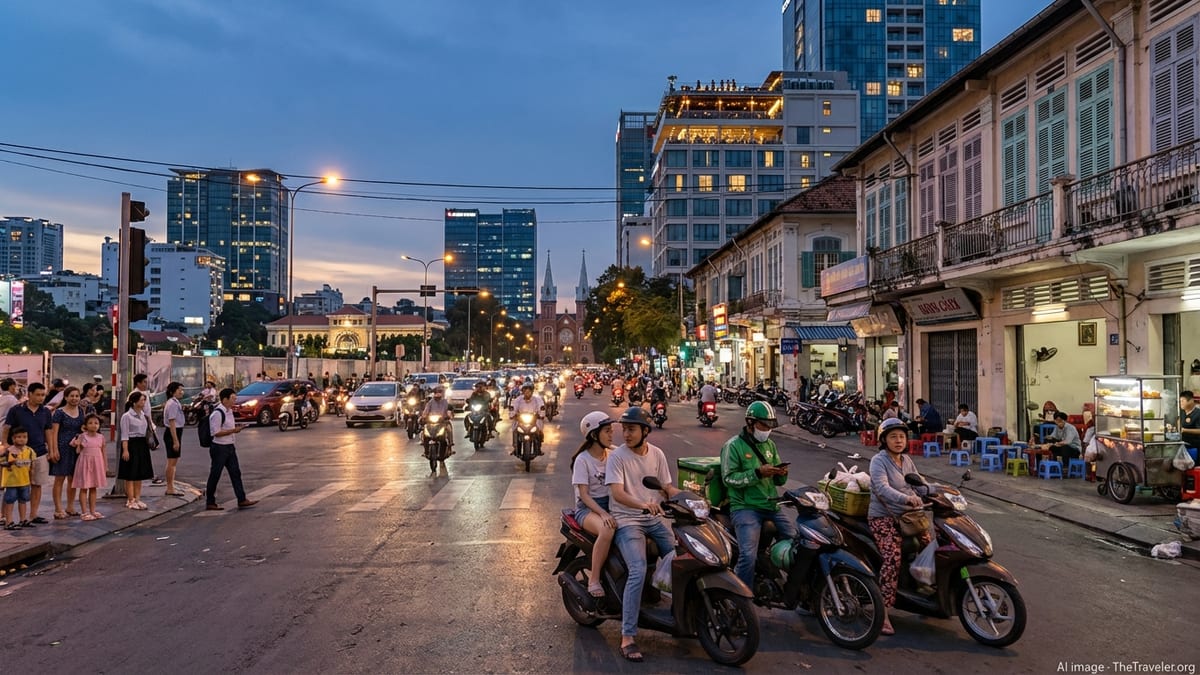
Ho Chi Minh City, still affectionately known as Saigon, is Vietnam’s economic powerhouse and a city that rarely slows down. Motorbikes swarm boulevards lined with French colonial architecture, rooftop bars glow above alleys packed with street food, and the Saigon River curves past glittering new developments in Thu Thiem. Whether you are here for history, food, nightlife or simply to feel the pulse of modern Vietnam, the city offers more than enough to fill several days of exploring.
Essential Landmarks and Historic Sights
From French colonial boulevards to wartime relics, Ho Chi Minh City’s core districts showcase the turbulent history that shaped modern Vietnam. Many of these landmarks are clustered in compact District 1, making it easy to explore on foot in the early morning or late afternoon when the heat is less intense.
Notre Dame Cathedral Basilica of Saigon
The red-brick Notre Dame Cathedral Basilica is one of the city’s most recognizable landmarks and a legacy of French colonial rule. After a multiyear restoration program completed in late 2025, its façade, stained glass and twin bell towers have been carefully cleaned and repaired, returning the church to something close to its late 19th century appearance. Visitors now find a brighter, more photogenic building that again anchors the square opposite the post office.
On weekends, access to the bell towers is offered on a limited basis, giving prebooked visitors a rare chance to look across downtown’s canopy of trees and towers from above. Even if you do not go inside, the spacious forecourt and the nearby statue of the Virgin Mary are popular gathering spots for both worshippers and couples taking wedding photos.
Saigon Central Post Office
Directly opposite the cathedral, the Central Post Office is another showpiece of French-era architecture, with a soaring iron vault, arched windows and intricate tiled floors. Long attributed to the office of Gustave Eiffel, the building remains a functioning postal hub while also serving as a free museum of colonial-era design. High walls map out old telegraph lines while vintage phone booths recall the early days of international communications.
In recent years, a short guided architectural tour has been introduced that leads small groups through the main hall, explains the building’s design details and highlights lesser-known corners. Even without a tour, this is one of the best air conditioned stops in the city for travelers who want to linger, admire the design and perhaps mail a postcard under the giant portrait of Ho Chi Minh.
Reunification Palace (Independence Palace)
The Reunification Palace, formerly the residence of South Vietnam’s president, became an instant icon of world history on 30 April 1975, when North Vietnamese tanks crashed through its gates. Today, it is preserved almost exactly as it appeared in the 1960s and 1970s, down to the rotary telephones and period furniture in its war rooms and reception halls.
Visitors can walk the corridors of power, peek into the basement command center and stand on the rooftop helipad. The palace lawns, with two replica tanks positioned at the main gate, are a reminder of how recently Vietnam’s long wars ended. Information panels and small exhibits provide context, but the most powerful impression comes simply from walking through intact rooms where decisions that shaped the country were once made.
War Remnants Museum
Few attractions in Ho Chi Minh City are as emotionally powerful as the War Remnants Museum. Outside, a collection of captured or retired aircraft and armored vehicles, including helicopters and fighter jets, set the tone. Inside, galleries document the Vietnam War from Vietnamese and international perspectives, using photographs, personal testimonies and press clippings.
Several rooms focus on the human cost of conflict, including the long-term impact of Agent Orange on civilians and veterans. The museum is not light sightseeing, but it is a vital stop for those who want to better understand the country they are visiting. Plan to spend at least two hours and consider pairing a visit here with time at the Reunification Palace for a more complete grasp of recent history.
Riverside Views, New Districts and Urban Landscapes
Ho Chi Minh City is changing at extraordinary speed, especially along the Saigon River and in the planned district of Thu Thiem opposite downtown. Exploring both banks of the river offers a sense of where the city has come from and where it is headed, with new skyline viewpoints, riverfront parks and night cruises expanding every year.
Saigon Riverfront and Bach Dang Wharf
Bach Dang Wharf in District 1 is one of the best starting points for appreciating the Saigon River. The riverside promenade has been upgraded in recent years with landscaped walkways, seating and open spaces that draw joggers at sunrise and families in the evening. From here you can watch cargo ships and commuter boats sharing the river with tourist dinner cruises and high speed ferries heading to Vung Tau.
Evenings are particularly atmospheric, when the surrounding towers light up and riverboats prepare for their nightly runs. Many visitors combine a stroll here with a river cruise, which typically includes dinner and live music as the boat glides past the city skyline. This is also a popular spot during national holidays and New Year’s celebrations, when fireworks and special light displays often take place along the river.
Thu Thiem and Saigon River Park
Across the water in Thu Thiem, the city’s new financial and residential district is rapidly taking shape, with wide boulevards, modern towers and expansive public spaces. Saigon River Park, opened in late 2023, extends for several kilometers along the right bank, offering lawns, walking paths and open views back across to downtown. It has quickly become a favorite gathering place for local residents, especially during festivals and weekend evenings.
Thu Thiem is also where major future projects are centered, including the headquarters of Vietnam’s new International Financial Centre and planned light rail links to the soon to open Long Thanh International Airport. For travelers, the main appeal today is the combination of quiet riverside walks, skyline photography and a growing cluster of cafés and creative spaces that contrast with the dense streets of District 1.
Ba Son Bridge and City Skyline Views
The cable stayed Ba Son Bridge, which opened in 2022, connects District 1 with Thu Duc City and acts as both a crucial traffic artery and a striking piece of urban design. Its illuminated pylons and sweeping curves have turned it into a favorite subject for photographers, especially at night when the bridge and surrounding towers reflect off the river.
Walking access around the bridgeheads on the District 1 side allows visitors to capture expansive views of both the old and new skylines, from classic landmarks in the city center to the residential high rises of Thu Duc. It is worth visiting around sunset to watch the sky change color behind the city before the lights flicker on.
Markets, Neighborhoods and Everyday City Life
Beyond its monuments and riverfront, Ho Chi Minh City’s real character reveals itself in its markets, side streets and everyday neighborhoods. From historic Chinese enclaves to air conditioned malls and rooftop cafés, exploring these areas offers an essential counterpoint to the city’s formal tourist sites.
Ben Thanh Market
Ben Thanh Market is the symbolic heart of downtown Saigon and one of the city’s oldest surviving marketplaces. Inside the vast hall, stalls sell everything from textiles and souvenirs to coffee, spices and dried fruits. Prices are higher than at neighborhood markets, but the selection is broad, and bargaining is expected on most nonfood items.
Mornings are ideal for wandering the aisles before the heat builds. The surrounding streets host a growing number of cafés and boutiques, and in the evening, the area around the market often fills with food vendors and casual outdoor dining. Even if you are not shopping, the market is a vivid introduction to the city’s commercial energy.
Cho Lon and District 5
Cho Lon, the historic Chinese quarter straddling Districts 5 and 6, offers a deeper dive into the city’s mercantile past. Wholesale markets spill onto the streets, shophouses display Chinese signage, and old assembly halls and temples sit tucked between apartment blocks and warehouses. It is a district built on trade, and even today vast quantities of goods move through its streets each day.
Key stops include Binh Tay Market, which caters largely to bulk buyers but also sells snacks, spices and household goods, and several atmospheric temples where incense coils hang from the ceiling. Unlike the polished core of District 1, Cho Lon feels dense and lived in, making it a rewarding area to explore with a local guide who can explain its history and point out the best eateries and tea shops.
Nguyen Hue Walking Street and City Hall
Nguyen Hue Boulevard, converted into a pedestrian friendly walking street in its central section, is one of the city’s most popular public spaces. Running from the riverside up to the ornate colonial era People’s Committee building, the wide promenade is lined with shops, cafés and apartment blocks whose balconies turn into viewing platforms during festivals.
In the evenings, families, teenagers and tourists stroll the length of the street, street performers entertain near the fountains, and the surrounding rooftops and upper floor cafés fill with people enjoying the scene from above. The combination of historic buildings at one end and contemporary towers at the other encapsulates the city’s blend of old and new.
Food, Coffee and Nightlife Experiences
For many travelers, the best things to do in Ho Chi Minh City revolve around eating and drinking. The city is a culinary crossroads, combining southern Vietnamese dishes with influences from across the country and a growing international dining scene. From street food stalls to sky high cocktail bars, you can build entire days around what and where you plan to eat.
Street Food Tours and Local Dishes
Organized street food tours, often by motorbike with local drivers, remain one of the most efficient and enjoyable ways to navigate the city’s food scene. These tours typically venture far beyond District 1 into local neighborhoods where few tourists go on their own, stopping for dishes such as broken rice with grilled pork, sizzling rice flour pancakes, snail dishes, skewered meats and fresh sugarcane juice.
Going with a guide helps you understand regional styles and ingredients, and also addresses practical considerations such as ordering, payment and basic food safety. Many tours now cater to dietary preferences, including vegetarian or less spicy options, while still prioritizing small, family run venues that rely on local clientele rather than tourist traffic.
Café Culture and Vietnamese Coffee
Ho Chi Minh City’s café culture is as integral to daily life as its street food. Traditional coffee shops serve intense, slow drip brews over ice or with sweetened condensed milk, while newer cafés offer espresso based drinks, pour over coffee and creative fusions. Rooftop and high floor cafés add a view to the experience, particularly around Nguyen Hue, Ben Thanh and the riverfront.
Trying different coffee styles is part of the fun, from the classic iced black coffee to coconut coffee and regional specialties. Many cafés also double as co working spaces for the city’s young professionals and freelancers, making them good spots to observe contemporary urban life as much as to take a break from sightseeing.
Rooftop Bars and Nightlife Districts
As evening falls, attention shifts upward to rooftop bars scattered across District 1 and beyond. Some venues sit atop luxury hotels and residential towers, pairing skyline views with craft cocktails and curated wine lists. Others are more casual, open air lounges with live music and a relaxed dress code. Reservations are recommended at the most popular spots, especially on weekends.
For a different atmosphere, the backpacker focused streets around Bui Vien and Pham Ngu Lao remain busy late into the night with casual bars, clubs and street food vendors. These areas can be noisy and crowded, but they offer inexpensive drinks and lively people watching. As always in nightlife districts, keep an eye on belongings and use registered taxis or ride hailing apps to move around safely.
Museums, Culture and Green Spaces
Ho Chi Minh City can be intense, and building quieter cultural or green stops into your itinerary is a wise move. Museums, pagodas and public parks offer space to slow down, absorb context and see how local residents relax away from the traffic.
Ho Chi Minh City Museum of History and Saigon Zoo & Botanical Gardens
Set within the grounds of the Saigon Zoo and Botanical Gardens, the Museum of History houses tens of thousands of artifacts outlining the cultural and political evolution of southern Vietnam. Exhibits range from ancient Champa sculptures and archaeological finds to displays on ethnic minorities and early trade routes. The building itself, dating to the colonial era, combines Vietnamese and European design elements.
Outside, the 20 hectare zoo, one of the oldest continually operating zoos in the world, is home to a wide range of animal species and extensive plant collections, including orchids and ornamental trees. While some visitors focus mainly on the zoo, combining both institutions in a single visit offers an engaging blend of natural and human history. Families in particular appreciate the open spaces and shaded paths, which provide a gentler pace than the surrounding streets.
Fine Arts Museum
Located in a cluster of restored 1920s mansions, the Fine Arts Museum showcases Vietnamese art from the early 20th century to contemporary works. The buildings themselves, with patterned floor tiles, carved wooden staircases and airy corridors, are as much a draw as the paintings and sculptures on display.
Exhibits cover colonial era academic art, wartime propaganda posters, lacquer painting and modern experimental pieces. Rotating shows highlight younger artists and new media. The museum’s relatively quiet galleries and internal courtyards offer a calm environment in which to consider how Vietnamese artists have responded to social and political change.
Tao Dan Park and Other Urban Green Spaces
In a city not known for wide sidewalks or leafy boulevards, parks such as Tao Dan offer welcome shade and open air. Early mornings see residents practicing tai chi, jogging, playing badminton and walking songbirds in ornate cages. Later in the day, families visit playgrounds and friends meet on benches under tall trees.
Other noteworthy green spaces include 23 September Park near the backpacker district and the newer stretches of landscaped riverfront. Even brief visits to these parks can make a difference during a packed day of sightseeing, providing a chance to reset before diving back into the city’s energy.
Day Trips and Wider Adventures from the City
Ho Chi Minh City also serves as a springboard for trips into the surrounding countryside, wartime sites and river landscapes of southern Vietnam. While some destinations can be visited independently, others are typically experienced as organized day tours with transport and guides included.
Cu Chi Tunnels
Roughly 60 to 70 kilometers northwest of central Saigon, the Cu Chi tunnel complex provides a tangible, if tightly confined, insight into guerrilla warfare during the Vietnam War. Sections of the vast tunnel network have been preserved and widened for visitors, who can crawl short stretches to experience the darkness and claustrophobia firsthand.
Above ground, displays of improvised traps, bunkers and weaponry illustrate the ingenuity of the fighters who lived and operated here. Most travelers visit as part of a half day tour from the city, often combined with a visit to a local farm or river boat ride. The site can be crowded during peak hours, so early morning departures are advisable for those seeking a quieter experience.
Mekong Delta Excursions
The Mekong Delta, a patchwork of rivers, canals and rice fields, begins just southwest of the city and is one of the most popular regions for short escapes from Saigon. Day trips typically involve a bus or car ride to a riverside town, followed by boat journeys between islands or along canals lined with fruit orchards and coconut groves.
Standard itineraries often include visits to small family run workshops producing items such as coconut candy, rice paper or handicrafts, along with a local lunch and optional cycling or rowboat rides. While these tours are well trodden, they still provide a welcome contrast to the urban environment and an introduction to the rural life that underpins much of Vietnam’s economy.
Travelers with more time may opt for one or two night stays in homestays or small lodges deeper in the delta, allowing for dawn boat rides to floating markets and quieter exploration away from the main tourist routes.
Vung Tau and Coastal Getaways
The seaside city of Vung Tau, reachable in a few hours by road or by high speed boat from central Saigon, serves as a convenient coastal escape. Its broad beaches, lighthouse viewpoints and hilltop Christ statue offer a change of scenery from the dense streets of Ho Chi Minh City.
While Vung Tau has long been a weekend destination for city residents, ongoing coastal developments and resort projects continue to expand visitor options. Day trippers can focus on simple pleasures such as seafood lunches, ocean swims and hill walks, returning to the city in the evening or staying overnight to enjoy cooler sea breezes.
The Takeaway
Ho Chi Minh City’s appeal lies in its contrasts. Historic sites that recall colonial rule and wartime struggle stand beside new towers and financial centers. Sidewalk food stalls operate in the shadow of rooftop cocktail bars, and markets that have traded for generations sit within sight of sleek malls. The city can feel overwhelming on first arrival, but for travelers willing to look beyond the traffic and humidity, it reveals layers of history, resilience and creativity.
Plan time for the icons, including the Reunification Palace, War Remnants Museum, Notre Dame Cathedral and Cu Chi tunnels, but do not overlook everyday experiences that give the city its character: a slow coffee in a crowded café, a night walk along Nguyen Hue, an early morning visit to a park or a quiet hour watching the Saigon River from Thu Thiem. Together, these moments turn a busy itinerary into a richer understanding of Vietnam’s southern metropolis.
FAQ
Q1. How many days should I spend in Ho Chi Minh City?
Most travelers find that three full days is enough to cover the main city attractions at a comfortable pace, while four to five days allows time for a day trip to the Cu Chi tunnels or Mekong Delta without feeling rushed.
Q2. What is the best time of year to visit Ho Chi Minh City?
The city has a tropical climate with a dry season roughly from December to April and a rainy season from May to November. The dry months, especially December to March, usually offer more pleasant conditions for walking and sightseeing, although temperatures remain warm year round.
Q3. Is Ho Chi Minh City safe for solo travelers?
The city is generally safe for solo travelers, including women, provided you take standard urban precautions. Petty theft such as bag snatching can occur in crowded areas, so keep valuables secure, use registered taxis or reputable ride hailing apps, and avoid displaying expensive items openly.
Q4. How do I get around the city without speaking Vietnamese?
Ride hailing apps, traditional taxis, and organized tours make it relatively easy to get around with minimal Vietnamese. Many younger residents working in hospitality and tourism speak basic English, and hotels or guesthouses can help you arrange transport and provide written addresses for drivers.
Q5. What should I wear when visiting temples and churches?
When visiting religious sites such as pagodas and the Notre Dame Cathedral, dress modestly by covering shoulders and knees. Lightweight long trousers or skirts and short sleeved tops are usually sufficient, and it is courteous to remove hats inside worship spaces.
Q6. Can I drink the tap water in Ho Chi Minh City?
Tap water is not recommended for drinking. Most visitors rely on bottled or filtered water, which is widely available at low cost. Ice in reputable cafés and restaurants is generally produced from treated water, but if you are concerned, you can request drinks without ice.
Q7. What are typical opening hours for major attractions?
Most museums and key attractions, including the War Remnants Museum and Reunification Palace, open from around 8 or 8:30 in the morning until late afternoon, often with a short closure at midday. It is wise to visit early in the day to avoid both crowds and the hottest hours.
Q8. Do I need to book Cu Chi tunnel or Mekong Delta tours in advance?
Popular tours to the Cu Chi tunnels and Mekong Delta often run daily and can be booked a day or two in advance through hotels, local agencies or online platforms. During major holidays or peak travel periods, reserving earlier provides more choice of departure times and group sizes.
Q9. Is street food safe to eat in Ho Chi Minh City?
Street food is a highlight of the city and is generally safe if you choose busy stalls with high turnover and freshly cooked dishes. Opt for foods cooked to order, watch basic hygiene practices, and ease in gradually if you are not used to local flavors or spices.
Q10. How will the new Long Thanh International Airport affect travel to the city?
Long Thanh International Airport, located to the east of Ho Chi Minh City, is scheduled to take on increasing numbers of international flights as it moves from initial technical opening to full commercial operations. Over time it is expected to relieve congestion at Tan Son Nhat Airport and offer improved connections, but in the near term most visitors will continue to arrive through the existing airport while Long Thanh ramps up services and transport links.