

Idaho’s wild reputation is well earned. This vast northern state is stitched together by glacier-carved mountains, pine forests, and a surprising number of volcanic landscapes, all laced with rivers that steam on frosty mornings. If you are looking for a trip that mixes long soaks in natural hot springs, lazy days on alpine lakes, and hikes through ancient lava fields that feel almost lunar, Idaho delivers in a big way. This guide brings together the state’s signature experiences so you can plan a route that connects hot pools, blue water, and black rock into one unforgettable journey.
Soaking Your Way Across Idaho’s Hot Springs Country
Idaho’s hot springs are the soul of the state’s outdoors scene, where skiers, hikers, anglers, and road trippers all end their days under plumes of rising steam. Fed by underground geothermal systems linked to the same tectonic forces that built Idaho’s mountains and lava fields, these springs range from rustic rock pools on riverbanks to developed resorts with lodging and spa facilities. Many are tucked into national forests or along scenic byways, so simply getting there becomes part of the adventure, especially in winter when snow-draped pines and icy river edges frame the warm water.
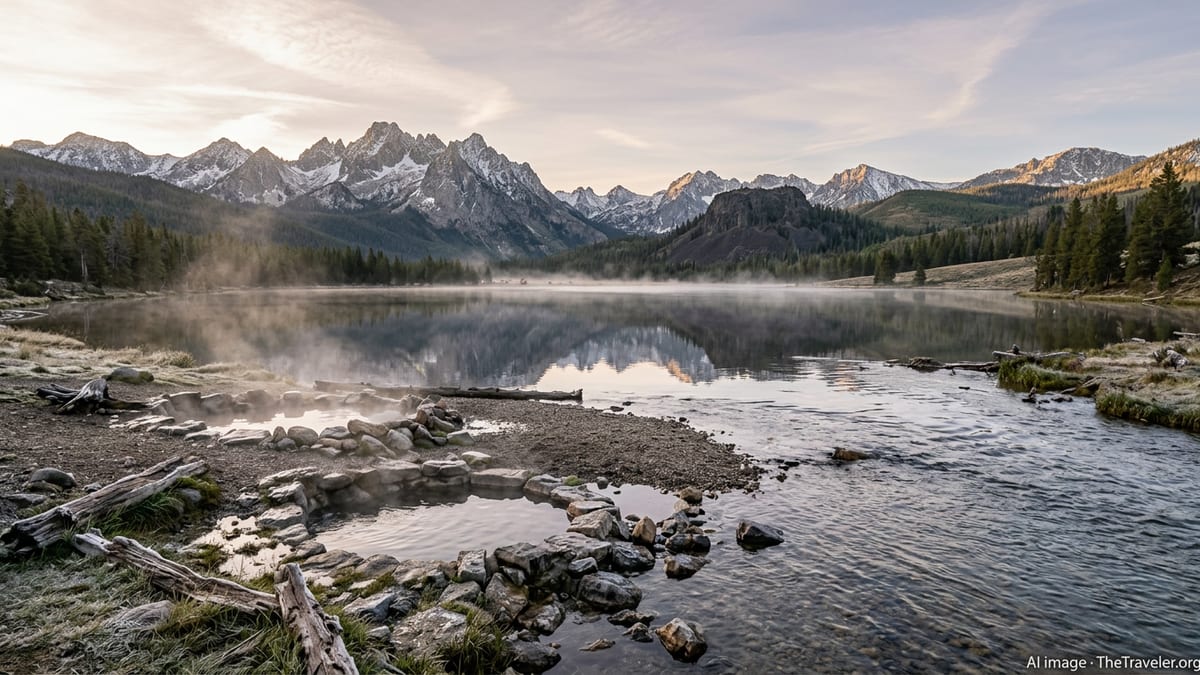
Along the Salmon River corridor near Stanley, travelers find a cluster of beloved hot springs where steaming pools overlook cold, fast water and distant peaks. Here, natural basins form among boulders at the edge of the river, and in places locals have stacked stones to deepen pools or direct the mineral-rich water. Conditions change with snowmelt and floods, so you may need to shift rocks or test temperatures before fully settling in, especially early in the season. Visiting at sunrise or on chilly evenings usually means fewer people and a more tranquil soak, but always keep a respectful distance from others and be prepared to share if space is tight.
In western Idaho, the Payette River canyon and surrounding forests hide more hot springs reachable from Highway 21 and other mountain roads. Some sit only a few minutes’ walk from pullouts, while others require short hikes along steep or icy paths. The reward is often a terraced series of clear pools where you can move between hotter and cooler spots while watching mist drift through the trees. Winter can be magical here, yet driving conditions may be challenging, so checking road reports, carrying traction devices, and keeping a flexible schedule are important parts of a safe hot springs itinerary.
Where springs are developed into resorts, visitors gain access to changing rooms, maintained pools, and sometimes restaurants or lodging, which can be appealing for families or anyone new to the region. Whether you choose fully wild pools or managed facilities, hot spring etiquette is similar across Idaho: pack out every scrap of trash, avoid soaps and glass, and keep noise low so the setting stays peaceful. Crowd pressure has led to periodic closures or restrictions at some sites, so treat every visit as a privilege and be ready to adapt if conditions or rules change.
Stanley and the Sawtooths: Hot Water, High Peaks, and Alpine Lakes
The tiny town of Stanley, encircled by the jagged Sawtooth Mountains, is one of Idaho’s most dramatic base camps for combining hot springs with high-country lakes. Here, the Salmon River braids through a wide valley while the skyline erupts into granite spires, and only a short drive separates steamy soaks from mirror-still alpine water. Redfish Lake, perhaps the most iconic lake in the Sawtooths, stretches south of town beneath serrated peaks, offering a postcard setting for paddling, swimming in summer, or simply strolling along the shore at dusk.
Redfish Lake anchors a network of trailheads that lead deeper into the Sawtooth Wilderness. Day hikers and backpackers can follow established routes along creeks toward smaller alpine basins, where glacially carved bowls hold lakes that often remain icy into early summer. Trails gain steady elevation and may cross lingering snowfields in shoulder seasons, so sturdy footwear, layers, and trekking poles are helpful for tackling uneven, sometimes muddy terrain. From open viewpoints you can look back toward the Stanley basin, connecting the dots between the geothermal rivers below and the sculpted peaks above.
After hours on the trail or water, returning to one of the area’s riverside hot springs creates a kind of daily ritual. Evenings in Stanley can be brisk, even during summer, and sliding into a warm pool while alpenglow fades on the Sawtooths is one of those quietly perfect mountain experiences. To make the most of it, bring a headlamp for the walk back to your vehicle, a dry bag for clothes, and a towel that can tolerate getting dusty or icy, depending on the season. Many visitors string together a pattern of hiking by day, soaking at dusk, and starwatching at night, since rural Idaho’s dark skies showcase constellations with remarkable clarity.
Peak season in the Stanley area typically runs from late June into early September, when campgrounds, lodges, and shuttle boats on Redfish Lake operate on more regular schedules. Shoulder seasons can be calmer and cooler, with thinner crowds at trailheads and hot springs but also more variable weather and limited services. Planning ahead by reserving campsites where possible, checking snowpack reports, and monitoring forest closures for wildfire can help ensure that your time among the Sawtooths remains focused on scenery and relaxation rather than logistics.
McCall and Payette Lake: Classic Idaho Lake Town Charm
On the western side of the state, McCall offers a different expression of Idaho’s lake culture. Nestled on the shore of deep, glacially carved Payette Lake and ringed by hills of mixed conifer forest, McCall blends a lively resort-town atmosphere with easy access to quiet coves and nearby hot springs. In summer, the lake comes alive with kayaks, stand-up paddleboards, pontoon boats, and swimmers, especially around public beaches near town. Early mornings often bring calmer water and softer light, ideal for paddle sessions that trace the forested shoreline while loons call in the distance.
Payette Lake’s setting provides an accessible introduction to Idaho’s lake scenery for visitors who prefer to stay close to amenities. From the lakefront you can walk to cafes, gear shops, and marinas, making it simple to rent equipment for a few hours on the water rather than committing to a full-day excursion. Families appreciate the combination of sandy stretches for kids, maintained picnic areas, and the backdrop of mountains that still feels wild even as you sip coffee on a dock. In late summer and early fall, the surrounding hillsides shift into a mix of golds and reds, and cool evenings hint at winter’s return.
For those who like to pair lake time with hot water, the forests around McCall hide both rustic and developed hot springs within a reasonable drive. Mountain roads branch away from the lake, climbing into canyons where geothermal pools collect near rivers or emerge at forest resorts. A common pattern in this region is to spend midday on or beside the lake, then head into the hills for a post-adventure soak while the sun drops behind ridgelines. Winter visitors often reverse the order, warming up in hot pools before returning to town for dinner or an evening walk along Payette Lake’s snowy shore.
McCall’s four distinct seasons create different moods around the lake. Summer is lively and warm, with long daylight hours and busy marinas. Autumn tends to be quieter, with crisper air and more open space on trails and beaches. In winter, ice and snow transform the scene entirely, turning McCall into a hub for snow sports, with the lake serving as a serene, frozen centerpiece. Spring brings melting edges and the gradual return of birds and boat wakes, a reminder that in Idaho, water is the thread running through every season.
Hidden North Idaho Waters: Priest Lake and Beyond
Farther north, near the Canadian border, Priest Lake and surrounding waters unveil a wilder, more remote side of Idaho’s lake country. The main body of Priest Lake stretches beneath timbered slopes and low, rounded peaks, with water so clear that shallows reveal pale stones and submerged logs. Shorelines alternate between sandy pockets, rocky points, and dense forest, creating plenty of opportunities to find your own corner of shoreline, especially if you arrive by kayak or small boat and hug the less-developed edges.
Priest Lake has long been popular with regional visitors who come for fishing, boating, and long summer days spent rotating between docks, trails, and campfires. Compared with more central destinations, it feels a step more removed, with fewer large towns nearby and longer drives between services. That sense of distance is part of its charm. Nights are genuinely dark and quiet, and the sounds that dominate are wind in the trees and the occasional splash of fish or paddle. For photographers and bird watchers, mornings often bring low fog over the lake that slowly lifts to reveal layers of ridges marching into the distance.
North Idaho’s lakes reward those willing to plan a bit more carefully. Road access can be narrow and twisting in places, especially on secondary routes that follow the shoreline. Summer weekends see campgrounds and popular day-use areas fill quickly, while shoulder seasons can bring sudden shifts from sunshine to rain and back again. Bringing extra layers, packing flexible meals, and arriving with a tentative but not rigid plan allows you to adapt to conditions and make the most of whatever weather the day offers. In return, you gain the chance to watch storms move across broad water and then clear to dramatic evening light.
While hot springs are less concentrated in this far northern corner of Idaho than in the central mountains, it is still possible to build an itinerary that swings between the region’s cooler lakes and warmer pools to the south. Many travelers include Priest Lake as one stop in a longer north-south journey, tracing a line from the Canadian border through lake country and on toward the lava fields and geothermal corridors of southern Idaho. Seen together, these landscapes highlight how ice, water, and fire have each shaped different corners of the state.
Craters of the Moon and Idaho’s Lava Landscapes
Few places illustrate Idaho’s volcanic story as vividly as Craters of the Moon National Monument and Preserve in the south-central part of the state. Here, a vast expanse of black and rust-colored lava flows stretches across the Snake River Plain, punctuated by cinder cones, spatter cones, and collapsed lava tubes. The landscape looks almost alien at first glance, but closer inspection reveals delicate wildflowers in spring, hardy shrubs clinging to cracks in the rock, and ravens circling on rising thermals. The monument is reached along a highway that crosses open country, making the sudden arrival of jagged lava fields all the more striking.
Craters of the Moon owes its shape to a series of eruptions from fissures in the earth’s crust known collectively as the Great Rift. Instead of a single prominent volcano, the region features many vents and cones that sent lava spilling outward in waves over thousands of years. Today, a scenic loop road within the monument provides access to short walks, viewpoints, and trailheads that showcase this volcanic variety. Visitors can stroll across young lava flows on paved paths, climb a cinder cone for panoramic views, and explore areas where ash, cinders, and scattered pines create a patchwork of colors and textures.
Lava tube caves add another dimension to the experience. These hollow channels formed when the surface of a lava flow cooled and solidified while molten rock continued to move beneath. In places, ceilings later collapsed, creating skylights and entrances that allow visitors to venture underground. Because these fragile environments can be sensitive to human impact and to diseases that affect bats, cave access often requires a free permit from the visitor center and may be restricted seasonally. Checking current conditions before you go is essential, and anyone entering should bring multiple light sources, sturdy shoes, and a keen respect for posted rules.
Weather strongly shapes visits to Craters of the Moon. Summers can be hot and exposed, with dark rock amplifying the sun’s intensity, so early starts, wide-brimmed hats, and ample water are important. Spring and fall tend to offer cooler temperatures and more comfortable hiking conditions, though late-season snow or ice can linger on shaded paths and cave entrances. In winter, snow may blanket the lava fields, creating stark black-and-white scenes and opportunities for snowshoeing on designated routes. Regardless of season, planning fuel and food carefully is wise, as services near the monument remain limited and the landscape feels suitably remote.
Snake River Canyon, Shoshone Falls, and Fossil Richlands
As Idaho’s volcanic history shaped the ground beneath your feet, the Snake River carved the canyons that now cut across much of southern Idaho. One of the most impressive sections lies near Twin Falls, where the river surges over Shoshone Falls, often called the Niagara of the West. At high flow, usually in spring when snowmelt is strongest, water thunderously drops into a horseshoe-shaped amphitheater surrounded by basalt cliffs. Overlooks and park lawns provide relaxed vantage points, and on clear days rainbows can form in the mist, creating an atmosphere that feels both grand and intimate.
Beyond the falls themselves, the broader Snake River Canyon offers hiking, paddling, and viewpoints that highlight the interplay of water and volcanic rock. Trails descend from the rim toward the river, passing layers of basalt that reveal past eruptions and flows. Kayakers and paddleboarders can explore calm sections, drifting beneath bridges and cliffs that tower overhead. For road trippers, bridges and overlooks act as natural pause points between longer drives across high desert, breaking up mileage with chances to stretch your legs and watch raptors riding thermals along the canyon walls.
Downstream and along other stretches of the Snake River Plain, fossil-rich areas help complete the picture of Idaho’s deep past. Preserved remains of ancient horses, camels, and other animals tell a story of shifting climates and ecosystems over millions of years. While these sites feel very different from hot springs or lakes, they underscore how varied Idaho’s landscapes are and how tightly geologic and natural history intertwine. Many travelers pair stops at canyons and fossil beds with visits to Craters of the Moon, using the river corridor as a natural link between lava fields and the broader plain.
Because water flow at Shoshone Falls and other Snake River features changes with irrigation cycles, dam operations, and snowpack, conditions can vary substantially month to month and year to year. Planning a visit in late spring gives you the best odds of seeing more powerful flows, while summer and autumn may deliver lower water but warmer air and more stable trail conditions. Checking local information close to your travel dates can help set realistic expectations and ensure that a visit to the canyon fits smoothly into a broader itinerary focused on hot springs and volcanic scenery.
Planning an Idaho Itinerary: Linking Water and Fire
Idaho’s size and the spread of its signature landscapes mean that crafting an itinerary is largely about choosing a focus and then drawing a logical line between highlights. One popular loop begins and ends in Boise, arcing north through McCall and Payette Lake, then east toward Stanley and the Sawtooths, before turning south to Craters of the Moon and the Snake River region. This route threads together hot springs near major rivers, alpine lake basins, and at least one extended encounter with lava fields, all within a framework of paved highways and well-known mountain passes.
Travelers with more time can extend the loop into North Idaho, adding Priest Lake and other northern waters before circling back through central forests and geothermal corridors. This longer arc reveals how distinct each subregion feels, even as the same themes of water, rock, and forest reappear. Regardless of route length, building in rest days can be invaluable, both for adjusting to elevation and for simply enjoying a single place without the pressure of packing up. Idaho rewards slow mornings by the water and unhurried evenings in camp as much as big summit days or long drives.
Because conditions in Idaho’s mountains and lava plains shift quickly with season and weather, flexibility is as important as ambition. Snowmelt can delay trail openings around high lakes, wildfire risk can trigger forest closures, and spring runoff can make riverside hot springs inaccessible or submerged. Checking a mix of official land management updates and recent local reports shortly before arrival helps you avoid surprises. Carrying extra food and water, filling fuel tanks when possible, and keeping an emergency kit in your vehicle all contribute to the kind of resilience that makes remote travel far less stressful.
Finally, Idaho’s growing popularity means that responsible travel habits have direct, visible impacts. Staying on established paths around fragile hot springs, avoiding shortcuts across delicate high-elevation meadows, and respecting closures around caves and wildlife habitat all help keep these places wild for future visitors. The state’s landscapes may appear rugged and indestructible at first glance, but many soils, plants, and geologic features are surprisingly vulnerable to trampling, litter, and other pressures. Leaving each site as clean or cleaner than you found it ensures that the magic of soaking, paddling, and hiking through Idaho’s water-and-fire country remains intact.
The Takeaway
Idaho’s appeal lies in contrasts that reveal themselves slowly. One day you may be floating in a riverside hot spring while snow swirls above a pine-framed canyon, and the next you are paddling on a clear, cold lake or crunching across a lava field that looks like another planet. Hot springs, lakes, and lava landscapes are not isolated attractions here so much as recurring notes in a larger composition, appearing in different combinations as you move from region to region. The reward for stringing them together is a richer sense of how this part of the American West came to be and why it feels so profoundly alive.
Whether you base yourself in a single hub such as McCall or Stanley or embark on a broader loop that takes in Priest Lake, Craters of the Moon, and the Snake River Canyon, the essentials remain the same. Travel with curiosity, give the landscapes time to sink in, and build your days around water and light. Mornings beside still lakes, afternoons on trails or roads that traverse old lava, and evenings in the glow of hot pools or campfires create a rhythm that stays with you long after you leave. In Idaho, the best things to do are often simple, but they unfold in settings that are anything but ordinary.
FAQ
Q1. When is the best time of year to visit Idaho for hot springs and lakes?
The prime season for combining hot springs and lake visits is generally late June through September, when high-country snow has mostly melted, mountain roads are clearer, and lake temperatures are more comfortable for swimming and paddling. Winter can be wonderful for soaking in outdoor hot springs, but short days, snow, and icy roads require more preparation and flexibility.
Q2. Do I need permits or reservations to use Idaho’s natural hot springs?
Most undeveloped hot springs on public land do not require advance permits, but parking restrictions, day-use fees, or seasonal closures may apply, and popular spots can feel crowded at peak times. Some developed hot spring resorts use reservation systems, and certain sensitive areas, such as caves in lava fields, may require free permits or have access limits, so it is wise to check current rules before you go.
Q3. How difficult are the hikes to Idaho’s alpine lakes?
Hikes to alpine lakes vary from short, relatively gentle walks near road-accessible basins to strenuous, full-day climbs with significant elevation gain. In the Sawtooth Mountains and other central Idaho ranges, many trails are well defined but can be rocky, steep, or snow-covered well into early summer, so sturdy footwear, layers, and honest self-assessment of fitness are important.
Q4. Is Craters of the Moon suitable for families and casual hikers?
Craters of the Moon National Monument includes a number of short, mostly paved or well-maintained trails that work well for families and visitors who prefer easier walks. Children often enjoy climbing cinder cones, peering into small lava features, and attending ranger talks, while more ambitious hikers can tackle longer routes across lava flows and through rougher terrain.
Q5. Can I swim in Idaho’s hot springs and lakes in winter?
Many outdoor hot springs remain appealing in winter, with snow on the banks and steam rising from the pools, but accessing them often involves driving on snowy roads and walking on icy paths, so traction and caution are essential. Most lakes are far too cold for comfortable swimming in winter and may partially freeze, though they remain beautiful backdrops for snowshoeing, photography, and quiet shoreline walks.
Q6. What safety considerations should I keep in mind around geothermal areas?
Geothermal water can be extremely hot at its source, so always test temperatures carefully before fully entering a pool and avoid tampering with natural inflows that could change conditions suddenly. Surfaces around springs may be slippery, unstable, or fragile, and some areas have thin ground crusts or sensitive vegetation, so staying on obvious paths and established pool sites helps keep both visitors and the landscape safe.
Q7. How crowded do popular Idaho hot springs and lakes get?
Crowds fluctuate by season and time of day, but many roadside hot springs and easily reached lakes can feel busy on summer weekends, holidays, and during school breaks. Visiting early in the morning, on weekdays, or in shoulder seasons like late spring and early fall typically offers a quieter experience, while more remote sites often require additional hiking or driving but reward that effort with more solitude.
Q8. Is it possible to visit hot springs, alpine lakes, and lava fields in one trip?
Yes, with thoughtful planning you can design an itinerary that links these landscapes in a single loop, especially if you have at least a week. Routes that connect Boise, McCall, Stanley, Craters of the Moon, and the Snake River region, with optional extensions to North Idaho, allow you to move gradually from hot riversides to cool lakes and then into lava country without excessive backtracking.
Q9. What gear should I pack for an Idaho trip focused on the outdoors?
Core items typically include sturdy footwear, layered clothing for changeable mountain and desert weather, sun protection, and a reliable rain shell, plus swimwear and quick-drying towels for hot springs and lakes. Adding a headlamp, basic first-aid kit, reusable water bottles, and navigation tools, along with traction devices or extra warm layers in colder seasons, helps you adapt to the broad range of conditions Idaho can present.
Q10. How can I minimize my environmental impact while exploring Idaho’s wild places?
Following Leave No Trace principles goes a long way: pack out all trash, avoid using soap in natural waters, camp and walk on durable surfaces, and keep a respectful distance from wildlife and other visitors. Around sensitive sites such as hot springs, alpine meadows, and lava formations, staying on existing paths and respecting closures or posted guidelines helps protect fragile soils, plants, and geologic features so they remain unspoiled for the next traveler.