

Illinois is often defined by Chicago’s skyline, but the Prairie State rewards anyone willing to look beyond the famous Loop. Lakeside architecture, vibrant neighborhoods, sandstone canyons, historic river towns, and small communities along legendary highways all reveal a richer story. Whether you are planning a first-time city break or a longer road trip, these are some of the best things to do in Illinois, from Chicago icons to scenic parks and lesser-known gems.
Experience Chicago’s Essential Icons
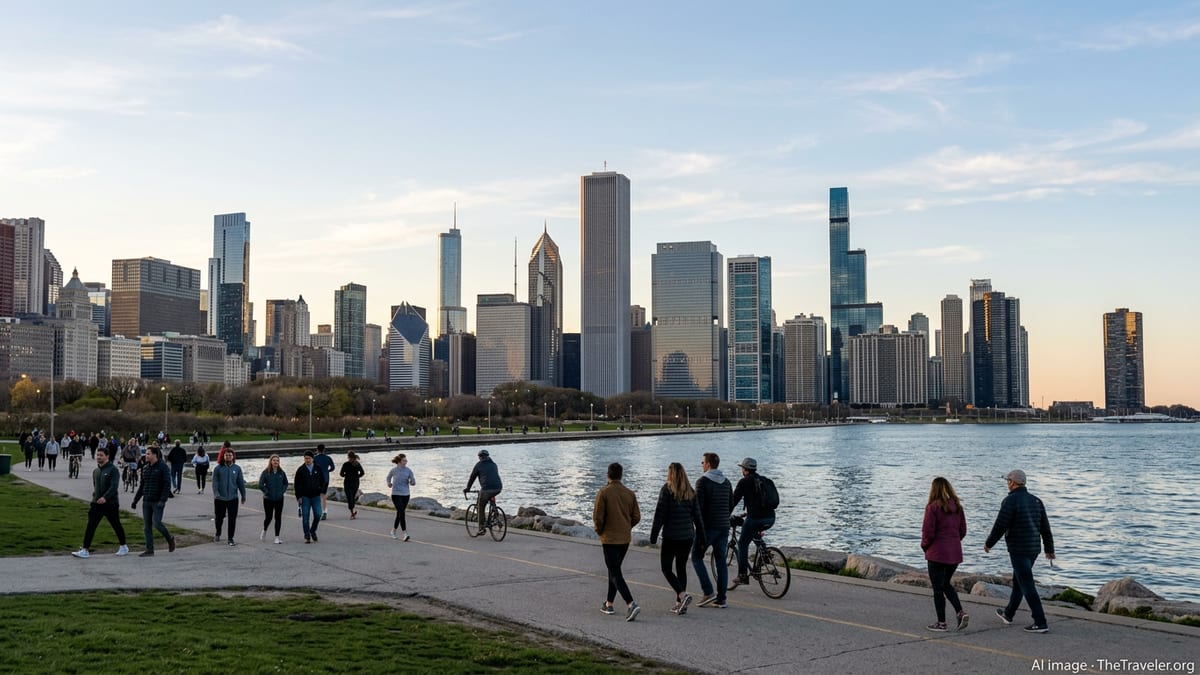
Most Illinois journeys begin in Chicago, a city that manages to feel both global and distinctly Midwestern. Start along the lakefront in Grant Park, the city’s expansive front yard, where the Art Institute of Chicago and the Museum Campus sit beside formal gardens and the spray of Buckingham Fountain. Just north, Millennium Park showcases striking public art and architecture, with Cloud Gate, Crown Fountain, and the Jay Pritzker Pavilion surrounded by carefully planted gardens that soften the high-rise backdrop.
For a different perspective, head upward. The Willis Tower’s Skydeck on the 103rd floor offers glass-floored ledges that extend over the city streets below, while 360 Chicago in the former John Hancock Center frames a sweeping view over Lake Michigan and the dense grid of neighborhoods in every direction. On clear evenings, the horizon glows long after sunset, giving a sense of just how far Illinois stretches beyond the city limits.
Back at ground level, stroll the Chicago Riverwalk, where the water reflects historic skyscrapers and contemporary towers alike. Architecture boat tours along the Chicago River are one of the most insightful experiences in the state, tracing how engineering and design transformed a marshy lakeside settlement into a showcase of American architecture. Finish the day at Navy Pier, where rides, seasonal events, and open promenades provide some of the best vantage points for the skyline and Lake Michigan.
Delve Into Chicago Neighborhoods, Culture, and Food
Chicago’s neighborhoods are where Illinois’ largest city feels most intimate. North Side districts like Lincoln Park, Lakeview, and Andersonville mix tree-lined residential blocks with independent shops, music venues, and casual restaurants. In Lincoln Park, the free-admission zoo and surrounding nature boardwalk are rare pockets where prairie plantings and ponds sit just steps from the city’s urban fabric.
On the West Side, Wicker Park and Logan Square combine historic apartment buildings, corner bars, and some of the city’s most talked-about dining rooms and cocktail bars. Murals brighten viaducts and brick walls, reflecting the city’s deep street art culture. To the south, neighborhoods such as Pilsen and Bronzeville offer more focused windows into local history, from Mexican-American bakeries and galleries to jazz clubs and landmarks tied to the Great Migration.
Culinary experiences are a significant part of any Illinois itinerary, and Chicago’s contributions go far beyond deep-dish pizza. You can find neighborhood bakeries that have served the same families for generations, modern tasting menus in reimagined warehouses, and bustling food halls showcasing newer immigrant cuisines. Sampling a classic Chicago-style hot dog, exploring a Polish deli, or visiting a South Asian restaurant cluster on Devon Avenue are all ways to understand the city’s layered communities.
Discover Scenic State Parks and Natural Escapes
Illinois is often assumed to be flat farmland, yet some of its most compelling attractions are sculpted by rivers, glaciers, and ancient seas. A standout is Starved Rock State Park, perched above the Illinois River in the north-central part of the state. Here, sandstone bluffs and tree-lined canyons cut a dramatic profile against the prairie. Depending on the season, trails lead past icefalls, spring wildflowers, or dense green foliage that glows in the low autumn sun. Just across the river, Matthiessen State Park offers additional canyons, waterfalls, and quieter trails.
Further south, the landscape grows hillier and more forested as you approach the Shawnee National Forest. The Garden of the Gods Recreation Area, with its weathered sandstone formations and sweeping overlooks, is one of Illinois’ most memorable viewpoints. Short trails weave among rock outcrops with names locals have used for generations, and sunrise or late-afternoon visits highlight textures in the stone that are easy to miss at midday.
Other natural escapes dot the state, from Pere Marquette State Park along the Illinois and Mississippi Rivers to the rolling woodlands of Rock Cut State Park near Rockford. Many of these parks sit close to small towns, making it easy to combine hiking or paddling with a stop at a local diner or brewery. Even in and around Chicago, forest preserves and lakefront parks provide quick access to bike paths, birding spots, and beaches, reminding visitors that nature is never far away.
Follow Historic Highways and Scenic Byways
Illinois is a natural state for road trips, with historic routes and scenic byways that reveal places easily missed from the interstate. U.S. Route 66, perhaps the most storied highway in American culture, begins in downtown Chicago and angles southwest across the state. Along the way you will find classic diners, restored gas stations, roadside art, and small towns that still lean into the Mother Road’s lore. Murals, local museums, and annual festivals celebrate the era when long-distance car travel felt new.
On the opposite side of the state, the Illinois Great River Road follows the Mississippi River from the far northwest corner down toward Cairo in the south. This route passes towering bluffs, wildlife refuges, state parks, and river towns that evolved around trade and river traffic. The Meeting of the Great Rivers National Scenic Byway near Alton, for example, is especially striking in autumn, with foliage on limestone cliffs mirrored in the river’s surface.
Other drives reveal quieter corners of Illinois. Highways weaving through the state’s western and northern regions link barns, historic courthouses, and main streets lined with brick storefronts. In some counties, local scenic drive events spotlight covered bridges, craft fairs, and harvest landscapes. Even a short detour through rural roads can transform a point-to-point journey into a richer part of your Illinois experience.
Explore Charming Small Towns and River Cities
Some of Illinois’ most rewarding destinations are small towns that have preserved their historic cores while adapting to modern travelers. Galena, in the state’s northwest, often tops lists of Midwestern getaways. The town is set against wooded hills and anchored by a Main Street of 19th-century brick buildings that now house boutiques, galleries, and restaurants. Many of the surrounding homes and public buildings date from the era when Galena was a major lead-mining and river port town, and several sites associated with Ulysses S. Grant and other historical figures are open to visitors.
Along the Mississippi and Illinois Rivers, communities such as Alton, Grafton, and Nauvoo combine layered histories with outdoor access. In these towns you can stroll past restored facades, learn about early religious settlements or river commerce, then step straight onto a trail or scenic overlook. Seasonal events, from eagle-watching weekends to wine festivals, highlight the changing character of the river valleys throughout the year.
Elsewhere in the state, college towns and smaller cities offer their own appeal. Springfield, the capital, draws visitors interested in Abraham Lincoln’s life and legacy, with sites that trace his years as a lawyer and politician before the presidency. Urbana-Champaign and Normal-Bloomington blend university energy with cultural venues, bookstores, and cafes that are easy to explore on foot or by bicycle. These communities reward travelers who prefer slower days of museum visits and conversation to packed sightseeing schedules.
Seek Out True Hidden Gems Across Illinois
Beyond well-known destinations, Illinois hides pockets of charm that rarely make national headlines. In the northern and western parts of the state, you will find small towns where a single restored theater or artists’ cooperative has helped revive the main street. Local festivals might center on seasonal harvests, traditional music, or even historic reenactments, giving visitors a chance to feel like temporary locals rather than spectators.
Along lesser-known stretches of highway, pocket parks and overlooks provide short but memorable stops. In some counties, scenic drives follow river valleys framed by limestone bluffs and meadows, where it is common to see migrating birds in spring and fall. Modest local museums often tell surprisingly far-reaching stories, from indigenous histories and early industrial experiments to the impact of railroads and canals on settlement patterns.
Even suburban communities around Chicago hold their own hidden gems, such as carefully planned riverwalks, Japanese and botanical gardens, and historic districts where architectural details have been preserved house by house. Spending an afternoon in one of these areas can be as satisfying as a full-day excursion, especially for travelers who appreciate the quieter side of Illinois life.
Plan an Illinois Trip for Every Season
Illinois is a year-round destination, but the experience shifts noticeably with the seasons. Spring brings wildflowers and higher water levels to the state parks, while city neighborhoods awaken with outdoor markets and sidewalk dining. In Chicago, lake breezes keep temperatures relatively cool as trees along the boulevards leaf out, making this a pleasant time for walking tours and bike rides.
Summer is peak season along the lakefront and rivers. Beaches on Lake Michigan open, music and food festivals take over Chicago parks, and small towns bustle with fairs and parades. This is also a popular time for camping and paddling in state parks, so advance reservations are wise for weekends. Longer daylight hours mean you can comfortably fit in both city sightseeing and an evening drive along a scenic byway.
Autumn is perhaps the most visually striking season in much of Illinois. Trees in the Shawnee National Forest, along the Great River Road, and around Galena turn vibrant shades of red, orange, and gold. Cooler temperatures make hiking especially comfortable, and harvest events pop up across rural areas. Winter, by contrast, offers a quieter experience. Snow can transform the canyons at Starved Rock and the rock formations in the south into entirely different landscapes, while Chicago shifts its attention to indoor cultural attractions, holiday markets, and ice skating rinks in city parks.
The Takeaway
Illinois offers a far broader range of experiences than many travelers expect. Chicago alone could fill a week with world-class art, architecture, food, and lakefront scenery, yet it is only one part of the story. State parks with sandstone canyons, national forest vistas, riverfront drives, and compact historic towns reveal a side of the state that has little to do with skyscrapers.
Whether you are riding an elevator to a glass viewing platform, winding along the Mississippi River at sunset, or stepping into a small-town cafe on a quiet weekday morning, Illinois encourages you to slow down and look closely. The best things to do here are less about checking off a list of attractions and more about moving between city energy and rural calm. With a bit of planning and a willingness to explore, Chicago icons, scenic parks, and genuine hidden gems can all fit into a single, memorable Illinois trip.
FAQ
Q1. How many days do I need to see the best of Illinois?
Most travelers are satisfied with four to seven days, which allows time for Chicago plus at least one region of small towns, state parks, or scenic byways.
Q2. Is Illinois only worth visiting for Chicago?
No. Chicago is a highlight, but destinations such as Starved Rock State Park, the Shawnee National Forest area, the Great River Road, and towns like Galena add depth to any trip.
Q3. What is the best time of year to visit Illinois?
Late spring and early autumn are often ideal, with milder temperatures and colorful landscapes. Summer is lively but can be humid, while winter offers quieter, more indoor-focused trips.
Q4. Do I need a car to explore Illinois?
You can experience much of Chicago using public transportation and walking, but a car is highly recommended if you plan to visit state parks, small towns, or scenic byways elsewhere in the state.
Q5. Are Illinois state parks suitable for beginners?
Yes. Many parks feature clearly marked trails of varying lengths, with short, accessible walks to overlooks as well as longer routes for more experienced hikers.
Q6. Is it safe to visit Chicago and other Illinois cities?
Most visitors experience Illinois safely by using common urban-sense precautions, staying aware of their surroundings, and following local guidance about neighborhoods and transportation.
Q7. Can I visit Route 66 sites without driving the entire highway?
Yes. Many visitors explore only the Illinois portion of Route 66 or even just a day trip segment, stopping at classic diners, museums, and roadside landmarks along the way.
Q8. What should I pack for an Illinois trip?
Pack layers for changing temperatures, comfortable walking shoes, rain protection, and any gear needed for hiking or outdoor activities, since weather can shift quickly across seasons.
Q9. Are there family-friendly attractions in Illinois?
Illinois is very family-friendly, with zoos, aquariums, interactive museums, lakefront parks, and easy trails in state parks that work well for children and multi-generational groups.
Q10. How far in advance should I book accommodation in popular areas?
In peak seasons such as summer weekends and fall foliage periods, booking several weeks in advance is wise for Chicago, popular state parks, and sought-after small towns.