

Indiana rewards curious travelers with far more variety than many expect. From a wild stretch of Lake Michigan shoreline at Indiana Dunes National Park to the museums, sports temples, and neighborhoods of Indianapolis, the Hoosier State pairs outdoorsy adventures with big-city culture and small-town charm. Whether you are planning a weekend along the lake, a road trip through rolling hills and forests, or a city break in the state capital, these are the best things to do in Indiana right now.
Indiana Dunes National Park and the Lake Michigan Shore
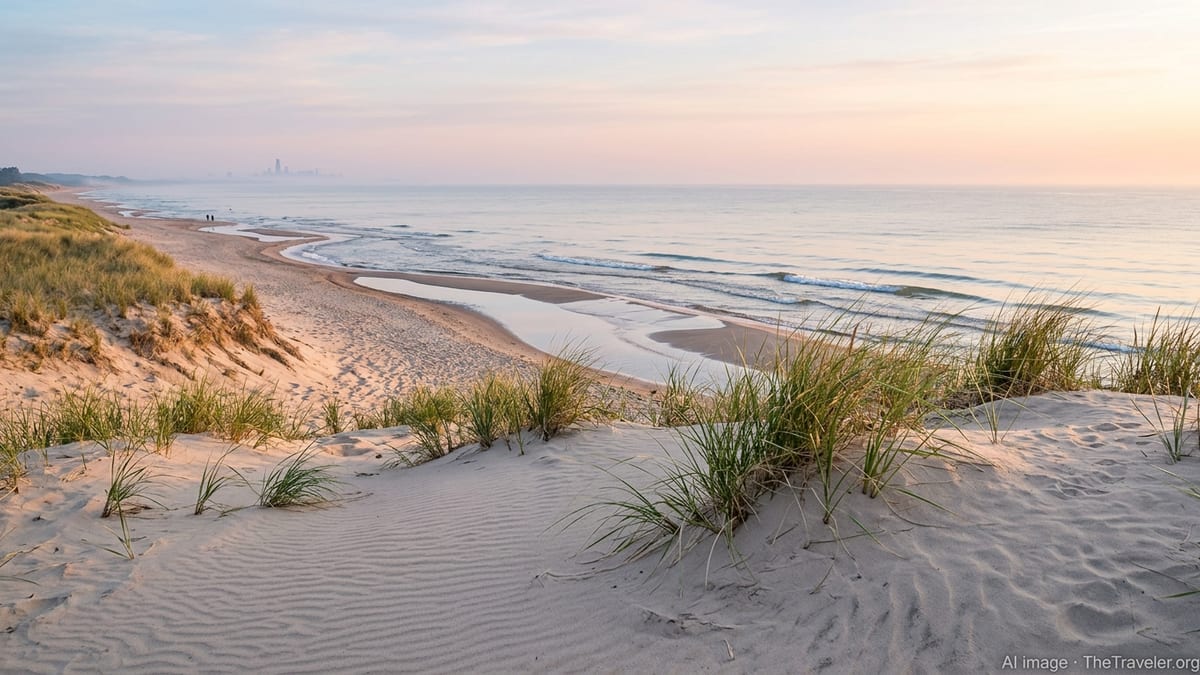
On Indiana’s northwest corner, Indiana Dunes National Park and Indiana Dunes State Park protect more than a dozen miles of Lake Michigan shoreline, a rare pocket of wild coast in the Midwest. Here, wind-sculpted dunes rise above wide beaches, and on clear days the Chicago skyline shimmers on the horizon. Travelers come for classic summer days of swimming and beachcombing, but the dunes are a true four-season destination, with quiet trails and shifting light that make each visit feel different.
Beach access points near communities such as Chesterton, Porter, and Michigan City provide a mix of lively and low-key experiences. Popular spots can feel busy in July and August, but a short walk from the parking lot often thins the crowds. The state park’s three towering dunes challenge visitors with steep, sandy climbs that reward with panoramic views over the lake and surrounding oak savanna. Spring and fall bring migratory birds, while winter sometimes coats the shoreline in sculpted ice formations when conditions are right.
Hikers can explore an unusually diverse set of habitats packed into a relatively small area, from black oak forests and wetlands to prairie and open dune. The national park’s network of trails includes easy boardwalk strolls, moderate loops through rolling hills, and longer routes that link dunes to inland lakes and creeks. Interpretive signs and occasional ranger-led programs help explain how wind, waves, and time shaped this landscape into one of the most ecologically rich corners of the state.
Beyond the sand and surf, nearby towns offer breweries, cafes, and independent shops that make the region ideal for a long weekend. Many visitors pair a day on the beach with stops at local farm stands or wineries in Indiana’s Cool North region. Lodging ranges from campgrounds and simple motels to vacation rentals tucked into wooded neighborhoods, so it is easy to tailor a dunes getaway to your budget and style.
Classic Indianapolis: Museums, Monuments, and the Canal
Indianapolis puts much of its cultural core within walking or biking distance of Monument Circle, the grand traffic circle dominated by the Soldiers and Sailors Monument. The memorial, dedicated in the early twentieth century, remains a visual and emotional anchor for the city. Around the circle, historic churches and theaters mix with modern office towers, while seasonal light shows and events keep this civic space lively after dark.
Just a short walk away, the downtown Canal Walk and nearby White River State Park create a green spine through the urban core. Paved paths along the water are popular with walkers, runners, and cyclists, and in warm months you can rent pedal boats or kayaks for a relaxed spin on the canal. The compact layout makes it easy to pair fresh air and skyline views with stops at neighboring attractions such as the Indiana State Museum, the Eiteljorg Museum of American Indians and Western Art, and the NCAA Hall of Champions.
The Indiana State Museum offers a broad overview of the state’s natural and cultural history, from Ice Age fossils to industrial innovations and contemporary stories. Next door, the Eiteljorg Museum stands out nationally for its focus on Indigenous art and the American West, set within a striking building that local architects have praised for its design. Together, these institutions provide a rich sense of how Indiana fits into larger American narratives.
Exploring Indianapolis’ center is straightforward, thanks to a mostly flat street grid and the Indianapolis Cultural Trail, a protected biking and walking route that links downtown with nearby arts districts. Many visitors find they can park once and spend the day on foot or by bike, crossing from museums to parks to restaurants without getting back in the car. This ease of movement is one reason Indianapolis has become a regular host city for conventions, sporting events, and large festivals.
Family Favorites: The Children’s Museum and Zoo in Indianapolis
For families, the Children’s Museum of Indianapolis is a destination in its own right. Frequently cited as one of the largest and most ambitious children’s museums in the world, the complex spans multiple floors of interactive exhibits that blend science, history, art, and imaginative play. Families can move from dinosaur skeletons to space exploration, from cultural galleries to rotating hands-on zones designed for toddlers, all under one roof.
The museum continues to add and update exhibits, and it is marking its centennial in the middle of the 2020s with special programming and celebratory events. Because the facility is so extensive, many travelers plan at least a half-day visit, if not an entire day, especially when traveling with younger children who tend to linger in each gallery. Timed entry, online ticketing, and seasonal hours can change, so checking details in advance is wise, particularly during peak school holiday periods.
On the city’s near west side, the Indianapolis Zoo and adjacent White River Gardens offer another family-friendly hub at the edge of downtown. The zoo’s exhibits highlight species from around the world, while the botanical gardens provide a quieter counterpoint with seasonal flower displays and indoor conservatory spaces. The setting along the river, with downtown towers as a backdrop, makes it easy to appreciate how much green space Indianapolis has woven into its urban landscape.
Combining the Children’s Museum and the zoo with downtown attractions results in a well-rounded Indianapolis itinerary for families. Many hotels cater to visitors with kids, offering package deals, indoor pools, or shuttle services to major sights. Food halls and casual restaurants in neighborhoods like Mass Ave and Fountain Square provide kid-friendly dining options that still give adults a taste of the city’s evolving culinary scene.
Racing Heritage and Big-Time Sports in the Circle City
Few places in the world are as closely linked to motorsport as Indianapolis. The Indianapolis Motor Speedway, on the edge of the town of Speedway just west of downtown, has hosted the Indianapolis 500 for more than a century. Even outside race day, the track and its museum are a pilgrimage site for fans of open-wheel racing. Visitors can tour exhibits of historic cars, trophies, and memorabilia, and in season can often book narrated bus tours that traverse portions of the 2.5 mile oval.
The Indianapolis Motor Speedway Museum has recently undergone a significant reimagining, adding immersive galleries that recreate the atmosphere of Gasoline Alley and highlight the engineering behind racing success. New acquisitions, including a group of Indy 500 winning cars from a major racing team, deepen the collection. The aim is to transform the museum from a static hall of fame into an experience that appeals even to those who are not already die-hard race fans.
Beyond the Indy 500, Indianapolis hosts a dense calendar of sports events. The city is home to the NFL’s Indianapolis Colts, the NBA’s Indiana Pacers, and the WNBA’s Indiana Fever, as well as a professional soccer club and a minor league baseball team that plays at a downtown ballpark often praised for its skyline views. On major sports weekends in late spring and early summer, the city can feel like a festival, with fans crowding restaurants, plazas, and hotel lobbies.
The city also leans into its role as a destination for amateur athletics and college tournaments, frequently hosting basketball championships and other large-scale events. For visitors, this means the downtown area is built to handle crowds, with plenty of lodging and dining options and a walkable core that connects arenas, convention halls, and entertainment districts. Even if you are not attending a specific game or race, touring the stadiums and speedway offers insight into an important part of Indiana’s identity.
Art, Neighborhoods, and Festivals in Indianapolis
Indianapolis’ cultural scene stretches far beyond its museums. Neighborhoods like Massachusetts Avenue, Fountain Square, and Broad Ripple function as arts corridors, lined with galleries, theaters, music venues, and public murals. The Indianapolis Cultural Trail links many of these districts, encouraging visitors to explore by bike or on foot, and turning the journey between attractions into part of the experience.
Newfields, the campus that includes the Indianapolis Museum of Art, sits north of downtown on a wooded estate with formal gardens, a historic mansion, outdoor sculptures, and a rotating program of seasonal events. Inside, the museum’s collection ranges from European and American paintings to contemporary installations and design objects, while outside, events like Spring Blooms and Winterlights draw both locals and travelers. The grounds and Fairbanks Art and Nature Park extend the experience into the landscape, blurring the line between gallery and garden.
Throughout the year, Indianapolis hosts a mix of festivals that showcase the city’s creative energy. The Indy Jazz Fest brings regional and international performers to venues across the city, while art-focused events and block parties activate neighborhoods with live music, food, and pop-up galleries. In recent years, new festivals dedicated to Black art, joy, and culture have gained attention for centering local creators and using city spaces in inventive ways.
Smaller institutions also enrich the city’s arts ecosystem. Places such as the Indianapolis Art Center, with its riverside sculpture park and community studios, and the network of independent theaters that power events like the Indianapolis Theatre Fringe Festival, give visitors a window into how locals make and experience art. Checking city and tourism calendars before a trip can help you align your visit with concerts, gallery openings, or neighborhood fairs that match your interests.
Beyond Indy: Brown County, Bloomington, and Scenic Southern Indiana
South of Indianapolis, the landscape shifts from flat farmland to rolling hills and hardwood forests, especially as you approach Bloomington and Brown County. Brown County State Park, often called the “Little Smokies” for its ridgeline views and dense woods, is one of Indiana’s most beloved outdoor destinations. Miles of hiking, mountain biking, and horseback riding trails wind through the park, and in autumn the hills explode into shades of red, gold, and orange that draw leaf-peepers from across the Midwest.
The nearby town of Nashville, Indiana, serves as a base for exploring the park, with a walkable center filled with galleries, studios, and cafes that tap into the region’s long-standing reputation as an artists’ colony. Local inns, cabins, and campgrounds give travelers a range of overnight options, from rustic to refined. While fall is peak season, spring wildflowers, summer camping, and crisp winter days offer quieter but still rewarding times to visit.
Bloomington, home to Indiana University, blends a youthful, international energy with access to lakes and forests. The campus itself features limestone architecture, performance halls, and museums, while the surrounding area includes trails, nature preserves, and scenic drives popular among locals seeking a quick escape. Within an hour’s drive of Bloomington, you can find waterfalls, forested state parks, and overlooks that underscore just how diverse Indiana’s topography becomes as you head south.
Other southern Indiana highlights include state parks and historic sites clustered near small towns, many of which retain nineteenth century main streets and courthouse squares. These communities often serve as gateways to nearby caves, rivers, and recreation lakes. A loop trip that connects Indianapolis, Brown County, Bloomington, and a few southern towns can provide a rewarding cross section of the state’s landscapes and local flavors.
Historic Trails, Small Towns, and the Rest of the Hoosier State
Outside the marquee destinations of Indianapolis, the dunes, and Brown County, Indiana is dotted with smaller cities and towns that reward unhurried exploration. Communities like Fort Wayne, South Bend, and Evansville have been reinvesting in riverfronts, downtown streetscapes, and cultural venues, often pairing historic architecture with new restaurants, breweries, and public art. In many cases, these efforts have created walkable districts that feel tailor-made for a weekend getaway.
Historic byways cut across the state, linking covered bridges, early industrial sites, and remnants of canal-era infrastructure. County tourism offices have developed themed driving routes that highlight barns, wineries, and farm markets or that trace the paths of famous Hoosiers. Because distances are relatively short, it is feasible to combine several stops in a single day, stopping for pie at a local diner or browsing antiques in repurposed depots along the way.
Outdoor enthusiasts will also find plenty to do beyond the best-known parks. Lakes and reservoirs across central and northern Indiana support boating, fishing, and swimming, while state parks and forests maintain networks of trails suitable for day hikes and weekend camping trips. Some parks have added mountain biking loops and paddle-friendly streams, reflecting a broader push in the state to expand active recreation options.
Seasonal events add another layer to Indiana’s appeal. The Indiana State Fair in early August turns the fairgrounds in Indianapolis into a temporary city of food stalls, midway rides, livestock exhibitions, and free concerts. Smaller county fairs, maple syrup festivals, holiday light displays, and harvest celebrations invite visitors to experience the state’s agricultural heritage up close. Travelers who time their trips around these events can mix classic sightseeing with distinctly local traditions.
The Takeaway
Indiana’s appeal lies in its combinations: freshwater dunes and industrial skylines, big-league sports and quiet forest trails, major museums and small-town galleries. A traveler can start the day watching waves roll onto a Lake Michigan beach, spend the next touring racing history at the Indianapolis Motor Speedway or galleries at Newfields, and then continue south into hills that glow with autumn color. The state’s manageable size and improving trail networks make it easy to link these experiences into a single journey.
Whether you are planning a dedicated trip to Indianapolis, a lakefront escape at the dunes, or a broader road trip that stitches together parks and towns, Indiana offers more than many first-time visitors expect. Focus on a few hubs, leave room for detours down scenic back roads, and pay attention to local event calendars. You are likely to leave with a new appreciation for the Hoosier State’s quiet surprises and big-stage moments.
FAQ
Q1. When is the best time of year to visit Indiana Dunes National Park?
The most popular months are June through August for warm lake swimming, but many travelers prefer late May or September for fewer crowds and milder temperatures. Spring and fall also offer good birding and hiking conditions, while winter can be atmospheric for quiet walks if you dress for cold and wind.
Q2. How many days should I plan for Indianapolis?
A long weekend of two to three full days lets you see major sights such as Monument Circle, the Canal Walk, the Children’s Museum, the zoo, and the Indianapolis Motor Speedway. If you want to add neighborhood exploring, festivals, or day trips, consider four or more days to avoid feeling rushed.
Q3. Is it realistic to visit both Indiana Dunes and Indianapolis on the same trip?
Yes. Driving time between the dunes area and Indianapolis is typically about three hours, depending on traffic. Many visitors spend a couple of days along Lake Michigan, then head south for several days in the capital, creating a trip that combines beach time, hiking, and urban culture.
Q4. Do I need a car to get around Indianapolis?
Having a car is helpful, especially for reaching outer neighborhoods and attractions, but the downtown core is quite walkable. The Indianapolis Cultural Trail, bike-share options, and rideshare services make it possible to see a lot without driving, particularly if you stay near the city center.
Q5. Are Indiana’s state parks suitable for first-time hikers?
Most state parks, including Brown County and Indiana Dunes State Park, offer a range of trails from short, paved paths to steeper, longer routes. Well-marked trail maps, moderate elevation changes, and maintained paths mean first-time hikers can find suitable options, especially if they choose routes labeled as easy or moderate and carry water and proper footwear.
Q6. What should families prioritize if they only have one day in Indianapolis?
Families with younger children often focus on the Children’s Museum of Indianapolis or the zoo and White River Gardens, then add a short visit to Monument Circle or the Canal Walk. Choosing one major attraction and leaving extra time for breaks usually leads to a more enjoyable day than trying to see everything.
Q7. Is Indiana a good destination for arts and culture travelers?
Yes. Newfields, the Eiteljorg Museum, and the Indianapolis Museum of Art offer substantial collections, while neighborhoods like Mass Ave, Fountain Square, and Broad Ripple showcase independent galleries, street art, and performance spaces. Annual festivals, jazz events, and theater gatherings add momentum to the city’s cultural calendar.
Q8. How crowded is the Indianapolis Motor Speedway outside of race season?
Outside major race weeks, the speedway and its museum are generally manageable, with visitors spread throughout the day. Special events and large tour groups can increase activity, but most travelers find they have plenty of space to explore exhibits and take track tours without intense crowds.
Q9. Can I combine Brown County State Park and Bloomington in one visit?
Yes. Brown County State Park and the town of Nashville sit less than an hour from Bloomington by car, making them easy to pair in a two to three day trip. Many travelers spend one day hiking or biking in the park and another day exploring Bloomington’s campus, restaurants, and music venues.
Q10. Are there any safety considerations for visiting Indiana’s outdoor attractions?
Standard outdoor precautions apply. At the dunes, steep sand slopes and changing lake conditions mean it is important to follow posted signs and swim near lifeguarded areas when available. In state parks, staying on marked trails, checking weather forecasts, carrying water, and watching for ticks during warm months help ensure a safe and enjoyable visit.