

Kasane, a small riverside town in northern Botswana, sits at one of Africa’s most remarkable crossroads. It is the gateway to Chobe National Park, home to some of the densest elephant populations on the continent, and lies within easy reach of four countries and the legendary Victoria Falls.
With the Chobe River flowing past its doorstep and wildlife wandering along the outskirts of town, Kasane is less a conventional destination and more an immersive safari hub where game drives, river cruises, and cross-border excursions fill every hour of daylight.
This guide explores the best things to do in and around Kasane, from classic Chobe safaris and sunset cruises to community encounters, birding, and day trips to one of the world’s greatest waterfalls.
Getting to Know Kasane and the Chobe Riverfront
Before diving into specific experiences, it helps to understand what makes Kasane such a unique base. Set on the banks of the Chobe River and adjoining the northeastern edge of Chobe National Park, the town offers rare convenience in a truly wild setting. Most lodges and guesthouses are only minutes from park gates and boat jetties, which means you can be watching elephants at sunrise and drifting past hippos at sunset without long transfers or complicated logistics.
Kasane also sits near the confluence of the Chobe and Zambezi rivers, close to the point where Botswana, Namibia, Zambia, and Zimbabwe meet. This location has shaped the town into a compact but busy hub, with safari operators, river cruise companies, and cross-border transfer services all catering to visitors who want to see as much of this four-country region as possible. Whether you have just two nights or an entire week, Kasane offers an impressive variety of things to do, anchored by world-class wildlife viewing.
Orientation: Town, Park, and River
The heart of Kasane stretches along the main road that parallels the river, dotted with supermarkets, fuel stations, local eateries, and safari lodges ranging from budget chalets to high-end riverfront resorts. The main entrance to Chobe National Park’s riverfront sector lies just west of town, while most river cruises depart from jetties at larger hotels and independent operators clustered along the water’s edge.
Across the river lies Namibia’s Caprivi (Zambezi) Region, where small settlements and riverine islands provide a scenic backdrop to most boat activities. To the east, the main road leads toward the Kazungula border area and the modern road-and-rail bridge over the Zambezi, an engineering landmark in its own right. Despite these connections, wildlife remains front and center: it is not unusual to see warthog grazing near petrol stations or baboons watching traffic from roadside trees.
When to Visit Kasane
Kasane is a year-round destination, but the character of your trip will change with the seasons. The dry months from roughly April to October are prime time for classic game viewing. As water sources shrink, elephant, buffalo, and antelope concentrate along the Chobe River, creating the dramatic riverside scenes that have made the area famous. Skies are generally clear, temperatures pleasant in the mornings and evenings, and humidity low.
The wet season, typically November to March, brings lush green landscapes, dramatic thunderclouds, and excellent birding. While wildlife disperses more widely and vegetation can be denser, sightings remain rewarding, especially for predators and migratory birds. Afternoon showers are common but usually short-lived, and river activities continue with appropriate weather precautions.
Chobe National Park Safaris from Kasane
Chobe National Park is the region’s main draw, known both for its immense elephant herds and for its accessibility from Kasane. Safaris typically focus on the Chobe Riverfront, a strip of floodplain, woodland, and riverbank that supports a remarkable variety of wildlife. Visitors can choose from short game drives to full-day safaris, with options tailored to different fitness levels, budgets, and interests.
Classic Morning and Afternoon Game Drives
Most visitors begin with a traditional game drive. Open 4x4 vehicles depart Kasane early in the morning or mid-afternoon, heading into the park through the main gate. Early starts capitalize on cooler temperatures and higher animal activity, while afternoon drives often culminate in golden light and sunset views. Typical outings last three to four hours and are suitable for all ages with basic mobility.
On any given drive, you might encounter large breeding herds of elephant moving between woodland and river, family groups of giraffe browsing acacia trees, or buffalo grazing on the floodplain. Lion are present and often seen resting in the shade or surveying the river, and lucky visitors may spot leopard slipping between thickets. Antelope species such as impala, kudu, waterbuck, and sable add to the diversity, while troops of baboon and vervet monkeys provide constant activity.
Full-Day Combination Safaris
For travelers who want maximum immersion, many operators offer full-day Chobe safaris that combine both a game drive and a river cruise, often with a break for lunch at a lodge between activities. A common pattern starts with a morning drive into the park, returning to Kasane for a buffet lunch, followed by an afternoon or sunset cruise on the Chobe River.
These combination packages provide a comprehensive perspective on the ecosystem, showing how animals move between land and water over the course of a day. They also help maximize limited time: in a single day from Kasane, it is entirely possible to see elephant herds, hippos, crocodiles, buffalo, and a wide range of antelope and birdlife from two distinct vantage points.
Photography-Focused Safaris
Serious photographers will find Kasane an ideal base. Several operators run small-group or private photographic safaris in Chobe, using specialized vehicles configured for camera equipment. Guides on these trips understand light, positioning, and animal behavior, and will often adjust routes to match guests’ interests, whether that means waiting longer at a promising waterhole or revisiting specific riverine stretches.
These activities are particularly attractive in the dry season, when dust, long views, and warm afternoon light combine to create dramatic scenes. Even travelers with compact cameras can benefit from the slower pace and considered positioning that photographic safaris provide.
Chobe River Cruises and Sunset Experiences
If game drives reveal Chobe’s wildlife across the wider landscape, river cruises bring you eye-level with the animals that depend most directly on the water. The Chobe River is famous for its dense concentrations of elephants, hippos, and crocodiles, and cruises departing from Kasane allow you to watch this daily drama unfold from the comfort of stable boats equipped with seating, shade, and refreshments.
Morning Wildlife Cruises
Morning cruises generally depart around 7 am, gliding out onto calm waters as mist lifts from the surface. These outings can be surprisingly peaceful, with bird calls carrying across the floodplain and early light catching the backs of hippos returning to deeper channels after night feeding. Birders will appreciate the chance to see African fish eagles, kingfishers, bee-eaters, and herons in excellent light.
Although large herds of elephant tend to concentrate at the river later in the day, mornings still offer good chances of spotting small family groups drinking or crossing shallow channels. The cooler temperatures also make this a comfortable option for families and those sensitive to midday heat.
Lunch and Midday Cruises
Some operators offer mid-morning or lunch cruises that include a meal on board or at a riverside lodge. These experiences pair leisurely wildlife viewing with time to relax and enjoy the scenery, appealing to travelers who prefer a slower pace. The angle of the sun can be less forgiving for photography at this time, but the trade-off is a more relaxed atmosphere and extended time on the water.
Midday cruises are well suited to travelers taking a day off from intensive early-morning game drives or those arriving in Kasane late morning who still want to get out on the river the same day.
Iconic Sunset Cruises
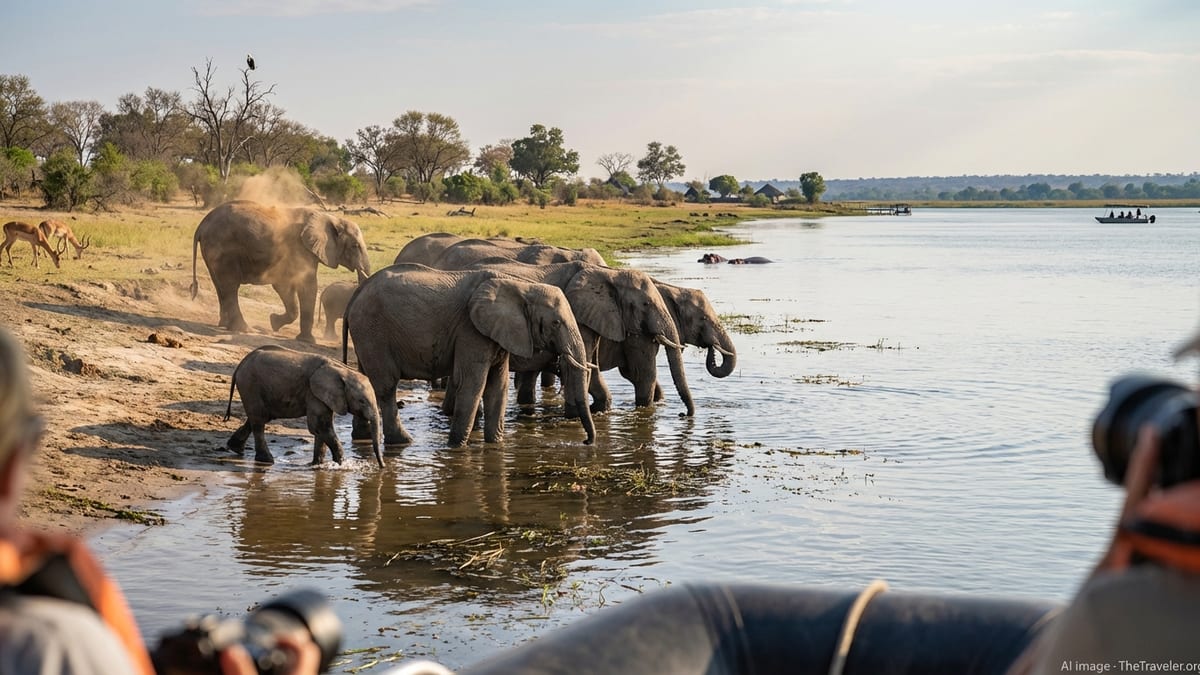
Sunset cruises are among the most sought-after experiences in Kasane. Departing in the mid-afternoon, boats travel upstream toward the heart of Chobe National Park, where the late-day ritual begins. As temperatures drop, elephants stream from the woodland to drink and bathe, often wading out to island grasses or slowly crossing channels with trunks raised above the water. Herds of buffalo gather at the edges of the floodplain, while giraffe silhouette themselves against the evening sky.
Operators typically include soft drinks, water, and sometimes snacks, with a cash bar for additional beverages. The combination of wildlife, expansive skies, and shifting colors makes sunset cruises memorable, even for travelers who have already spent days on safari elsewhere. Because these cruises return after dark, they also offer a different perspective on Kasane’s riverfront, twinkling with lodge lights and campfires.
Specialty and Small-Boat Cruises
In addition to standard river cruises, Kasane companies operate smaller, lower-profile boats that can access shallower channels and get closer to the waterline. These are popular with photographers and birders, as the lower angle produces more intimate wildlife images and reflections. Some operators label these as luxury, photographic, or private cruises, with fewer guests and more flexibility over pace and positioning.
Travelers seeking a quieter, more exclusive experience may wish to book one of these options, particularly during peak season when standard boats can be busier. Private charters are also available for families or groups who want a tailored outing with a dedicated guide.
Beyond the Riverfront: Day Trips and Regional Highlights
While most visitors come to Kasane for Chobe safaris and river cruises, the town’s strategic location opens up a wider range of excursions. With four countries meeting in the region, cross-border day trips are both practical and popular, especially for travelers who want to add a world-famous natural landmark to their safari itinerary.
Day Trips to Victoria Falls
Victoria Falls, straddling the border of Zimbabwe and Zambia, lies roughly 80 to 90 minutes’ drive from Kasane, depending on border formalities. This proximity has made full-day excursions from Kasane a staple of local tour offerings. Typical itineraries include early-morning pickup from Kasane hotels, assisted border crossings, and several hours at the falls before returning late afternoon.
Guided tours often include a structured walk along viewpoints, a stop at local craft markets, and a sit-down lunch at a restaurant overlooking the gorge. Some packages add extra experiences such as a short helicopter flight over the falls or a township visit. Unguided day trips are also available, providing transfers and border assistance but leaving you free to explore the falls and town on your own timetable.
Visitors should budget separately for visa fees and park entrance charges, which vary by nationality and current regulations. Given the popularity of these excursions, advance booking is highly recommended, especially in the dry season when both Kasane and Victoria Falls receive higher visitor numbers.
Exploring the Kazungula Bridge and Four-Country Region
Just downstream from Kasane, the modern road-and-rail bridge at Kazungula spans the Zambezi River, replacing the long-standing ferry crossing between Botswana and Zambia. Some cruise operators offer short excursions that highlight views of the bridge and the rare geographical point where four countries touch or nearly meet: Botswana, Namibia, Zambia, and Zimbabwe.
While not as wildlife-focused as core Chobe activities, these outings appeal to travelers interested in regional infrastructure, trade routes, and cross-border history. Seeing the bridge from the water also adds visual context to the region’s role as a transport corridor linking landlocked countries to seaports farther afield.
Crossing to Namibia’s Caprivi (Zambezi) Region
Opposite Kasane lies Namibia’s Caprivi (Zambezi) Region, a narrow strip of land that threads between several neighboring states. Some lodges and houseboats operate along the channels and islands opposite Chobe, and a small number of operators in Kasane can arrange transfers or combined itineraries that include nights on both sides of the river.
From a visitor’s perspective, this offers an opportunity to experience a slightly different rhythm of river life, including community areas and conservancies that still maintain close ties to traditional livelihoods. As with other cross-border trips, travelers must consider visa requirements and ensure passports and relevant documentation are in order.
Cultural Encounters and Community Experiences
Although wildlife sits at the center of most itineraries, Kasane and the broader Chobe region are also home to vibrant communities with their own histories and traditions. Integrating cultural experiences into your stay can deepen your understanding of the region and help ensure that tourism benefits local residents as well as conservation efforts.
Village Visits and Traditional Lifestyles
Several local operators offer guided visits to nearby villages where guests can learn about daily life, agriculture, and traditional crafts. Depending on the specific community and arrangement, these visits may include demonstrations of basket weaving, explanations of local building techniques, or introductions to customary practices surrounding weddings, conflict resolution, or seasonal ceremonies.
Responsible tours are typically organized in partnership with community leaders and designed to be respectful and unobtrusive. Travelers are usually encouraged to ask questions, buy locally produced items where available, and avoid intrusive photography. Participation fees often contribute directly to community projects or shared funds.
Markets, Crafts, and Everyday Kasane
Within Kasane itself, small shops and roadside stalls sell everyday necessities alongside souvenirs such as carvings and textiles. While the town does not have the extensive curio markets found in larger regional centers, spending time wandering local streets, stopping at grocery stores, or visiting small restaurants can offer insights into daily life beyond the lodge environment.
Purchasing locally made crafts or dining at independently owned eateries is another way to support the community. Visitors are advised to carry some cash in the local currency for small purchases, as card facilities may not be universally available in smaller outlets.
Conservation and Education Initiatives
Kasane’s position at the edge of a major national park means various conservation and education initiatives are active in the area. While not all are open to casual visitors, some organizations coordinate scheduled talks, school outreach programs, or volunteer opportunities for longer-stay guests. Subjects might range from human-wildlife conflict mitigation to anti-poaching efforts and habitat restoration.
Travelers interested in these themes can inquire through their lodge or safari operator about current projects and any appropriate ways to engage, donate, or learn more without disrupting ongoing work.
Adventure Activities, Birding, and Slow Travel
Kasane’s appeal extends beyond traditional game drives and river cruises. The varied mix of river channels, floodplains, and woodlands creates rich opportunities for birdwatching, while the region’s infrastructure supports a range of light-adventure activities and slower, more reflective ways to experience the landscape.
Birdwatching along the Chobe
Birders will find Chobe Riverfront one of southern Africa’s standout locations. Over the course of a few days, it is possible to record a long list of species, from iconic African fish eagles and open-billed storks to colorful bee-eaters, kingfishers, and rollers. The mosaic of habitats supports both waterbirds and woodland species, and the constant presence of water ensures good sightings even in drier months.
Dedicated birding cruises and game drives can be arranged with specialist guides who know key hotspots and seasonal patterns. Even standard safaris can be remarkably productive, particularly in early morning or late afternoon when birds are most active and light is optimal for viewing and photography.
Light Adventure and Active Options
Compared with some adventure centers, Kasane’s activities trend toward relaxed rather than extreme, but there are still options for those who like to keep moving. Walking safaris are available in certain areas with experienced guides, typically focusing on tracks, plants, and smaller wildlife rather than close approaches to large animals. These walks are strictly controlled and subject to park regulations.
On the Zambezi side of the region, particularly near Victoria Falls, more adrenaline-focused pursuits such as white-water rafting and gorge swings are popular, and these can be combined with day trips from Kasane for travelers seeking contrast to sedate river cruising. In and around Kasane itself, the primary emphasis remains firmly on wildlife watching, which is well suited to a broad range of ages and abilities.
Houseboats and Multi-Day River Stays
For a more immersive slow-travel experience, some visitors opt to spend nights on houseboats that cruise or moor along the Chobe and adjacent channels. While many of these vessels are technically based on the Namibian side, they operate in close coordination with Kasane’s tourism infrastructure and can often be combined with land-based stays in and around town.
Life on board tends to follow a gentle rhythm of morning and afternoon excursions by tender boat, interspersed with relaxed deck time watching wildlife and sunsets. For couples, families, or small groups wanting extended time on the river, this can be an appealing alternative to moving between multiple lodges.
Practical Tips for Visiting Kasane and Chobe
Kasane’s popularity and relatively compact size make it a straightforward destination, but a few practical considerations can help ensure a smoother and more rewarding visit. From booking safaris to preparing for border crossings, a bit of planning goes a long way in this corner of Botswana.
Choosing and Booking Activities
Most lodges and guesthouses in Kasane can arrange game drives, river cruises, and day trips directly, often with established local partners. Travelers who prefer to plan ahead may also book key activities before arrival, particularly for peak months when popular time slots, such as sunset cruises, can fill quickly.
When comparing options, consider group size, departure times, inclusions such as park fees or meals, and the level of guiding expertise. Smaller groups often provide more flexibility and a quieter experience, while larger boats and vehicles can be more social and budget-friendly.
Health, Safety, and Park Etiquette
Kasane lies in a malaria zone, so visitors should speak with a medical professional well before travel about appropriate prophylaxis and prevention strategies. Insect repellent, long sleeves in the evenings, and netting where provided are all sensible precautions. Tap water quality and food hygiene are generally good in reputable lodges, but basic travel vigilance remains advisable.
Within the park and on the river, guides will brief guests on safety and responsible behavior. This typically includes remaining seated while animals are close, keeping noise levels low, not feeding or attempting to touch wildlife, and following all instructions promptly in the rare event that an animal’s behavior changes unexpectedly. Respectful conduct not only protects visitors but also helps minimize stress on the animals themselves.
What to Pack for Kasane
Packing for Kasane is largely about balancing sun protection with comfort across a range of temperatures. Light, neutral-colored clothing works well for game drives and boat trips, paired with a wide-brimmed hat and high-factor sunscreen. Even in the dry season, early mornings and evenings can be cool, so a warm layer is essential.
Closed, comfortable footwear is recommended for both drives and any light walking; sandals can be useful around lodges. Binoculars significantly enhance wildlife and bird sightings, and a camera with a telephoto lens is ideal for photography enthusiasts. Reusable water bottles, insect repellent, and a small daypack complete most basic lists.
Money, Connectivity, and Services
Kasane has banks, ATMs, and fuel stations, though machine reliability can vary, particularly at peak times. Lodges and established operators commonly accept major credit cards, but carrying some cash in local currency remains important for tips, small purchases, or situations where card systems are unavailable.
Mobile coverage in town is generally good, with data connections varying by provider. Lodges often provide Wi-Fi, though speeds can be modest and access limited at busier times. Visitors should not expect the seamless high-speed connectivity found in major cities, and many appreciate the opportunity to disconnect to some extent during their stay.
The Takeaway
Kasane occupies a rare niche among safari destinations: a compact, well-connected town that opens directly onto one of Africa’s great rivers and most wildlife-rich national parks. From the simple pleasure of watching elephants wade through the Chobe at sunset to the spectacle of Victoria Falls reachable on a comfortable day trip, the range of experiences available from this small hub is striking. Game drives and river cruises remain the foundation of any visit, but cultural encounters, birding, and cross-border excursions add rich layers to the story.
Whether you are planning a once-in-a-lifetime journey or adding a few days in Kasane to a longer regional itinerary, the town rewards those who slow down enough to appreciate its rhythms: the early-morning movement of safari vehicles, the quiet heat of midday along the river, and the evening chorus of birds and frogs as boats return from the floodplain. With thoughtful planning and a willingness to let the river set the pace, Kasane offers one of southern Africa’s most compelling blends of accessibility and wildness.
FAQ
Q1: How many days should I spend in Kasane to experience Chobe and the river properly?
Most travelers find that three to four nights in Kasane provides enough time for multiple game drives, at least one or two river cruises, and potentially a day trip to Victoria Falls. With five or more nights, you can slow the pace, include cultural visits or specialized birding excursions, and enjoy some downtime between activities.
Q2: Is it better to do a game drive or a river cruise if I only have time for one activity?
If you must choose, a river cruise often provides the most distinctive Chobe experience, with close-up views of elephants, hippos, and crocodiles along the water’s edge. However, a game drive offers broader exposure to the park’s landscapes and a higher chance of encountering predators on land. Ideally, visitors should try to do at least one of each, as the experiences are complementary.
Q3: Do I need to book Chobe safaris and river cruises in advance?
While it is sometimes possible to arrange activities on arrival, advance booking is strongly recommended during peak dry-season months and around major holidays. Booking ahead helps secure preferred time slots for sunset cruises and combination safaris, and allows you to compare options and inclusions before committing.
Q4: Can I visit Victoria Falls as a day trip from Kasane?
Yes. Several operators offer full-day transfers and guided or unguided packages from Kasane to Victoria Falls, typically departing around 8 am and returning mid to late afternoon. These trips usually include transport and border assistance, with visa fees, park entry, and optional activities paid separately. Visitors should carry passports and confirm entry requirements for Zimbabwe or Zambia in advance.
Q5: Is Kasane suitable for families with children?
Kasane works well for families, provided children are comfortable with early starts and periods of sitting quietly on vehicles or boats. Many river cruises and game drives accept children of all ages, and some operators offer private vehicles or boats for families who prefer a more flexible schedule. Parents should discuss specific age policies, safety guidelines, and life jacket availability with operators before booking.
Q6: When is the best time of year to see elephants in Chobe from Kasane?
The dry season, roughly from April to October, is widely regarded as the best time to see large concentrations of elephants along the Chobe River. As inland water sources diminish, herds move down to the river to drink and bathe, creating dramatic scenes that are especially impressive on afternoon and sunset cruises. Elephants are present year-round, but their movements are more dispersed in the wetter months.
Q7: What kind of clothing should I wear on safaris and river cruises in Kasane?
Lightweight, neutral-colored clothing is recommended for both drives and cruises, paired with a wide-brimmed hat and good sunscreen. Early mornings and evenings can be cool, particularly in winter, so pack a warm jacket or fleece. Closed shoes are advisable for vehicle steps and any light walking, while a light rain layer can be useful in the wet season.
Q8: Are there health or safety concerns I should be aware of in Kasane?
Kasane lies in a malaria area, so travelers should consult a medical professional about prophylaxis and take standard bite-prevention measures. Within town and on organized activities, safety standards are generally good, and guides are trained to manage wildlife encounters. Visitors should follow all instructions from guides, avoid approaching animals on foot, and keep a respectful distance from wildlife even when it wanders close to developed areas.
Q9: How easy is it to pay for things in Kasane, and should I bring cash?
Many lodges and established operators accept major credit cards, and there are banks and ATMs in Kasane. However, card systems can occasionally be disrupted, and smaller shops or markets may operate on a cash-only basis. Carrying a reasonable amount of local currency for tips, small purchases, and contingencies is sensible, particularly if you plan to visit rural areas or cross borders.
Q10: Can I self-drive into Chobe National Park from Kasane, or do I need a guide?
Experienced travelers with suitable 4x4 vehicles may enter Chobe National Park on a self-drive basis from Kasane, provided they obtain the required permits and understand local conditions. However, for most visitors, joining guided game drives is recommended. Professional guides know the terrain, track wildlife effectively, and handle park regulations and safety considerations, allowing guests to focus fully on the experience.