

Sun-drenched and effortlessly relaxed, Kos is one of the most inviting islands in the Dodecanese for first-time visitors.
Long ribbons of sandy beach, a compact and walkable main town, ancient ruins in everyday settings and easy day trips to nearby islands all make it an ideal introduction to the Greek island lifestyle.
This guide brings together the best things to do in Kos right now, with a focus on experiences that will help you understand the island’s character, from its Hippocratic heritage to its modern café culture and coastal adventures.
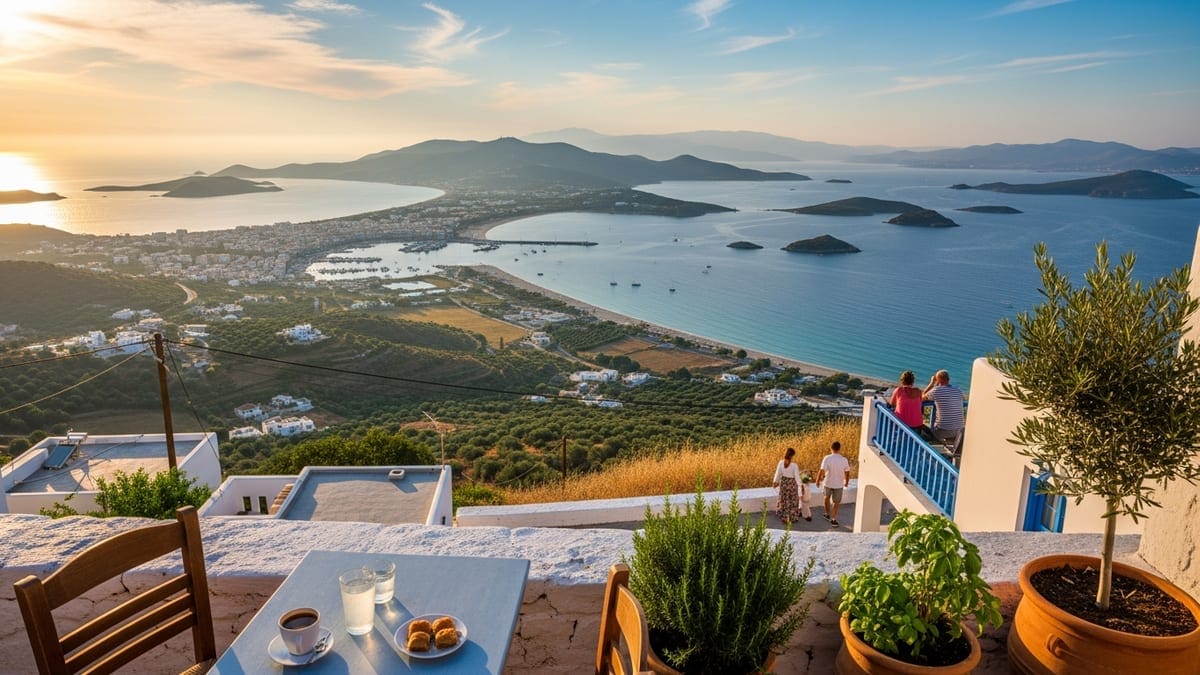
Getting to Know Kos Town
Most visitors will start and end their trip in Kos Town, the island’s main port and a lively, historic hub.
The town is compact enough to explore on foot, mixing Venetian, Ottoman and Italianate architecture with bustling squares and waterfront promenades.
It is also where you will find several of the island’s most important archaeological and cultural sites within a short walking radius.
Stroll the Old Town and Harborside Promenade
Kos Town’s Old Town spreads inland from the harbor, a tangle of narrow streets lined with small shops, cafés and tavernas.
Freedom Square and the surrounding lanes are particularly atmospheric in the early evening, when locals and visitors alike come out to walk, shop and linger over drinks in open-air cafés.
Make time to wander the Mandraki harbor front, where fishing boats and excursion vessels moor side by side.
The waterfront is an excellent place for a first orientation walk, with views across to the Turkish coast, and an easy way to slip into the island’s slower rhythm as you pause for coffee or a seafood meal.
Visit the Castle of the Knights
Guarding the entrance to the harbor, the medieval Neratzia Castle was built by the Knights Hospitaller in the 14th and 15th centuries. Its thick walls, bastions and sea views give a clear sense of Kos’s strategic position in the eastern Aegean.
Inside the complex, you can walk among scattered columns and sculpted blocks reused from ancient buildings, a reminder of how many eras overlap here.
From the ramparts, look back over the old town’s tiled roofs and out across the channel to Turkey.
Early morning and late afternoon offer softer light and fewer crowds, and in summer the stone walls can be very hot at midday.
Pay Homage at the Plane Tree of Hippocrates
Just outside the castle, near the former ancient agora, stands the famous Plane Tree of Hippocrates. Tradition holds that the ancient physician taught his students beneath a plane tree in this spot.
The current tree is several centuries old, supported by scaffolding, but it remains a symbolic place to pause and reflect on Kos’s role in the history of medicine.
This small square is often busy with tour groups, but even a brief stop connects you to one of the island’s most enduring stories.
Nearby stalls sell herbs, oils and souvenirs inspired by Hippocrates and traditional healing.
Explore the Archaeological Museum and Ancient Ruins
Kos Town’s archaeological remains are unusually integrated into the modern cityscape, with excavated zones appearing between contemporary buildings.
The Archaeological Museum, located on or near Eleftherias (Freedom) Square, is the best place to get context. Inside you will find mosaics, statues and everyday objects from Hellenistic and Roman times, many uncovered in and around the town.
After the museum, walk through the Western Archaeological Zone, where you can see the outlines of ancient houses, a gymnasium, a Roman Odeon and several temples.
Elsewhere in town, parts of the ancient agora have been revealed, illustrating how large and important classical Kos once was. These sites are generally low-key and open-air, lending a pleasantly informal feel to archaeology here.
Tracing Hippocrates and the Island’s Ancient Heritage
Beyond the evocative sites in the town center, Kos offers several important archaeological locations that illuminate its classical and Hellenistic past.
For first-time visitors, combining these with the Hippocratic story deepens your understanding of the island as more than a beach destination.
Visit the Asklepion Healing Sanctuary
The Asklepion is Kos’s signature archaeological site, set on a hillside a short drive from Kos Town. Dedicated to Asclepius, the god of healing, it functioned as a medical and religious sanctuary in antiquity.
Hippocrates is believed to have been associated with such healing centers, and this site is often linked to his legacy.
The complex is built on several terraces connected by grand stairways. As you move upward, you pass the remains of treatment rooms, dormitories and temples, while enjoying increasingly sweeping views of Kos Town and the turquoise sea.
Informational panels explain how patients sought cures through ritual, diet, exercise and the early practice of clinical observation.
Arrive early in the day or later in the afternoon to avoid both heat and crowds. Even if you are not deeply interested in archaeology, the combination of ruins, pine trees and views makes this a standout excursion.
Discover Casa Romana and the Roman Odeon
Back in Kos Town, Casa Romana is a meticulously restored Roman mansion that offers a vivid window into upper-class life in the 2nd and 3rd centuries AD.
Its colonnaded courtyards, elaborate floor mosaics and reconstructed rooms are more intact than many open-air ruins and show the island’s Roman-era prosperity.
A short walk away, the small Roman Odeon is an ancient performance venue that has been partially restored. Seating tiers and the stage area are clearly defined, and the site is occasionally used for modern performances.
Together, Casa Romana and the Odeon help round out the story begun at the Asklepion, illustrating how public and private life unfolded in Roman Kos.
Seek Out Lesser-Known Historic Sites
If you have extra time and enjoy quieter sites, venture inland to locations such as Antimachia Castle and the abandoned village of Paleo Pyli. Antimachia Castle crowns a plateau, its walls encircling the remains of dwellings and small churches.
From here, you can survey central Kos and the surrounding sea, underlining the island’s defensive concerns in medieval times.
Paleo Pyli clings to the slopes of Mount Dikaios, an atmospheric ruin of stone houses, alleys and chapels gradually reclaimed by vegetation. A walk here combines moderate hiking with history and rewarding views across fields and coastline.
These locations make a good contrast to the busier coastal strip, and they show another, more introspective side of the island.
Beaches and Coastal Escapes
Kos is renowned for its sandy beaches, many of them long, shallow and family-friendly. For first-time visitors, it makes sense to sample several areas rather than settling in one resort, as each part of the coastline has its own character.
An efficient local bus network and plentiful car, scooter and bike rentals make beach-hopping straightforward.
Relax on the Classic North-Coast Beaches
North of Kos Town, the shoreline is dotted with accessible, well-serviced beaches that are ideal for a first day on the island.
Tigaki is among the most popular, with a broad sweep of pale sand, shallow water and a backing of tavernas and cafés. It is suitable for families, casual swimmers and anyone seeking an easy day by the sea.
Lambi, closer to Kos Town, functions as the town beach, within walking or short cycling distance of the center. It offers a mix of sunbed sections and free areas, and it pairs naturally with an evening stroll or dinner back in town.
These beaches are not the island’s most dramatic, but they are convenient and welcoming, especially if you have just arrived.
Explore Kefalos and Agios Stefanos
On the southwestern tip of Kos, the Kefalos peninsula has a different feel, more windswept and relatively less developed in places.
Kamari Bay, below the hilltop village of Kefalos, serves as the main resort area, with a string of beaches and a relaxed, slightly quieter atmosphere than the main town or Kardamena.
Agios Stefanos Beach is a highlight here. Its clear water and views of tiny Kastri islet would be appealing enough, but what makes it memorable are the ruins of early Christian basilicas scattered near the shore.
You can swim with ancient stones in view, an unusual pairing of seaside relaxation and history. The area suits visitors who want to combine gentle exploration with laid-back hours on the sand.
Seek Out Paradise and Other South-Coast Spots
Along the southern coast near Kefalos, beaches such as Paradise, Camel and Markos offer soft sand and typically calm, clear water protected from stronger northern winds.
Paradise Beach is especially well known for its light sand and shallow entry, making it a favorite for families and anyone who prefers easy swimming conditions.
Facilities here range from sunbed rentals and beach bars to quieter stretches where you can simply lay a towel.
If you have a rental car or scooter, it is easy to string together several of these beaches in one day, stopping wherever the sea looks most appealing.
Experience the Therma Hot Springs
On the island’s eastern side, a short drive from Kos Town, the Therma Beach hot springs provide a natural spa experience. Hot, mineral-rich water emerges from the rocks and pools by the shore before mixing with cooler seawater.
Visitors sit in the stone-ringed pool or just where the heated water meets the sea, adjusting their spot to find a comfortable temperature.
The smell of sulfur is noticeable but generally tolerable, and the surrounding cliffs and sea views make the setting striking.
This is a popular spot, so plan to visit early or late in the day, and bring dark swimwear, as minerals can sometimes discolor lighter fabrics.
Day Trips and Boat Adventures
The sea around Kos is dotted with small islands and coastal inlets, many reachable on easy day trips. For first-time visitors, a boat excursion is an efficient way to experience the broader Dodecanese seascape and add variety beyond pool and beach days.
Join a Three-Island Cruise
From Kos Town harbor, numerous excursion boats run classic “three-island” cruises, typically visiting Pserimos, Plati and Kalymnos.
These full-day outings often include swimming stops in clear bays, barbecue lunches on board or on shore, and short visits to small harbors where you can stroll and have a coffee.
While the overall format is touristy, the scenery is consistently appealing, and for many first-time visitors it is a relaxing way to enjoy the Aegean without worrying about logistics.
Check departure times and what is included when booking, and consider choosing a slightly smaller boat if you prefer a less crowded feel.
Take a Volcanic Excursion to Nisyros
If you are drawn to more unusual landscapes, consider a day trip by boat to the nearby island of Nisyros. Ferries and organized excursions from Kos connect you to this compact volcanic island, where the main attraction is a walk into the active volcanic caldera.
Inside the crater, steam vents and sulfur-crusted rocks testify to ongoing geothermal activity, while villages on the rim provide whitewashed lanes and sea views.
Trips usually include transport from Kos to Nisyros, a bus up to the crater, free time in the main village and return in the late afternoon or evening.
This makes for a longer, more active day than the beach-focused mini-cruises, but it offers one of the most distinctive experiences available from Kos.
Explore the Coast by Small Boat or Kayak
For more independent exploration, look for small-boat rentals with skippers or guided sea kayaking tours around quieter sections of the coastline.
Paddling or cruising near low cliffs, sea caves and small coves gives you access to places that are difficult to reach by road, especially along less-developed stretches near Agios Theologos or the Kefalos peninsula.
When arranging small craft activities, pay attention to safety briefings, local wind patterns and any restrictions. Organized operators typically know which routes are appropriate for beginners and can adjust plans according to weather and sea conditions.
Villages, Sunsets and the Island Interior
While the coastline attracts most of the attention, Kos’s interior holds atmospheric villages, fertile farmland and the island’s highest peaks.
Exploring away from the shore provides a welcome change of pace and a closer look at everyday island life beyond the resorts.
Watch the Sunset from Zia Village
Zia is a small village perched on the slopes of Mount Dikaios, widely regarded as one of the best sunset viewpoints on Kos.
In the late afternoon, visitors arrive by car, taxi or tour coach to find terraces and tavernas facing west, waiting for the sun to sink over the sea and nearby islands.
The village lanes host craft shops, small bakeries and cafés, and you can wander between them before settling on a balcony for dinner or drinks.
Although Zia is firmly on the tourist trail, the combination of mountain air, broad views and warm evening light is difficult to beat for a first-time visitor.
Hike on Mount Dikaios
For those who like to combine scenery with physical activity, Mount Dikaios offers one of the island’s standout hikes. Trails from near Zia or other starting points wind up through pine forest and rocky slopes to the summit ridge, where views fan out over Kos, neighboring islands and the distant Anatolian coast.
The hike is typically classed as moderately challenging to demanding, depending on the route, and is best attempted in spring or autumn or early in the morning on summer days to avoid heat.
Even if you do not reach the summit, shorter walks on the lower slopes give a strong sense of Kos’s geography and plant life.
Discover Traditional Settlements and Rural Life
Inland towns such as Antimachia and small hamlets scattered across the central plain provide glimpses of traditional island life.
In Antimachia you can visit a historic windmill and simple folk architecture, then continue to nearby farms, vineyards and olive groves.
Driving or cycling through the interior, you will see orchards, vegetable plots and grazing land that still underpin the local food culture.
Stopping at a village café or bakery for coffee or sweets is an easy way to connect with everyday rhythms that feel far from the beach bars yet are only a short drive away.
Food, Wine and Nightlife
Kos shares many culinary traditions with the rest of Greece, but its position in the Dodecanese and historical links to Asia Minor and Italy add subtle variations.
For first-time visitors, tasting local produce and exploring both relaxed and livelier night scenes is essential to understanding the island’s contemporary character.
Sample Local Cuisine in Seaside Tavernas
Seafood is a natural highlight on Kos, with many tavernas along the waterfront in Kos Town, Kardamena, Mastichari and Kefalos featuring grilled fish, octopus, calamari and sardines.
Meat dishes such as slow-cooked lamb and pork, often baked with herbs and vegetables, reflect the island’s rural interior.
Look for plates built around local ingredients: island cheeses, olives, tomatoes, cucumbers and capers, plus wild greens in season. Shared meze dishes are a sociable way to sample a range of flavors, from dips like tzatziki to fried courgette patties and stuffed vine leaves.
Discover Kos Wineries and Island Wines
Wine-making on Kos dates back to antiquity and has seen renewed energy in recent years. Several modern wineries on the lower slopes of Mount Dikaios, particularly east of Kos Town, now welcome visitors for vineyard tours and tastings.
These estates produce whites, reds and rosés from both international and Greek grape varieties.
A typical visit includes a walk through the vines, a look at production facilities and a guided tasting of several wines, often accompanied by local cheeses and small bites.
If you are exploring by car, consider designating a driver or arranging a tour that includes transport, so you can fully enjoy the tastings.
Experience Nightlife in Kos Town and Kardamena
Kos has a varied nightlife scene that ranges from quiet harbor cafés to energetic bar streets and clubs.
In Kos Town, a cluster of bars near the harbor offers cocktails, music and people-watching late into the night, while nearby lanes hold more relaxed wine bars and lounge-style venues.
Kardamena, on the south coast, has long been known for its party-oriented atmosphere, with beachfront bars and small clubs drawing a younger, livelier crowd.
For a completely different evening mood, some tavernas in Zia and other villages host live traditional music, pairing local dishes with folk songs and dancing in a more low-key setting.
Practical Tips for First-Time Visitors
A bit of planning goes a long way toward making your first visit to Kos smooth and enjoyable. From transport choices to seasonal considerations, understanding how the island works will help you spend more time enjoying and less time organizing.
Choose the Right Base and Getting Around
Where you stay on Kos will shape your experience. Kos Town suits visitors who prioritize history, dining variety and easy access to transport and excursions.
Kardamena appeals to those who want a resort feel with an emphasis on nightlife, while Kefalos and Mastichari offer quieter bases closer to less developed beaches.
For getting around, the island has a network of buses linking major towns and popular beaches, particularly in the high season. However, many visitors find that renting a car, scooter, quad bike or bicycle gives them more flexibility to reach smaller villages and coves.
Always check local traffic rules and insurance coverage, and be cautious on rural roads at night.
Time Your Visit and Plan for the Weather
High season on Kos runs roughly from late June through August, when temperatures are hottest, the sea is warmest and the island is at its busiest. May, early June, September and early October are often excellent times for first-time visitors, balancing warm weather and swimmable seas with fewer crowds and slightly lower prices.
Summer afternoons can be very hot away from the sea, so plan hikes and major sightseeing for early or late in the day, and keep beach time and leisurely meals for midday. A light jacket can be useful for breezy evenings by the water, especially in shoulder seasons.
Respect Local Culture and Environment
Greek island life is relaxed but grounded in strong local traditions. Dress standards are casual in resorts and on beaches, but modest clothing is appropriate for visiting churches and monasteries. When driving or cycling through villages, go slowly and yield to pedestrians and local traffic.
Help preserve Kos’s natural environment by using designated paths, not removing stones or artifacts from archaeological sites, and minimizing plastic use at the beach.
Many coastal areas host turtles and other marine life, so follow local guidance on responsible swimming and boating practices.
The Takeaway
For first-time visitors, Kos offers a particularly balanced introduction to the Greek islands. It is large enough to provide variety yet compact enough to feel manageable, and it combines distinguished ancient sites with a welcoming, modern holiday infrastructure.
In a few days, you can move from Hippocrates’ Asklepion to quiet rural villages, from volcanic hot springs to white-sand bays, and from sunset in the mountains to music on the waterfront.
Whether you come primarily for beaches, history, food or simple relaxation, the island invites you to experience all of these at your own pace.
With a bit of planning and a willingness to explore beyond your nearest sunbed, Kos can turn a first visit into the start of a longer relationship with the Dodecanese and the wider Aegean.
FAQ
Q1: How many days do I need in Kos for a first visit?
For a first-time visit, plan on at least four to five full days. This allows time to explore Kos Town and the main archaeological sites, enjoy two or three different beach areas and fit in at least one day trip by boat or into the island’s interior without rushing.
Q2: Is it better to stay in Kos Town or a beach resort?
Kos Town is ideal if you want easy access to historic sites, restaurants, shops and boat excursions. Beach resorts such as Kardamena, Tigaki, Kefalos or Mastichari are better if your priority is spending most of your time on the sand and in the water. Many visitors split their stay between town and a quieter coastal base.
Q3: Do I need a car to get around Kos?
You can see key sights using the public bus network and organized excursions, especially in summer, but renting a car or scooter gives you much more flexibility to reach smaller villages, remote beaches and inland ruins. For a short first visit, consider at least one or two rental days for wider exploration.
Q4: When is the best time of year to visit Kos?
Late May, June, September and early October are often the best times for first-time visitors, with warm weather, swimmable sea temperatures and fewer crowds than in peak July and August. Winter is very quiet, with many tourist services reduced or closed.
Q5: Are the beaches in Kos sandy or pebbly?
Kos is particularly known for its sandy beaches, especially along the north and south coasts, including Tigaki, Paradise and sections around Kefalos. Some areas have a mix of sand and pebbles, so water shoes can be useful, but you will find plenty of genuinely sandy options.
Q6: Can I visit Turkey from Kos on a day trip?
Yes, seasonal boat services connect Kos Town with nearby Turkish coastal cities for day trips, subject to current immigration and customs regulations. If you plan to go, check schedules and entry requirements in advance and remember to bring your passport and any necessary visas.
Q7: Is Kos suitable for families with children?
Kos is very family-friendly. Many beaches are shallow and sandy, restaurants are welcoming to children and attractions such as boat trips, castle ruins and the Therma hot springs offer variety beyond the pool. Renting a car with proper child seats can make moving around with younger children easier.
Q8: What should I wear when visiting churches and monasteries?
When entering churches or monasteries, dress modestly. Shoulders should be covered, shorts and skirts should be at least knee-length and swimwear is not appropriate. Many visitors carry a light scarf or wrap that can be used when needed over regular summer clothing.
Q9: Are there good options for vegetarians and vegans on Kos?
Yes. Traditional Greek cuisine includes many vegetarian dishes such as salads, grilled vegetables, bean stews and cheese-based plates. Vegan options are increasingly common, especially in areas with more international tourism, though you may need to ask staff to clarify ingredients and suggest suitable choices.
Q10: Is the tap water safe to drink on Kos?
Tap water in Kos is generally treated and safe, but many locals and visitors prefer to drink bottled water due to taste and mineral content. It is usually fine to use tap water for brushing teeth and washing fruits, and you will find bottled water widely available and inexpensive in shops and cafés.