

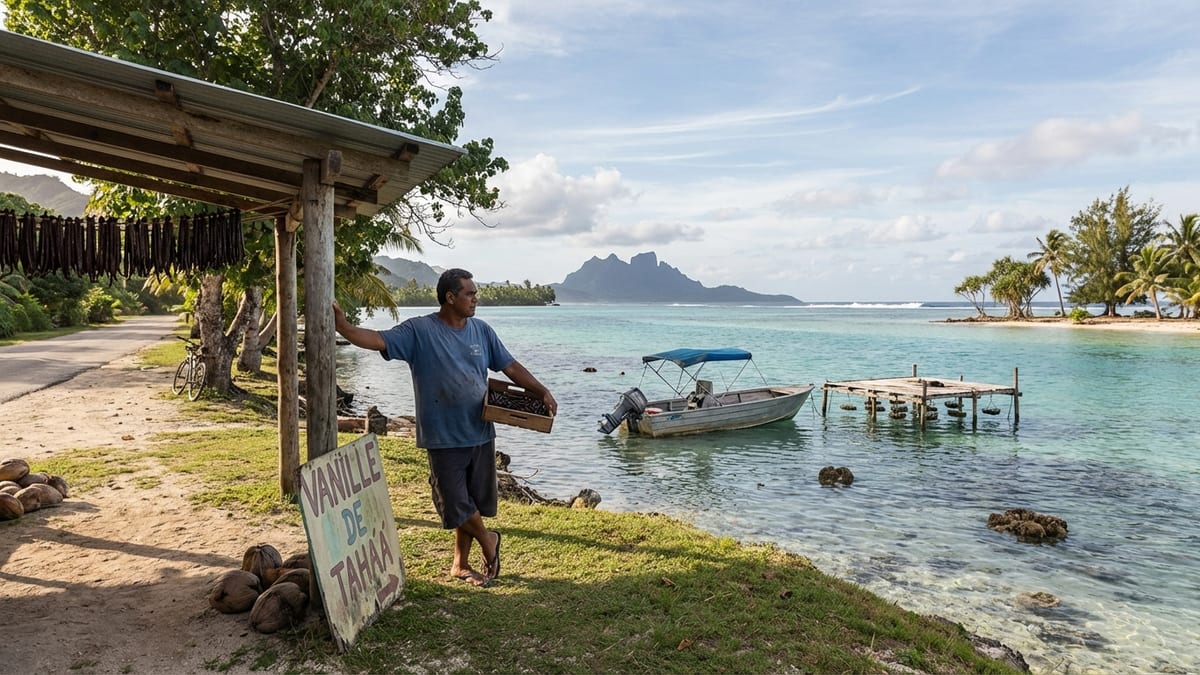
Ringed by a translucent lagoon and framed by views of distant Bora Bora, Taha’a is often seen only from the deck of an overwater bungalow. Yet this quiet island in French Polynesia is one of the most rewarding places in the Society Islands to get beyond the resort gates.
Vanilla farms, coral gardens, rum distilleries, pearl stations and sleepy village roads invite you into a slower, more intimate version of Polynesia. Whether you arrive by small plane or via neighboring Raiatea, Taha’a rewards travelers who are willing to trade poolside cocktails for local encounters, boat rides and bare-foot wanderings.
Explore Vanilla Plantations at the Heart of Island Life
Taha’a is often called the Vanilla Island, and visiting a plantation is one of the most revealing ways to understand its economy and culture. Small family farms supply a significant share of Tahitian vanilla, cultivating the climbing orchid vines under shade trees and nurturing each flower by hand. On a guided visit you walk among the vines, watch how delicate blossoms are pollinated and learn why every bean represents months of careful labor. The fragrance in the curing sheds is almost overwhelming, a warm and sweet haze that feels more like a memory than a smell.
Several plantations welcome visitors for tours that typically last an hour or two. At places such as La Vallée de la Vanille and other small holdings, growers explain the full process, from the morning pollination of each bloom to the blanching, sweating and slow drying that transforms green pods into glossy black beans. Recent visitor reports in 2025 note that many tours remain informal and owner-led, with plenty of time for questions and photography rather than tightly scripted presentations. This personal interaction is part of the appeal and helps support households that still rely on agriculture rather than large-scale tourism.
Most plantations also operate tiny boutiques where you can sample and buy vanilla-infused products. Expect bottles of syrup, extract and rum flavored with local beans, along with vanilla sugar, oils, soaps and whole pods sold by weight. Prices are generally better than in resorts or airports, and because production numbers are modest, you are often buying one-of-a-kind batches that rarely leave the island. Travelers should be prepared to pay in cash for smaller roadside stalls, though larger plantations increasingly accept cards.
Visiting a vanilla plantation is possible year-round, but what you see varies with the season. Flowering usually peaks around the cooler months, while curing and drying take place across many weeks after harvest. Even outside the main flowering period there is plenty to learn, and growers often use photos or demonstrations to explain what you cannot see in the fields. For travelers seeking more than a beach, this is one of the richest cultural experiences on Taha’a.
Drift Snorkel the Coral Gardens and Quiet Reefs
Taha’a’s protected lagoon shelters some of the Society Islands’ most accessible coral gardens, where shallow channels between motu sand islets concentrate coral and marine life. The best-known spot is the Coral Garden near Motu Tau Tau, where you can float along with a gentle current through a maze of hard corals patrolled by butterflyfish, parrotfish, clownfish and occasional reef sharks. Many visitors in the 2024–2025 seasons describe this drift as a natural aquarium, with clear water, bright colors and soft sand underfoot.
Access to the Coral Garden is possible even if you are not staying at a resort on the motu. Small-boat lagoon tours from Taha’a and Raiatea typically include a snorkeling stop here, and some guesthouses can arrange their own outings. A mask, snorkel and reef shoes are essential because currents can push you over coral heads, and sharp limestone is never far away. Operators commonly provide basic equipment, but bringing your own ensures the best fit and hygiene, especially if you plan to snorkel over several days.
Beyond the famous garden there are lesser-known passes and reef edges around the island where visibility is excellent and crowds are rare. Local boat captains often guard these spots closely, choosing the itinerary on the day according to wind, tide and swell. In the last year or two, several small operators have begun promoting semi-private lagoon safaris with a maximum of a dozen passengers, creating a quieter alternative to the packed day boats seen around Bora Bora. These trips tend to move slowly, combining drift snorkels with longer swims above patch reefs where turtles, rays and schools of surgeonfish are common.
Responsible snorkeling is increasingly emphasized by guides as the coral system shows signs of stress from warming seas and occasional storm damage. You will be reminded not to stand on coral, to avoid touching marine life and to use reef-safe sun protection. Following this guidance not only preserves the environment, it also maintains the low-impact, uncrowded feel that makes Taha’a’s lagoon special. For many travelers, drifting silently through the Coral Garden is the single most memorable experience beyond the resort walls.
Visit Pearl Farms and Meet Taha’a’s Lagoon Craftspeople
For centuries, Polynesians have harvested shell and pearls from their lagoons, and today Taha’a is part of the network of islands cultivating Tahitian black pearls. Visiting a pearl farm offers a compelling look at a modern craft that still depends on manual skill and patience. Typically perched over shallow water on stilts or floating platforms, these farms culture black-lipped oysters, carefully grafting them to encourage the formation of lustrous pearls over many months.
Family-run operations such as those on the Taha’a lagoon have featured prominently in 2025 tour descriptions, with guests saying they appreciated the small scale and direct contact with the owners. Guides explain how oysters are selected, how technicians insert a nucleus and tissue graft, and what conditions are needed for the oyster to produce a high-quality gem. You may see baskets of oysters suspended beneath the farm, as well as demonstration harvests where pearls are gently extracted and graded by color, shape and luster.
Almost every visit ends in a simple showroom where finished necklaces, pendants and loose pearls are displayed. Buying at the source can be good value compared with resort boutiques, and you gain the satisfaction of knowing exactly where your pearl came from. Prices range widely, from modest imperfect pearls suitable for a casual bracelet to rarer, perfectly round pieces destined for fine jewelry. Reputable farms provide certificates of authenticity and information on how to care for your purchase.
For travelers interested in a full day on the water, several current lagoon tours in 2025 combine pearl farm visits with vanilla plantations and Coral Garden snorkeling, usually including a picnic lunch on a motu. Others fold pearl stops into more adventurous programs, including jet ski circuits around the island that pause at farms and distilleries. However you arrive, a pearl farm visit gives you a deeper appreciation for the lagoon as a working environment rather than a mere backdrop for photos.
Follow Coastal Roads and Village Paths Around the Island
Although Taha’a is known first for its lagoon, the interior and coastal roads reveal another side of the island. A narrow ring road circles most of the coastline, passing through a string of small villages where daily life continues at an unhurried pace. Renting a car for a half day from a local agency or arranging a driver through your pension allows you to trace this circuit, stopping at viewpoints, roadside shrines and tiny shops along the way.
Recent travel accounts from 2024 and 2025 highlight that infrastructure remains modest. There are no large towns or traffic jams, just scattered houses, churches and schools tucked amid breadfruit, banana and coconut trees. In villages like Tapuamu and Haamene, you may find family snack stands selling poisson cru, grilled fish or coconut desserts, along with one-room stores stocked with essentials. These are good places to buy snacks and support local businesses. Respectful dress and a friendly greeting go a long way, especially away from resort zones.
On foot, short walks along the shoreline between villages can be particularly rewarding. The road frequently approaches the lagoon edge, where you can look across to motu sandbars and to the jagged dark peaks of Raiatea. The light changes constantly, with cloud shadows drifting across the water and sudden bursts of color at sunset. Independent hikers should note that trails into the mountainous interior are less developed than on larger islands, and guides from neighboring Raiatea are usually employed for serious treks. For most visitors, a day of gentle village and coastal exploration is ideal.
Cycling is another effective way to experience Taha’a beyond the resorts. Some pensions offer bicycles for guests, and the modest traffic makes riding relatively relaxed. Be prepared for heat, occasional steep rises and the need to share the road politely with pick-up trucks and scooters. By slowing down to pedal pace, you notice flower-filled gardens, schoolyards at recess and fishermen mending nets along the shore, all of which add texture to your understanding of the island.
Discover Rum Distilleries, Copra Sheds and Everyday Island Work
A less glamorous but fascinating side of Taha’a lies in its small-scale industries. Along parts of the western coast you may encounter rum distilleries that transform local sugarcane, fruit and vanilla into aromatic spirits. One of the best known producers in recent years has built an international reputation for its fragrant vanilla rum and limited-batch bottles, though visiting is still an informal, low-key experience. Tours often combine a look at the stills and aging barrels with tastings and the chance to buy direct from the source.
Elsewhere on the island, copra production remains a traditional livelihood. Copra is dried coconut meat, used to make oil and other products, and you may spot smoke rising from simple drying sheds where halved coconuts are stacked and slowly desiccated over heat. Some families are happy to explain their work if asked respectfully, showing how coconuts are split, scooped and laid out in racks. This kind of impromptu encounter is easiest to arrange through a local guide or driver who knows which households are open to visits.
In recent travel seasons there has been a quiet increase in small workshops producing coconut oil, soaps and other value-added goods aimed at visitors. These micro-businesses often sit behind family homes, with a modest display table and perhaps a hand-painted sign along the road. Purchasing directly here keeps more money circulating within the community and gives you a story to bring home along with your souvenirs. English is not always widely spoken, but a mix of smiles, basic French and gestures usually suffices.
Together, the rum distilleries, copra sheds and home-based workshops create a mosaic of island life that exists largely independent of high-end resorts. Seeing them firsthand underlines how Taha’a’s economy still rests on crops, craftsmanship and an intimate relationship with the land and lagoon. It is a reminder that beyond the beaches, this is a living, working island where centuries-old skills adapt slowly to modern tourism.
Experience Lagoon Life by Boat, Catamaran or Jet Ski
Because Taha’a shares a wide lagoon and barrier reef with neighboring Raiatea, boat travel is part of everyday life. For visitors, joining the local rhythm on the water is one of the best ways to move beyond resort activities. A range of excursions now operate in 2025, from small-group day boats to private catamarans and longer sailing itineraries between the Leeward Islands.
Typical full-day lagoon tours depart from Raiatea’s main quay or from small docks on Taha’a, taking groups of 8 to 12 people to a pearl farm, a vanilla plantation and the Coral Garden, with time for swimming and sunbathing on a motu. Lunch is usually served picnic-style under a thatched shelter or simply on the sand, with grilled fish, salads, local vegetables and fruit. Operators emphasize that small boat sizes allow more flexibility: if conditions are rough in one part of the lagoon, captains can adjust the route to keep guests comfortable.
For those who prefer a more active experience, jet ski circuits around Taha’a have become increasingly popular over the past two years. These guided outings, often lasting around six hours, pair fast crossings over open stretches with regular stops at cultural or natural sites. You might idle off a pearl farm, tie up at a rum distillery or snorkel a quiet patch reef before riding on to a picnic spot. The cost is higher than for a standard boat tour, but for confident riders it can be a highlight of the trip.
Multi-day catamaran charters provide the most immersive option for travelers who want to explore Taha’a in the context of the wider Society Islands. Departing from Raiatea or Bora Bora, these small yachts often anchor off different motu each night, giving guests the chance to paddleboard, kayak, fish and snorkel in near solitude. While these trips remain a premium product, demand has remained strong into 2026, reflecting a growing preference among some travelers for small-scale, slow journeys over large cruise ships.
Connect With Culture in Villages and Sacred Sites
Taha’a does not have the major ceremonial centers found on Raiatea, but traces of ancient Polynesian culture are scattered across its hillsides and coasts. Small marae, or temple platforms, sit in clearings near the shore or hidden among plantation trees, often marked by low stone walls and upright slabs. Visiting these sites with a local guide who can share stories and customs helps turn what might seem like simple ruins into meaningful connections with the island’s pre-European past.
Daily cultural life is often easier to find than formal performances. Early morning visits to village quays reveal fishermen unloading their catch, women arranging produce for sale and children heading to school. On Sundays, church services fill the air with hymn singing that drifts out open windows. With permission, standing quietly at the back or outside offers a glimpse of community ties and faith that no resort show can replicate. Modest clothing and discreet behavior are expected.
Several guesthouses and small tour operators around Raiatea and Taha’a have begun offering combined excursions that link natural sites with cultural stops. A day might include a visit to the UNESCO-recognized marae complex on Raiatea followed by an afternoon at a vanilla plantation on Taha’a, tracing continuity between ancient navigation traditions and today’s agricultural practices. As travelers increasingly seek depth alongside beauty, such itineraries are becoming more common.
The key to meaningful cultural encounters on Taha’a is to move slowly and show genuine curiosity without entitlement. Ask before taking photos of people, accept that some places are off-limits or sensitive, and be prepared for schedules that bend around weather, church times and family obligations. In return you are likely to find small moments of welcome: a shared cup of coffee, a story about ancestral land, or a tip about the best place to watch the sunset.
The Takeaway
Beyond its photogenic bungalows and turquoise shallows, Taha’a rewards travelers who are willing to leave the resort, board a small boat or follow a narrow coastal road in search of quieter stories. Vanilla plantations reveal an economy built on careful hands and patient work. Coral gardens and pearl farms demonstrate the lagoon’s dual role as both ecosystem and workplace. Rum distilleries, copra sheds and family workshops show how tradition and tourism interweave in everyday life.
In an era when many tropical islands are shaped around large-scale tourism, Taha’a still feels defiantly small and personal. Experiences are often arranged through guesthouses, word of mouth or modest local outfits rather than glossy brochures. This can require more effort from visitors, along with flexibility and respect, but the reward is a more authentic connection with place. The best things to do here are not spectacles designed for crowds, but simple, intimate moments on footpaths, in pirogues and under the shade of vanilla vines.
If you approach Taha’a as a living island rather than a backdrop, you will come away with more than souvenir bottles and sunset photos. You will have tasted its fragrance on the air in a curing shed, felt its currents carry you across a coral garden and heard its stories in the voices of people whose families have shaped these shores for generations. That experience, quiet and deeply local, is Taha’a’s greatest luxury.
FAQ
Q1. When is the best time to visit Taha’a for activities beyond the resorts?
For generally calmer seas and more predictable weather, the period from May to October is ideal. This is the cooler, drier season in French Polynesia, which favors lagoon excursions and road exploration. From November to April temperatures rise and showers become more frequent, but visitor numbers are lower and the island feels even more tranquil.
Q2. Do I need to book vanilla plantation and pearl farm visits in advance?
For high season dates, it is wise to arrange visits through your guesthouse or a local tour operator before arrival, especially if you want an English-speaking guide. Some plantations and farms welcome drop-in visitors, but opening hours can vary and many families balance tourism with other work, so advance coordination avoids disappointment.
Q3. Can I explore Taha’a without renting a car or joining a tour?
Yes, if you stay at a pension or small hotel that offers transfers and can help coordinate activities, you can rely on boat shuttles, bicycles and occasional taxi-style rides. However, public transport is limited and irregular. To circle the island in a single day or reach scattered sites independently, a rental car with careful advance booking is the most practical option.
Q4. Is snorkeling the Coral Garden suitable for beginners and children?
The Coral Garden near Motu Tau Tau is shallow and generally calm, which makes it accessible to beginners and older children who are confident in the water. That said, there is often a gentle current and plenty of coral heads, so reef shoes, flotation aids for weaker swimmers and close adult supervision are essential. Guides are accustomed to mixed-ability groups and will usually brief you carefully before entering the water.
Q5. How can I support local communities while visiting Taha’a?
Choosing locally owned pensions, booking lagoon tours with small operators, visiting family-run vanilla plantations and buying handicrafts or vanilla products directly from producers are all effective ways to keep spending in the community. Tipping is not obligatory but small gestures of appreciation for exceptional service are welcome, particularly when given discreetly to individuals rather than large companies.
Q6. What should I wear when visiting villages, churches and sacred sites?
In villages and at churches, modest clothing is appreciated: covered shoulders, shorts or skirts to at least mid-thigh and removal of hats inside religious spaces. At marae and other sacred sites, guides may ask you to avoid climbing on structures, to speak quietly and to refrain from eating on or near ceremonial stones. Carrying a light pareo or scarf makes it easy to adapt your dress respectfully.
Q7. Are credit cards widely accepted on Taha’a?
Larger resorts and some established tour companies accept major credit cards, and this has become more common as visitor numbers grow. However, many small pensions, snack stands, roadside stalls and family workshops still operate in cash. It is prudent to bring sufficient local currency, especially if you plan to explore villages or buy directly from producers.
Q8. How do I get from Raiatea to Taha’a if I am not on a cruise?
Taha’a has no commercial airport, so most independent travelers fly into Raiatea, then continue by pre-arranged boat transfer. Many pensions and small hotels on Taha’a organize lagoon pickups for their guests, coordinated with flight arrival times. There are also inter-island shuttle boats, though schedules can change, so confirming the latest timetable before travel is important.
Q9. Is it safe to drink tap water on Taha’a?
Water quality can vary by location. In some accommodations, tap water is treated and considered safe for drinking, while others recommend using bottled water or filtered supplies. Your host is the best source of current advice. Regardless, it is essential to stay hydrated in the tropical climate, particularly when spending long days on the lagoon or cycling.
Q10. Do I need a guide for hiking or can I explore Taha’a’s interior on my own?
Short walks along coastal roads and clearly marked paths near villages can be done independently. However, trails into the mountainous interior are less developed than on some neighboring islands and may cross private land. For any serious hike or waterfall trek, especially on Raiatea’s larger peaks that frame Taha’a’s horizon, hiring a local guide arranged through your accommodation is the safest and most respectful approach.