

The Netherlands rewards travelers who look beyond clichés of windmills, tulips and coffee shops. Yes, those classics are here in abundance, but so are striking modern cities, quiet car-free villages, innovative museums and expansive nature reserves. Whether you are planning a first visit focused on the highlights or returning to uncover lesser known corners, this guide brings together the country’s most compelling experiences, from famous sights to under the radar gems.
Experience Amsterdam Beyond the Postcard
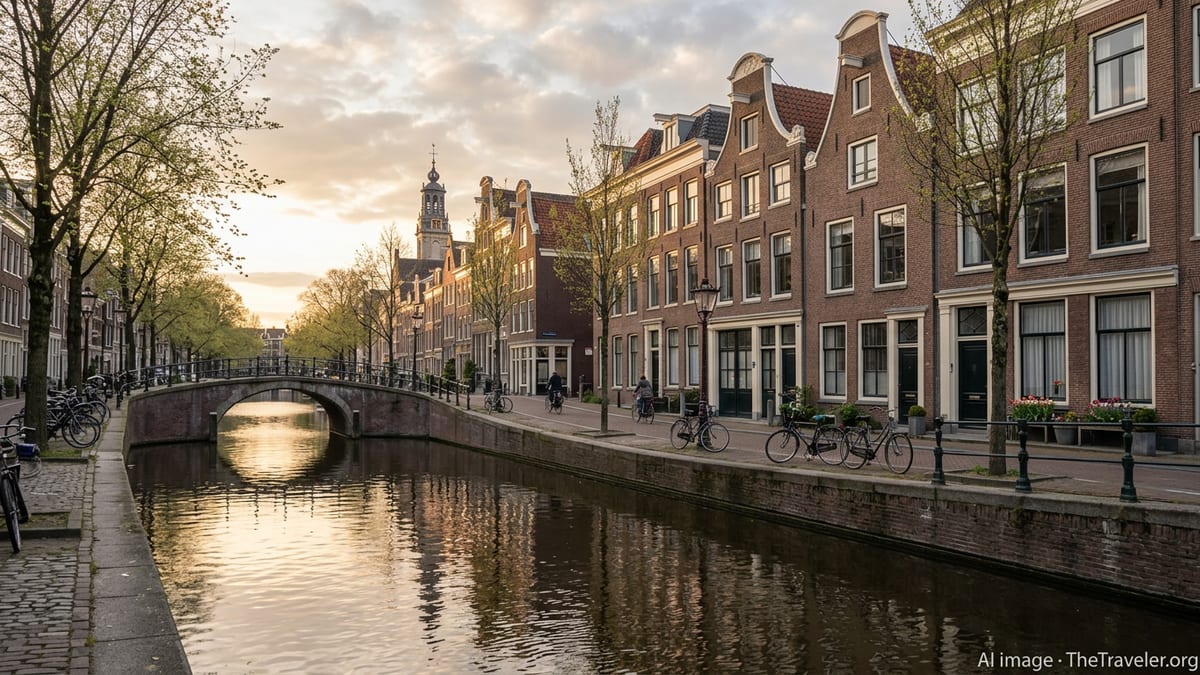
Amsterdam is often the first stop in the Netherlands and it more than earns its reputation. The historic canal belt, with its narrow gabled houses reflected in the water, is a UNESCO World Heritage highlight and best appreciated slowly. Rather than rushing from sight to sight, give yourself time to wander along smaller canals, cross arched bridges and duck into peaceful courtyards. A canal cruise can provide useful orientation, but some of the city’s most memorable moments come on foot when you turn a corner and find an unexpected view or neighborhood cafe.
World class art is another reason Amsterdam remains at the top of many itineraries. The Rijksmuseum showcases masterpieces by Rembrandt, Vermeer and other Dutch Golden Age painters in a building that is itself a national icon. Nearby, the Van Gogh Museum presents the world’s largest collection of the artist’s work in a carefully curated, chronologically arranged display. For a more contemporary perspective, the Stedelijk Museum focuses on modern and contemporary art and design, while inventive newer venues explore digital art and immersive installations, reflecting Amsterdam’s evolving cultural scene.
The city’s museums also increasingly reckon with difficult chapters of Dutch history. The Anne Frank House remains one of the most affecting experiences in the country, placing visitors inside the cramped canal house where Anne and her family hid during the Second World War. In 2024 the Dutch National Holocaust Museum opened in the Jewish Cultural Quarter, dedicated to telling the story of the Holocaust in the Netherlands through the lives of individual victims. Together, these institutions offer necessary context and invite reflection alongside the lighter pleasures of canal side strolls and cafe hopping.
To escape the busiest streets and experience a more local rhythm, explore neighborhoods just beyond the historic core. De Jordaan’s cobbled lanes and converted warehouses now host independent boutiques and small galleries. Across the water in Amsterdam Noord, former shipyards have turned into creative hubs with street art, casual waterfront dining and panoramic city views. As Amsterdam refines its approach to tourism and encourages longer, more meaningful visits, choosing slower, less crowded corners of the city is both rewarding and responsible.
Discover Dutch Art, Architecture and New Cultural Landmarks
Across the Netherlands, art and architecture provide a thread that connects cities and regions. In The Hague, the Mauritshuis hangs Vermeer’s “Girl with a Pearl Earring” and other intimate masterpieces in an elegant 17th century mansion. The nearby Kunstmuseum adds a strong collection of modern art and design, including work by Piet Mondrian. These museums are compact enough to experience in a single day, yet rich enough to anchor a longer stay in a city that also houses international courts and embassies.
Rotterdam, rebuilt after wartime destruction, has become a showcase for bold contemporary architecture. Striking landmarks range from the Erasmus Bridge stretching across the Maas River to cube houses and converted harbor warehouses. Cultural life here is equally dynamic. The city’s main photography institution has moved into a renovated warehouse at the edge of the harbor, offering exhibitions drawn from a vast national collection and spaces designed to reveal how photography is preserved and displayed. Nearby, an ambitious museum of migration occupies another historic dockside building, using art and archival material to explore movement of people to and from Rotterdam and beyond.
New institutions continue to reshape the country’s cultural landscape. In Amsterdam, historic industrial buildings on the city’s eastern edge are being repurposed into contemporary art and design spaces, giving visitors fresh reasons to explore outside the traditional center. National museums headquartered in the capital are also planning satellite locations in other cities, expanding access to collections that currently spend most of their time in storage. For travelers, this means that works by major Dutch artists will increasingly be visible beyond Amsterdam, reinforcing the idea that art focused itineraries can and should include multiple cities.
Architecture lovers will find interest in everything from Gothic churches in regional capitals to cutting edge sustainable housing projects. Cities such as Utrecht and Eindhoven highlight bicycle friendly planning, repurposed railway yards and creative districts that blend living, working and public space. Exploring on foot or by bike reveals how the Netherlands continues to experiment with urban design, often at a human scale that makes neighborhoods feel welcoming rather than imposing.
Cycle Through Canals, Dunes and Forests
If there is one quintessentially Dutch experience that unites cities and countryside, it is cycling. The Netherlands is renowned for its dense network of well maintained bike paths, clear signage and a culture that treats cycling as everyday transport rather than a niche activity. Even nervous riders often find they relax after a short time, especially on separated paths away from car traffic. Many towns and cities have bike rental shops near train stations, making it simple to step off a train and continue your journey on two wheels.
One classic ride connects Amsterdam with the countryside around Waterland and the former Zuiderzee. Within minutes of leaving the urban center, you find yourself pedaling past green meadows, wooden houses and church spires reflected in still water. Villages such as Broek in Waterland or Monnickendam feel a world away from the city despite being within easy cycling distance. Another popular day trip focuses on the historic windmills of the Kinderdijk area, where a string of 18th century mills lines canals that were once essential to controlling water levels in the low lying polder landscape.
Nature reserves provide a different kind of cycling experience. The Veluwe region, which tourism authorities now actively promote as an alternative to Amsterdam for nature oriented travelers, is home to expansive forests, heathlands and drifting sand areas crisscrossed by bike paths. Within Hoge Veluwe National Park, you can use free white bicycles to explore a landscape that shifts from woodland to open heath, then finish at the Kröller Müller Museum, which combines a notable Van Gogh collection with an outdoor sculpture garden. Coastal dunes along the North Sea also reward exploration, with well signposted paths threading between sandy hills, pine forest and broad beaches.
When planning cycling in the Netherlands, consider distance, weather and wind, which can be a significant factor on more exposed routes. Spring and early autumn often provide pleasant temperatures and relatively stable conditions, though summer evenings can also be lovely. Helmets are less common among local riders than in some countries, but they are increasingly available for rent and remain a sensible option for visitors. With common sense and respect for traffic rules, cycling becomes one of the most enjoyable and flexible ways to see the country.
From Tulip Fields to Wadden Islands: Nature and Seasonal Highlights
The Netherlands is strongly associated with tulips and springtime color, and with good reason. Between late March and early May, fields in regions such as the Bollenstreek between Haarlem and Leiden transform into bands of vivid red, yellow and purple blooms. Gardens dedicated to spring flowers open for a few weeks, attracting visitors from around the world who come to see carefully designed displays and surrounding bulb fields. These landscapes are heavily photographed, so it is worth seeking quieter corners and respecting farmers’ fences rather than walking into fields.
Outside the brief tulip season, Dutch nature offers year round interest. Along the North Sea coast, broad sandy beaches stretch for kilometers, backed by rolling dunes that serve as both recreational area and important natural defense against the sea. Resorts like Scheveningen near The Hague and Zandvoort near Haarlem draw local day trippers and international visitors alike, especially in summer. Quieter stretches of dune, often protected as national parks, provide walking paths, bird watching opportunities and a feeling of space that can be surprising in such a densely populated country.
Further north, the Wadden Islands form a chain of low lying islands separated from the mainland by tidal flats recognized as a UNESCO World Heritage Site. Islands such as Texel, Vlieland, Terschelling and Ameland combine sandy beaches with cycling routes, small villages and dark skies ideal for stargazing. Activities here include guided mudflat walks at low tide, wildlife watching boat trips and simply spending time in a setting where the rhythm of the day is set by tides and wind. These islands are particularly appealing for travelers seeking a slower pace and a strong sense of place.
Inland, wetlands and river landscapes offer still more variety. National parks such as De Biesbosch showcase intricate networks of creeks and willow forests that can be explored by canoe or small boat. In autumn, forested areas across the country see foliage turn shades of orange and gold, while winter sometimes brings enough frost for lakes and canals to freeze, reviving the national dream of long distance ice skating routes. Climate variability makes it difficult to rely on ice forming every year, so it is wise to view such possibilities as fortunate bonuses rather than guaranteed experiences.
Step Back in Time in Historic Towns and Villages
Beyond the major cities, the Netherlands is dotted with smaller towns whose historic centers tell stories of trade, defense and everyday life over the centuries. Many of these places sit within easy reach of Amsterdam, Rotterdam or Utrecht, making them ideal for day trips or short stays. Their compact size invites unhurried exploration: a walk along the old harbor, a visit to a local museum, coffee in a market square and perhaps an evening by the water as church bells ring.
One of the most distinctive historic landscapes is found in fortified towns built in star shaped patterns with moats and bastions. Naarden, east of Amsterdam, is a particularly striking example, its outline clearly visible from the air. Visitors can walk or cycle along grassy ramparts, admire brick gatehouses and look down at the water filled defensive works that once protected the town. Similar fortified towns in other provinces each have their own character, often combining military history with atmospheric streets lined with merchants’ houses and churches.
Canal side villages also capture an earlier way of life. Giethoorn in the northeastern province of Overijssel is sometimes called the village without roads because many of its thatched farmhouses are accessible primarily by water or narrow footpaths. Exploring by small electric boat or on foot allows you to drift under wooden bridges and past gardens that seem to float between water and land. While Giethoorn has become much better known internationally in recent years, visiting outside peak summer or staying overnight can restore some of its quiet charm.
Old university towns such as Leiden and Groningen, trading centers like Haarlem and Middelburg, and river cities including Deventer and Zutphen all reward exploration. Their museums focus on topics ranging from science and natural history to regional art and maritime trade. Many retain traditional market days and seasonal festivals that give a sense of living history rather than a staged past. Choosing a base in one of these smaller cities can provide a relaxed alternative to staying only in Amsterdam, with straightforward rail connections making wider exploration easy.
Hidden Gems for Curious Travelers
Travelers who have already visited the classic highlights or who simply prefer quieter places will find plenty of lesser known corners to explore. In the east, the wooded hills and rivers of the Achterhoek and Salland regions provide rolling countryside that contrasts with the flat polder stereotype. Here, lanes wind past farmhouses and small castles, and cycling routes connect villages where local bakeries and cafes still serve as community hubs. In the south, the province of Limburg offers gentle hills, vineyards and churches that hint at cultural ties with neighboring Belgium and Germany.
On the coast, smaller harbor towns offer a more low key alternative to large resorts. Places along the former Zuiderzee, now the IJsselmeer, retain old sea locks, wooden warehouses and traditional sailing ships that once carried goods across what was then an inland sea. Staying in one of these towns, you can watch the evening light change over the water, learn about land reclamation and flood defenses in compact museums, and perhaps sail on a restored historic vessel. Inland fishing villages along rivers and lakes provide similarly atmospheric settings, with terraces overlooking the water and menus focused on local catch.
Urban explorers will find interest in emerging creative districts built in former industrial zones. In cities such as Rotterdam, Eindhoven and Arnhem, former factories and warehouses now house design studios, galleries, concept stores and cafes, often retaining traces of their earlier functions. Street art tours reveal large scale murals that transform once neglected walls into open air galleries. These neighborhoods may feel a little rough around the edges compared with polished historic centers, but they give a sense of how Dutch cities continue to reinvent themselves.
For a quieter cultural experience, consider smaller specialized museums that focus on topics such as ceramics, printing, regional costumes or a single artist. Botanical gardens in university towns, often among the oldest in Europe, provide peaceful places to wander among exotic plants that tell stories of exploration and scientific exchange. Because these sites attract fewer visitors than headline attractions, staff often have more time to interact, making it easier to ask questions and gain deeper insight into Dutch culture and history.
Planning Your Trip: Practical Tips and Responsible Travel
The Netherlands’ compact size and dense rail network make it an exceptionally easy country to explore without a car. Most major towns are within a couple of hours of each other by train, and many routes run at least twice per hour. Purchasing a rechargeable public transport card or using contactless payment methods simplifies hopping between trains, trams, buses and metro systems. For visitors arriving at Amsterdam’s main airport or traveling onward from neighboring countries, direct rail connections minimize the need for domestic flights.
Accommodation options range from design forward city hotels to family run bed and breakfasts and simple canal side apartments. Booking in advance is essential during peak periods, particularly spring flower season and major event dates in cities like Amsterdam and Rotterdam. If your schedule is flexible, consider visiting in early spring before the busiest weeks or in September and October when temperatures are still pleasant, cultural calendars are full and crowd levels tend to be lower than midsummer.
In recent years, Dutch authorities and local tourism boards have emphasized more balanced, sustainable travel. Amsterdam has introduced measures to reduce disruptive party tourism and encourage visitors to spend more time in museums, cultural sites and neighborhoods outside the most crowded streets. National campaigns highlight lesser known regions such as the Veluwe forests, northern provinces and coastal towns as attractive alternatives. As a visitor, you can support these efforts by traveling during off peak times when possible, choosing locally owned businesses and being mindful of noise and waste in residential areas.
Weather in the Netherlands is famously changeable, with sun, showers and wind often sharing the same day. Packing layers, a light waterproof jacket and comfortable walking shoes will help you adapt. English is widely spoken, especially in service industries and urban areas, but learning a few Dutch phrases is appreciated and can be a pleasant way to connect with locals. Above all, leaving room in your itinerary for spontaneity allows you to follow unexpected recommendations, discover neighborhood parks and cafes, and experience the country at a more local pace.
The Takeaway
The Netherlands offers far more than a quick checklist of famous sights. Amsterdam’s canals and major museums are just a starting point for a country that combines rich history, inventive contemporary culture and surprisingly varied landscapes. From dune backed beaches and tidal islands to fortified star shaped towns and experimental architecture, each region adds another layer to the story.
By balancing headline attractions with hidden gems, spending time in smaller cities and rural areas, and traveling thoughtfully, you can experience a more nuanced Netherlands. Slow walks along quiet canals, conversations in neighborhood cafes, a sudden shaft of sunlight over a windmill or modern bridge, a train ride through misty fields at dawn: these small moments often linger as long as any masterpiece. Plan with intention, stay curious and let the country’s waterways, paths and rail lines lead you beyond the obvious.
FAQ
Q1. How many days do I need to see the best of the Netherlands?
For a first visit focused on highlights, many travelers find five to seven days sufficient to experience Amsterdam plus a couple of regional cities or day trips. With ten days or more, you can combine major museums with smaller towns, coastal areas and a nature reserve without feeling rushed.
Q2. When is the best time to see tulips and flower fields?
Spring is the key season, with late March through April generally offering the best chance to see both curated gardens and surrounding bulb fields in bloom. Exact timing varies each year based on weather, so it is wise to aim for the middle of the season and treat peak color as a fortunate bonus rather than a guarantee.
Q3. Is it necessary to rent a car to explore the Netherlands?
For most itineraries, a car is not necessary. The Netherlands has an extensive and reliable public transport system, and many destinations described in this guide are reachable by train or bus, often combined with short bicycle rides or walks. A rental car may be useful only if you plan to stay in very rural areas away from public transport.
Q4. Do I need to book museum tickets in advance?
For the most popular museums in Amsterdam, advance booking is strongly recommended, especially during weekends, holidays and spring flower season. Smaller museums and regional attractions often have more flexible entry, but checking ahead can still be helpful during school vacations or special exhibitions.
Q5. Is cycling safe for visitors who are not used to biking in cities?
Cycling infrastructure in the Netherlands is generally excellent, with many dedicated bike lanes and clear rules. Visitors who are cautious in busier city centers may prefer to start in quieter areas or on routes that follow separated paths through parks and countryside. Choosing a comfortable bike and allowing time to adjust to local traffic patterns makes the experience more enjoyable.
Q6. What are some good bases outside Amsterdam?
Cities such as Utrecht, Haarlem, Leiden, The Hague and Rotterdam all work well as bases, each with its own character and quick rail links to other destinations. Staying in a smaller city can provide a calmer atmosphere while still allowing easy day trips throughout the country.
Q7. How expensive is travel in the Netherlands compared with other European countries?
Prices in the Netherlands are comparable to many Western European countries, with accommodation and eating out in major cities often the biggest expenses. Costs can be managed by using public transport, choosing simple local eateries, staying in smaller cities or towns and mixing paid attractions with free experiences such as walking, cycling and exploring parks.
Q8. Are there any cultural customs I should be aware of?
Dutch culture tends to value direct communication, punctuality and respect for shared spaces such as bike paths and public transport. Greeting shop staff, keeping noise down in residential areas and following local rules about separating waste are all appreciated. Modest dress is generally acceptable everywhere, with only a few religious sites requesting covered shoulders or heads.
Q9. How easy is it to travel with children in the Netherlands?
The Netherlands is generally very family friendly, with many museums offering interactive exhibits and parks or playgrounds nearby. Public transport accommodates strollers, and cycling with child seats or cargo bikes is common. Booking family rooms early and planning regular breaks for playgrounds, parks and pancake cafes can help keep younger travelers happy.
Q10. Can I visit multiple regions of the Netherlands using only trains and bikes?
Yes, combining trains and bicycles is one of the most efficient and enjoyable ways to see different parts of the country. Many stations have bike rental options nearby, and well signposted cycling networks make it easy to explore surrounding countryside and towns before returning to the rail system to continue your journey.