

Utrecht is one of the Netherlands’ most atmospheric cities, a compact historic center wrapped in canals and crowned by the Dom Tower. It blends medieval streets, cutting edge urban design, and a thriving café and cultural scene, all within easy reach of Amsterdam by train.
From canal cruises and museums to innovative green projects and lively student energy, Utrecht rewards both quick day trips and longer stays. The following guide walks you through the best things to do in Utrecht, focusing on sights and experiences you should not miss.
Explore the Heart of the Historic City
Utrecht’s medieval core is small enough to cross on foot in 15 minutes, yet packed with historic monuments, picturesque lanes, and inviting canal-side terraces. Start here to get your bearings, soak up the city’s atmosphere, and trace Utrecht’s story from Roman frontier post to modern cultural hub. This first section covers the essential centerpieces around Domplein and the canals that shape the old town.
Dom Tower
The Dom Tower dominates Utrecht’s skyline and serves as its most recognizable symbol. At around 112 meters, it remains the tallest church tower in the Netherlands and can be seen from far outside the city. Construction began in the 14th century, and the tower has watched over everything from medieval markets to today’s bike commuters.
Climbing the Dom Tower is one of Utrecht’s classic experiences. Guided tours lead you up more than 450 steps past massive bells and through historic chambers to an open-air viewing platform. On clear days, you can see as far as Amsterdam and Rotterdam, with the red roofs and canals of Utrecht spread out below. Book ahead, especially on weekends and in peak season, as timed entry slots are standard and often sell out.
At ground level, pause on Domplein, the square at the base of the tower. Paving stones outline where the nave of the former cathedral once stood before it collapsed in a 17th century storm, leaving the tower freestanding. This open space sets the stage for festivals, public art, and occasional concerts beneath the tower’s Gothic arches.
St. Martin’s Cathedral (Dom Church) and Cloister
Next to the Dom Tower stands St. Martin’s Cathedral, often called the Dom Church. Once the largest church in the country, it is now a striking Gothic shell comprising the choir and transept. The gap between church and tower, filled by Domplein, tells the story of the great storm that destroyed the nave in 1674.
Step inside for a calm contrast to the bustle outside. The interior is spacious and spare in the Dutch Protestant tradition, with high vaults, memorials, and occasional concerts that show off the church’s acoustics. Admission is typically free or low cost, making it an easy addition to any central walking route.
Do not miss the cloister garden connecting the cathedral to the university buildings. This enclosed courtyard of stone arcades, flowers, and fountains feels worlds away from the city and is one of Utrecht’s most atmospheric spots for quiet photos or a reflective pause. It is a reminder of Utrecht’s long religious and academic heritage in the very center of town.
DOMunder
Directly beneath Domplein lies DOMunder, an immersive underground attraction that reveals 2,000 years of history at the exact spot where Utrecht began. Guided with an audio device and torch, visitors move through excavated layers of Roman fort remains, medieval structures, and traces of that fateful 1674 storm.
It is particularly worthwhile if you are interested in archaeology or if you want more context for the buildings above. By the end, the Dom Tower and cathedral feel less like isolated monuments and more like chapters in a continuous story. Tours run in multiple languages and are popular with both adults and older children, so advance reservations are recommended.
Discover Utrecht’s Iconic Canals
Utrecht’s canals are unlike those in Amsterdam, thanks to their unique wharf cellars sitting just above the water, many of which now house cafés, boutiques, and restaurants. Spending time on and along the canals is essential to understanding the city’s character. This section highlights the best stretches to explore on foot or by boat, and the modern canal restoration that has reshaped the city center.
Oudegracht and Nieuwegracht
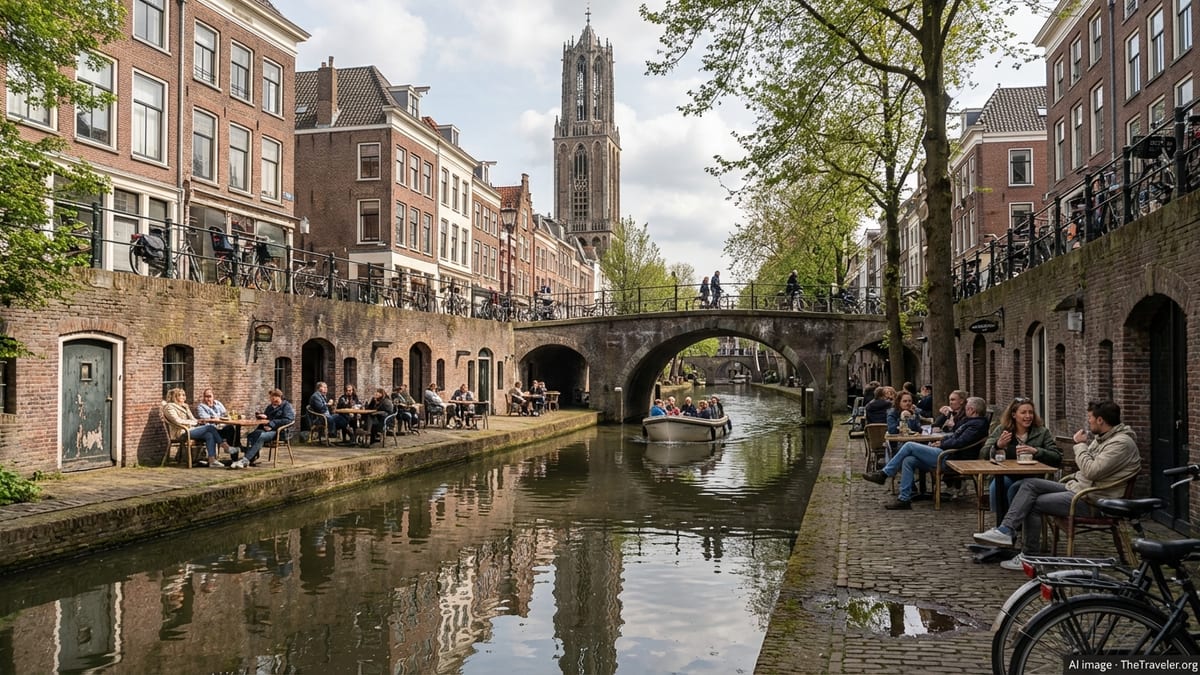
The Oudegracht, or Old Canal, runs like a spine through the medieval center. Once a working waterway lined with warehouses, it now offers Utrecht’s most photogenic scenes, with tall townhouses above and wharf terraces below. Walking either bank takes you past bridges draped in bikes, ivy covered walls, and a constant sequence of cafés, bars, and independent shops.
The slightly quieter Nieuwegracht parallels the Oudegracht to the east. With more residential façades and leafy trees, it offers a softer, more local atmosphere that many visitors never see. Together, these canals form a loop of streets that are ideal for strolling day or night, especially when lights reflect off the water and the Dom Tower glows above.
To experience the canal system fully, combine walking with a boat trip. Standard sightseeing cruises, small electric boats, and self piloted pedal or electric craft all operate in the center. A loop route takes you under low bridges, around the old fortress ring, and back along the wharf cellars that define Utrecht’s waterfront architecture.
Canal Cruises and Wharf Terraces
Canal cruises in Utrecht are more intimate than in larger cities, often using smaller boats that allow commentary to feel personal and routes to reach narrower stretches of water. Commentary typically covers the history of the wharves, canal-side warehouses, and restored city defenses, as well as modern projects like new parks and public art.
After (or instead of) a cruise, choose a wharf level terrace for drinks or a meal. Sitting at water level beneath arched brick cellars is one of Utrecht’s signature pleasures, particularly in warm weather. Look for spots along the central Oudegracht, where you may be eye level with swans and passing boats while the street traffic hums unseen above.
The Restored Catharijnesingel
The Catharijnesingel is the outer canal that once formed part of Utrecht’s defensive moat. In the 20th century, much of it was filled in and replaced by a sunken motorway. In recent years the city reversed that decision and completed a major restoration, reintroducing water and parkland right next to the station and shopping district.
Today, boats can once again circle the historic center via the Catharijnesingel, and locals use the surrounding paths for walking, jogging, and cycling. The project has received international attention as a model of people focused urban planning. It is worth taking a short detour from the main streets to walk a segment of the canal and appreciate how blue and green space has been brought back into the heart of the city.
Immerse Yourself in Utrecht’s Museums and Culture
Despite its compact size, Utrecht offers a strong lineup of museums with a distinctly local flavor, from Dutch rail history to self playing instruments and modern art. The city is also a year round cultural hub, with a renowned early music festival, cutting edge architecture, and one of the Netherlands’ most important music venues. This section covers the museums and cultural sites that deserve a spot on your itinerary.
Spoorwegmuseum (Railway Museum)
Located east of the center in a former station, the Dutch Railway Museum brings the country’s rail history to life in a way that appeals to both enthusiasts and casual visitors. Exhibits mix restored locomotives and carriages with immersive themed areas, such as historic platforms, interactive displays, and model railways.
Families particularly appreciate the mix of educational content and rides, including child friendly attractions that simulate train journeys and industrial landscapes. Even if you are not a dedicated rail fan, the museum offers a lively window into how trains shaped Dutch life and travel, and it can easily fill several hours on a rainy day.
Museum Speelklok
Museum Speelklok, just off the Oudegracht, specializes in self playing musical instruments. Inside, you will find ornate street organs, music boxes, musical clocks, and mechanical curiosities that spring to life during guided demonstrations. Staff members regularly bring instruments into action, filling the rooms with cheerful, sometimes unexpectedly powerful sound.
The museum balances historical explanation with playful performance, making it a favorite with both children and adults. Tours and information are typically offered in multiple languages, and the central location makes it easy to combine with a wider canal or Domplein walking route.
Centraal Museum and Miffy Museum
The Centraal Museum is Utrecht’s main art and city history museum, housed in a former monastery south of the center. Its collection ranges from Gothic and Golden Age painting, including works by Utrecht Caravaggisti, to contemporary art, applied design, fashion, and a notable display on the city’s development, including the thousand year old Utrecht Ship.
Families with young children will want to consider the nearby Miffy Museum, dedicated to Dick Bruna’s beloved rabbit character created in Utrecht. This hands on space focuses on play and exploration for smaller kids and is run by the same museum foundation. Due to its popularity and limited capacity, time slots may need advance booking, especially during weekends and holidays.
Sonnenborgh Observatory and Museum
On a remaining bastion of the former city walls sits Sonnenborgh, an observatory and museum that combines science, history, and architecture. Established in the 19th century as a university observatory and meteorological institute, it now offers exhibits on astronomy, weather, and the building’s layered past as a fort, botanical garden, and scientific hub.
Evening stargazing sessions and special events allow visitors to observe the sky through historic and modern telescopes, weather permitting. By day, the museum offers rooftop views back toward the center, and its bastion location illustrates how Utrecht’s defenses once wrapped around the city.
TivoliVredenburg and the Performance Scene
TivoliVredenburg, near the central station, is one of the Netherlands’ leading music and performance complexes. The building contains multiple halls designed for different genres, from classical and jazz to pop, electronic, and experimental music. Its stacked, multi venue architecture has made it a landmark in contemporary Dutch design.
Even if you are only in Utrecht for a night, it is worth checking the program for concerts, club nights, or festivals. The city also hosts the annual Festival Oude Muziek in late summer, a major event in the early music calendar that draws international performers and audiences for days of concerts across historic venues.
Experience Utrecht Like a Local
Beyond must see monuments and museums, much of Utrecht’s charm lies in its everyday rhythms. The city moves at a relaxed pace, fueled by bicycles, student life, and a vibrant café culture. This section focuses on experiences that help you tap into local routines, from market browsing to neighborhood exploring.
Cycle the City and Surroundings
Like most Dutch cities, Utrecht is built for bicycles. Dedicated lanes, bike traffic lights, and ample parking make cycling the easiest way to move between neighborhoods and reach green spaces just beyond the center. The station area even houses one of the world’s largest bike parking facilities, a modern spectacle in its own right.
Rent a bike for a day to expand your sightseeing radius. Popular options include looping the restored canal ring, riding out to nearby parks, or following routes along the river Vecht toward historic estates and windmills outside the city. Most rental shops provide suggested routes and maps, and the flat terrain keeps distances manageable for casual riders.
Browse Markets and Independent Shops
Utrecht’s streets are lined with independent boutiques, specialty food shops, and concept stores, particularly around the Oudegracht, Twijnstraat, Voorstraat, and the lanes radiating from Domplein. Here you can find everything from Dutch design objects and vintage clothing to artisanal cheeses and local delicacies.
On market days, squares fill with stalls selling fresh produce, flowers, clothing, and street food. The main general market usually sets up near Vredenburg, while specialty markets, such as book or plant markets, appear on selected days in other central locations. Checking market schedules before you visit can help you time a stroll for maximum color and atmosphere.
Relax in Cafés and Canal Side Terraces
Stopping frequently for coffee, a pastry, or a drink is part of the Utrecht experience. Traditional brown cafés and modern espresso bars sit side by side throughout the center. Many offer sidewalk seating at street level, while others take advantage of the city’s wharf terraces directly on the canals.
In good weather, these waterside terraces are among the city’s most popular social spaces. Locals linger over drinks as boats glide past just a few meters away, and the angled evening light on the bricks and water gives the old town a golden glow. Even in cooler months, covered and heated terraces allow you to enjoy the canal views bundled up under blankets.
Walk Through Parks, Forts, and Green Spaces
Utrecht may be dense at its core, but it offers plenty of greenery within a short stroll or bike ride. Historic parks, former defenses, and nearby nature reserves provide fresh air and contrasting scenery between cultural visits. This section outlines some of the most rewarding green breaks in and around the city.
Zocherpark and the City Moat
Encircling much of the historic center is a ribbon of parkland known as the Zocherplantsoen, designed in the 19th century in English landscape style. Winding paths, lawns, and old trees follow the course of the former defensive moat and bastions, forming a continuous green belt between the inner city and outer neighborhoods.
Walking or cycling this ring gives you shifting perspectives of Utrecht, from quiet residential stretches to views of the Dom Tower rising above the trees. Benches along the way invite picnics or reading breaks, and the park’s gentle curves offer constant new vistas. In spring and summer, the combination of water, foliage, and historic skylines is especially rewarding.
Wilhelminapark and East Utrecht
East of the center, Wilhelminapark is one of Utrecht’s most beloved neighborhood parks. With a central pond, mature trees, and broad lawns, it is popular with joggers, students, and families. Cafés on and around the park add to its appeal as a relaxed hangout.
The surrounding streets showcase elegant townhouses and a more local side of Utrecht life. Combining Wilhelminapark with nearby restaurants and bars in the eastern districts makes for an easy half day away from the busiest tourist routes while still remaining close to the center.
Fortresses and the New Dutch Waterline
Utrecht lies along the New Dutch Waterline, a historic defensive system that once used controlled flooding and fortified positions to protect the heart of the Netherlands. Several forts near the city have been repurposed as recreational and cultural sites, accessible by bike or car.
Visiting one of these forts offers insight into Dutch military engineering and landscape design. Some host cafés, exhibitions, or seasonal cultural programs, while others primarily serve as quiet green spaces where ramparts and moats have been reclaimed by nature. They provide an appealing contrast to the urban energy of the city center and highlight Utrecht’s strategic importance over the centuries.
Explore Utrecht’s Architecture and Design Highlights
Utrecht combines medieval fabric with notable examples of modernist and contemporary design. Architecture enthusiasts can easily spend a full day tracing stylistic shifts from Gothic to De Stijl and 21st century experimentation. This section highlights a few key stops for design minded travelers.
Rietveld Schröder House
On the eastern edge of the city, the Rietveld Schröder House is one of the purest built expressions of the Dutch De Stijl movement. Designed in the 1920s by Gerrit Rietveld for client Truus Schröder, the house features bold lines, sliding partitions, primary colors, and an open plan that was decades ahead of its time.
Now a UNESCO World Heritage Site managed by the Centraal Museum, the house can be visited by guided tour on a prebooked basis. Inside, adjustable walls and custom furniture demonstrate Rietveld’s radical approach to flexible living space. Even if you only see it from the outside, the house offers a fascinating counterpoint to Utrecht’s older architecture.
Contemporary Urban Projects
In addition to the canal restoration, Utrecht has invested heavily in redesigning the area around the central station, including new pedestrian routes, public squares, and large scale bike infrastructure. The transformation of the once car dominated station district into a more human centered environment has been closely watched by urban planners worldwide.
A short self guided walk from the historic center to the station takes you past modern commercial architecture, rooftop gardens, and public spaces that illustrate how an old city can accommodate growth while improving livability. For many travelers, this immediate contrast between Domplein and the dynamic station area is part of Utrecht’s appeal.
The Takeaway
Utrecht distills many of the Netherlands’ best qualities into a walkable, welcoming package. Its soaring Dom Tower, distinctive canals, and fine museums provide plenty of headline attractions, while bike friendly streets, leafy parks, and wharf level terraces give the city its relaxed, lived in charm. Whether you are here for a day trip from Amsterdam or settling in for several nights, you can tailor your time to a mix of history, culture, and everyday Dutch life.
Climb the tower, cruise the canals, step into a fort turned observatory, lose yourself among self playing instruments and Caravaggist paintings, then wind down at a café with church bells in the background. Utrecht may not always grab the spotlight like the capital, but for many visitors, it quietly becomes the Dutch city they remember most fondly.
FAQ
Q1. Is Utrecht worth visiting if I am already going to Amsterdam?
Yes, Utrecht is absolutely worth visiting in addition to Amsterdam. It offers a different, often more relaxed atmosphere with unique canal wharves, a compact historic center, and fewer crowds, while still providing high quality museums, architecture, and dining.
Q2. How many days do I need in Utrecht?
One full day is enough to see the main highlights such as the Dom Tower, canals, and a museum or two. Two to three days lets you explore neighborhoods beyond the center, visit more museums, take a bike trip into the surroundings, and enjoy the city’s café and restaurant scene at an easier pace.
Q3. What is the best time of year to visit Utrecht?
Late spring through early autumn offers the most pleasant weather for walking and canal side terraces, roughly from May to September. Summer brings the liveliest outdoor atmosphere and festivals, while shoulder seasons such as April and October tend to be quieter and can still be very enjoyable.
Q4. Can I visit Utrecht as a day trip from Amsterdam?
Yes, Utrecht is one of the easiest Dutch cities to visit as a day trip from Amsterdam. Direct trains typically take around half an hour from Amsterdam Central to Utrecht Central, and the historic center is a short walk from the station, making it simple to see major sights in a single day.
Q5. Is Utrecht easy to get around without a car?
Very easy. The city center is compact and walkable, and public transport links neighborhoods efficiently. Bicycles are the preferred local mode of transport, and visitors can rent bikes from several outlets near the station and in the center.
Q6. Do I need to book the Dom Tower in advance?
Advance booking for the Dom Tower is strongly recommended, especially on weekends, holidays, and during school vacations. Timed entry tickets help manage the number of people on the stairs and viewing platform, and popular time slots often sell out ahead of time.
Q7. Which canal area is best for photos and cafés?
The Oudegracht is the most iconic stretch, with historic buildings, arched bridges, and lively wharf level terraces that are perfect for photos and people watching. The slightly quieter Nieuwegracht offers more tranquil scenes with leafy banks and residential façades.
Q8. Are Utrecht’s museums suitable for children?
Yes, several Utrecht museums are very family friendly. The Railway Museum and Museum Speelklok are particularly popular with children, and the Miffy Museum is designed specifically for younger kids, offering interactive play spaces built around the famous rabbit character.
Q9. What should I pack for a trip to Utrecht?
Pack comfortable walking shoes, layers to adjust to changing weather, and a compact rain jacket since showers can occur in any season. If you plan to cycle, consider clothing suitable for biking and a small backpack for day trips. In cooler months, a warm coat, hat, and gloves are advisable.
Q10. Is Utrecht safe for solo travelers?
Utrecht is generally considered a very safe city for solo travelers, including those walking at night in the central areas. Normal urban precautions apply, such as being aware of your surroundings and keeping an eye on your belongings, especially in busy spots around the station and major shopping streets.