

Vatnajökull National Park is one of Iceland’s wildest frontiers, a protected landscape where glaciers, volcanoes, waterfalls and black-sand coasts collide. Covering around 13 percent of the country and crowned by Europe’s largest ice cap, it offers a rare mix of easily accessible highlights along the Ring Road and remote interior wilderness that still feels genuinely untouched. Whether you come for day hikes to waterfalls, boat rides among icebergs, or guided journeys into blue ice caves, this is a place where even short stops feel like expeditions into the elements.
Getting Oriented and Planning Your Visit
Vatnajökull National Park is vast, so understanding its main regions helps you make the most of limited time. The south, around Skaftafell and the glacier lagoons, is the most popular and easiest to access from the Ring Road. Here you can reach trailheads, viewpoint walks and guided glacier activities without leaving paved roads. The north, focused on Jökulsárgljúfur Canyon and the mighty Dettifoss waterfall, offers a different atmosphere of deep canyons and volcanic landscapes. The east and interior areas, where peaks like Snæfell and volcanic ranges such as Kverkfjöll dominate, feel wilder and are best suited to travelers comfortable with gravel roads and long distances between services.
While you can visit the park independently, a mix of self-guided exploration and guided trips is often the most rewarding approach. Short, well-marked trails and roadside viewpoints make it simple to explore the southern edge of the ice cap on your own, while activities such as glacier walks, ice cave tours and snowmobiling legally require certified guides and specialized equipment. Visitor centers at Skaftafell, Ásbyrgi and in the eastern territory provide current information on conditions, trail closures and ranger programs, which can change quickly with weather.
Timing is crucial. From roughly June to early September, most roads and hiking trails are open, daylight is long and ranger-led walks operate in several areas. Spring and autumn bring fewer visitors and dramatic light but also lingering snow patches and more unpredictable conditions on longer routes. In winter, access narrows to lowland locations near the Ring Road, yet seasonal experiences such as ice caves and northern lights watching come into their own. Whatever the month, you should expect fast-changing weather and always carry more warm layers and food than a trail distance might suggest.
Hiking the Trails of Skaftafell
For many visitors, Skaftafell is the ideal introduction to Vatnajökull National Park. This southern gateway combines an accessible visitor center, a large campground and a dense network of marked trails that weave through birch scrub, moraines and viewpoints above glacial tongues. You can adjust your day to the weather and your energy, choosing anything from a one-hour stroll to a full-day hike connecting several lookouts. Maps and up-to-date advice are available at the Skaftafell visitor center, which also hosts interpretive exhibits on the local geology and human history.
The most famous walk here is the route to Svartifoss, a slender waterfall framed by dark basalt columns that resemble organ pipes. The trail climbs steadily on good paths, passing smaller cascades and open viewpoints. Most hikers complete the return trip in about 90 minutes to two hours, but it is worth lingering at the base of Svartifoss to study the hexagonal rock formations that inspired several Icelandic architects. Nearby loops allow you to extend the walk to additional lookouts over the Skeiðarársandur outwash plain and surrounding glaciers.
For wider views over the ice and lowlands, consider continuing from the Svartifoss area to panoramic points like Sjónarnípa or other signed viewpoints that look directly over the outlet glaciers descending from Vatnajökull. These routes require more time and some steeper sections but reward you with classic vistas of blue ice and braided rivers. In summer, national park rangers often lead short interpretive walks in the Skaftafell area, explaining how volcanic eruptions, glacial floods and climate change are reshaping the landscape in real time.
Exploring Jökulsárlón Glacier Lagoon and Diamond Beach
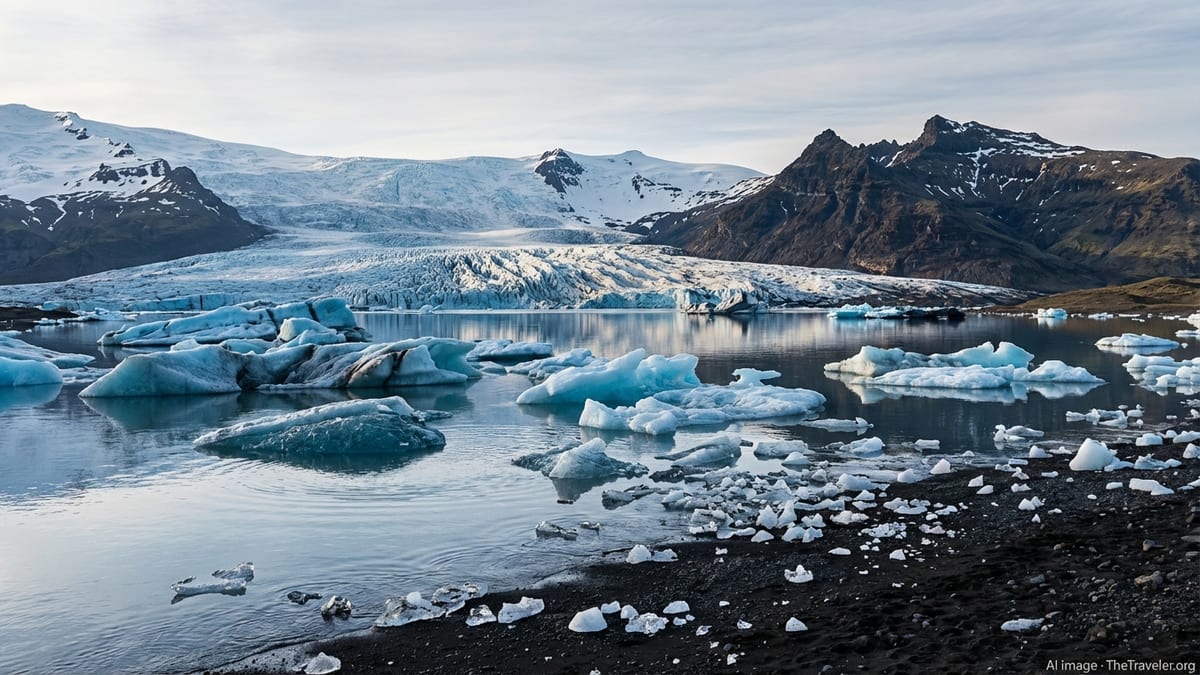
No visit to Vatnajökull National Park feels complete without time at Jökulsárlón, the glacier lagoon where luminous icebergs drift slowly from the retreating Breiðamerkurjökull outlet glacier toward the Atlantic. The lagoon lies a short drive east of Skaftafell along the Ring Road, and parking areas and paths make it easy to explore on foot. From the shore you can watch icebergs rotate and crumble, hear the creak of shifting ice and, in summer, often spot seals surfacing between the floes.
Boat tours, amphibious vehicles, rigid inflatables and sometimes kayaks operate on the lagoon in the main season, offering a closer look at the varied shapes and shades of the ice. The exact start and end of the season depends on weather and ice conditions, but typically runs through the summer months and parts of shoulder seasons. Operators provide flotation gear and brief safety instructions, and departures usually cluster near parking areas beside the lagoon. These outings bring you closer to the glacier face and offer a sense of how quickly the ice is calving and retreating.
Directly across the road lies the black-sand shore often called Diamond Beach, where smaller ice fragments wash up and glitter against the volcanic sand. This shoreline can be mesmerizing at any time of day, but it is especially atmospheric at sunrise or in soft evening light when the contrast between white ice, dark sand and shifting waves is at its most dramatic. Even though the beach is easily accessible, it is still an active coastal environment. Keep a safe distance from the surf, never climb onto ice floating in the water and stay aware that waves can be stronger and more unpredictable than they appear.
Venturing Onto Glaciers and Inside Ice Caves
Walking on the surface of Vatnajökull or entering an ice cave ranks among Iceland’s most memorable experiences, but it is also one of the most tightly regulated. The combination of crevasses, unstable snow bridges and changeable weather makes unguided travel on the ice extremely dangerous. Local regulations and common sense both dictate that glacier hiking, ice climbing and visits to natural ice caves should only be done with certified guides who know the current conditions and carry the right equipment.
Glacier tours typically depart from hubs near Skaftafell and Jökulsárlón, as well as from towns like Höfn further east. In summer, shorter introductory hikes guide small groups onto relatively gentle glacier tongues using crampons, helmets and harnesses supplied by the operator. Some itineraries focus on walking among crevasses and blue ice formations, while more advanced trips might include ice climbing or longer traverses. Distances are often modest, but the uneven surface and cold conditions can make the experience feel demanding, so honest self-assessment of your fitness helps in choosing a suitable tour.
From roughly late autumn through early spring, when conditions allow, guides also lead visitors into naturally formed ice caves beneath the edges of the glacier. These chambers vary in size and stability from season to season, and existing caves can collapse or become unsafe as temperatures shift. As a result, the specific cave you visit is always subject to last-minute changes, and reputable operators prioritize safety over fixed itineraries. Inside, you can expect deep blue ceilings, trapped air bubbles and sinuous ice walls that reward slow, careful photography. Tours generally include transport by modified vehicles to the cave entrance, short walks over uneven ground and occasional sections on ice.
Discovering Jökulsárgljúfur Canyon and Dettifoss
In the northern reaches of Vatnajökull National Park, the landscape around Jökulsárgljúfur feels quite different from the glacier-dominated south. Here the Jökulsá á Fjöllum river has carved a deep canyon system filled with basalt formations, side ravines and waterfalls. The area is often accessed from the Ring Road via routes that lead toward Ásbyrgi Canyon and the Dettifoss waterfall, which is frequently described as one of the most powerful in Europe in terms of combined flow and drop. The sheer volume of water thundering into the gorge creates spray clouds that can rise high above the rim.
Viewpoints on both the west and east banks provide different perspectives of Dettifoss, as well as neighboring falls such as Selfoss and Hafragilsfoss. The west side is usually the more developed, with paved access and marked paths, while the east remains somewhat rougher and typically is more seasonal. Short walks connect the viewpoints, and sturdy waterproof footwear is essential as rocks can be wet and slippery from constant mist. On windy days, be prepared for spray that can soak clothing and camera gear, even at a distance.
Further north, Ásbyrgi Canyon offers a striking horseshoe-shaped depression with cliffs rising steeply on either side and a tranquil forested floor. Trails here range from gentle loops around small lakes to longer hikes that climb to viewpoints along the canyon rim. National park rangers often operate out of the Ásbyrgi visitor center in high season, offering interpretive walks that explore the area’s geology, vegetation and folklore. With its mix of sheltering woods and dramatic rock walls, Ásbyrgi can be a welcome change of mood after the raw exposure of the glacial plains.
Experiencing the Eastern Highlands and Snæfell Region
Travelers willing to venture away from the main tourist routes can find a different side of Vatnajökull National Park in the eastern and interior territories. Peaks such as Snæfell and the volcanic massif of Kverkfjöll overlook wide wetlands, glacial rivers and mountain plateaus that feel far removed from the busier stops along the south coast. These lands are important habitats for reindeer herds and nesting birds, and much of the terrain is only accessible in the snow-free months when highland tracks open and conditions stabilize.
Access is part of the adventure here. Roads into the highlands often require a high-clearance four-wheel drive vehicle, and some are designated mountain routes that only open from roughly mid to late June, closing again as early autumn snows return. Because these areas are remote, with long gaps between fuel and services, careful planning is essential. Many travelers choose to explore with experienced local guides or join small group tours that handle navigation, river crossings and contingency plans if weather shifts suddenly.
The reward for this extra effort is a sense of expansiveness and solitude that is increasingly rare in European national parks. You might spend hours driving across gravel plains with Vatnajökull’s white horizon filling your windshield, then hike into valleys where geothermal activity, glacial rivers and rugged peaks create constantly shifting scenery. Visitor facilities are intentionally limited, but centers such as Snæfellsstofa in the east provide context about geology, ecology and cultural history, giving you a deeper understanding of the landscape you are entering.
Seasonal Highlights, Safety and Practical Tips
The best time to visit Vatnajökull depends on what you hope to do. In summer, typically from June through August, daylight can extend nearly around the clock, temperatures are relatively mild by Icelandic standards and most trails and services operate at full capacity. This is the ideal period for longer hikes, backcountry excursions and extended road trips that combine the park with other regions of Iceland. It is also the busiest time of year, so advance booking of accommodation, rental cars and guided tours is strongly recommended.
Spring and autumn offer a different balance. In May and September, the park is quieter, prices may be more moderate and the light can be particularly beautiful, with lingering snow on the peaks and changing colors in lowland vegetation. However, some interior routes can remain closed by snow well into early summer, and autumn storms can bring sudden changes in conditions. Winter, running from roughly October into April, reduces your independent hiking options but opens the door to experiences such as ice cave tours, snowmobile trips on or near the glacier and, with clear skies, the chance to see the northern lights reflecting off snow and ice.
Whatever the season, safety deserves constant attention. Weather can change with little warning, especially near the ice cap and in exposed plains, and temperatures often feel colder than forecast due to wind chill. Always check local weather and road condition services before driving or setting out on longer walks, and be prepared to modify plans if warnings are issued. Never venture onto glaciers, approach steep ice fronts or attempt unmarked river crossings on your own. Respect trail closures and signs, as these often reflect real-time assessments of hazards such as unstable cliffs, flood risks or crevasse zones.
Practical preparation will make your time in the park far more enjoyable. Pack multiple warm layers, a waterproof outer shell, hat and gloves even in midsummer. Good hiking boots with firm soles and ankle support help on rocky and sometimes muddy paths. Carry snacks, extra water and a paper map or offline navigation app, since mobile coverage can be patchy in several areas. Fuel up your vehicle whenever you pass a service station, do not rely on a single charging stop if driving an electric car and keep in mind that some remote accommodations and campsites may operate only seasonally.
The Takeaway
Vatnajökull National Park is not a single destination but an entire world of ice, rock, water and sky. In the south, short trails and roadside viewpoints let you peer directly into the face of a changing glacier. In the north, thunderous waterfalls and sculpted canyons showcase the power of water shaped over millennia. In the east and interior, long horizons and sparse infrastructure remind you how much of Iceland is still defined by natural forces rather than human design.
Choosing the best things to do here is less about checking off a fixed list and more about matching your ambitions to the seasons and your experience level. For some travelers, a day of hiking around Skaftafell and an afternoon at Jökulsárlón will be enough to create lasting memories. Others will plan multi-day treks, ice cave adventures or highland expeditions. However you approach it, travel with patience, humility toward the weather and respect for local guidelines. In return, Vatnajökull offers something increasingly rare in modern travel: the feeling that you are standing in a landscape that is still changing faster than the human world around it.
FAQ
Q1. When is the best time of year to visit Vatnajökull National Park?
The most popular time is from June to August, when roads and trails are most accessible and services run at full capacity. Shoulder seasons offer fewer crowds but more variable conditions, while winter is best for ice caves and northern lights, with limited independent hiking.
Q2. Do I need a guided tour to walk on the glacier or visit ice caves?
Yes. Glacier walks, ice climbing and entering natural ice caves should only be done with certified guides using proper equipment. Independent travel on the ice is dangerous due to hidden crevasses and rapidly changing conditions.
Q3. Can I visit Jökulsárlón Glacier Lagoon all year round?
In typical years, road access to Jökulsárlón from the Ring Road is possible year round, though severe winter storms can occasionally close routes temporarily. Boat and kayak tours operate mainly in the warmer months and may not run in midwinter or during periods of heavy ice or bad weather.
Q4. Is Vatnajökull National Park suitable for families with children?
Yes, many areas are family friendly, especially short walks around Skaftafell, viewpoints at Jökulsárlón and gentle trails in Ásbyrgi. Parents should supervise children closely near cliffs, rivers, beaches and ice, and choose guided tours that accept younger participants.
Q5. How many days should I plan for Vatnajökull National Park?
With one full day you can visit Skaftafell or Jökulsárlón from the Ring Road. Two to three days allow you to combine several highlights, add a guided glacier activity and adjust for weather. Longer stays open up time for northern or highland regions.
Q6. Do I need a 4x4 vehicle to explore the park?
For the main southern attractions along the Ring Road, a regular car is usually sufficient in summer. To reach many interior and highland areas, particularly in the east and north, a high clearance four wheel drive is often required and some mountain roads are only open in the snow free months.
Q7. Are there visitor centers inside Vatnajökull National Park?
Yes. Key visitor centers include Skaftafell in the south, Ásbyrgi in the north and Snæfellsstofa in the east, along with additional local information offices near the park. They provide maps, condition updates, exhibits and, in high season, ranger led walks.
Q8. What should I pack for a summer trip to Vatnajökull?
Even in summer you should bring warm layers, a waterproof jacket and pants, hat, gloves, sturdy hiking boots and a small daypack. Sunglasses, sunscreen, reusable water bottle and a camera with weather protection are also useful, along with snacks and a paper map or offline navigation.
Q9. Can I camp inside or near Vatnajökull National Park?
Yes, there are established campgrounds in key areas such as Skaftafell and additional sites in nearby communities along the Ring Road. Many open mainly from late spring to early autumn, so check operating dates in advance, and always follow local regulations regarding wild camping.
Q10. Is it possible to see the northern lights in Vatnajökull National Park?
Yes, northern lights can be visible from autumn through early spring when skies are dark and clear. Rural locations around the park have minimal light pollution, but sightings depend on both solar activity and weather, so no night can guarantee an aurora display.