

Faliraki, the liveliest resort on the Greek island of Rhodes, enjoys a long season of sunshine, warm seas and energetic nightlife. Yet the experience you have here can change dramatically depending on when you visit.
From high-summer party weeks to peaceful spring walks along an almost empty bay, timing your trip is just as important as choosing your hotel.
Understanding Faliraki’s Seasons
Faliraki has a classic Mediterranean climate with hot, dry summers and mild, wetter winters. Average daytime highs climb from around 14 to 16 degrees Celsius in January and February to 29 to 31 degrees in July and August, before easing back to the low 20s by October.
Rain is concentrated from November through March, while summers are almost completely dry, often with zero measurable rain in July and August.
The sea temperature is a major draw. The water hovers around 16 to 17 degrees Celsius in late winter, which feels fresh even to hardy swimmers.
By May it typically reaches about 19 to 20 degrees, becomes comfortably warm around 22 to 23 degrees in June, and peaks at roughly 25 to 27 degrees in July, August and early September.
This makes open-water swimming, water sports and long days on the beach viable from late spring through much of autumn.
Tourism in Faliraki follows the weather closely. The main season runs from May to October, with July and August as the intense high season.
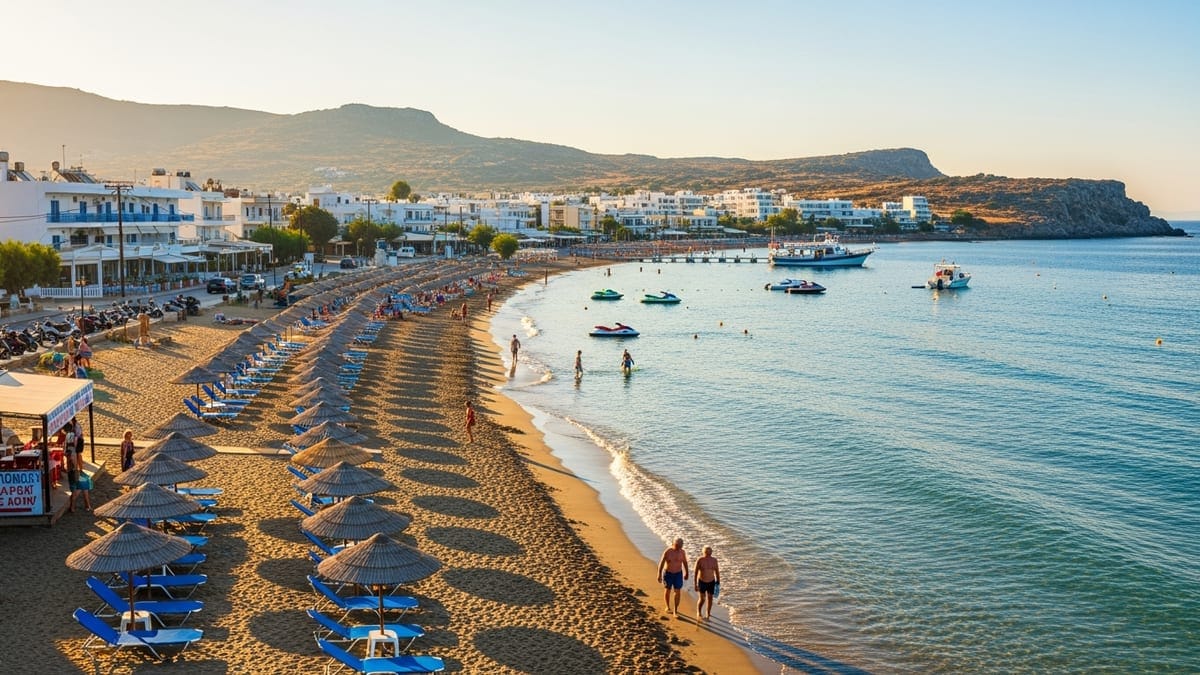
During those months, hotels are full, nightlife pulses late into the night and the long strip of beach is dotted with sunbeds and parasols.
Shoulder seasons in April, May, late September and October see fewer visitors and better value, while winter is largely a time for local life, mild weather and limited resort services.
Best Time for Ideal Beach Weather
If long, hot days on the sand are your priority, June through early September offer the most reliable conditions. Daytime highs in June tend to sit around the mid 20s Celsius, with evenings still pleasantly warm.
By July and August, expect around 30 to 31 degrees most afternoons and warm nights that are ideal for outdoor dining and strolling the seafront.
Sunshine hours peak at this time, often around 12 hours of sun per day, with very low humidity compared with tropical destinations.
Sea temperatures mirror this pattern. They are usually around 23 to 24 degrees in June, warm enough for most swimmers, and climb to around 25 to 27 degrees in July and August.
September often remains superb for swimming, with water temperatures still about 26 degrees and air temperatures in the upper 20s.
This combination makes early autumn an underappreciated time for beach lovers who prefer slightly milder heat.
One factor to consider in peak summer is the UV index. From June through August it typically sits in the high range in Faliraki, meaning sun protection is essential, especially in the midday hours.
Light clothing, hats and regular sunscreen are important if you plan to spend full days by the sea or on boat excursions along the east coast of Rhodes.
For travelers who prefer warm but not scorching conditions, late May and early June, as well as late September, strike a good balance.
Daytime highs around 24 to 28 degrees and moderate sea temperatures allow full enjoyment of the beach without the intensity of peak-summer heat.
When to Avoid the Crowds
Faliraki’s character shifts notably with the seasons. In July and August the resort becomes one of the busiest holiday hubs in the Dodecanese, drawing families, couples and groups of friends from across Europe.
The beach can feel crowded by late morning, and the party strip hums with noise well into the early hours. If you are after a more relaxed atmosphere, it is worth timing your visit outside these two months.
April, May and October are the best bets for a quieter Faliraki. In April the season is just beginning, with many businesses reopening after winter.
Visitor numbers are still moderate, beach space is plentiful and queues for buses, taxis and popular restaurants are minimal.
May builds gently toward summer, but it generally remains easy to find a peaceful spot on the sand and to book last-minute tables or excursions.
September represents a turning point. Early in the month, especially during European school holidays, Faliraki can still feel busy, though not as packed as August.
By the last two weeks of September, however, the atmosphere relaxes, with more mature travelers, couples and repeat visitors replacing peak-season crowds. October is noticeably calmer again, with many families back home and a slower, more local rhythm settling over the resort.
Winter, from November to March, is the quietest period of all. Much of the resort’s tourism infrastructure, including some hotels, bars and beach clubs, closes or runs on reduced hours.
While this can appeal to visitors seeking solitude and cool-weather walks, it means far fewer options for nightlife or organized activities. If you value energy and choice, you are better off sticking to the late spring through early autumn window.
Finding the Best Value for Money
Prices in Faliraki rise and fall in a predictable arc across the year. High season, typically from late June through early September, brings the most expensive hotel rates, package holidays and sometimes higher prices in restaurants and bars on the main strip.
Reservation lead times are long in this period, and last-minute deals are rare, especially for beachfront or family-friendly properties.
For good value without sacrificing sunshine, shoulder seasons are ideal. May and early June, as well as late September and October, often see significantly lower accommodation rates than July and August.
You may find better terms on car rentals, sunbed rentals and organized excursions at these times as operators adapt to lower demand.
Airfares from major European hubs also tend to be more reasonable outside school holidays, adding to potential savings.
Winter offers the very lowest prices, but that comes with trade-offs. While you may secure bargain flights and budget-friendly rooms in Rhodes town or in the small number of Faliraki properties that stay open year-round, the limited services and cooler, wetter weather make this period less attractive for a traditional beach break.
For budget-conscious travelers who still want swimming and nightlife, late May and late September remain the sweet spots.
Another cost consideration is the length of stay. During high summer, many hotels require minimum stays and offer fewer flexible options. In shoulder seasons, you are more likely to find short-break deals or midweek discounts that pair well with cheaper flights.
If your schedule allows, traveling midweek in May, early June or October can further stretch your budget while still delivering pleasant weather.
Month-by-Month Guide to Faliraki
January and February are the heart of winter in Faliraki, although compared with northern Europe they feel relatively mild. Daytime temperatures tend to hover in the mid teens Celsius, with nights dipping into single digits.
Rainfall is at its highest, and storms can roll in from the sea. This period is not beach weather, and most tourist facilities remain closed, but it can appeal to visitors who want quiet coastal walks and time exploring Rhodes town without crowds.
March and April mark the transition into spring. Days become longer, sunshine increases and temperatures climb into the high teens and low 20s. Rain becomes less frequent.
April in particular can be delightful for hikers and cyclists, as the island’s hills are still green and wildflowers are in bloom. The sea, however, is still cool, usually around 16 to 18 degrees, so swimming remains brisk rather than relaxing for most people.
May is the unofficial start of the summer season in Faliraki. Average daytime highs move into the mid 20s, while evenings remain comfortable with light layers.
Rain is now rare, and the sea warms to around 19 to 20 degrees. Beach services, tavernas and bars are operating, but crowds have not yet reached their peak.
For travelers who want a mix of beach time, sightseeing and good value, May is one of the most attractive months.
June, July and August form the core of summer. June often feels like a pleasant midpoint, with high temperatures near 28 to 29 degrees, low humidity and sea temperatures around 23 to 24 degrees. July and August ramp things up to full heat, with daytime temperatures around 30 to 31 degrees and bath-warm sea conditions.
This is prime time for water sports, boat trips to nearby bays and long evenings in Faliraki’s bars and clubs. It is also when you are most likely to encounter crowds, higher prices and the need for advance reservations.
September and October bring a gentler, more relaxed flavor of Faliraki. Early September still feels summery, with highs around the upper 20s and sea temperatures commonly around 26 degrees. By late September and into October, air temperatures settle in the low to mid 20s, and evenings can require a light jacket.
The sea remains inviting at around 23 to 24 degrees in October, and the weather is generally dry, though showers become gradually more likely as the month progresses. Many regular visitors consider late September and early October the ideal compromise between comfortable warmth, swim-ready seas and manageable crowds.
November and December see cooler, wetter conditions return. Daytime highs decline to around 16 to 20 degrees, and the sea cools to about 19 to 21 degrees.
Some hardy swimmers and locals still take quick dips on sunny days, but for most visitors this is hiking, sightseeing and cultural-exploration season rather than a beach holiday. Many seasonal businesses close by the end of October, so expect a quieter, more local environment.
Aligning Faliraki With Your Travel Style
Choosing the best time to visit Faliraki depends largely on the holiday you have in mind. If nightlife, pool parties and a lively atmosphere are essential, mid June to late August will suit you best. Clubs, beach bars and late-opening restaurants operate at full throttle, and organized events are frequent.
Younger travelers and groups of friends often gravitate toward this window, accepting higher prices and busier beaches as part of the experience.
Families with school-age children are often tied to peak-summer dates, but if flexibility exists, late June and early July or the first half of September may be more comfortable than August.
The weather is still reliably hot and sunny, yet crowds can be slightly thinner, and accommodation rates may be a little more forgiving than at the absolute peak of the season.
Cultural travelers, hikers and those who prioritize exploring Rhodes beyond Faliraki may find April, May and October preferable. These months offer comfortable daytime temperatures for visiting the medieval city of Rhodes, climbing to hilltop ruins or driving around the island’s interior.
You can still enjoy time on the beach, especially in May and October, while avoiding the hottest, busiest weeks.
For couples seeking romance and quieter evenings, late May, mid to late September and early October are often ideal. Restaurants are open, sunsets are still warm and the town feels relaxed rather than frenetic.
You are more likely to find quiet corners of the beach, affordable boutique accommodations and easy last-minute bookings for private boat trips or excursions.
The Takeaway
Faliraki’s long season and consistently pleasant climate mean there is no single best month for every traveler. Instead, the ideal time to visit hinges on the balance you prefer between heat and comfort, buzz and tranquility, and indulgence and value.
Summer, from late June to early September, delivers the classic high-energy beach-holiday experience with hot days, warm seas and a vibrant nightlife scene, at the cost of higher prices and heavier crowds.
Shoulder seasons in May, early June, late September and October provide a softer version of Faliraki: still sunny, with swimmable seas, but gentler on the wallet and easier on those who dislike intense heat.
Winter, meanwhile, offers mild weather and quiet streets rather than a conventional resort atmosphere.
By aligning your visit with these seasonal shifts, you can experience Faliraki exactly as you imagine it, whether that means dancing till dawn, paddling in a calm autumn sea or sipping coffee on a peaceful spring promenade.
FAQ
Q1. What is the absolute best month to visit Faliraki overall?
Many visitors consider September the best all-round month, with warm air and sea temperatures, plenty of sunshine, fewer crowds than July and August, and slightly better prices than peak summer.
Q2. When is the sea warm enough for comfortable swimming?
The sea typically becomes comfortably warm for most swimmers from late May, peaks in warmth in July, August and early September, and remains inviting through much of October.
Q3. Which months are the hottest in Faliraki?
July and August are usually the hottest months, with daytime highs around 30 to 31 degrees Celsius and warm nights that often stay in the low to mid 20s.
Q4. When are hotel prices highest in Faliraki?
Hotel rates reach their peak from late June through August, especially during school holidays, when demand for beachfront rooms and family accommodations is strongest.
Q5. Is April a good time for a beach holiday in Faliraki?
April can be lovely for sunshine and sightseeing, but the sea is still cool and evenings can feel fresh, so it suits active travelers more than those seeking full days of swimming and sunbathing.
Q6. What is the best time to visit Faliraki on a budget?
Late May, early June, late September and October usually offer the best combination of reasonable prices, open facilities and pleasant weather, making them ideal for value-seeking travelers.
Q7. Are there many things to do in Faliraki during winter?
Winter is quiet, with many tourist-focused businesses closed, but you can still enjoy coastal walks, visits to Rhodes town and local tavernas, especially if you prefer a calm, off-season atmosphere.
Q8. When is Faliraki least crowded?
The least crowded periods are from November to March and, within the main season, in April, early May and after mid October, though services are also more limited at these times.
Q9. Is it too hot to visit Faliraki in August?
August can feel very hot, especially in the middle of the day, but many visitors enjoy the intense summer conditions as long as they plan siestas, stay hydrated and use sun protection.
Q10. What is the best time for families with young children?
Late May, June and the first half of September are often ideal for families, with warm but not extreme temperatures, open attractions and a friendlier balance between activities, comfort and cost than in peak August.