

Illinois is a state of changing skies and shifting seasons, where the same skyline and prairies can feel entirely different from one month to the next. From glowing maples along the Mississippi bluffs to long evenings by Lake Michigan, timing is everything. Whether you are chasing peak fall foliage, packing your calendar with festivals, or hoping for that perfect lakefront breeze in Chicago, knowing when to come can turn a good trip into a great one.
Understanding Illinois Seasons at a Glance
Illinois stretches from the Wisconsin border nearly to Kentucky, and that north to south distance makes its seasons more varied than many visitors expect. Winters are often cold and gray, with snow and wind especially common around Chicago and the open prairies. Summers can be hot and humid, with thunderstorms rolling across the state. In between, spring and autumn bring more moderate temperatures and some of the region’s best light for photography and outdoor exploration.
Most travelers find the most comfortable windows in late April through early June and again in late September through October. During these periods, daytime highs often sit in a mild range and humidity tends to ease, particularly along Lake Michigan where breezes can soften both heat and chill. Shoulder seasons also mean fewer extreme weather swings, though sudden temperature changes are always possible in the Midwest.
Because Illinois is relatively flat, the sky feels vast, and weather systems move quickly. A trip that starts with cool rain can shift to warm sunshine in a single day. Packing layers is essential in every season, but especially in spring and fall when mornings can feel crisp and afternoons surprisingly warm.
When planning your visit, think first about what you want to do. If your priorities are beach time, rooftop patios, and big lakefront festivals, the classic summer months work best. If you dream of color drenched forests, apple orchards, and cozy small towns, then a fall focused itinerary will be much more rewarding.
When Fall Colors Peak Across Illinois
For many travelers, the best time to visit Illinois is during peak fall foliage, when hardwood forests and river valleys blaze with color. Because of the state’s length, peak color does not arrive everywhere at once. Northern and central Illinois, including the Chicago area, typically reach their most vivid shades by mid October, with colors starting to fade late in the month. Southern Illinois, where elevations rise slightly and the climate is milder, often peaks from late October into early November.
Local forecasts and foliage maps published each year tend to show a band of progressing color that slides southward over several weeks. Around Chicago and much of northern Illinois, the last week of September through about the third week of October usually offers good to excellent color, depending on the year’s rainfall and temperatures. Central regions around Springfield and the Illinois River often trail by roughly a week. By the time Halloween approaches, attention turns to the rolling hills and forests of the southern counties.
It is important to remember that foliage timing shifts year to year. Warm autumns can delay peak color, while early cold snaps or drought can mute the palette or cause leaves to drop more quickly. The safest bet is to plan for mid October if your trip centers on northern or central Illinois, and late October into the first days of November if you want to spend more time in the southern part of the state.
If your dates are flexible, pairing your travel window with local foliage reports and park updates in the weeks before you arrive can help you decide which part of the state to focus on. Even if you do not hit the single peak weekend, you are likely to find pockets of beautiful color in forest preserves, river corridors, and small town neighborhoods.
Best Places to Experience Illinois Fall Colors
Once you have your timing, the question becomes where to go. Northern Illinois rewards visitors with a surprising mix of bluffs, river valleys, and forest preserves that contrast sharply with the flat farmland many people picture. The Great River Road along the Mississippi, particularly between Galena and Alton, is one of the classic fall drives in the Midwest. Here, limestone bluffs and forests create layered views of reds and golds reflecting off the river on clear days.
Closer to Chicago, the forest preserve system offers easy access to color without long drives. Trails along the Des Plaines River, the North Branch of the Chicago River, and the Fox River wind under maples, oaks, and hickories that turn brilliant shades in October. Neighborhoods anchored by older parks, including those on the North Shore and in near west suburbs, can be especially picturesque when mature street trees change at once.
Central Illinois highlights include state parks along the Illinois River and scenic byways that cut through prairie remnants and woodlands. The combination of golden fields and pockets of glowing trees can feel quietly dramatic, particularly under the long shadows of late afternoon. Small towns along these routes often hold harvest themed weekends and antique fairs that add to the seasonal atmosphere.
In southern Illinois, Shawnee National Forest and nearby parks showcase some of the state’s most dramatic fall landscapes. Here you can pair rock formations, ridges, and overlooks with rolling forests that turn rich shades of orange and burgundy. Because this region peaks later, it is a reliable choice if you are traveling in late October or the first part of November and still want striking fall scenery.
Lakefront Weather and Chicago’s Best Months
The Chicago lakefront is one of Illinois’s defining landscapes, and choosing the right time to experience it is crucial. From June through August, daytime temperatures along the lake often sit in a comfortable warm range, though heat waves and humidity are possible. The water stays relatively cool, so a lake breeze can make the shoreline feel several degrees cooler than inland neighborhoods, especially in the afternoon.
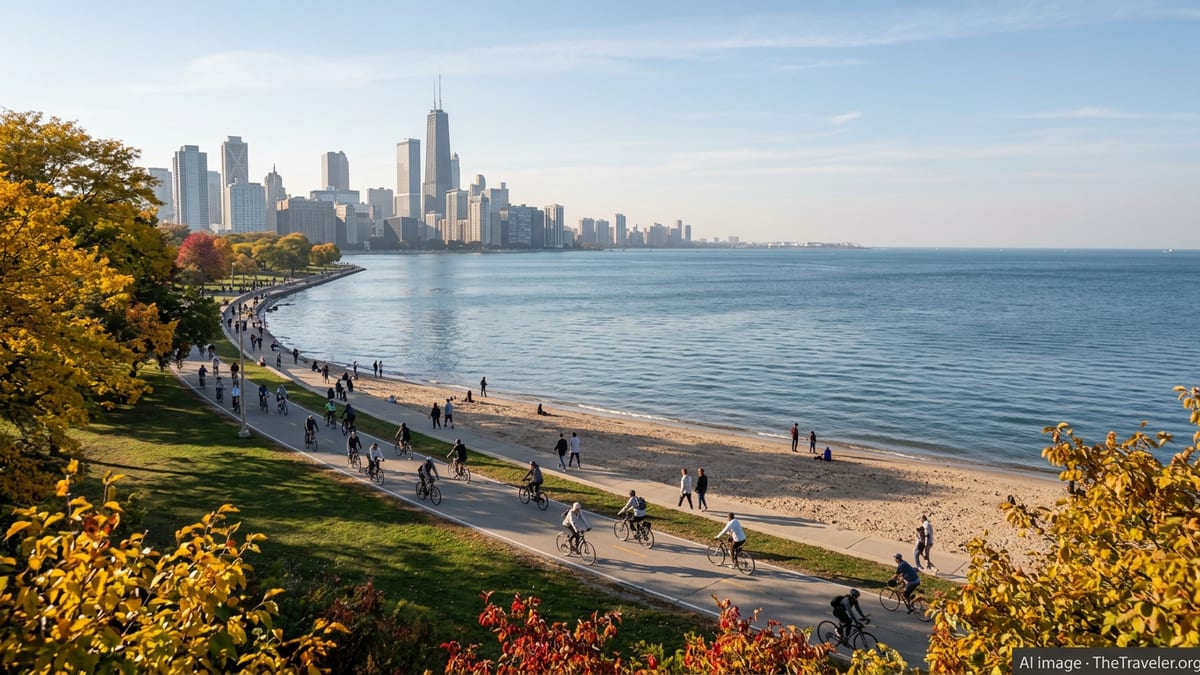
Summer brings the classic “beach season” experience: long evenings, busy bike paths, and plenty of people swimming, kayaking, or simply walking the Lakefront Trail. Rain showers and thunderstorms do occur, usually brief but sometimes intense. If your main goal is to be on or near the water, from boat tours to lakefront patio dining, the period from mid June through early September is often ideal.
Many repeat visitors argue that September and early October offer the single best blend of conditions for the lakefront. The water retains some of summer’s warmth, yet air temperatures usually become more moderate. Humidity typically drops and the crowds thin, while lake views stay crisp and clear. It is still possible to enjoy boat tours, riverwalk strolls, and lakeside parks, but with a calmer feel than in peak summer.
By late October and into November, the character of the lakefront begins to shift. Winds strengthen, temperatures fall, and the water often appears steely and restless. These weeks can still be beautiful for bundled up walks, especially on bright sunny days with high clouds, but they are less suited to long hours outdoors. Winter, from December through March, brings biting wind chills, patchy ice along the shore, and fewer open seasonal attractions, making it a better time for indoor cultural visits than lakefront recreation.
Festival Season: When Illinois Comes Outside
Illinois, and Chicago in particular, embraces festival season as soon as weather allows. Late spring through early fall sees a packed calendar of music, food, cultural, and neighborhood events that spill into parks and onto city streets. Planning your visit around these festivals can add a memorable layer to your trip, but it is worth balancing that excitement against larger crowds and higher demand for hotels.
In Chicago, summer months are thick with marquee events that fill central parks and lakefront spaces. Multi day music festivals, large scale food gatherings, and cultural celebrations draw visitors from across the country. July and August weekends often feature multiple neighborhood street festivals at once, each with live bands, food vendors, and local artisans. If your goal is to experience the city at its most energetic, this is the time to come, keeping in mind that popular dates can be both crowded and expensive.
Smaller cities and towns around Illinois also hold signature summer and early fall festivals. These range from art fairs and county fairs to wine and craft beer events, often tied to regional traditions. While the exact lineups and schedules change year by year, the pattern is consistent: from about Memorial Day through early October, it is difficult to find a weekend without some form of outdoor celebration happening within a reasonable drive.
Weather during festival season is generally warm, sometimes hot. Days can be humid and evenings mild, which is pleasant for outdoor concerts but can feel heavy during midday. Packing a hat, sunscreen, and a light rain layer is wise, as rain showers can move in quickly. Despite the occasional storm, most festival organizers plan with weather variability in mind, and activities often continue around brief interruptions.
Fall Festivals, Harvest Weekends, and Seasonal Events
As summer gives way to autumn, Illinois shifts from peak music and food festivals to events themed around harvest, foliage, and cozy seasonal traditions. September and October are prime months for apple festivals, pumpkin patches, Oktoberfest inspired gatherings, and community celebrations that pair local food with live music and craft markets.
In Chicago, early fall often features neighborhood events that highlight changing leaves, seasonal foods, and small scale performances. Street festivals in tree lined districts can feel especially atmospheric when paired with crisp air and the first hints of color in nearby parks. The city also hosts larger autumn events and parades tied to cultural heritage and the Halloween season, drawing families and visitors who prefer sweaters and hot drinks to peak summer’s heat.
Outside the city, orchard visits, corn mazes, and farm tours dominate many fall weekends. Northern and central Illinois are dotted with family run farms that invite visitors to pick apples, search for the perfect pumpkin, and enjoy hayrides. These experiences reach their height from late September through much of October, aligning neatly with the most reliable fall color in the surrounding countryside.
Southern Illinois adds its own flavor with wine country events and harvest festivals near the wooded hills of the Shawnee region. Here, vineyards, farm to table dinners, and small town squares play host to visitors looking for a slower paced seasonal escape. Because the region’s fall runs on a slightly later schedule, these events often remain vibrant when northern leaves are already dropping.
Balancing Crowds, Prices, and Weather
Timing a visit to Illinois is about more than temperature and color. It also involves tradeoffs between crowds, prices, and overall atmosphere. Summer in Chicago, for example, brings lively streets, late sunsets, and a busy event schedule, but also the highest hotel rates and densest tourist crowds. Weekdays can feel more relaxed, yet popular attractions and central lakefront areas stay active throughout the season.
Autumn, especially late September and October, offers a different balance. As families shift back to school routines, visitor numbers often dip slightly, even though the weather can be excellent. Hotels in major cities may still be busy during large conventions or high profile events, but many midweek nights see more moderate prices than the peak of summer. In smaller towns and scenic regions, fall weekends are popular yet rarely overwhelming, with a comfortable level of energy.
Spring serves as a gentle entry to the state. April can still be cool and occasionally wet, while May often brings greener landscapes and a growing list of outdoor events. Prices are typically more forgiving than at midsummer’s height, and crowds are concentrated around specific happenings such as early baseball games or spring cultural festivals. For travelers who prefer flowers and fresh foliage to autumn’s reds and golds, late spring can be a smart alternative.
Winter, from roughly December through March, tends to be the quietest time for tourism, aside from the holiday period in major cities. This season can offer savings on accommodation and opportunities to enjoy museums, restaurants, and indoor attractions without long waits. However, it calls for a genuine tolerance for cold, particularly around the lakefront where wind can be intense.
Planning by Interest: Colors, Culture, or the Coastline
The best time to visit Illinois depends as much on your interests as it does on the calendar. If fall foliage and scenic drives are at the top of your list, plan a route that follows color southward. Start around Chicago, the northwest corner, or along the Mississippi during the first half of October, then work your way toward central and southern Illinois as the month progresses. This approach can stretch your leaf peeping window and introduce you to a range of landscapes.
Travelers driven by culture and events might instead anchor their plans to Chicago’s festival calendar and major city happenings. For music, big food events, and a steady stream of neighborhood festivals, a trip between June and early September offers the richest options. If you prefer the same cultural depth with more manageable temperatures and somewhat fewer crowds, consider late May, September, or early October, when outdoor activities are still in full swing but the atmosphere feels less intense.
For visitors who see the lakefront as the star, think in terms of comfortable walking and waterfront recreation. Kayaking, beach days, and long bike rides feel best from mid June to mid September, while architectural boat tours and riverside strolls remain attractive from late spring through mid fall, provided you are prepared with layers. Photography minded travelers might favor crisp, clear days in late September or October, when sunlight slants at a lower angle and the skyline reflects sharply in the water.
Families with children, meanwhile, often appreciate the rhythm of school holidays. Summer vacations line up naturally with Illinois’s most active outdoor season, while fall long weekends provide opportunities for shorter trips built around orchards, pumpkin farms, and foliage. No matter your focus, booking key attractions and accommodations early is wise during any period that overlaps with school breaks or headline events.
The Takeaway
If your goal is to see Illinois at its most vibrant, combine the flame colored trees of autumn with the gentle warmth of the Chicago lakefront and the buzz of seasonal festivals. For many visitors, that sweet spot falls between late September and late October, when northern and central leaves usually reach their peak, days are often mild, and both city streets and country roads are alive with activity.
That said, there is no single perfect week for every traveler. Summer maximizes beach days and major festivals but brings heat, humidity, and higher prices. Late spring offers blossoms and emerging greenery with fewer crowds. Winter strips away distractions and reveals a quieter side of cities and small towns, best suited to travelers who prize museums, dining, and indoor culture over time outdoors.
The most successful Illinois itineraries start with an honest look at your priorities. Decide whether fall colors, festivals, or lakefront weather matters most, then choose a month that favors that experience while still leaving room for surprises. With flexible expectations and a willingness to dress for shifting conditions, you will find that Illinois rewards visits in every season, each with its own distinct character.
FAQ
Q1. When is the best time to see peak fall colors in Illinois?
The most reliable window for peak color in northern and central Illinois is generally mid October, while southern Illinois often peaks from late October into early November.
Q2. Which month is best for visiting Chicago’s lakefront?
For warm weather lakefront activities like beach days and long walks, mid June through early September is ideal, with many travelers favoring September for milder temperatures and smaller crowds.
Q3. Is September a good time to visit Illinois?
Yes, September is one of the most pleasant months, with lingering summer warmth, many outdoor events, and the first hints of fall color, especially later in the month.
Q4. Are Illinois festivals only in summer?
No, although summer is the busiest season for large festivals, there are many fall harvest events, orchard weekends, and autumn themed celebrations throughout September and October.
Q5. How cold does Chicago get in winter for visitors?
Winter temperatures in Chicago often drop below freezing, and wind off Lake Michigan can make it feel significantly colder, especially from December through February.
Q6. When are hotel prices typically highest in Chicago?
Hotel prices often peak in summer during major festivals and popular holiday weekends, and can also rise during large conventions in spring and fall.
Q7. What is the best time to drive scenic routes in southern Illinois?
Late October and early November are usually best, when forests in the Shawnee region and surrounding hills reach strong fall color and the weather often stays mild.
Q8. Is spring a good season for visiting Illinois parks?
Yes, late April through May brings wildflowers, fresh greenery, and comfortable temperatures in many parks, although rain showers and rapidly changing weather are common.
Q9. When is the Chicago lakefront most crowded?
The lakefront is busiest on sunny weekends from late June through August, especially around popular beaches, major events, and holiday periods.
Q10. If I can visit only once, which season should I choose?
For a mix of comfortable weather, fall colors, and active city life, many travelers find late September through October the most rewarding overall time to visit Illinois.