

The Netherlands is a compact country with a big personality, and the time of year you visit will shape almost everything about your trip. From spring fields striped with tulips to long summer evenings on Amsterdam’s canals and crisp winter walks in medieval cities, each season offers a distinct experience. Understanding how weather, daylight, and crowd patterns shift through the year will help you plan a visit that matches your priorities, whether that is flowers, festivals, budget, or quiet streets.
Understanding the Dutch Seasons
The Netherlands has a mild maritime climate, with cool summers, relatively moderate winters, and frequent clouds and rain spread across the year. Spring and autumn often feel short and changeable, but they are also some of the most atmospheric times to visit, especially if you are interested in tulips or soft golden light over the canals. Temperatures rarely reach extremes, yet strong winds off the North Sea and damp air can make it feel colder than the thermometer suggests.
For travelers, the year divides into three broad patterns. Spring, roughly from late March through May, is tulip season and the most photogenic period in the countryside. Summer, from June through August, brings the warmest temperatures, long daylight hours, and the highest visitor numbers, especially in Amsterdam and along the coast. Autumn and winter, from September through February, are cooler, quieter, and often better for budget travelers, with December standing out for festive markets and lights.
While you can visit the Netherlands in any month, the experience varies more by weather and crowds than by temperature alone. Rain showers are common even in summer and sunshine can appear on the coldest days, so flexible plans and layered clothing are much more important than chasing a particular degree reading. With that in mind, the “best” time to visit depends on whether you are dreaming of tulip fields, museum-hopping without queues, or cycling through the dunes on a warm evening.
Spring & Tulip Season: When the Netherlands Blooms
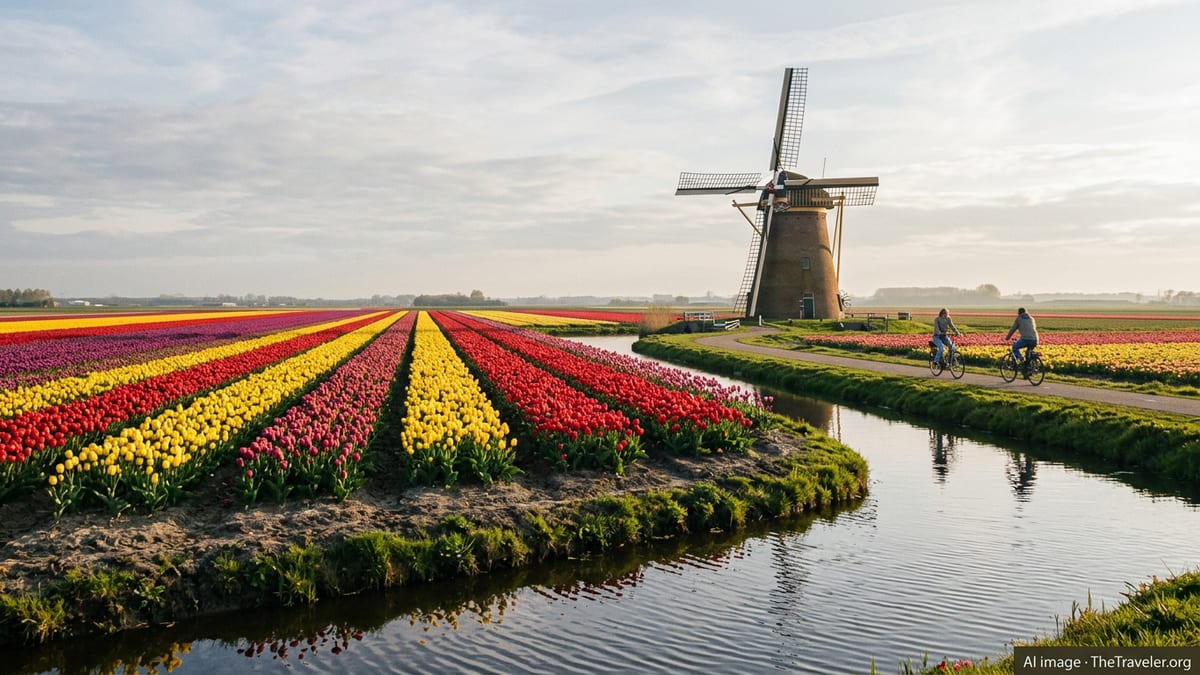
Spring is the headline season for many first-time visitors. Tulip season usually runs from late March to early May in the main bulb-growing region between Haarlem, Leiden, and Lisse, often called the Bollenstreek. Public gardens such as Keukenhof, one of the world’s most famous spring parks, traditionally open for about eight weeks from mid or late March until mid May. Peak color in the surrounding fields often arrives in the second half of April, although the exact timing shifts every year with the weather.([amsterdam-explorer.com](https://amsterdam-explorer.com/best-time-to-visit-keukenhof/?utm_source=openai))
In a typical year, early spring in late March and early April brings crocuses, daffodils, and hyacinths. Many outdoor tulip fields are still green at that point, but garden beds inside parks and show gardens display layered plantings designed to ensure there is always something in bloom throughout the opening period. Peak tulip bloom across the fields often falls between mid April and the first days of May, with farmers watching temperatures closely. A warmer spring can bring that peak forward by a week or more, while a cool, grey start may delay the color.([tulipfestivalamsterdam.com](https://tulipfestivalamsterdam.com/flower-forecast-2025/?utm_source=openai))
National Tulip Day in January, when a temporary picking garden appears on Amsterdam’s Dam Square, signals the symbolic start of the tulip year, but it is an urban event rather than an indicator of field conditions. For most travelers, the practical tulip window is from the last week of March until around the first week of May. Within that period, early April is often a good compromise between reliable blooms in gardens and manageable crowds, while the final ten days of April tend to be best for wide fields of color outside the parks.([en.wikipedia.org](https://en.wikipedia.org/wiki/National_Tulip_Day?utm_source=openai))
Planning a Tulip-Focused Trip
If tulips are your top priority, it pays to organize your trip around both dates and locations. Aim to base yourself near the bulb-growing region if possible, in towns such as Haarlem, Leiden, or Lisse, or in Amsterdam with day trips by train and bus. Keukenhof is usually open daily from morning to early evening for roughly eight weeks, and most recent seasons have seen peak displays in mid April, when both the landscaped beds and surrounding fields are typically at their most colorful. Recent bloom reports indicate that well-planned plantings provide continuous color during the whole opening period, even when the weather runs early or late.([keukenhof.nl](https://keukenhof.nl/en/news/flowering-in-2025/?utm_source=openai))
The exact best day is impossible to predict many months ahead, as it depends on temperature, sunshine, and rainfall in late winter and early spring. Travel operators and local tourism boards increasingly encourage visitors to treat tulip season as a flexible window rather than a single perfect week. If your schedule is fixed far in advance, consider aiming for mid April as a balanced choice that historically aligns with strong bloom conditions. For those with flexible dates, tracking flower forecasts published in March and early April can help you adjust your visit slightly once you see how the season is developing.([tulipfestivalamsterdam.com](https://tulipfestivalamsterdam.com/flower-forecast-2025/?utm_source=openai))
Beyond Keukenhof, other tulip experiences include organized tulip routes through the Noordoostpolder in Flevoland, smaller show gardens, and farm visits that explain bulb cultivation. These regions usually reach their peak a little later than the Bollenstreek, often in the second half of April, which can be useful if your dates fall slightly after the busiest Keukenhof weeks. Flower parades, including the famous Bloemencorso in the bulb region, typically take place in late April and combine floats decorated with fresh flowers, marching bands, and village festivities, offering a concentrated burst of local color and tradition.([en.wikipedia.org](https://en.wikipedia.org/wiki/Bloemencorso_Bollenstreek?utm_source=openai))
Summer in the Netherlands: Long Days and Festival Energy
Summer, from June through August, is the most popular season for general travel across the Netherlands. By June, temperatures are usually comfortably mild, canal terraces are open, and the country’s extensive cycling network is at its most inviting. Daylight stretches well into the evening, especially around the June solstice, allowing long days of sightseeing without the pressure of nightfall. Coastal resorts such as Zandvoort and Scheveningen see their peak crowds at this time, with beach clubs, outdoor concerts, and water sports drawing locals and visitors alike.
In Amsterdam and other major cities, summer brings a dense calendar of cultural events, open-air cinema, and music festivals. Parks like Vondelpark in Amsterdam and Het Park in Rotterdam are busy with picnics after work and weekend gatherings. Museum lines can be longer, and popular canal cruises, Anne Frank House tickets, and other timed entries often sell out days or weeks ahead, especially in July and August. Booking key attractions in advance is advisable if you are visiting during school holidays.
Weather in summer is generally pleasant but changeable. Average daytime temperatures often sit in the low to mid twenties Celsius, but brief heatwaves have become more common in recent years, occasionally pushing temperatures close to 30 degrees. Humidity and sudden showers are frequent, so light layers and a compact rain jacket remain useful, even in high summer. For many travelers, early summer in June and early July offers the most balanced mix of warm weather, long daylight, and slightly fewer crowds compared with late July and August.
Autumn & Winter: Quiet Streets, Cozy Nights, and Canal Atmosphere
From September onward, the Netherlands gradually shifts into a quieter, more introspective mood. Early autumn often brings mild temperatures and soft light, ideal for photography along the canals and in historic towns like Utrecht, Delft, and Leiden. Trees along city waterways turn gold and red during October, and café terraces stay open with blankets and outdoor heaters well into the season. Hotel prices and airfares can drop compared to peak summer, especially outside of major event weekends.
By November and into winter, days become shorter and wetter, with a noticeable dip in outdoor activity among visitors. However, this period rewards travelers who enjoy museums, galleries, and a slower pace. Crowds at headline attractions tend to be lighter except during school holidays. The canals rarely freeze reliably enough for large-scale outdoor skating as in decades past, but occasional cold snaps still bring a wintry feel, and frost-covered mornings can be strikingly beautiful.
December stands apart as a festive highlight. Cities and towns decorate their centers with lights, seasonal markets, and special events. Amsterdam’s light installations, winter markets in places such as Maastricht and Haarlem, and seasonal skating rinks create a warm atmosphere in contrast with the cool temperatures. January and February are typically the coldest and quietest months, appealing to budget-conscious travelers who prioritize low prices and empty galleries over comfortable temperatures or outdoor dining.
Weather, Crowds, and Prices by Month
Choosing the best time to visit the Netherlands often comes down to how you weigh weather, crowd levels, and costs. March and early April can feel chilly, with temperatures often in the single digits Celsius, but they mark the start of tulip season and remain relatively calm outside major events. Mid April through early May is one of the busiest periods in the countryside due to the fields and tulip gardens, while cities experience extra crowds around King’s Day at the end of April and public holidays in May. Accommodation sells quickly in this window, and prices reflect the demand.
June is frequently an excellent all-round month, with warming temperatures, long days, and slightly more space than in peak school-holiday season. July and August are busy and typically more expensive, especially in Amsterdam and coastal areas. Families from across Europe travel in these months, filling trains, beaches, and popular museums. If you travel then, consider exploring secondary cities such as Groningen, Arnhem, or Breda to experience a less crowded side of the country.
September and October form a shoulder season with more moderate pricing and often stable, if occasionally wet, weather. These months can be ideal for cultural trips focused on architecture, design, and food. November is quiet and can be quite grey, which some visitors find atmospheric and others gloomy, but it is usually one of the cheaper months for flights and hotels. From December through February, prices fluctuate around the holiday period, spiking in the days before New Year’s Eve and falling again in January once the celebrations end.
Matching Your Interests to the Best Time of Year
Because the Netherlands offers distinct experiences in each season, it helps to decide what you care about most and then work backward to the calendar. If seeing tulip fields is non-negotiable, your travel window is naturally constrained to spring, with a focus on mid April for the most consistent combination of park displays and field color. If blooming conditions slip earlier or later in a specific year, you will still enjoy extensive plantings in parks and greenhouses, even if the surrounding fields are slightly ahead or behind their peak.
For travelers whose priorities center on city life, nightlife, and cycling, late spring and early summer are generally optimal. May and June combine decent weather with lighter crowds than the full summer holiday period, making it easier to find tables at canal-side cafés and tickets to concerts or exhibitions. Those interested in contemporary architecture in Rotterdam, design in Eindhoven, or the university atmosphere of Groningen may find September and early October particularly appealing, blending active student life with manageable visitor numbers.
If budget is a key concern, late autumn and winter months outside the festive peak often offer the best value. November, January, and early February usually bring the lowest hotel prices and airfare, along with quieter trains and tram stops. While the weather can be damp and chilly, this is also the best time to see the Netherlands as residents experience it, with busy brown cafés, locals commuting by bicycle in rain gear, and few tour groups in museum galleries. Packing warm layers, waterproof shoes, and an umbrella will help you enjoy the atmosphere without discomfort.
The Takeaway
There is no single perfect month to visit the Netherlands, only the period that best matches the trip you have in mind. Spring delivers the postcard image of tulip fields and fresh green landscapes between late March and early May, with mid April often providing the richest color. Summer offers long days for cycling, canal cruises, and festival-hopping, but it also brings higher prices and busier streets, especially in July and August. Autumn and winter reward travelers who prioritize culture, value, and a quieter pace over guaranteed sunshine.
As you plan, consider choosing your primary focus first, whether it is tulips, outdoor living, or off-season calm, and then selecting a travel window that supports that goal. Be prepared for unsettled weather at any time of year by bringing layers and waterproofs, and build some flexibility into your schedule so that you can swap days for indoor museums or outdoor adventures as conditions change. With realistic expectations and thoughtful timing, the Netherlands can be a rewarding destination in every season.
FAQ
Q1. When is the best time to visit the Netherlands for tulips?
The most reliable period to see tulips in bloom is usually from early to late April, with mid April often bringing the most intense color in both gardens and fields, although exact timing changes slightly each year with the weather.
Q2. How long does tulip season last in the Netherlands?
In most recent years, tulip season in the main bulb regions has stretched from the last week of March into the first week of May, with show gardens arranging plantings so there is continuous color throughout their eight- to nine-week opening period.
Q3. Is summer a good time to visit the Netherlands?
Yes, summer is ideal if you want warm weather, long daylight hours, and an active festival scene, though July and August are the busiest and often most expensive months, especially in Amsterdam and at the coast.
Q4. Are winters very cold in the Netherlands?
Winters are generally cool rather than extremely cold, with temperatures often hovering just above freezing, but strong winds and damp air can make it feel colder, so warm, windproof clothing is important.
Q5. What is the best month to visit Amsterdam for fewer crowds?
For a balance of manageable crowds and reasonable weather, consider March, early April outside major tulip weekends, or the shoulder months of September and October, when popular attractions are usually quieter than in high summer.
Q6. Can I still enjoy the Netherlands if I visit outside tulip season?
Absolutely, as most of the country’s highlights, including museums, canal districts, historic towns, and cycling routes, are enjoyable year-round, with each season offering its own atmosphere and events.
Q7. When are prices lowest for travel to the Netherlands?
Airfares and hotel rates are often lowest in November, January, and early February, outside holiday periods and major events, making these months attractive for budget-conscious visitors who do not mind cooler, wetter weather.
Q8. Does it rain a lot in the Netherlands?
Rain is frequent but usually comes in short showers rather than all-day downpours, and it can occur in any month, so packing a compact umbrella and light waterproof layers is recommended regardless of season.
Q9. How far in advance should I book for tulip season?
For visits between late March and early May, especially if you plan to see Keukenhof or stay in Amsterdam, it is wise to book accommodation and key tickets several months in advance, as this is one of the country’s busiest travel periods.
Q10. What is the best time to combine city visits with beach or dune walks?
Late May, June, and early September often provide the best mix of comfortable temperatures, open coastal facilities, and manageable crowds, allowing you to pair Amsterdam or Rotterdam with day trips to nearby beaches and dune reserves.