

With Japan attracting record numbers of international visitors again, the question of whether tourist passes still offer genuine savings has become more complicated. Major price hikes, new regional options and bundled attraction passes mean you now have to run the numbers instead of assuming any unlimited pass is automatically a deal. This guide focuses on the rail and city passes that can still save typical travelers meaningful money in 2026, and explains exactly when they make financial sense.
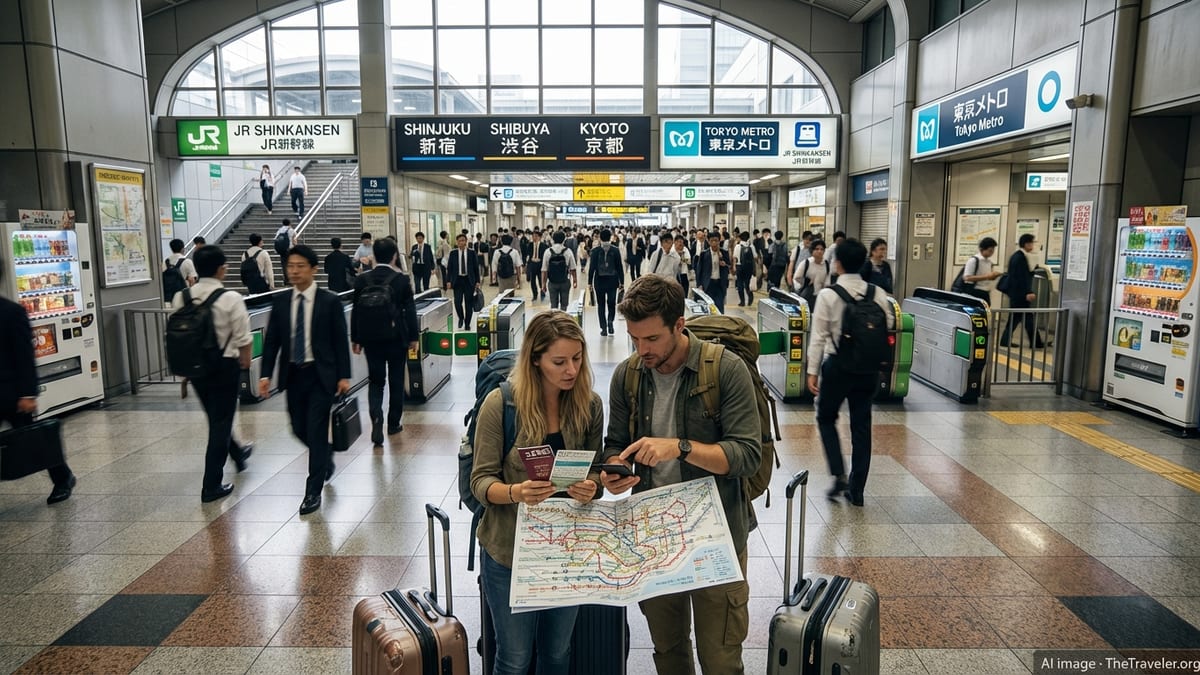
How to Decide If a Japan Pass Will Really Save You Money
The classic image of the foreign visitor in Japan is someone flashing a rail pass at every ticket gate and never thinking about individual fares. That used to be an easy way to save money, but in 2026 the reality is more nuanced. Prices for the nationwide Japan Rail Pass jumped by around two thirds after an October 2023 revision, and some regional passes have quietly increased as well. At the same time, flexible city passes and attraction bundles have become more competitive, especially for travelers concentrating on a single region or metropolitan area.
Before buying any pass, start with your itinerary, not the marketing brochure. Write down your likely long-distance routes, such as Tokyo to Kyoto or Osaka to Hiroshima, and use sample fares from official rail websites or route-planning apps to estimate the total cost of individual tickets. Add local transport where relevant. Only once you have a rough figure should you compare it to the price of a rail or city pass. If the pass does not at least break even with a little room for error, you are probably better off paying per ride using an IC card like Suica or PASMO.
The second key principle is to match the scope of the pass to the scope of your trip. The nationwide Japan Rail Pass now only suits travelers who will string together several expensive Shinkansen journeys within a short window. Many visitors, especially first-timers focused on Tokyo and the Kansai region, can save more with one or two well-chosen regional passes and a city subway ticket. Thinking in terms of clusters of travel days rather than your entire stay helps you avoid paying for long stretches when you barely move.
Finally, remember that the best-value pass is the one you actually use. An unlimited ticket that looks good on paper but locks you into an exhausting schedule of long-distance hops is not a bargain in practice. In the sections below, we look at specific passes that still deliver solid savings for common routes and travel styles, along with simple rules of thumb for when they pay off.
Japan Rail Pass: When the Nationwide Pass Still Makes Sense
The Japan Rail Pass, often abbreviated as JR Pass, remains the most discussed tourist ticket in the country. After the October 2023 price increase, a standard 7-day pass for adults now costs about 50,000 yen, with 14-day and 21-day versions priced at roughly 80,000 and 100,000 yen. Those figures are significantly higher than in the past, which means you now need a busier and more Shinkansen-heavy itinerary for the pass to be worthwhile.
In broad terms, the 7-day pass can still pay off if you plan at least two or three long bullet train trips within that week. A simple example is flying into Tokyo, visiting Kyoto and Hiroshima, and then returning to Tokyo within seven days. Buying separate tickets for Tokyo to Kyoto, Kyoto to Hiroshima, Hiroshima to Tokyo, and a few local JR rides will often approach or exceed the cost of the pass. Add in the convenience of not having to buy a new ticket each time and you still have a defensible purchase, even at the new prices.
On the other hand, if your plan is limited to a Tokyo to Kyoto round trip plus a little local JR travel, the pass is harder to justify. A round-trip Shinkansen ticket between Tokyo and Kyoto in reserved standard class typically costs noticeably less than a 7-day nationwide pass, and you will have days within that week when you do not step on a train at all. In that scenario, a combination of point-to-point Shinkansen tickets and city passes for Tokyo and Kansai will usually be cheaper and more flexible.
The nationwide pass is also less compelling if you are focusing on a single region. For example, visitors who intend to explore only Hokkaido, only Tohoku, or only the Kansai area now have multiple regional JR passes that mirror the unlimited concept at a significantly lower price point. In short, the Japan Rail Pass still works for fast-paced, multi-region itineraries packed into one to three weeks, but it is no longer the default choice for everyone.
Regional JR Passes: Better Value for Focused Itineraries
For many travelers in 2026, regional JR passes have become the sweet spot between cost and flexibility. Each major JR company offers its own tourist products that cover specific areas, such as Hokkaido, eastern Honshu or western Japan. Because these passes limit you geographically, their prices tend to be lower than the nationwide ticket, while still including unlimited travel on relevant JR trains for several consecutive or flexible days.
In northern Japan, JR Hokkaido’s rail passes are a practical option for itineraries centered on Sapporo, Otaru, Hakodate and nearby cities. A typical island-wide pass covers local, rapid and limited express trains for several days and is designed to be cheaper than buying two or more long segments separately. Given the length of journeys in Hokkaido and the relative scarcity of competing private railways, it is relatively easy to recoup the cost if you plan even a modest loop such as Sapporo to Asahikawa and Hakodate.
Further south, JR East and its partners offer passes including the JR East South Hokkaido Rail Pass and various Tohoku and Nagano Niigata tickets. These are geared toward visitors flying into Tokyo who want to explore the Tohoku region, ski areas around Nagano, or connect to Hokkaido without buying expensive point-to-point tickets. Some of these passes have seen minor price adjustments in 2025, but they still tend to undercut the cost of a couple of long Shinkansen rides plus local trains if you use them for the full validity period.
In western Japan, JR West’s range of passes is particularly relevant to first-time visitors, with products that cover Kansai only or extend out to Hiroshima and even Kyushu. For example, a pass that includes unlimited rides between Osaka, Kyoto, Nara, Kobe and Himeji over several days will often be cheaper than buying individual tickets every time you hop on a limited express or Shinkansen. The key test is simple: if your plan involves riding JR trains most days within the pass area, especially on limited express or Shinkansen services, a regional JR pass will usually deliver real savings.
City Transit Passes: Tokyo Subway Ticket and Beyond
While intercity rail tends to dominate the conversation, some of the most reliable money savers in Japan are local subway and city transport passes. Tokyo is the prime example. The Tokyo Subway Ticket, available to foreign visitors on short-term stays, offers unlimited rides on all Tokyo Metro and Toei Subway lines for 24, 48 or 72 consecutive hours. Current pricing is 800 yen for 24 hours, 1,200 yen for 48 hours and 1,500 yen for 72 hours for adults.
In practice, this pass starts to pay for itself quickly. A typical subway ride in central Tokyo costs a few hundred yen, so using the ticket for multiple hops in a day usually comes out ahead of paying individual fares. Tokyo Metro itself notes that the 24-hour version will save you money if you get on and off at least five times within that window, while the longer versions become economical with slightly fewer daily rides because they spread the cost over more time. For visitors who plan intensive sightseeing days in neighborhoods like Asakusa, Shibuya, Shinjuku, Ginza and Ueno, this threshold is easy to reach.
Beyond Tokyo, other cities offer similar products aimed at tourists. Osaka and Kyoto have one-day and multi-day passes covering subway and municipal bus networks, sometimes bundled with discounts at attractions. These passes generally require only a handful of rides per day to break even, and they remove the small friction of calculating individual fares in unfamiliar systems. They are especially useful for first-timers who may backtrack or change plans frequently during the day, because every extra unplanned ride strengthens the value proposition of an unlimited pass.
One important caveat is that city passes do not cover private railways or JR lines unless explicitly stated, and they typically exclude airport trains. This means you still need to budget separately for connections like the Narita Express or Kansai Airport Limited Express. Even so, for pure in-city movement on intensive sightseeing days, these modestly priced tickets remain among the most dependable ways to trim your transport budget.
Bundled Attraction Passes: Tokyo City Pass and The Tokyo Pass
A newer category of products seeks to combine transport and sightseeing into a single purchase. Tokyo now has several such options that are worth considering if you plan to visit multiple major attractions in a short period. The Tokyo City Pass, introduced recently for international visitors, bundles admission to selected attractions with unlimited use of the Tokyo Subway Ticket for one to three days. Depending on the variant, it can include one or more premium attractions plus a set number of additional spots at no extra charge, alongside unlimited Tokyo Metro and Toei Subway access for 24, 48 or 72 hours.
The economics of this type of pass depend heavily on which attractions you choose. The organizers advertise potential savings percentages compared with buying admission and subway tickets separately, but those assume you max out the number of included spots. To gauge real value, list the specific museums, theme parks or viewpoints you are likely to visit, look up their current admission prices and add a realistic estimate of subway fares for the days in question. If the bundled pass costs appreciably less than that total, it can be a good deal while also simplifying your logistics.
Another product, The Tokyo Pass, is sold in one-, two-, three- and five-day versions and focuses primarily on attraction entry, with a Tokyo Subway Ticket available as an add-on for an extra fee. In this case the subway component functions more like a convenient package than a discount, but the overall bundle can still save money if you use the maximum allowed number of included attractions. Longer-duration variants that span three to five days work best for travelers who enjoy museums and cultural sites and are comfortable structuring their days around pass coverage.
These bundled passes have two potential downsides. First, they introduce a degree of pressure to “get your money’s worth” that may encourage rushed sightseeing. Second, they are sensitive to operating hours and rest days at each facility, which can change seasonally. If you are traveling during New Year holidays or Golden Week, for example, some museums may close or operate on reduced hours, undermining the value of a pre-purchased pass. Used thoughtfully, however, attraction-plus-transport bundles can still provide solid savings for culture-heavy itineraries in Tokyo.
Kansai, Hiroshima and Beyond: Non-JR Passes That Add Up
While JR passes dominate long-distance rail, several excellent value passes are issued by local governments and private railway consortia, especially in the Kansai region. The Kansai Thru Pass, for example, allows unlimited travel on many non-JR railways and buses across Osaka, Kyoto, Kobe, Nara, Wakayama and nearby areas for a set number of days within a validity period. It typically excludes JR lines but compensates with coverage of private systems like Hankyu, Keihan and Kintetsu, which often run parallel routes between major cities.
This kind of pass is particularly attractive for visitors whose stay centers on Osaka or Kyoto with day trips to neighboring cities. A typical Kansai itinerary might involve staying in Osaka, visiting Kyoto on multiple days, then adding side trips to Nara and Kobe. Paying for each journey individually across several private operators can add up quickly. By contrast, a regional private-rail pass that covers all of those routes allows you to forget about individual tickets and explore more spontaneously, often at a lower total cost.
In and around Hiroshima, local passes combine tram and bus access with discounted or fully covered ferry rides to Miyajima. These can be a smart supplement if you already hold a JR pass that gets you as far as Hiroshima Station but does not cover last-mile connections. They are usually inexpensive and tuned specifically to the patterns of short-stay visitors who want to see a cluster of famous sites within one or two days.
Outside the largest metropolitan areas, be on the lookout for city-specific tourist passes that pair unlimited bus or tram rides with admission discounts. Many regional cities promote such products through local tourism boards or visitor centers. While each individual pass may only save a modest amount, combining them with strategic JR or private-rail passes can produce meaningful overall reductions in your transport spending over the course of a multi-week trip.
Practical Strategies to Maximize Savings From Any Pass
Once you have chosen the passes that fit your itinerary, a few planning techniques can increase your actual savings. One of the most important is clustering. Try to schedule your most expensive travel during the validity period of your unlimited rail pass, and group heavy sightseeing days inside the dates of your city or subway tickets. For example, if you have a 7-day regional JR pass, arrange your long Shinkansen hops and far-flung day trips within those seven days, and leave quieter city wandering or neighborhood exploration for days outside that window.
Activation timing can also make a significant difference. Many passes begin counting time from the moment of first use rather than the calendar day. The Tokyo Subway Ticket, for instance, works on a 24, 48 or 72 hour basis starting when you first pass through a gate. This means that activating a 72-hour ticket at 3 p.m. on a Monday will keep it valid until 3 p.m. on Thursday, effectively covering parts of four separate calendar days. Smart timing like this can squeeze an extra morning or evening of free travel out of a pass.
Another useful tactic is to combine broad passes with selective pay-as-you-go segments. Even if your JR pass does not cover private railways or subways, you may find that riding a short non-JR line to reach a particular landmark is cheaper than upgrading to a more expensive pass that includes it. Likewise, airport transfers sometimes cost less when bought separately, especially if you only need to ride them once in each direction. Treat passes as tools, not as an all-or-nothing choice, and do not hesitate to mix and match according to cost.
Finally, stay updated on price adjustments and sales windows. Some regional passes can only be purchased outside Japan or must be activated within a fixed period after buying. Others, such as certain city passes, are sold in limited promotional runs that change by season. Because pricing and conditions can shift with relatively little notice, it is wise to confirm current details directly with railway companies or official tourism sources shortly before you travel, rather than relying on information from trips taken years earlier.
The Takeaway
In 2026, the era when you could buy a single nationwide pass and assume you were getting the best possible deal is largely over. The steep price increase of the Japan Rail Pass has made it a niche product for high-intensity, multi-region itineraries packed into one to three weeks, rather than a universal recommendation for anyone setting foot in the country. At the same time, a dense ecosystem of regional JR passes, private railway tickets, city subway passes and attraction bundles has emerged as a flexible toolkit for travelers who are willing to do a little arithmetic in exchange for real savings.
If your trip involves crisscrossing Japan from Hokkaido to Kyushu within a short span, the nationwide pass can still work, provided you are comfortable riding several long-distance trains in quick succession. For more focused journeys centered on Tokyo, Kansai or a single region, regional rail passes and city transit tickets such as the Tokyo Subway Ticket usually offer better value at a lower upfront cost. Bundled passes that combine transport with attraction entry can be economical for museum and theme park enthusiasts who plan ahead and fully use their inclusions.
The most important shift is mental rather than logistical. Instead of asking which pass you should buy, start by asking what you actually want to see and how quickly you prefer to travel. Sketch a realistic route, estimate individual fares and then layer passes onto that foundation only where they clearly undercut the pay-as-you-go alternative. Approached this way, Japan’s complex landscape of tourist passes can still be turned from a source of confusion into a powerful tool for saving money and reclaiming time during your journey.
FAQ
Q1. Is the Japan Rail Pass still worth it after the price increase?
The Japan Rail Pass can still be worthwhile if you plan several long Shinkansen journeys within its validity, typically two or three major intercity trips in a week or a dense multi-region itinerary over two or three weeks. For slower trips focused on one area, regional passes and city tickets often provide better value.
Q2. How do I know whether a regional JR pass will actually save me money?
List your planned routes within the region and look up approximate fares for each segment. Add them together and compare the total to the price of the regional pass. If the pass is cheaper or only slightly more expensive but adds flexibility and convenience, it is likely a sound choice.
Q3. When does the Tokyo Subway Ticket pay off compared with paying per ride?
The Tokyo Subway Ticket generally becomes economical when you make several subway trips per day within its 24, 48 or 72 hour validity, such as hopping between major districts for sightseeing. If you only expect one or two rides in a day, a rechargeable IC card is usually cheaper.
Q4. Are attraction bundles like Tokyo City Pass always better than buying separate tickets?
No, their value depends on how many included attractions you actually visit within the validity period and how expensive those admissions are. If you plan to use most or all of the included entries and ride the subway extensively, they can offer meaningful savings; otherwise, separate tickets may cost less.
Q5. Should I combine the Japan Rail Pass with local city passes?
Combining passes is often the smartest strategy. A nationwide or regional JR pass covers long-distance and many local JR trains, while city passes handle subways, trams or buses not included in JR products. This mix can reduce gaps in coverage and minimize situations where you pay full fare for short but frequent local trips.
Q6. What is the best pass if I am only visiting Tokyo and Kyoto?
If you are simply traveling between Tokyo and Kyoto once in each direction with a few local days in each city, individual Shinkansen tickets plus city subway or bus passes usually beat the cost of a nationwide rail pass. A regional JR pass or private-rail product can make sense only if you add several more day trips.
Q7. Do these tourist passes cover airport trains in Japan?
Coverage of airport lines varies widely. Some regional JR passes cover JR-operated airport services, while many city tickets and attraction bundles exclude dedicated airport trains. Always check the specific conditions of each pass and budget separately for airport transfers if necessary.
Q8. Can I rely on tourist passes for all my transportation costs in Japan?
In most cases, no. Passes often exclude certain private railways, limited express services, ferries or buses. Many travelers use one or two well-chosen passes for the bulk of their movement and pay per ride for occasional out-of-area trips, airport links or premium services.
Q9. How far in advance should I buy rail and city passes?
Some passes can be purchased months in advance, while others must be bought within a specific window or only inside Japan. It is usually safe to decide one to three months before your trip, then recheck current prices and conditions on official sites shortly before purchase to confirm that nothing has changed.
Q10. What is the simplest way to avoid overbuying passes?
Start with a realistic day-by-day itinerary and a rough fare estimate before looking at any pass. Only consider products that clearly undercut that baseline or offer additional flexibility that you know you will use. If the math is marginal or the itinerary feels forced to justify the pass, it is better to skip it.