

Idaho is built for road trips. From the jagged Sawtooth Mountains and the Salmon River Scenic Byway to the high desert around Twin Falls and the Palouse near Moscow, many of the state’s standout experiences lie at the end of a long drive. With gas prices in Idaho recently hovering in the high two to low three dollar range per gallon, and lodging costs climbing in popular summer destinations, using the right travel credit card can meaningfully soften the blow at the pump and at the front desk. This guide walks through how to think about gas and hotel rewards for an Idaho road trip, and which types of cards tend to work best in early 2026.
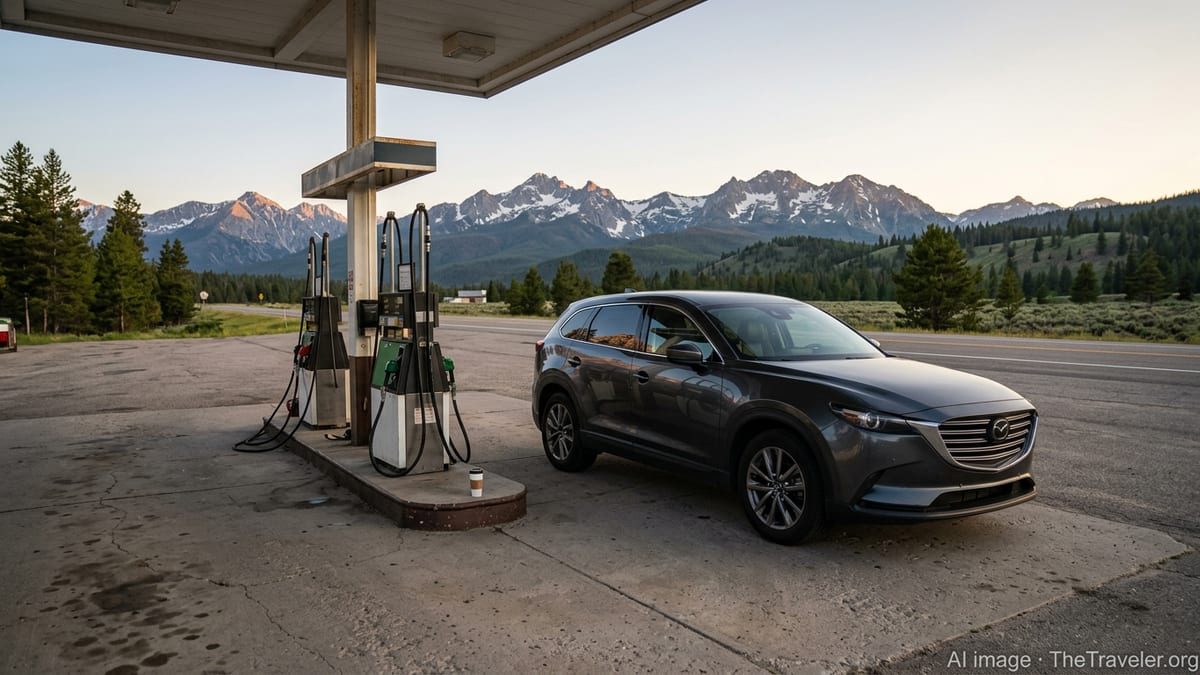
Idaho Road Trips, Gas Prices, and Why Your Card Choice Matters
Idaho’s geography almost guarantees plenty of time behind the wheel. A loop from Boise through Sun Valley, Stanley, Coeur d’Alene and back can easily top 1,000 miles, and adding side trips to places like Craters of the Moon, Hells Canyon or the St. Anthony sand dunes piles on even more. While Idaho’s average gas prices have usually sat close to the national norm, they still add up quickly when you are filling a tank every day or two. Recent reports from regional motoring groups show statewide averages in early 2026 around the upper two dollar range per gallon, after sharper spikes and dips in previous years. Pump prices also vary across the state, with resort and rural areas often running higher than larger population centers.
Those dynamics make your choice of credit card surprisingly important. A flat 1 percent card on a road trip delivers only modest savings. By contrast, a strong gas rewards card can push your effective savings on fuel into the 3 to 5 percent range, and a well-chosen hotel or flexible travel card can return even more value if you redeem points for high-season stays in places like Sun Valley, Coeur d’Alene or McCall. Over a week or two on the road, that difference can translate into the cost of an extra night in a hotel or several restaurant meals.
There is also a timing factor. Recent years brought big swings in gas prices tied to global events, followed by a calmer period with relatively modest price movement. That calmer backdrop means the percentage rewards from your card are more predictable in dollar terms. You may not be able to control the price at the pump, but using a strong rewards card ensures you are clawing back as much as is practical on every fill-up and hotel stay throughout Idaho.
Finally, an Idaho road trip often means crossing state lines to or from Oregon, Washington, Montana, Wyoming, Nevada or Utah. A card that performs well on gas and lodging throughout the broader Rocky Mountain and Pacific Northwest region simplifies your wallet and avoids surprises if you top off in a different state. Before you head out, it is worth reviewing not just the headline reward rates, but also any caps, rotating categories and travel protections that will matter on open roads and in mountain towns.
How Gas Rewards Cards Work on a Western Road Trip
Gas rewards cards come in a few main flavors, each with tradeoffs that can matter on an Idaho drive. The first category is co-branded gas station cards tied to a single chain. These sometimes advertise very high discounts per gallon or elevated cash back on gas purchases, but in exchange you are locked into that brand. In Idaho’s mix of interstate corridors, small-town stations and stretches where only one or two pumps are open late at night, that kind of brand restriction can be inconvenient. If you leave the coverage area of your preferred chain, your rewards may drop sharply.
The second category is general cash back or travel cards with elevated rewards on gas. These cards often pay around 3 to 5 percent back at most gas stations, up to a spending cap per quarter or year. Some also bundle gas with broader “travel” categories that include hotels, campgrounds and rental cars, which is particularly useful if your Idaho itinerary combines nights in chain hotels with stays at independent lodges in places like Stanley or Victor. These cards tend to be better suited to a long, flexible road trip, because you can pull into nearly any station and still earn a strong rate.
A third subset uses rotating categories, where gas may be a bonus category for one quarter of the year. When the timing lines up with your Idaho trip, those cards can be very rewarding, especially when paired with a welcome bonus. The drawback is that if your travel dates do not match the gas quarter, you fall back to a lower base rate. For travelers who plan major trips far in advance, checking the issuer’s calendar and activating relevant categories before departure can help align rewards with real-world driving.
Regardless of type, gas cards often feature caps on how much spending earns the top rate, such as a few thousand dollars of gas purchases per year. On a typical Idaho vacation, most drivers will not hit those limits, but frequent road trippers or people combining work and leisure driving might. Before committing to a primary gas card, it is wise to estimate your total fuel spend for the year, including daily life at home, to avoid surprises where the rewards drop to the base rate halfway through summer.
Hotel and Travel Cards That Shine in Idaho
While gas cards deliver immediate savings at the pump, hotel and broader travel cards can add outsized value once you park for the night. Major national hotel chains such as Marriott, Hilton, Hyatt and others operate in Boise, Idaho Falls, Twin Falls, Coeur d’Alene and near popular ski and lake destinations. Recent rankings from travel and personal finance outlets highlight that several hotel-branded credit cards continue to offer free night certificates, bonus points on hotel spending and automatic elite status levels that unlock room upgrades and late checkout. Those benefits are particularly helpful in Idaho’s busy summer and winter high seasons, when cash rates rise and occupancy tightens.
For example, premium hotel cards tied to large chains frequently offer an annual free night certificate that can offset much of the card’s annual fee if used at a higher-tier property. In Idaho, that might mean applying the certificate to a peak-season weekend near a major ski resort or lakefront town. Meanwhile, mid-tier hotel cards with lower annual fees often earn enhanced points on hotel stays, which can add up over the course of a multi-stop road trip through several Idaho cities.
Flexible travel cards from major issuers remain a strong alternative. Rather than locking you into a single hotel chain, these cards earn transferable points on broad travel spending, including many independent hotels, cabins and lodges that better match Idaho’s outdoorsy character. Editorial reviews in early 2026 continue to praise these cards for their combination of solid earning rates, wide-ranging transfer partners and robust travel protections. For road trippers who may stay in a mix of branded hotels, vacation rentals and small inns, this flexibility can outweigh the richer but narrower benefits of a single hotel chain card.
Another consideration is how easily you can redeem rewards for Idaho lodging during peak periods. Some hotel chains use dynamic pricing, where award nights cost more points when cash rates climb, while others rely on more stable award charts or capped categories. Flexible travel cards that let you redeem points at a fixed value through an issuer’s portal can sometimes provide more predictable value, especially when hotel cash rates are volatile. Checking typical award rates for Idaho destinations you are likely to visit before choosing a card can help you avoid disappointment later.
Practical Card Strategies for an Idaho Road Trip
Instead of hunting for a single “perfect” credit card, many travelers will get better results by pairing a strong gas card with a flexible travel or hotel card, then using each where it is strongest. For example, you might use a dedicated gas rewards card for every fill-up in Idaho, then put hotel nights, rental cars and dining on a separate travel card that earns transferable points. This two-card strategy keeps your wallet simple while maximizing rewards where they matter most on the road.
Before leaving, take time to map your likely route and identify where you will be staying. If your itinerary centers on towns that are well covered by one hotel chain, a co-branded hotel card for that chain may make sense. On the other hand, if you plan to mix chain hotels with independent roadside motels or mountain lodges near places like Stanley, Driggs or Salmon, a flexible travel card that treats most lodging as “travel” can be a better fit. In rural stretches where lodging options are limited, independent properties are common, so having a card that earns competitive rewards on any hotel charge is useful.
It is also important to think beyond rewards and consider travel protections and fees. Some mid-range and premium travel cards include trip delay coverage, primary rental car insurance, lost baggage protection and emergency assistance services. While these benefits are most often associated with air travel, they can be helpful on road trips too, especially if your itinerary includes one-way car rentals or connections through busy regional airports. At the same time, cards with high annual fees or complex credits may not be worthwhile if you only travel once a year. For a focused Idaho road trip, a solid mid-tier travel card with clear benefits often hits the sweet spot.
Finally, factor in how you will handle payments in smaller Idaho communities. Many gas stations and motels readily accept major credit card networks, but some remote businesses may prefer a particular network or even set minimum purchase amounts for card transactions. Carrying at least two cards from different issuers and networks provides backup if one is declined or a station’s payment terminal is offline. While outright refusals are rare, redundancy is part of smart planning on long, rural stretches.
Regional Considerations: From Boise to the Bitterroots
Driving across Idaho highlights just how varied the state is, and those variations can impact how you use your credit cards. In and around Boise, Meridian and Nampa, you will find a full range of brand-name gas stations, chain hotels and national retailers. Here, virtually any mainstream gas or travel card will operate at its full earning potential, and you can easily stack promotions or limited-time offers from issuers. If your trip starts and ends in Boise, it may be convenient to fill up, stock your cooler and even book your first and last hotel nights in the metro area where options are broader.
As you move toward mountain corridors like the Sawtooths, the Bitterroots or the Salmon River country, the mix changes. In smaller towns such as Stanley, Challis, Riggins and Darby, stations may be independent or part of smaller regional chains, and lodging might be a blend of cabins, motor inns and seasonal lodges. Most of these businesses still process major credit cards, but your co-branded gas card tied to a national chain may no longer earn its highest rewards rate. In these environments, a general gas or travel card that treats most fuel and lodging purchases the same will often come out ahead.
Seasonality is another key factor. Idaho’s busiest driving seasons revolve around summer road trips and winter ski travel. During those peaks, hotels in places like McCall, Sun Valley and Schweitzer can charge higher cash rates, and availability may tighten. For road trippers holding hotel or travel cards, this is when advance planning and flexible points shine. Booking award nights early, taking advantage of off-peak dates midweek and using free night certificates strategically can stretch your rewards further when demand is highest.
Weather and road conditions also play a role. Shoulder seasons in spring and fall can bring sudden storms, mountain passes closing overnight and longer detours. Cards with roadside assistance dispatch or trip interruption coverage may not replace full roadside memberships or travel insurance, but they can provide an extra layer of support. Before heading into more remote Idaho corridors, it is worth reviewing your card benefits so you know what help is available if a breakdown or unexpected closure delays your plans.
Using Rewards Wisely Without Overspending
While generous sign-up bonuses and high gas or hotel reward rates are appealing, it is crucial to remember that the value of any travel credit card depends on using it responsibly. It rarely makes sense to increase your overall spending just to chase rewards, especially when interest charges on carried balances can wipe out months of earnings. For an Idaho road trip, the healthiest approach is to estimate your realistic fuel, lodging and dining costs, then choose cards that reward that existing spending pattern instead of encouraging new, unnecessary purchases.
When evaluating offers, pay close attention to minimum spend requirements for welcome bonuses and to the timeline for meeting them. If you know you will spend a certain amount on gas and hotels during your trip, you may be able to time a new card so that regular travel expenses naturally satisfy the requirement. Conversely, if the minimum spend required is far beyond what you expect to pay for an Idaho vacation, it is better to look for more modest bonuses or no-bonus options with strong ongoing rewards.
Redemption strategy matters as much as earning. For hotel and travel cards, redeeming points at poor value for small statement credits may undercut the rewards you worked hard to accumulate. Instead, consider whether you can reserve high-value stays on points during peak periods in popular Idaho destinations or along connecting routes in neighboring states. If your card allows you to transfer points to airline or hotel partners, checking the relative value of each option helps ensure you are not leaving value on the table.
A final component of wise rewards use is recordkeeping. Road trips generate many small charges: gas fill-ups, roadside diners, parking fees and unexpected supply runs. After your trip, reviewing statements to see where your spending clustered can inform your future card choices. If you see far more independent motels than major chains, for instance, that can guide you toward flexible travel cards rather than co-branded hotel products going forward.
The Takeaway
An Idaho road trip rewards curiosity, flexibility and a willingness to take the longer route. Those same qualities can guide your approach to travel credit cards. Rather than fixating on a single “best” product, think in terms of how a small combination of cards can support the way you actually travel: one to maximize gas rewards at almost any station you encounter from Boise to Bonners Ferry, and another to turn hotel nights and other travel expenses into future adventures.
In early 2026, many mainstream gas and travel cards continue to offer strong earning rates and practical benefits without requiring expert-level points knowledge. By focusing on cards with straightforward gas rewards, broadly defined travel categories, useful but understandable perks and reasonable fees, you can capture meaningful value from the money you were going to spend on your Idaho journey anyway. Combine that with realistic budgeting, on-time payments and thoughtful redemptions, and your credit card strategy becomes one more tool that makes the open road feel more accessible.
Idaho’s scenic byways, hot springs, ski hills and small towns are well worth the drive. With the right cards in your wallet, each fill-up and overnight stop can quietly accumulate rewards that help fund the next trip, whether that is another circuit through the Gem State or a longer adventure across the Mountain West. Plan ahead, stay flexible and let your credit cards work in the background while you focus on the landscapes rolling by your windshield.
FAQ
Q1. Do I really need a separate gas card for an Idaho road trip?
It is not strictly necessary, but a dedicated gas or travel card with elevated fuel rewards can noticeably reduce your overall trip cost, especially on longer drives.
Q2. Are hotel credit cards worth it if I only visit Idaho once?
They can be, particularly if you stay several nights at the same major chain and can use a welcome bonus or free night certificate, but flexible travel cards may be better for occasional travelers.
Q3. Will my travel card’s “gas station” bonus apply at all Idaho stations?
Most cards reward purchases based on how the merchant codes its business, so nearly all stand-alone gas stations qualify, while fuel bought at big-box stores may not always trigger the bonus.
Q4. Is it safe to rely solely on credit cards in rural parts of Idaho?
In most cases yes, as major credit networks are widely accepted, but it is wise to carry a backup card and a small amount of cash for very remote stops or temporary network outages.
Q5. How far in advance should I apply for a new travel or hotel card before my trip?
Applying one to three months before departure typically provides enough time for approval, card delivery and meeting any minimum spend requirement with your planned travel expenses.
Q6. Are cards with annual fees worth considering for an Idaho road trip?
They can be if the combination of welcome bonuses, free night certificates, elevated earning rates and travel protections clearly outweighs the fee based on your expected yearly travel.
Q7. Do travel cards cover rental car insurance for driving in Idaho?
Many mid-tier and premium travel cards provide some form of rental car coverage, but you should review your card’s guide to benefits and follow any requirements, such as declining the rental agency’s collision damage waiver.
Q8. Will using several cards hurt my ability to track expenses on a road trip?
It can if you overcomplicate things, which is why many travelers stick to a simple two-card setup, making it easier to monitor spending in a budgeting app or through online statements.
Q9. What if I hit my card’s annual gas spending cap during the year?
If you drive frequently, you may eventually reach the cap for top-tier gas rewards; at that point, it is useful to have a backup card that still earns a respectable base rate on fuel.
Q10. Can I redeem points or cash back immediately during my Idaho trip?
In many programs you can redeem cash back as a statement credit or use points to offset travel purchases relatively quickly, but processing times vary, so it is best to plan redemptions after the trip rather than counting on them mid-journey.