

From summer drives along the Indiana Dunes to basketball weekends in Indianapolis and campus visits in Bloomington or West Lafayette, a smart travel credit card can stretch your budget on flights, hotels and gas. The best cards for Indiana trips do more than earn points: they help offset parking fees in downtown Indy, ease the sting of rising fuel prices on I-65 and I-69, and unlock free nights near major attractions. This guide focuses on how different types of cards work in practice for Indiana-based travelers or anyone planning to explore the Hoosier State, with an emphasis on flexible rewards, hotel perks and strong gasoline earnings.
Why Travel Credit Cards Matter for Indiana Trips
Indiana trips tend to blend road miles with short flights and midscale hotel stays. You might fly into Indianapolis International Airport, then rent a car to drive to a Notre Dame football game in South Bend or a state park near Brown County. A well-chosen travel credit card can earn extra rewards on every leg of that journey, turning ordinary expenses on gas, lodging and flights into points that reduce the cost of your next trip. Instead of using a basic debit card, putting trip spending on a rewards credit card lets your travel budget work in the background for future getaways.
For Indiana travelers, the math is usually straightforward. Many leading travel cards earn three times points or more on flights and hotels, while some general rewards cards add bonus categories for gas stations, electric vehicle charging and supermarkets. Others provide annual credits that can offset checked bag fees, airport parking or hotel incidental charges. Used consistently, these benefits can add up to hundreds of dollars in value each year, especially for families that regularly visit colleges, attend sports events or drive to nearby states.
Travel cards also come with protective benefits that matter on Midwest trips, where winter storms and flight disruptions are common. Certain cards include trip delay coverage, lost luggage reimbursement or rental car protections when you pay with the card. Even if you never transfer points to airline or hotel partners, the combination of rewards and protections can make a travel-focused card more useful than a simple cash back card for Indiana travel.
Because offers and terms change frequently, it is important to check the latest details with each card issuer before applying. The goal is not to chase every promotion, but to align one or two solid cards with the kind of Indiana travel you already plan to do over the next year.
Choosing Between Flexible Travel Rewards and Co-Branded Cards
The first major decision is whether to focus on flexible travel rewards cards or co-branded airline and hotel cards. Flexible cards earn points that can be redeemed through the issuer’s travel portal or transferred to multiple airline and hotel loyalty programs. Recent rankings from outlets such as Bankrate and Kiplinger highlight cards that earn at least two times points on most travel purchases, with higher multipliers on flights and hotels and optional transfers to a network of partners. These cards work well if your Indiana trips do not revolve around a single airline or hotel chain.
Co-branded cards, by contrast, tie your rewards to a specific brand such as a major hotel group or legacy airline. Many of these cards provide strong ongoing benefits for loyal customers, including free checked bags, priority boarding or annual free night certificates at participating hotels. Coverage in Indiana is generally strongest for major chains with a presence along interstate exits and in cities like Indianapolis, Fort Wayne, Evansville and South Bend. If your trips consistently use the same airline from Indianapolis or the same hotel group for conferences and tournaments, a co-branded card can unlock meaningful extras that a flexible card may not provide.
For many Indiana-based travelers, a blended strategy works best. One widely recommended approach is to hold a flexible travel rewards card for general spending and flights, then add a hotel card that offers a free annual night or automatic elite status. This combination lets you earn broadly on everyday purchases while still enjoying brand-specific perks when you check into a property near Lucas Oil Stadium or along the shores of Lake Michigan.
The right mix also depends on how often you leave the state. If your travel is mainly road trips within Indiana and neighboring states, a general travel card with strong gas station rewards may be more effective than an airline card. On the other hand, frequent flyers out of Indianapolis International Airport to hubs like Chicago, Atlanta or Dallas may derive more value from airline lounge access, priority boarding and bag fee waivers.
Maximizing Rewards on Flights To and From Indiana
Although Indiana road trips are common, many travelers still rely on flights in and out of Indianapolis, South Bend or regional airports in neighboring states. A number of top travel cards highlighted in recent best-of lists from financial publications earn elevated rewards on flight purchases, particularly when you book directly with the airline or through the card issuer’s travel portal. Some flexible cards offer three or more points per dollar on airfare, while certain airline co-branded cards add extra miles for tickets purchased with the airline.
In addition to earning rates, look closely at flight-related perks. Airline co-branded cards frequently provide a free checked bag on domestic flights, priority boarding and discounts on in-flight purchases. For families traveling from Indiana to Florida beaches or to major cities for vacations, the value of waived bag fees can easily exceed the annual fee after just a few round trips. Some premium cards also offer statement credits for airline incidental charges, which can soften the blow of seat selection fees or airport lounge passes at busy hubs.
If your Indiana travel pattern includes occasional flights but frequent road segments, you may prefer a flexible travel rewards card rather than a brand-specific airline card. Flexible cards make it easier to compare fares across airlines that serve Indianapolis and nearby airports, because you can redeem points for any ticket rather than being locked into a single carrier. Many such cards also let you transfer points to multiple airline partners, so you can move your rewards to whichever program offers the best value when you are ready to book.
One more consideration is booking channel. Recent guidance from personal finance outlets points out that some card issuers give higher rewards when you book flights through their travel portals rather than the airline directly. The tradeoff is that changes and disruptions may need to be handled through the portal instead of directly with the airline. Indiana travelers who value simplicity and direct communication with airlines may accept slightly lower points in exchange for easier customer service.
Hotel Credit Cards for Indy Weekends and Statewide Stays
Hotel credit cards can be particularly valuable for Indiana travelers, because midscale and upper-midscale properties from major chains are spread across the state’s highways and city centers. Recent reviews from sources such as Forbes Advisor and NerdWallet emphasize cards that provide annual free night certificates and automatic elite status with the associated hotel program. A single free night can often offset the entire annual fee when used at a busy downtown Indianapolis property on a sports weekend or during a major convention.
Many popular hotel cards offer one free night certificate each year after your account anniversary, valid up to a specific category or points limit. Examples frequently cited in the financial press include cards connected to large hotel programs that allow redemption at mid-tier properties across the country, including Indiana cities and resort-style locations along the Indiana Dunes region. Some cards let you “top off” a free night certificate with extra points, effectively upgrading from a standard interstate hotel to a more desirable downtown or resort stay when capacity and point caps permit.
Beyond free nights, hotel cards often grant automatic elite status that can be helpful on repeated Indiana stays, even if you only travel regionally. Lower and mid-level elite tiers sometimes come with benefits like late checkout, room upgrades when available, complimentary bottled water or modest welcome bonuses. For frequent business travelers driving between Indianapolis, Fort Wayne and Louisville, these small but consistent benefits can improve comfort and reduce incidental expenses over time.
However, a hotel card tied to a single brand is most rewarding if you can reliably stay within that brand’s portfolio. If your Indiana trips are a patchwork of independent inns, on-campus lodging, short-term rentals and whatever is cheapest near the interstate, a general travel card or cash back card may suit you better. Before applying, search the major chains’ websites for hotel locations in the Indiana cities and towns you visit most often to ensure you will have practical opportunities to redeem both points and free night certificates.
Gas and Road Trip Rewards Across the Hoosier State
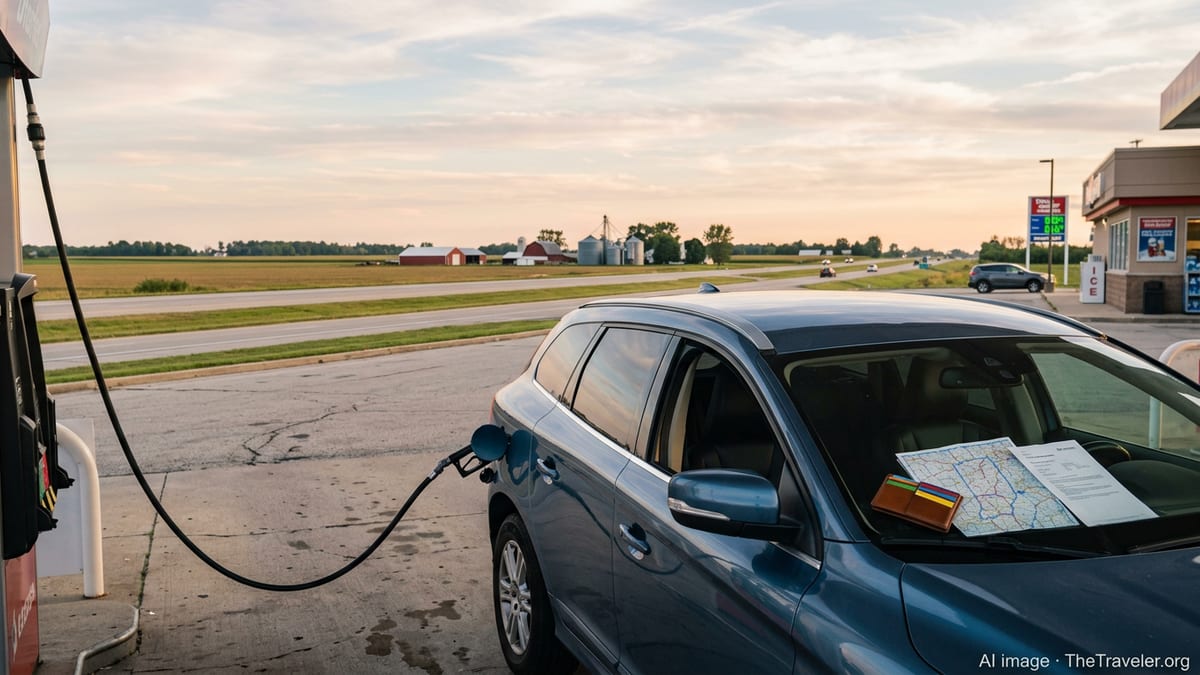
Gas station rewards are central to any discussion of travel credit cards for Indiana trips. Long drives along I-65, I-70 and U.S. 31 can quickly add up, especially for families venturing to college towns, state parks or neighboring cities like Chicago, Louisville and Cincinnati. Several current travel and cash back cards offer elevated earnings on gas and, increasingly, on electric vehicle charging stations. Some of the cards mentioned in recent surveys and best-card lists return three times points or higher on gas purchases, while certain regional institutions and credit unions even market dedicated gas rewards cards with high cash back rates up to a monthly cap.
When evaluating cards for Indiana road trips, pay attention not only to the headline gas rewards rate but also to any caps, rotating categories or issuer restrictions. A card that advertises 5 percent cash back on gas may cap earnings at a few hundred dollars in fuel per quarter, which heavy drivers can exceed quickly. Others provide uncapped 3 percent or similar rates on gas, which may be more useful for year-round driving in a car-dependent state. If your Indiana travel schedule includes frequent visits to relatives across the state or regular business drives, an uncapped or high cap gas rewards structure can be more efficient.
Electric vehicle drivers should review whether a card’s “gas and EV charging” category truly includes the charging networks they use along Indiana highways and in city garages. Some recent card offers explicitly include EV charging alongside gas stations as a bonus category, reflecting the gradual shift in how road-trip energy is purchased. For mixed-fuel households, pairing a strong gas and EV charging card with a general travel rewards card can capture value regardless of which vehicle you take on a given trip.
Remember, though, that fuel rewards by themselves rarely justify overspending or carrying a balance. Interest charges will quickly erase any savings. The most effective strategy is to put planned gas purchases on a card that rewards them generously, pay the balance in full each month and view the accumulated rewards as a discount on your broader Indiana travel budget rather than an excuse to drive more.
Pairing Cards With Indiana Travel Styles and Budgets
Different Indiana travel patterns call for different card combinations. A family based in Indianapolis that takes a few domestic flights per year and frequent weekend trips to Bloomington or Chicago might benefit from one flexible travel card and one hotel card that consistently has properties where they stay. A student or new graduate driving between campus, home and nearby cities might focus more on a low-fee card with solid gas and dining rewards. Meanwhile, a consultant who spends multiple nights per week in Indiana hotels could rationalize a premium travel card with airport lounge access and upgraded elite status benefits.
Budget is another key factor. Many of the most talked-about travel cards carry annual fees, from modest ones under one hundred dollars up to premium fees that can exceed several hundred dollars per year. In exchange, issuers often provide travel credits, free nights or statement credits that can offset those fees if you use them fully. Indiana travelers who only take one or two modest trips per year should be cautious about high-fee cards and instead consider no-annual-fee travel cards, rotating category cash back cards that sometimes feature gas and travel, or entry-level co-branded cards with lower fees.
Credit profile also matters. Cards that appear at the top of national rankings often require strong to excellent credit scores, while some gas-focused or regional cards may be more accessible to borrowers with limited credit history. If you are building or rebuilding credit in Indiana, starting with a simpler card that earns a flat rate on all purchases may be more realistic. Once your credit profile improves, you can graduate to richer travel cards that offer transferable points and premium travel protections.
It can help to map out your expected Indiana travel for the next 12 months before applying. Estimate how much you will spend on gas, hotels and flights, then apply the earning rates from two or three candidate cards to see which combination yields the most value for your specific pattern. This simple exercise often reveals that one card is a better fit for Hoosier-style travel than a competitor that looks more enticing in generic national rankings.
Protecting Your Trips: Insurance and Practical Considerations
While rewards and bonuses capture most of the attention, the safety and protection features of travel credit cards are equally important for Indiana trips. Winter storms off Lake Michigan, thunderstorms during the humid months and periodic airline staffing disruptions can quickly derail a flight or road trip schedule. Some mid-tier and premium travel cards include built-in benefits such as trip delay reimbursement, trip cancellation and interruption coverage, rental car damage waivers and lost luggage insurance when you pay with the card and meet eligibility requirements.
For Indiana travelers who frequently rent cars at airports or in neighboring states, primary or secondary rental car coverage through a credit card can be significant. It may allow you to decline the rental agency’s costly collision damage waiver, provided you understand the terms and exclusions for your card. This is especially relevant for long weekend rentals to explore state parks, drive to Big Ten games or visit extended family in rural areas, where road conditions can vary widely.
Fraud monitoring and security tools are another, often overlooked, advantage. Major travel card issuers offer features like instant purchase alerts, temporary card number locking and robust zero-liability protections. These can be reassuring when you are using your card at unfamiliar gas stations along Indiana interstates or in busy tourist areas in downtown Indianapolis. If suspicious activity occurs, the issuer can usually reverse fraudulent charges and overnight a replacement card, minimizing disruption to your trip.
Despite these protections, a travel credit card should only be part of a broader financial safety plan. Carry a backup payment method, keep emergency cash on hand for places that do not accept cards and monitor your accounts regularly while on the road. Travel cards are powerful tools when used carefully, but relying solely on them without a backup strategy can create stress if a card is declined or compromised during your Indiana travels.
The Takeaway
Indiana travelers have more options than ever to earn rewards and benefits from their travel spending. Whether you are planning long drives through the countryside, weekend games in Indianapolis or flights out of the state to major hubs, the right mix of travel credit cards can help reduce costs and smooth over disruptions. The key is to match your card choices to your actual patterns of flights, hotel stays and gas purchases, rather than chasing the flashiest sign-up bonuses or the prestige of premium cards that you may not fully use.
For many, a practical combination will include a flexible travel rewards card that earns strong points on flights and general travel, paired with either a hotel card that provides a free annual night or a gas-focused card that keeps Midwest road trip costs in check. By paying balances in full, using travel protections wisely and taking full advantage of issuer credits and free night certificates, you can turn routine Indiana trips into a steady stream of rewards that fund future adventures. Before you apply, review current terms directly with each issuer, compare your projected Indiana travel spending and choose the card or cards that clearly fit your Hoosier lifestyle.
FAQ
Q1. What type of travel credit card works best for mostly Indiana road trips?
For primarily in-state driving, a card that offers elevated rewards on gas and possibly EV charging, plus solid but simple travel redemption options, is often the best fit. You may not need a premium airline card if you rarely fly, but a general travel or cash back card with strong fuel rewards can meaningfully reduce road trip costs.
Q2. Are hotel credit cards worth it if I only travel around Indiana?
Hotel cards can still be worthwhile if you consistently stay with the same chain in Indiana cities and near highways. An annual free night certificate redeemed at a busier location, like downtown Indianapolis during a major event, can easily offset the card’s annual fee, provided that the brand has convenient properties where you normally travel.
Q3. Should I choose an airline card if I only fly a few times a year from Indianapolis?
If you use the same airline for most flights and tend to check bags, a basic airline card can be valuable even for limited travel, because free checked bags and priority boarding can quickly pay for the annual fee. If you prefer to shop across airlines for each trip, a flexible travel rewards card may be more versatile than a co-branded airline card.
Q4. How do travel credit card points help with Indiana gas and lodging costs?
Points earned on flights, gas and hotels can usually be redeemed for statement credits toward travel purchases or bookings through the issuer’s portal. Over time, these redemptions can offset the cost of future hotel nights in Indiana, reduce the out-of-pocket price of flights and effectively provide a discount on the fuel you already planned to buy.
Q5. What should I watch for with gas rewards cards used in Indiana?
Look closely at category definitions, reward caps and whether the card recognizes both gas stations and EV charging networks you actually use. Some cards offer high promotional rates that are limited by quarterly spending caps, while others provide consistent but slightly lower rates without caps, which may be better for year-round Indiana driving.
Q6. Do travel credit cards provide useful protections for Midwest weather disruptions?
Many mid-tier and premium travel cards include trip delay, trip interruption or lost luggage coverage when you pay for travel with the card. These benefits can be invaluable during Indiana winters or stormy summers, helping cover meals, lodging or replacement items when flights are delayed or bags are misrouted.
Q7. Is it better to redeem points through a card’s travel portal or book directly?
Redeeming through a travel portal can sometimes yield higher point values or earning multipliers, but booking directly with airlines or hotels may make changes and problem-solving easier. Indiana travelers who value simple customer service may accept slightly lower rewards to deal directly with the airline or hotel, while others maximize value by learning the nuances of their issuer’s portal.
Q8. How many travel credit cards should I have for regular Indiana trips?
Most people can cover their needs with one or two well-chosen cards. A single flexible travel card may be enough for occasional trips, while frequent travelers might add a hotel or gas-focused card. Holding too many cards can complicate tracking benefits and due dates, so prioritize a small lineup you can fully use.
Q9. What credit score do I usually need for popular travel cards?
Many nationally recognized travel cards are aimed at consumers with good to excellent credit, often meaning a strong history of on-time payments and responsible use of existing accounts. If your credit profile is still developing, starting with a more basic card and building a track record can position you to qualify for richer travel rewards cards later.
Q10. How can I avoid interest charges while using travel cards for Indiana trips?
The simplest way to avoid interest is to pay your statement balance in full and on time every month, treating the card as a payment tool rather than a borrowing tool. Planning your Indiana trip budget in advance and charging only what you can repay quickly allows you to enjoy rewards, protections and free nights without eroding their value through finance charges.