

Traveling in the Netherlands in 2026 is easier than ever for card‑carrying visitors. Cash is declining, contactless is everywhere, and Dutch shops are increasingly friendly to foreign cards. Yet not every travel credit card performs equally well once you land in Amsterdam or bike into the countryside. The right card can save you money on fees, slot effortlessly into local payment habits, and keep your trip running smoothly from the train platform to the canal-side cafe.
How Payments Work in the Netherlands Today
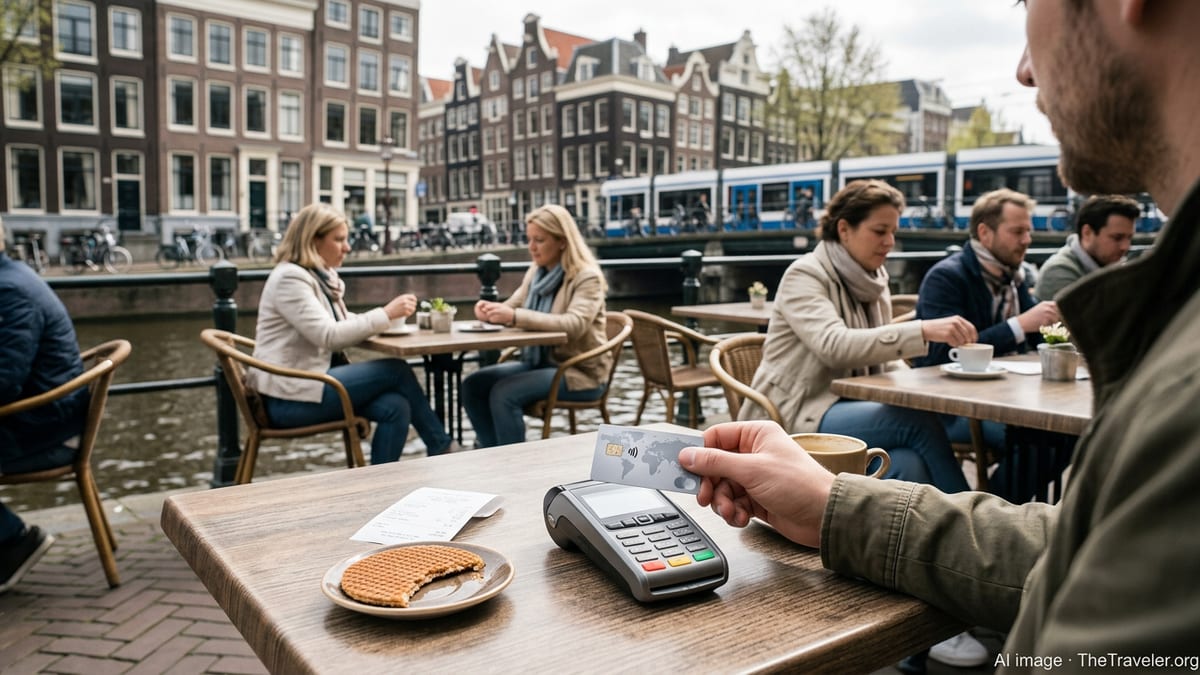
The Netherlands is one of Europe’s most cash-light countries. Only a minority of in-store purchases now happen with banknotes or coins, and card payments dominate daily life. Supermarkets, museums, restaurants, and bike rentals almost all accept contactless payments, and tapping your card or phone is considered the normal way to pay for even very small amounts.
Historically, visitors sometimes struggled because Dutch shops preferred domestic debit cards on legacy systems like Maestro and V PAY. That picture has shifted. Dutch banks and merchants have spent the last few years rolling out Debit Mastercard and Visa Debit as replacements, and card terminals are being updated so that if a store accepts one Visa or Mastercard product, it is expected to accept them all. This has dramatically improved acceptance for foreign-issued Visa and Mastercard cards at point-of-sale terminals across the country.
At the same time, mobile payments via Apple Pay, Google Pay, and similar wallets are growing quickly. A large majority of point-of-sale card transactions are now contactless, and Dutch consumers are increasingly comfortable paying with phones and watches in supermarkets and on public transport. For travelers, that means a modern contactless-capable credit or debit card, ideally added to a mobile wallet, will feel native almost everywhere from Amsterdam to Rotterdam.
For visitors, the key takeaway is that mainstream Visa and Mastercard products now work far more reliably than a decade ago. American Express is more mixed: widely accepted at major hotel chains, many museums, and upmarket restaurants, but still refused at some supermarkets and smaller shops. Choosing the right travel credit card for the Netherlands means leaning into this new environment, with a focus on Visa or Mastercard networks, no foreign transaction fees, and strong contactless support.
Why No Foreign Transaction Fee Cards Matter in the Netherlands
Foreign transaction fees can quietly inflate your travel budget. Many general-purpose credit cards still charge around 3 percent per transaction for purchases made in foreign currencies. Even when paying in euros, some issuers treat overseas transactions as international and add a similar percentage fee. Over a week or two in the Netherlands, with hotels, dinners, train tickets, and museum passes, this surcharge can add up to the cost of an extra excursion or a nicer hotel night.
A travel-focused credit card that advertises “no foreign transaction fees” usually waives these percentage surcharges on purchases made outside your home country or in a currency other than your billing currency. That means the only markup you face is the standard currency conversion spread baked into the card network’s exchange rate. While those rates are not perfect, they tend to be reasonably close to mid-market rates, especially compared with dynamic currency conversion offers you might see at terminals.
The Netherlands is squarely in the eurozone, but that alone does not protect you from foreign fees. Issuers in countries like the United States or the United Kingdom often apply foreign fees based on location, not currency. If you tap your US-issued credit card in Amsterdam, you can be charged a foreign fee even though the purchase is in euros, simply because it was processed by a non-domestic merchant. That is why a no-foreign-fee card is so valuable for trips within the euro area, not just for destinations with exotic currencies.
As you compare travel credit cards, look for clear language in the fee table about foreign transaction fees and overseas purchase charges. Cards that charge no foreign transaction fees are ideal for the Netherlands. When in doubt, assume that a general cashback or rewards card that is not marketed as a travel card probably does add a foreign fee, even if it pays attractive points on dining or hotels.
Card Networks and Acceptance: Visa, Mastercard, and Amex
For the Netherlands in 2026, the most important choice you make is the network on the front of your card. Visa and Mastercard have the widest acceptance, especially now that Dutch merchants have modernized their terminals to work with Debit Mastercard and Visa Debit alongside credit products. In practice, if a shop’s terminal displays the Visa or Mastercard logo, your foreign-issued card from that network usually works for contactless or chip-and-PIN payments.
American Express can be extremely useful for earning rewards, but its acceptance is patchier. Many major chains, hotel groups, and some national rail services accept it, particularly in big cities and tourist areas. However, budget supermarkets, small cafés, independent shops, and family-run accommodations may still decline Amex to avoid higher processing costs. That makes Amex an excellent secondary card for the Netherlands rather than a sole payment solution.
Alternative networks like Discover and domestic-only schemes from other regions have limited or inconsistent acceptance. Some Discover-branded cards ride on the Diners Club or other partner networks in Europe, which might work in certain locations but not others. For a short or medium-length trip, relying on these alone introduces unnecessary risk. The most robust approach is to carry at least one Visa and one Mastercard, ideally credit cards with no foreign transaction fees and contactless capability.
When you pair a no-foreign-fee credit card on Visa or Mastercard with a backup card from a different issuer, you shield yourself from technical outages or unexpected refusals. Even in a country as highly digitized as the Netherlands, individual terminals, local policies, or card-network hiccups can occasionally disrupt a particular card brand or issuer. Redundancy gives you flexibility at the checkout line.
Best Types of Travel Credit Cards for the Netherlands
While it is risky to crown a single “best” travel credit card globally, certain card categories consistently work well for trips to the Netherlands. Broadly, you are looking at three groups: general travel rewards cards with no foreign fees, airline or hotel co-branded cards that waive foreign fees, and fintech-style multi-currency or travel debit products that complement a primary credit card.
General travel rewards cards issued on the Visa or Mastercard networks are often the most versatile. These typically include mid- to high-tier annual fee products that earn points redeemable for flights, hotels, or statement credits. They almost always waive foreign transaction fees, support contactless payments, and integrate seamlessly with mobile wallets. Many also offer travel protections like trip delay coverage or baggage insurance, which can be helpful when connecting through major European hubs on your way to the Netherlands.
Airline and hotel co-branded cards can also be strong options, particularly if you are loyal to a carrier that operates transatlantic or European routes into Amsterdam Schiphol, Eindhoven, or Rotterdam. Many of these cards now waive foreign transaction fees on purchases worldwide and are issued on widely accepted networks. Their earnings structures are skewed toward spending with the associated airline or hotel group, so they are best if you intend to channel a significant portion of your travel spending through those partners.
Finally, app-based travel cards and multi-currency debit products can be excellent companions, especially for ATM withdrawals or budgeting day-to-day expenses. Some of these services provide bank-beating exchange rates, limited free ATM withdrawals per month, and useful app-level controls. However, many are debit rather than credit products, so they may not offer the same level of purchase protection or dispute mechanisms as premium credit cards. In the Netherlands, it is common to see debit cards used for everything, so a robust travel debit card can fit well into local habits, but you will still want at least one no-foreign-fee credit card for large purchases and emergencies.
How to Use Credit Cards Smoothly in Dutch Everyday Life
Once you arrive in the Netherlands, you will quickly notice how natural it feels to pay by tapping your card or phone. To make your credit card work as effortlessly as a local’s debit card, there are a few practical habits to adopt. First, ensure your card is enabled for contactless and that you have set a PIN. Although many transactions under a certain threshold are approved by tap alone, Dutch terminals can request a PIN at random intervals for security or for higher amounts.
Second, always choose to pay in euros instead of accepting any dynamic currency conversion offered in your home currency. Some terminals or online checkouts will detect a foreign card and propose billing you in dollars or pounds at a marked-up exchange rate. For almost all travelers, selecting euros and letting your card network handle the conversion results in a better effective rate, especially if your card does not charge foreign transaction fees. Merchants are used to visitors declining dynamic conversion, and staff rarely bat an eye when you insist on paying in euros.
Third, be prepared for a few categories where credit cards are less dominant than in some other countries. Local neighborhood shops, smaller cafés, and certain budget supermarkets may prefer or only accept debit cards, although this is changing as more terminals support all card types. Public transport has largely embraced contactless bank card payments on the OV-pay system, but some operators or ticket machines may temporarily restrict certain virtual cards or wallet configurations, requiring a physical card or an alternative ticketing method. Having both a physical card and a mobile wallet option provides the best coverage.
Finally, keep a modest amount of cash as a backup for small street markets, rural establishments, or very small purchases where cards are still discouraged. The need for cash is far reduced compared with a decade ago, but having a small cushion can save time and frustration in edge cases. Use ATMs at reputable bank branches, and rely on your travel credit card for in-store purchases to maximize protections and minimize exposure if a card is lost or skimmed.
Managing Fees, Security, and Local ATMs
Even with a no-foreign-fee credit card, it is wise to pay attention to where costs can creep in. Cash withdrawals from ATMs using a credit card are generally treated as cash advances by most issuers, which means immediate interest accrual, higher interest rates, and sometimes separate cash-advance fees. For that reason, it is usually better to withdraw cash using a debit card designed for travel, while reserving your credit card for point-of-sale purchases, online bookings, and large expenses.
In the Netherlands, ATMs are widely available in cities and at major transport hubs, though there are fewer independent machines than in some tourist-heavy countries. When you use an ATM, decline any option that offers to convert the withdrawal into your home currency. Just as with dynamic currency conversion at stores, this bank-offered conversion usually includes a steep margin. Opting to be charged in euros instead lets your own bank or card issuer set the conversion rate, which is typically more favorable.
Security practices are broadly similar to elsewhere in Europe, but Dutch reliance on contactless payments means lost or stolen cards can be used quickly for multiple small purchases if not blocked. Before traveling, install your issuer’s app on your phone, enable transaction alerts, and learn how to freeze or cancel a card instantly. Many travel-focused issuers now let you place region-based restrictions, spending caps, or contactless disablement toggles, which can be reassuring when navigating busy train stations or crowded nightlife areas.
If your card is declined at a terminal that clearly supports your network, stay patient and try a different method. Sometimes a card stored in a mobile wallet will work when the physical card does not, or vice versa. If problems persist, contact your card issuer via the app or phone, since automated systems may have flagged an unusual overseas pattern. Keeping more than one travel card on hand is the simplest form of risk management.
Planning Your Card Strategy for a Dutch Trip
Creating a simple card strategy before you fly will help you avoid unnecessary fees and awkward moments at the checkout. Start by identifying a primary travel credit card, preferably on Visa or Mastercard, that explicitly charges no foreign transaction fees. This will be your go-to for hotels, restaurant meals, rail tickets, museum passes, and most in-store purchases. If you already hold a card that earns elevated rewards on travel and dining with no foreign fee, it is often an ideal choice for the Netherlands.
Next, choose a backup card from a different issuer and, if possible, a different network. This could be an American Express if you value its rewards and perks, or a second Visa or Mastercard with a different bank should your primary issuer temporarily block transactions. Make sure this second card also has no foreign transaction fee if you intend to use it regularly; otherwise, reserve it for emergencies when acceptance or authorization issues arise.
Consider adding a multi-currency or travel debit card for ATM withdrawals and small everyday purchases. Some app-based services offer favorable currency exchange spreads, limited-fee ATM usage, and strong controls through their mobile interfaces. In the Netherlands, such a debit card can behave much like a local’s bank card at many terminals, especially in supermarkets and transit environments that have traditionally preferred debit over credit. Having both a credit and debit option gives you flexibility and helps you segment spending.
Finally, test all your cards before departure. Confirm PINs, double-check that international and contactless usage are enabled, and notify your issuers of your travel dates if your bank still recommends it. Load each card into at least one mobile wallet if supported. By the time you land at Schiphol, you want to be ready to tap through station ticket gates, buy a coffee on arrival, and settle into your accommodation without calling the back of your card.
The Takeaway
The Netherlands in 2026 is a friendly destination for travelers who rely on plastic and digital wallets. Payments are overwhelmingly cashless, contactless technology is standard, and ongoing upgrades to debit and credit card infrastructure mean foreign Visa and Mastercard products now work more smoothly than ever. Gone are the days when Dutch-only debit cards dominated to the point of excluding many visitors from everyday transactions.
To make the most of this environment, bring at least one travel credit card that charges no foreign transaction fees and rides on the Visa or Mastercard network. Pair it with a backup card from a different issuer and, if you wish, a dedicated travel debit product for cash withdrawals and budgeting. Use your cards primarily for in-store and online purchases, paying in euros and avoiding dynamic currency conversion, and reserve ATM withdrawals for topping up a small cash buffer.
With a little preparation, your cards can fade into the background, freeing you to focus on canal cruises, museum masterpieces, and cycling between villages instead of calculating hidden fees. The best travel credit card for the Netherlands is ultimately the one that disappears from your worries, working quietly and reliably every time you tap.
FAQ
Q1. Do I really need a special travel credit card for the Netherlands?
While it is possible to use many regular credit cards, a travel-focused card with no foreign transaction fees is strongly recommended. It helps you avoid percentage-based surcharges on every purchase, tends to integrate more smoothly with contactless and mobile payments, and often includes travel protections that general cards lack.
Q2. Will my Visa or Mastercard work in most Dutch shops?
In most cases yes. As Dutch merchants and banks have adopted Debit Mastercard and Visa Debit, terminals that accept those products usually accept foreign Visa and Mastercard credit cards as well. There can still be exceptions at smaller or more traditional businesses, so carrying a backup card and a little cash is sensible.
Q3. Is American Express widely accepted in the Netherlands?
American Express is accepted at many hotels, larger restaurants, and tourist-oriented businesses, particularly in big cities. However, it is less commonly accepted at supermarkets, smaller cafés, and independent shops. Amex works best as a secondary card rather than your only payment method in the Netherlands.
Q4. Should I pay in euros or in my home currency when offered a choice?
Choose euros almost every time. Dynamic currency conversion into your home currency usually carries a worse exchange rate than your card network would provide. Paying in euros keeps costs lower, especially if your card charges no foreign transaction fees.
Q5. Can I rely entirely on cards, or do I still need cash?
You can rely on cards for most daily spending, since the Netherlands is highly cash-light. However, carrying a small amount of cash is still useful for occasional markets, rural areas, or very small purchases where cards may not be welcome or convenient.
Q6. Are credit card cash advances at Dutch ATMs a good idea?
Generally no. With most issuers, withdrawing cash on a credit card is treated as a cash advance, which often carries immediate interest and extra fees. A dedicated travel debit card is usually a better tool for withdrawing euros from ATMs.
Q7. Do I need a PIN for my credit card in the Netherlands?
Yes, you should have a functioning PIN. Many contactless transactions go through without it, but terminals may request a PIN for higher amounts or at random for security. A chip-and-PIN capable card reduces the risk of declines at unattended machines and ticket kiosks.
Q8. Will my mobile wallet work on Dutch public transport and in shops?
In many cases yes, especially with Visa and Mastercard cards loaded into Apple Pay, Google Pay, or similar wallets. Dutch consumers commonly use phones and watches for contactless payments. Still, keep a physical card handy, as some specific gates, ticket machines, or older terminals may not support every virtual card configuration.
Q9. How many cards should I bring on a trip to the Netherlands?
Bringing at least two is wise. A primary no-foreign-fee Visa or Mastercard credit card should handle most spending, while a second card from another issuer or network serves as a backup in case of technical issues, loss, or temporary blocks. Adding a travel debit card for ATM withdrawals is an optional but helpful extra.
Q10. Are there any card-related issues I should watch for as a tourist?
Watch for dynamic currency conversion prompts and always select euros. Be aware that a few merchants may prefer or only accept debit, so have alternatives ready. Finally, enable your bank’s alerts and be ready to freeze your card through its app if it is lost or used suspiciously, especially in busy tourist areas and transit hubs.