

Italy is one of the world’s most rewarding travel destinations, but using the wrong credit card there can quietly drain your budget through fees, poor exchange rates and weak protections. Choosing the right travel card before you land in Rome, Milan or Naples can save you real money while also making your trip smoother and safer.
How Credit Cards Work in Italy Today
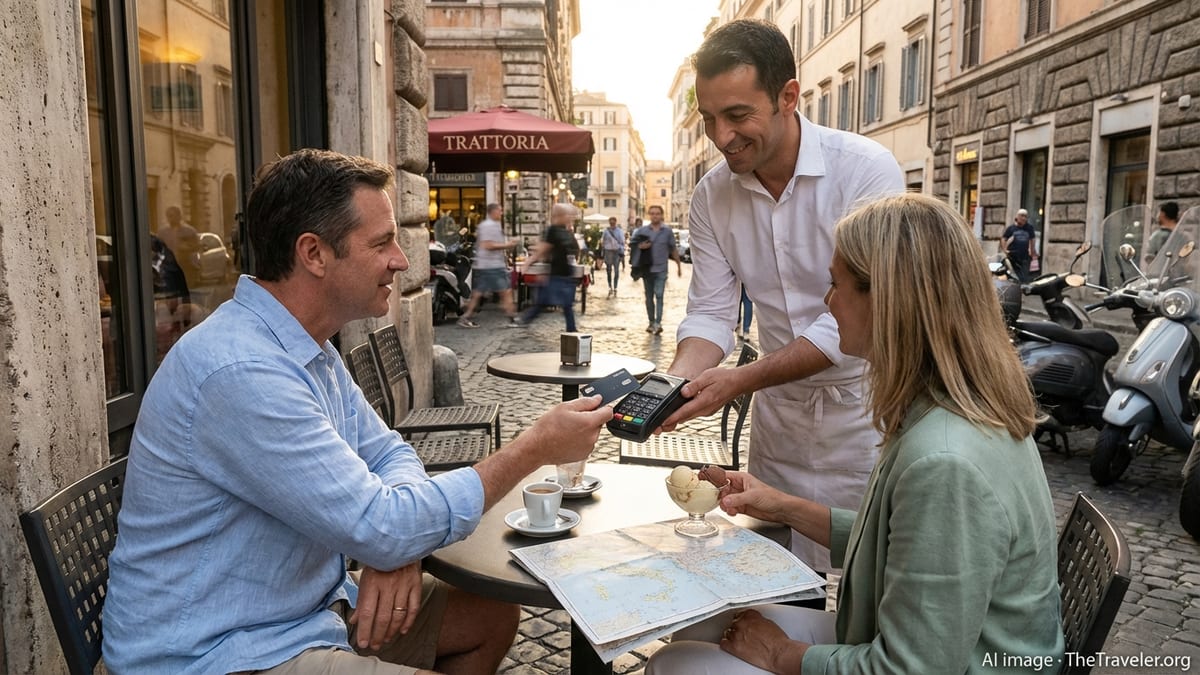
Italy has embraced card payments, especially in cities and tourist hubs, but the way terminals handle foreign cards can surprise many visitors from the United States. Contactless payments are now common at hotels, restaurants, train stations and larger shops, and Visa and Mastercard are widely accepted. American Express is accepted at many mid to high end merchants, though still less consistently than the major global networks, while Discover and other smaller networks are more hit and miss. Having at least one Visa or Mastercard branded credit card is the most reliable foundation for a trip to Italy.
Chip-and-PIN is standard for Italian cards, while many American cards still rely on chip-and-signature. In practice, most Italian terminals process modern US chip cards without issue, and contactless tap payments further smooth over the difference. The only recurring friction point tends to be unmanned kiosks, such as some train ticket machines, motorway tolls or gas stations, which sometimes reject foreign chip-and-signature cards. Carrying a backup card and some euros in cash provides an important safety net for those moments.
Italian merchants are required to display prices in euros, and the real cost of using your US credit card depends on how your bank converts your dollars and what fees it adds on top. Many mainstream US cards still charge a foreign transaction fee around 3 percent on every overseas purchase. That may not sound dramatic, but on a long-awaited vacation it can add up quickly. For example, a 2,000 dollar trip’s worth of hotels and dining can quietly incur 60 dollars or more in avoidable charges if you bring the wrong card.
Over the last few years, European regulations have pushed card networks to be more transparent about exchange rates and extra markups, especially when dynamic currency conversion is involved. That transparency helps, but it does not eliminate all traps for travelers. Understanding which card features matter most in Italy, and which specific cards now excel at international use, is the key to keeping those hidden costs under control.
Key Features to Look For in a Card for Italy
When evaluating travel credit cards specifically for use in Italy, three features stand above the rest. First is the absence of foreign transaction fees. Paying an extra percentage on every purchase simply for using your card abroad rarely makes sense when so many competitive cards now waive this charge. A strong Italy-ready card should clearly state that it does not add foreign transaction fees to purchases in euros or other currencies.
The second essential feature is competitive rewards on travel and dining, because those are typically your largest expense categories on an Italian trip. Many of the best modern travel cards now offer elevated points or miles for purchases like hotels, flights, trains and restaurant meals. Some go a step further and provide bonus value when you redeem those points through their travel portals or transfer them to airline and hotel partners. Over time, that can translate into discounted flights back to Italy or free nights in Rome, Venice or Florence.
The third important area is travel protections. Italy is generally a safe and well organized destination, but disruptions do happen: delayed flights, lost luggage, rental car incidents or last minute illness. Leading travel credit cards increasingly include benefits like trip cancellation and interruption coverage, delayed baggage reimbursement, rental car collision damage waivers and even emergency medical evacuation assistance in some cases. Reading the fine print matters, but a card with strong embedded protections can reduce the need for separate policies or at least complement them.
Secondary features are also worth weighing. These include airport lounge access, statement credits for Global Entry or TSA PreCheck that ease your trip out of the United States, and user friendly mobile apps that make it easy to lock a card, dispute a charge or monitor spending while abroad. Some issuers have updated their apps in recent years to give real-time exchange rate visibility and clearer foreign transaction notifications, which can be reassuring when you are making large purchases in another currency.
Best Overall Travel Cards for Italy in 2026
For many travelers planning one or more trips to Italy in the next few years, versatile mid-tier travel rewards cards remain the sweet spot. Among them, the Chase Sapphire Preferred card is frequently highlighted by financial publications and comparison sites as a top general travel choice in 2025 and 2026. It typically charges a moderate annual fee, offers bonus rewards on travel and dining, and does not impose foreign transaction fees. Points earned with this card can usually be redeemed through the issuer’s travel portal for extra value or transferred to a range of airline and hotel partners that serve Italy and the wider Europe region.
For those willing to pay a higher annual fee in exchange for richer benefits, premium cards such as the Chase Sapphire Reserve or certain high tier options from American Express and other issuers can be compelling for an Italy itinerary heavy on flights, fine dining and luxury hotels. These cards often add airport lounge access, annual travel credits and enhanced trip and rental car coverage on top of robust rewards. When used heavily for travel and redeemed wisely, the overall value can easily offset the higher fee, though they may be excessive for an occasional traveler who visits Italy only once every few years.
Capital One’s Venture line has also drawn strong praise in recent analyses of travel cards for 2026. The mainstream Venture Rewards version emphasizes simplicity: a flat rate of miles on everyday purchases, no foreign transaction fees and flexible redemption that allows you to offset recent travel purchases with statement credits. That can work particularly well for expenses that do not neatly fit into airline or hotel partner ecosystems, such as regional trains, independent guesthouses or agriturismo stays in the Italian countryside.
Although co-branded airline or hotel cards can be useful, they are usually best as secondary options tailored to a specific loyalty strategy rather than as your primary payment method across Italy. A co-branded airline card might get your checked bag free on your transatlantic flight, but if it still charges foreign transaction fees or offers weak rewards on non-airline spending, it is less ideal for daily use at Italian restaurants and shops. Starting with a strong general travel card, then layering a co-branded product if it complements your habits, is often a more balanced approach.
Cards That Excel on Fees and Exchange Rates
As card issuers compete more aggressively for internationally minded customers, several major US cards now combine zero foreign transaction fees with strong overall value. Many recommendations from personal finance outlets still center on a core group of products that consistently waive these fees, including the leading travel rewards cards from Chase and Capital One. For US based travelers heading to Italy, these cards are attractive because you can tap, sign and move on without worrying that the bank will tack on its own percentage fee every time.
In addition, some issuers have refined how they pass through foreign exchange rates, generally applying the rates provided by the card network, such as Visa or Mastercard, plus any disclosed margin. Recent European rules require clearer disclosure of the rate used and how it compares to the prevailing interbank or European Central Bank reference rates. While you may still pay a small embedded spread, using a modern travel credit card that is transparent about conversions is typically far cheaper than letting a merchant or ATM perform its own so called “dynamic currency conversion” at the point of sale.
From a practical perspective, this means your top priority should be avoiding foreign transaction fees assessed by your own bank, and your second priority should be steering clear of dynamic currency conversion at Italian terminals. When a card machine in Rome or Florence asks if you wish to pay in dollars instead of euros, declining that option and insisting on being charged in euros almost always yields a better effective rate. The best travel cards are designed around this assumption and expect their customers to transact in local currency whenever possible.
Even within the category of no foreign transaction fee cards, there can be important differences. Some options, such as the entry level cards in certain product families, may waive these fees but skimp on travel protections or offer modest rewards. Others, such as the more established travel rewards cards that feature prominently in 2025 and 2026 rankings, layer in substantial insurance benefits and richer earning structures. Matching your travel frequency and risk tolerance to the right combination of fee policy, exchange rate handling and protection can deliver the best outcome for Italy.
Rewards, Redemptions and Italy-Focused Strategies
Getting the best value from a travel credit card in Italy is not just about avoiding fees. It also involves planning how you will earn and redeem rewards in ways that complement your trip. Many US travelers now favor cards whose points can transfer to airline alliances that serve Italy heavily, such as carriers in the Star Alliance and SkyTeam networks. This can open up award opportunities on direct or one stop flights into Rome, Milan, Venice or regional airports, turning past restaurant bills and museum tickets into future flights.
Flexible bank points also pair well with Italy’s diverse accommodation landscape. You might use them for chain hotels in major cities one trip, then for independent stays booked through a portal on the next. Some cards add a redemption bonus when you book travel directly through the issuer’s platform, effectively stretching your points further. That can be handy for large Italian rail tickets, rental cars or packaged experiences where partner transfers are less relevant.
For many visitors, however, the simplest path remains statement credit style redemptions. Cards like Capital One Venture Rewards allow you to pay for nearly any travel purchase with the card, then erase those charges later using miles at a fixed rate. This flexibility fits well with the on the ground reality in Italy, where you may split your time between national rail operators, regional transport, boutique hotels, agriturismi, ferries and small tour operators, not all of which align cleanly with a single loyalty program. Knowing you can later offset those transactions with rewards can encourage you to use the card more confidently.
Regardless of the rewards structure, it is wise to focus your everyday purchases in the United States on a small set of strong travel cards rather than fragmenting spending across many accounts. Concentrating spend helps you reach welcome bonus thresholds and earn enough points to meaningfully impact your Italy travel budget. Coupling a primary travel card with one or two specialized backups, such as a no fee card that still waives foreign transaction charges, gives you redundancy without unnecessary complexity.
Practical Tips for Using Cards on the Ground in Italy
Arriving in Italy with the right cards is only half the equation; using them smartly is just as important. Before departure, ensure your issuer has your up to date contact information and that you are enrolled in fraud alerts via text or app notifications. While banks are less likely than in the past to block cards simply for foreign use, unusual spending patterns can still trigger security checks. Being able to quickly confirm legitimate transactions from your phone can prevent awkward declined payments at Italian restaurants or ticket counters.
Once in Italy, lean on contactless payments wherever possible. Tap to pay transactions are broadly supported across major cities and tourist areas and tend to be quick and reliable. Always check receipts to confirm you were charged in euros and that no optional gratuities or add ons were slipped in. When a terminal offers to convert and bill in dollars, politely request to be billed in euros instead. If a merchant insists, you can consider using a different card or, in rare cases, another merchant.
For smaller purchases at markets, family run trattorie or rural establishments, be prepared to pay in cash, as the infrastructure for small card payments still varies outside major centers. Using a low fee debit card with ATM reimbursement to withdraw euros can complement your credit card strategy, especially if you plan extended time in Italy. A well regarded approach among frequent visitors is to pay for hotels, rental cars and larger restaurant bills with a no foreign transaction fee credit card, then rely on a fee friendly debit card for modest cash withdrawals.
Always carry at least two different credit cards, ideally on different networks, and store them separately. Network outages, localized fraud blocks or simple card damage can happen at inconvenient times. If you rent a car, confirm whether your card’s collision damage waiver applies in Italy, as terms can vary by issuer and card tier. Even when coverage is available, some Italian rental agencies will strongly encourage or require their own insurance, so factor that into your budget and be ready to show proof of your card’s benefits if you choose to decline.
Safety, Security and Consumer Protections
One of the less appreciated advantages of using a credit card in Italy is the layer of consumer protection it provides. Leading US travel cards typically include zero liability policies for unauthorized charges, as long as you report suspicious activity promptly. Coupled with real time transaction alerts, this allows you to monitor spending and detect potential fraud quickly. If your card is lost or stolen, issuers can often ship a replacement to your Italian hotel or provide an emergency cash advance, though conditions vary.
Chargeback rights are another protection that can matter on the road. If a prepaid hotel does not honor your reservation, or a tour operator fails to deliver a promised service, you may be able to dispute the charge through your card issuer. While such disputes take time and require documentation, the existence of a formal mechanism can be reassuring when booking with unfamiliar providers. Cards with strong reputations for customer service may be worth prioritizing for this reason alone.
Newer security features continue to roll out across the industry. Many issuers now support virtual card numbers in their apps, allowing you to generate a unique number for online bookings that is separate from the card in your wallet. This can reduce the impact if a website is compromised. Some apps also allow granular controls, such as temporarily locking the card, setting per transaction limits or restricting international use, features that can be adjusted before and during your Italy trip.
Despite these protections, common sense remains important. Use ATMs located inside or attached to banks when possible, shield your PIN at machines that require one, and avoid letting your card out of sight for extended periods. Most Italian restaurants now bring portable terminals to your table rather than walking away with the card, which is a positive shift from a security perspective. Keeping copies of your card numbers, issuer contact details and passport information in a secure place, separate from your wallet and phone, can further speed up response if an issue arises.
The Takeaway
Planning an Italian getaway in 2026 is the perfect moment to review which credit cards you carry and how well they support international travel. The best options for Italy today typically share a core set of traits: no foreign transaction fees, competitive rewards on travel and dining, and solid embedded protections for trips and rental cars. Cards like the popular mid-tier travel products from Chase and Capital One have emerged as frequent recommendations because they offer this combination at a reasonable annual cost.
Beyond choosing the right card, the way you use it in Italy will influence how much value you ultimately capture. Paying in euros instead of dollars at the terminal, avoiding dynamic currency conversion, concentrating spending on a small group of strong cards and pairing them with a low fee debit option for cash can all reduce friction and expense. Attention to mobile app settings, security alerts and backup cards ensures you stay protected without having to think about payments constantly while exploring.
No single product is perfect for every traveler, and card offers evolve regularly. Checking the latest terms and benefits before you apply, and reflecting honestly on how often you travel to Europe and where your biggest expenses fall, will help you match yourself with the best fit. With a thoughtful card strategy in place, you can spend more of your time in Italy focused on art, food and landscapes, and less on exchange rates and fine print.
FAQ
Q1. Do I really need a travel credit card just to visit Italy?
For a short, one time trip, you can manage with a basic card, but a dedicated travel card without foreign transaction fees usually saves money and adds useful protections.
Q2. Which card network works best in Italy?
Visa and Mastercard are the most widely accepted across Italy, while American Express is common at mid to high end merchants but not as universal, so bringing at least one Visa or Mastercard is wise.
Q3. Are foreign transaction fees still common on US cards in 2026?
Many mainstream cards still charge these fees, often around a few percent per purchase, but most leading travel focused cards now waive them entirely for international use.
Q4. Should I pay in euros or dollars when a terminal gives me a choice?
It is almost always better to pay in euros and let your card handle the conversion, because paying in dollars often uses dynamic currency conversion with a poorer exchange rate.
Q5. Will my chip-and-signature card work at Italian train stations and toll booths?
Most attended terminals accept US chip cards without issue, but some unmanned kiosks may reject them, so carrying a backup card and a bit of cash is a sensible precaution.
Q6. Is it safe to rely mainly on credit cards instead of cash in Italy?
In cities and tourist areas it is generally safe and convenient to rely on credit cards, but you should still carry some euros for small purchases, rural areas and markets where cards are not always accepted.
Q7. How many credit cards should I bring to Italy?
Carrying two or three cards from different issuers or networks provides a good balance, giving you redundancy if one card is lost, blocked or not accepted at a specific merchant.
Q8. Do travel credit cards cover rental car insurance in Italy?
Many travel cards offer collision damage waivers for rental cars, but coverage can vary by issuer and card tier, so you should read your benefits guide and confirm whether Italy is included.
Q9. Can I use mobile wallets like Apple Pay with my US travel card in Italy?
Yes, many Italian terminals support contactless payments, and adding your travel card to a mobile wallet can make transactions quicker and sometimes more secure.
Q10. How far in advance should I apply for a new travel card before my trip?
Applying two to three months before departure usually allows enough time for approval, card delivery and meeting any welcome bonus spending requirements before or during your Italy trip.