

Duluth has a dramatic setting on Lake Superior and a reputation for rugged adventure, but you do not need to tackle every steep hill or cram your day with activities to enjoy it. With a little planning, you can explore the city in a calm, measured way that highlights its lakeside paths, neighborhood parks, and laid back culture without the usual road trip hassles. This guide focuses on low stress ways to get around, where to base yourself, and how to enjoy Duluth at an easy pace in every season.
Choosing a Low Stress Home Base in Duluth
Where you stay in Duluth will strongly influence how relaxed your visit feels. The city climbs sharply from the Lake Superior shoreline toward Skyline Parkway, and staying close to where you plan to spend most of your time can greatly reduce driving and parking concerns. Many first time visitors gravitate to Canal Park or the downtown waterfront because they can step straight onto the Lakewalk, watch ships move through the Aerial Lift Bridge, and walk to restaurants without needing a car at all.
If you prefer quieter evenings, consider lodging slightly up the hill in neighborhoods near Skyline Parkway or around Chester Park and Hartley Park. These areas place you close to wooded trails and viewpoints while remaining a short ride away from the lakefront. The tradeoff is that walking down to Canal Park is easy, but the walk back up can be strenuous, especially in winter or if you are not used to hills. Factor this into your plans if you have mobility concerns or simply want to avoid turning every stroll into a workout.
Travelers focused on road trip convenience sometimes choose hotels near Miller Hill Mall, close to Highway 53 and the airport. This area lacks the charm of the lakeshore but offers simple access to grocery stores, chain restaurants, and major roads without navigating downtown. If your goal is to minimize city driving and use your car mainly as a base for regional day trips along the North Shore, an upland commercial area can be a low stress compromise.
Wherever you stay, ask about parking cost and access before you arrive. In canal side districts, on street meters in key zones now tend to be enforced year round, while some municipal lots become free only in the colder months, with enforcement returning in spring. Policies can change and different blocks follow different rules, so verify details with your hotel or host to avoid unpleasant surprises.
Getting Around: Transit, Walking, and Car Light Strategies
Duluth is compact enough that you can often leave the car parked for long stretches, which is one of the easiest ways to reduce travel stress. The Duluth Transit Authority operates a network of around 15 routes that serve most residential areas and key visitor destinations, including downtown, Canal Park, University of Minnesota Duluth, and shopping corridors. Many residents live within a short walk of a bus stop, and the system has been updated under a Better Bus Blueprint plan to emphasize frequent core routes and real time tracking for reduced uncertainty.
For visitors who rarely use transit, the DTA trip planner powered by familiar mapping tools can be especially helpful. You can enter a landmark such as Canal Park, the Duluth Transportation Center, or a neighborhood park as your destination and see options prioritized for less walking or shorter travel times. Buses are equipped with front mounted bike racks and accessibility features such as kneeling steps and ramps, so combining cycling or walking with short bus hops can keep hills manageable and reduce fatigue.
Walking remains one of the most enjoyable and low stress ways to move through Duluth, provided you plan for the terrain and weather. Downtown streets are laid out on a grid but rise steeply away from the lake, so building extra time into your schedule helps you avoid rushing uphill. In winter, plowed sidewalks and skywalk segments through downtown buildings can make walks more comfortable, though surfaces can be slick and wind off the lake intense. Dressing in layers and wearing footwear with good traction are the simplest ways to keep a stroll from turning into a struggle.
Rideshare services and local taxis fill in gaps if you find yourself tired after a long walk or hike. A practical strategy is to walk downhill to explore parks and neighborhoods, then call for a ride back to your lodging. This approach lets you enjoy Duluth’s scenery at a comfortable pace without worrying about saving energy for the return climb.
Exploring the Lakewalk and Canal Park Calmly
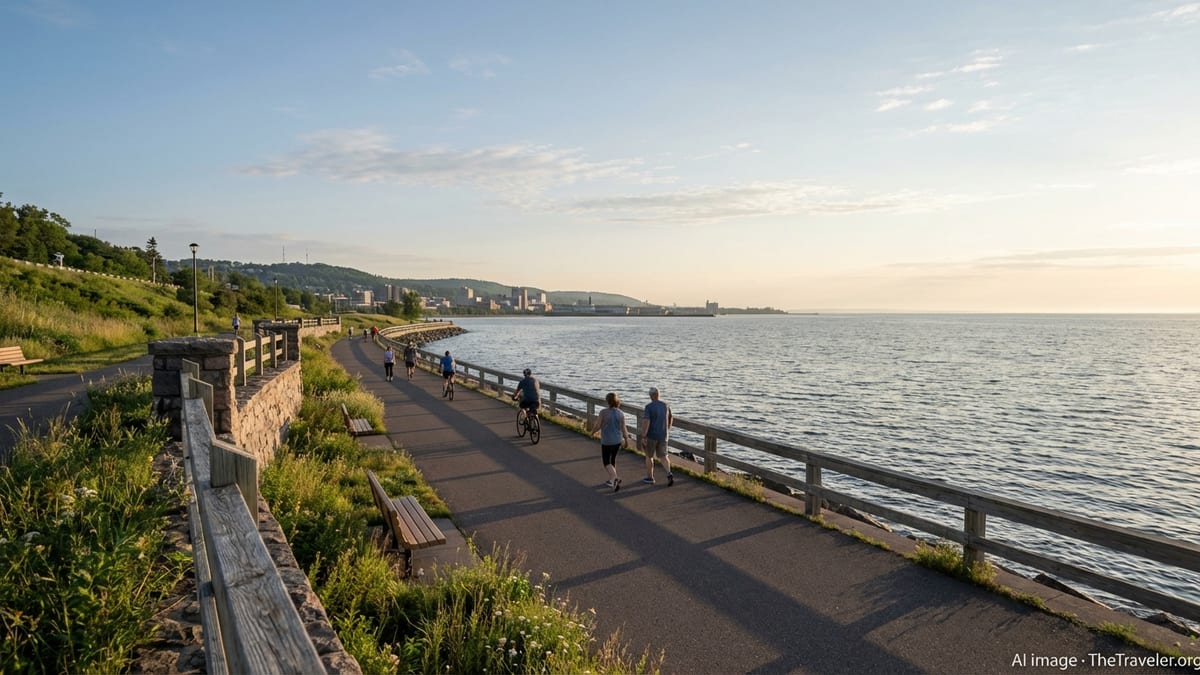
The Lakewalk is Duluth’s signature stress free experience: a paved multi use path that extends for roughly eight miles along the waterfront from Canal Park northeast toward Brighton Beach. Developed over decades and maintained by the city, it offers benches, access to parks and gardens, public restrooms at certain points, and frequent views of Lake Superior that change with every bend in the weather. It is level, wide, and suited for both walkers and cyclists, making it accessible for many visitors who might find Duluth’s steeper hikes challenging.
To keep your time on the Lakewalk relaxing, consider starting early in the morning or later in the evening, especially on busy summer weekends. Midday crowds around Canal Park can be thick, and the path closest to attractions may feel hectic at peak hours. Beginning your stroll near the Rose Garden or another quieter access point and walking toward the activity can create a gentler transition from solitude to bustle. Benches and low stone walls along the way invite you to sit, watch the water, and simply rest rather than feel compelled to cover the full distance.
Canal Park itself mixes shipping history, restaurants, galleries, and gift shops in a compact waterfront district. Watching the Aerial Lift Bridge raise for lakers and ocean going freighters is a classic Duluth moment, and one that rewards patience. Instead of trying to time your visit perfectly, allow a window of an hour or two around likely ship passages and treat bridge watching as something you fold into an unhurried walk or meal. The lake can feel cool even on warm days, and breezes can make conditions feel several degrees colder than inland neighborhoods, so a light jacket is wise in any season.
Parking in and near Canal Park can be a source of stress if you arrive unprepared. On street meters along key corridors are now typically enforced all year, while some city owned lots in the district may offer free or reduced enforcement during portions of the colder months, with paid parking returning in spring and summer. The easiest way to avoid tickets and circling is to use a single garage or hotel lot as your base and walk or ride transit from there, rather than moving your car throughout the day. Check the latest signs at each lot and meter and do not assume off season rules match guides from older visits.
Relaxed Nature Time in Duluth’s Parks and Trails
One of the pleasures of Duluth is how quickly you can step from city streets into dense forest, creek ravines, or ridge top overlooks. The municipal parks system manages hundreds of miles of trails, including roughly 30 miles of paved accessible routes and more than 150 miles of natural surface hiking options within city limits. The Superior Hiking Trail alone passes through Duluth on about 40 miles of dedicated footpath, offering segments that range from easy strolls to challenging climbs.
If your priority is staying relaxed, choose parks with shorter, clearly marked loops and gentler grades. Chester Park, just uphill from the central city, offers creek side paths with waterfalls and bridges in a setting that still feels close to town. Portions of the trail system here are considered moderate, but you can limit effort by sticking to well graded segments near the main access points. Hartley Park, a bit farther north, combines forest paths, a small lake, and an old road corridor that often remains open even when soft surface trails temporarily close during spring thaw to prevent damage.
Duluth’s parks department regularly closes natural surface trails during wet spring and fall periods and directs users to paved or gravel options that can handle traffic without erosion. Checking current trail conditions before you head out will help you avoid frustration, especially if you have your heart set on creek side hiking. Local apps and city announcements can provide timely updates, and staff at visitor centers or outdoor shops usually know which parks are in the best shape that week.
For very low effort time in nature, look for overlooks and parks along Skyline Parkway, where short paths lead from small parking areas to big views over the lake and harbor. Spending an hour with a thermos of coffee at a lookout can be as rewarding as a longer hike, especially in shoulder seasons when trails are muddy but the vistas are clear. Always carry a light jacket or wind layer, even on sunny days, because conditions can shift quickly on the ridge and near the water.
Season by Season Strategies for a Calmer Visit
Duluth’s climate shapes the feel of every trip, and thinking seasonally is one of the best ways to reduce stress. Summers are short but lively, with long daylight hours, festivals, and heavy traffic along the lakeshore and North Shore corridors. This is the time when booking lodging and key experiences several months ahead is most important. To avoid crowds, visit popular spots such as Canal Park, the Lakewalk, and major viewpoints early in the day on weekends, or save them for quieter weekdays.
Autumn brings fall color to the ridge and creek valleys, drawing leaf peepers but generally fewer family groups. Daytime temperatures are comfortable and evenings cool, making it a superb season for walking tours, hikes, and scenic drives. Some seasonal attractions scale back their hours after Labor Day, but the tradeoff in reduced congestion can make October and early November especially calm for explorers who dress for changing weather and shorter days.
Winter in Duluth is real winter, with lake effect snow, wind, and cold that demand preparation but reward those who embrace it. Parks maintain cross country ski trails and some city rinks, while the waterfront transforms into a starkly beautiful landscape of ice, snow, and steely water. For a low stress experience, focus on short outings layered with plenty of indoor breaks in cafes, breweries, or cultural venues. Keep your schedule flexible enough to adjust for storms, and lean on transit or walking when streets are slick.
Spring can be the trickiest time, with freeze thaw cycles that make some trails muddy and prompt temporary closures, yet it offers the satisfaction of watching the city reemerge from snow. The Lakewalk and other paved paths are ideal in this season, and creek side parks put on a show of high water and waterfalls. Packing waterproof footwear and accepting that some routes may be off limits will help keep your mood light and your shoes dry.
Food, Culture, and Quiet Corners to Slow Down
Exploring Duluth without stress means balancing outdoor activity with places where you can sit, linger, and absorb the city’s character. The waterfront districts and hillside neighborhoods host a growing mix of cafes, bakeries, and restaurants that invite lingering over coffee or a meal. Instead of trying to visit as many spots as possible, choose a few that are near your other plans for the day and build your schedule around them. A morning walk on the Lakewalk followed by brunch within a short stroll can feel more restorative than racing between distant favorites.
Cultural stops also pair well with a slower approach. Duluth has long valued live music, theater, and community events, and parks programming often brings performances to outdoor stages in summer. Checking a current events calendar before you arrive allows you to select one or two concerts or gallery visits that fit your interests rather than trying to improvise on a crowded weekend. Favor venues you can reach on foot or via a direct bus to avoid hunting for parking just before showtime.
When you need a break from sights and sounds, look for small parks and pocket overlooks scattered through residential streets. Many visitors focus on the largest viewpoints, but a quiet bench overlooking a side street and a slice of lake can be just as restorative. Bringing a book or journal and giving yourself permission to sit still for an hour can be a powerful antidote to itineraries that try to fill every minute.
Shopping in Duluth can also be approached with calm in mind. Rather than walking every block of a busy district, identify a cluster of shops or galleries that match your interests, whether that is outdoor gear, local art, or regional specialties. Visiting during opening hours on weekdays or earlier in the day typically means more relaxed conversations with staff and less pressure to move quickly through crowded aisles.
The Takeaway
Duluth rewards unrushed exploration. Its steep streets, changing weather, and lively summer calendar can feel intense if you treat the city like a checklist, but a simple shift in strategy turns those same traits into assets. Picking a well located base, leaning on the Lakewalk and public transit, favoring short trail segments over epic pushes, and leaving room for weather and serendipity all make your visit more restful.
Above all, approach Duluth as a place to be lived in for a few days rather than conquered. Watch a freighter ease under the lift bridge without worrying about the next stop, let a creek side bench become your main event for the afternoon, and treat a long conversation in a neighborhood cafe as a successful use of time. The city’s mix of water, woods, and community feels most memorable when experienced at human speed and without hurry.
FAQ
Q1. Is it realistic to visit Duluth without renting a car?
Yes, especially if you stay near the waterfront or downtown. The Duluth Transit Authority serves major visitor areas, and many highlights like the Lakewalk, Canal Park, and some hillside parks can be reached by bus, rideshare, or on foot. For regional excursions along the North Shore, a car is helpful but not essential for enjoying the city itself.
Q2. What is the least stressful time of year to visit Duluth?
Early fall is often the calmest blend of good weather and lighter crowds. September and early October usually offer comfortable temperatures, colorful hillsides, and fewer peak season visitors than midsummer, though weekends can still be busy around major events.
Q3. How can I avoid parking stress in Canal Park?
Choose one lot or garage and leave your car there while you explore on foot, and check posted signs carefully because enforcement can be year round on key streets. When possible, consider walking or taking transit from your hotel rather than driving repeatedly in search of closer spaces.
Q4. Are Duluth’s hills a problem for people with limited mobility?
Duluth’s terrain can be challenging, but you can reduce strain by focusing on flatter areas such as the Lakewalk, waterfront districts, and selected overlooks with nearby parking. Transit, rideshare, and accessible trail segments allow you to experience views and nature without committing to steep climbs.
Q5. What are some easy, low effort nature experiences in Duluth?
The Lakewalk is the simplest option, providing long, level lake views with many benches and access points. Short walks in parks like Hartley and Chester, ridge top overlooks along Skyline Parkway, and brief visits to creek crossings can also deliver strong scenery without lengthy or strenuous hikes.
Q6. How do trail closures affect stress free planning?
Natural surface trails in Duluth may close during spring and fall thaw to protect them from damage, which can change your options on short notice. Checking current conditions through city resources or local shops before heading out lets you pick open, stable routes and avoids disappointment at locked gates or posted closures.
Q7. Is Duluth walkable in winter?
Many sidewalks and key paths are plowed, and downtown has skywalk segments that help in cold weather, so winter walking is possible with preparation. Warm layers, traction friendly footwear, and shorter planned distances keep outings pleasant, and having an indoor destination such as a cafe or museum in mind adds motivation.
Q8. How can I see ships without crowding my schedule?
Rather than timing a single precise ship passage, build a flexible window into your day to spend near the Aerial Lift Bridge and harbor. Treat ship watching as part of an unhurried walk or meal in Canal Park so you can enjoy the area even if a vessel arrives earlier or later than expected.
Q9. Are there quiet places to escape summer crowds?
Yes. Smaller neighborhood parks, less central sections of the Lakewalk, and hillside overlooks away from the main viewpoints often remain peaceful even on busy weekends. Visiting popular waterfront spots early in the morning or around sunset also helps you enjoy them with fewer people.
Q10. What is the best way to plan a low stress Duluth itinerary?
Start with two or three priorities per day at most, such as a morning walk, an afternoon park visit, and an evening meal. Cluster activities by location to minimize travel, allow buffer time for hills and weather, and accept that skipping some attractions in favor of rest can make the overall trip more enjoyable.