

Florida is vast, varied, and busier than ever, with more than 140 million visitors a year and millions more residents crisscrossing the state for work and leisure. Choosing how to get around can shape your entire trip, from how much of the coastline you actually see to how stressed you feel when you arrive. Whether you are planning to chase theme parks, beaches, springs, or small towns, understanding the best ways to travel across Florida will help you match your route, budget, and style of travel to the realities on the ground in 2026.
Reading Florida’s Map: Distances, Hubs, and Travel Realities
Florida looks narrow on the map, but its travel distances can surprise first time visitors. Driving from Pensacola in the Panhandle to Key West covers roughly 800 miles and can easily take more than 12 hours of road time, even before factoring in traffic. East to west crossings are shorter, yet a drive from Tampa Bay to Miami still takes around four to five hours in normal conditions. Many itineraries underestimate these distances, attempting to combine too many regions in a single week and turning a beach holiday into a long haul shuttle between cities.
Most long distance travel within Florida is anchored by a handful of major hubs. Orlando, Miami, Tampa, Fort Lauderdale, Jacksonville, and the South Florida corridor from Miami through Palm Beach handle the bulk of air, rail, and highway traffic. Orlando and South Florida are particularly important. They sit on the main north south spine of interstate highways and host the largest airports, along with the state’s only private higher speed rail line. Planning to connect through one of these hubs, even if your final destination is smaller, often results in more options and lower travel stress.
Florida’s popularity as a drive in destination also shapes how people move once they arrive. State tourism figures show that a majority of visitors still come by non air travel, which includes personal cars and buses. High traffic volumes on Interstates 4, 75, and 95, as well as on Florida’s Turnpike, can mean congestion around urban areas and during holiday peaks. For visitors, that reality heightens the importance of smart routing, off peak travel times, and considering alternatives such as rail or regional flights for the busiest corridors.
At the same time, Florida’s travel infrastructure continues to evolve. Investment in rail, express bus routes, and electric vehicle charging corridors is steadily improving connectivity. Travelers now have more credible choices beyond the traditional rental car. Combining modes, for instance flying into Orlando, taking the train to South Florida, then renting a car only for a few days in the Keys, can create a more relaxed, efficient journey while trimming both costs and driving fatigue.
Driving Florida: Classic Road Trips, Highways, and Tolls
Driving remains the most flexible way to travel across Florida, especially for families, photographers, and outdoor travelers who want to reach beaches, springs, and state parks beyond the main cities. The backbone of long distance road travel is a trio of interstate highways. Interstate 95 runs along the Atlantic coast from the Georgia line to Miami, Interstate 75 tracks down the Gulf side from the Panhandle to Naples and then cuts east across the peninsula along Alligator Alley to Fort Lauderdale, while Interstate 10 slices east west across the Panhandle between Jacksonville and Pensacola. Linking these routes are cross state connectors such as Interstate 4 from Tampa to Daytona Beach and a web of state highways.
Toll roads are a defining feature of Florida driving, particularly in central and South Florida. Florida’s Turnpike is the most prominent example, running from just north of Orlando to Miami with fully electronic tolling. The state relies heavily on systems such as SunPass and Toll by Plate, and many smaller toll roads ring or bypass major cities. For visitors in rental cars, this can mean daily toll programs, automatic charges, or administrative fees layered on top of the actual toll cost. Checking in advance how your rental company handles tolling and deciding whether to bring or purchase a compatible transponder can prevent expensive surprises.
Road trip itineraries within Florida range from short coastal hops to multi day journeys. One classic route follows U.S. Highway 1 from Miami through the Florida Keys, a slow but spectacular drive across a chain of bridges and low islands where the journey is the attraction. Another memorable stretch is the Gulf Coast from Clearwater through Sarasota and Fort Myers toward Naples, where a mix of barrier islands, wildlife refuges, and small towns rewards frequent stops. Inland, routes through central Florida’s lakes and citrus country, or across the Big Bend between the Nature Coast and the Panhandle, offer a quieter, more rural experience with fewer high rises and more state parks.
With road travel, timing is everything. Peak traffic typically builds on Friday afternoons, Sunday evenings, and around major holiday weeks such as spring break, Memorial Day, and Christmas. Sections of Interstate 4 around Orlando and the approaches to Miami are known for heavy congestion at commuter times. Planning early departures, allowing generous buffers before flights or cruise departures, and considering alternative routes away from the busiest urban segments can make the difference between a smooth journey and hours of stop start traffic.
Rental Cars, EVs, and Car Free Alternatives
For many visitors flying into Florida, renting a car remains a default choice. The largest airports at Orlando, Miami, Fort Lauderdale, and Tampa support extensive rental fleets, and strong tourism demand keeps options competitive throughout much of the year. That said, record visitation means rental inventory can tighten at peak times, especially around school holidays and major events. Booking early, avoiding last second bookings at small airports when possible, and being flexible about vehicle class usually leads to better pricing and availability.
Electric vehicles are increasingly visible on Florida roads, and the state has been investing in a growing network of charging stations along major corridors. This makes EV rental a realistic option on popular routes between cities, especially for travelers who prefer lower emissions and quiet highway cruising. Drivers still need to plan more carefully in remote areas such as parts of the Panhandle or the Keys, where charger density may be lower and detours to reach fast chargers can add time. Checking charging locations in advance for your specific route helps avoid range anxiety.
Not every traveler needs a car for an entire trip. In some scenarios, going car free for part of your journey can be simpler and more cost effective. For example, a visitor might fly into Miami, use rideshares and local transit in the dense urban core, then rent a car only for a shorter side trip to the Keys or the Everglades. Orlando theme park visitors often discover that staying at a resort with internal shuttles and then using rail or bus to reach coastal cities later in the trip can eliminate days of paying for an unused rental in a hotel parking lot.
Considering insurance, parking, and toll charges is essential when comparing car based and car free travel. Urban hotels in Miami, Orlando, and Tampa frequently charge nightly parking fees, and some coastal areas have limited public parking near popular beaches. Visitors who plan to spend most of their time walking or on resort shuttles may find that combining local transit, rail, intercity buses, rideshares, and only short term car hire provides more freedom and lowers overall costs.
Riding the Rails: Brightline, Amtrak, and Future Projects
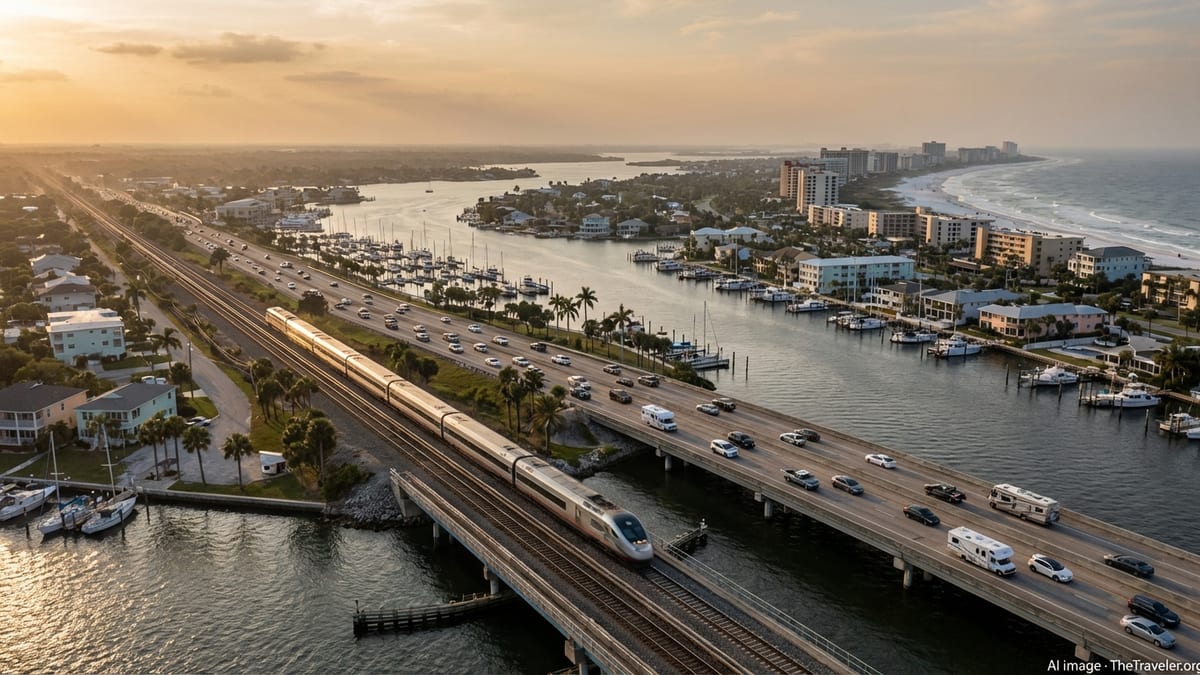
Florida has entered a new era of passenger rail with the expansion of Brightline, the privately operated higher speed train linking Miami and Orlando with intermediate stops in Aventura, Fort Lauderdale, Boca Raton, and West Palm Beach. Trains can reach top speeds of about 125 miles per hour on some segments, allowing end to end travel between Miami and Orlando in a few hours without dealing with highway congestion or airport security lines. On board, reserved seating, Wi Fi, and the ability to walk around appeal to families, business travelers, and anyone who wants to arrive less fatigued.
Brightline’s stations are strategically placed near downtown cores and other major transport links. Miami’s hub connects with local transit and urban neighborhoods, while the Orlando station serves the region’s major attractions and airport area. For visitors planning to split their time between central Florida’s theme parks and South Florida’s beaches or nightlife, this train can serve as the spine of an itinerary. Travelers often choose to ride the train between regions, then use local options such as rideshares, rental cars, or hotel shuttles only at each end of the trip.
Beyond Brightline, Amtrak continues to operate traditional intercity trains across Florida. Routes such as the Silver Star and Silver Meteor connect Miami and Orlando with Jacksonville and onward to the northeastern United States. Within Florida, these services provide an alternative for travelers who have extra time, prefer a more leisurely pace, or wish to avoid driving long distances. Stations are fewer and schedules less frequent than highway options, so Amtrak is best for travelers who can plan around specific departure times rather than expecting turn up and go service.
Looking ahead, Florida has several rail projects in planning stages, including commuter services in the Miami area that may link with existing Brightline tracks. These projects will take years to reach passengers, but their direction is clear. Over the coming decade, a traveler could reasonably expect more rail based options along the state’s busiest corridors, especially in southeast Florida. For now, combining Brightline or Amtrak on long legs with local transit and selective car rental at the destination offers a forward looking and increasingly practical way to traverse large sections of the state.
Flying Within Florida: When the Plane Beats the Highway
With multiple major airports and dozens of regional fields, Florida supports a dense network of domestic flights. For some long haul in state routes, particularly between the Panhandle and South Florida, flying can save an entire day. For instance, a trip between Pensacola and Miami or Fort Lauderdale by car can consume more than 10 hours of driving, while a nonstop or one stop flight will often complete the journey in a fraction of the time. Travelers who value time over scenic drives, or who are combining Florida with other states on a tighter schedule, should at least price regional flights before committing to all day drives.
Orlando, Miami, Fort Lauderdale, and Tampa function as the main interchange points for in state flights, supported by secondary hubs at Jacksonville, West Palm Beach, Fort Myers, Sarasota, Destin, and others. Low cost carriers and major airlines alike use these airports to link cities that would otherwise require long detours over the road. Price patterns vary seasonally, so an in state flight that is expensive during peak school holidays might be comparatively affordable during shoulder seasons, making it a useful option for flexible travelers.
When deciding whether to fly or drive within Florida, consider not just the flight time but the door to door journey. Urban traffic on the way to the airport, check in and security lines, and time spent retrieving luggage or rental cars all add to the total. On shorter hops such as Orlando to Tampa, these additional steps can erase any time savings over the highway. On the other hand, for longer routes like Jacksonville to Key West, or for those with mobility limitations, a combination of air segments can significantly reduce physical strain.
Regional flights also pair well with other modes. A traveler might, for example, fly into Orlando, spend a few days, take the train to West Palm Beach, then board a short flight to Key West or a Panhandle beach town. As always, building in buffer time is wise. Florida’s tropical weather can bring intense afternoon thunderstorms, especially in summer, that may delay flights. Allowing extra time between connections and avoiding the tightest possible itinerary is one of the best ways to keep a multi segment Florida journey running smoothly.
Buses, Shuttles, and Local Transit: Budget Friendly Connections
Intercity buses remain a practical and budget friendly way to travel across Florida, especially for solo travelers, students, and those without a license or desire to drive. Several carriers operate routes linking major cities such as Miami, Orlando, Tampa, Jacksonville, Tallahassee, and Gainesville, often with pick up points near airports, downtowns, or university campuses. Some companies focus on no frills point to point service, while others offer more spacious seating and onboard amenities between key city pairs.
Regional shuttles and private transfer services fill in gaps between major hubs and popular destinations that lack robust public transit. Shared and private shuttles run regularly between Orlando’s airports and nearby cruise ports, beach towns, and theme parks. In South Florida, shuttles and ride services connect airports, ports, and tourist centers between Miami and West Palm Beach. These services can be more expensive than intercity buses on a per mile basis but often deliver door to door convenience that justifies the cost for travelers with limited mobility or heavy luggage.
Within cities, local transit options vary. Miami and Miami Beach combine buses, a limited heavy rail system, and downtown people movers, while Fort Lauderdale and Tampa rely largely on buses and streetcar style services in core districts. Orlando’s local bus network covers a wide area but requires advance planning, as many routes are geared toward commuters rather than tourists. In college towns such as Gainesville or Tallahassee, student focused transit can be helpful on weekdays but less frequent on weekends and holidays.
For visitors who plan their routes around these networks, buses and local transit can dramatically cut costs and reduce the stress of navigating unfamiliar highways. The trade off is longer travel times and less spontaneity. It is often worth combining these services with occasional rideshares or taxis, especially late at night or when connecting between transit lines that do not align neatly. As always, checking operating hours and any seasonal service changes before relying entirely on public transport is crucial.
Planning Smart Itineraries: Matching Routes, Seasons, and Budgets
Choosing the best way to travel across Florida starts with clarifying your priorities. Travelers focused on beaches and relaxation may want to minimize days spent in transit, using the fastest modes between just one or two coastal regions. Theme park enthusiasts might prioritize the Orlando area, only adding a rail trip or short drive to the nearest beach. Road trip fans who enjoy the journey as much as the destination, on the other hand, might design loops that include both coasts, the interior springs, and the Panhandle over a longer stay.
Seasonality matters. Winter and early spring bring some of the heaviest demand, especially from snowbirds and school holidays, which affects not only accommodation and flight prices but also traffic and rail or bus loads. Summer can be hot and humid, yet often more affordable outside of peak holiday weeks. It is also the heart of hurricane season, which introduces the risk of storm related disruptions on roads, rails, and in the air. Building flexibility into your plan, such as leaving room to adjust routes or modes by a day or two, becomes particularly valuable during this period.
Budget plays a central role in choosing modes. A family of four may find that renting a car and driving between cities is considerably cheaper than buying multiple train or plane tickets, especially once checked baggage, seat selection, or premium rail classes are considered. Solo travelers, by contrast, often discover that a single train or bus ticket is competitive with the cost of fuel, tolls, and parking, particularly for long one way journeys where returning a rental car to the starting point would be inefficient.
Combining modes is often the smartest strategy. You might fly into Orlando, spend several days without a car using shuttles and rideshares, then take Brightline to South Florida and rent a car there for a Keys road trip. Another traveler could drive their own vehicle into the Panhandle, explore that region in depth, then park and fly to South Florida for a few concentrated days in Miami without worrying about urban parking. Framing your itinerary in segments and asking which mode works best for each segment typically leads to a smoother, more enjoyable experience than trying to force a single mode to fit every leg of the journey.
The Takeaway
Traveling across Florida in 2026 offers more choice than ever, but those choices are not evenly distributed. High speed trains, frequent flights, and extensive toll roads cluster around the central and southern urban corridors, while rural areas and small towns still depend heavily on cars and a patchwork of buses and shuttles. Understanding this geography, and matching it to your own tolerance for driving, budget, and appetite for spontaneity, is the foundation of a successful Florida trip.
For travelers who value independence and plan to explore beaches, springs, and parks beyond city limits, a car remains the most versatile tool, especially outside the largest metro areas. Those moving primarily between Orlando and South Florida should give serious weight to Brightline as an efficient and comfortable alternative to highway driving. Long haul in state trips that cross the peninsula or connect the Panhandle to the southern tip often justify a regional flight, particularly when time is limited.
Layering these modes rather than treating them as competitors is where Florida travel becomes truly rewarding. Use planes for distance, trains for busy high demand corridors, cars for local freedom, and buses or shuttles to plug gaps. Add in an understanding of seasons, traffic patterns, and your own travel style, and Florida’s size transforms from an obstacle into a canvas. The state’s diverse landscapes, from subtropical Keys to pine forests and sugar sand beaches, are all within reach if you choose the right way to move between them.
FAQ
Q1. Do I really need a car to travel across Florida?
Many visitors benefit from having a car, especially outside major cities and resort areas, but it is not strictly necessary. Between Brightline, Amtrak, intercity buses, regional flights, and rideshares, you can connect most major destinations without driving, particularly along the corridor from Miami to Orlando. However, reaching rural springs, remote beaches, and some state parks is significantly easier with your own vehicle.
Q2. Is Brightline faster than driving between Miami and Orlando?
In many cases, yes. Brightline avoids highway congestion and offers a predictable schedule, so overall travel time between central areas often compares favorably with driving, especially at peak hours. When you factor in fuel, tolls, and parking, many travelers find the train both time efficient and competitively priced.
Q3. How bad is traffic on Florida’s main highways?
Traffic can be heavy on corridors such as Interstate 4 around Orlando, Interstate 95 along the southeast coast, and the approaches to Miami and Tampa, particularly during rush hours and holiday periods. Delays of an hour or more are not unusual on peak days. Planning early departures, avoiding known bottlenecks at commuter times, and building buffer time into your schedule helps reduce stress.
Q4. Are there toll roads I should know about?
Yes. Florida has an extensive network of toll roads, including Florida’s Turnpike and numerous regional expressways. Most use electronic tolling systems rather than cash booths. Visitors driving rental cars should check how tolls are handled, since administrative fees can increase costs. Purchasing or renting a compatible transponder, or choosing rental companies with clear toll policies, can make charges more predictable.
Q5. Is it safe and practical to rent an electric car for a Florida road trip?
For many itineraries, especially along major corridors between cities, renting an electric vehicle is increasingly practical. The state has expanded charging infrastructure along interstates and in urban areas. Travelers should still plan ahead, particularly for routes through rural stretches of the Panhandle, the Keys, or the interior, where chargers may be spaced farther apart.
Q6. When does it make sense to fly instead of drive within Florida?
Flying makes the most sense on very long routes, such as between the Panhandle and South Florida, or when you have only a few vacation days and want to minimize transit time. Routes that would take much of a day to drive can often be covered in a few hours by air, even with airport formalities. For shorter city pairs, such as Tampa to Orlando, the time savings usually shrink once check in and security are considered.
Q7. Can I get around major cities like Miami and Orlando without renting a car?
Yes, although the experience varies by city. In Miami and nearby areas, a mix of local rail, buses, rideshares, and walking can cover many needs, especially if you stay in central neighborhoods. In Orlando, resorts and theme parks often provide shuttles, and rideshares are widely available. However, for farther flung attractions or off property dining and shopping, some visitors still prefer to have a car.
Q8. Are intercity buses in Florida reliable for long distance travel?
Intercity bus services generally provide reliable, scheduled connections between major cities and college towns, and they can be a cost effective alternative to renting a car or taking the train. As with any scheduled service, occasional delays can occur, and amenities differ between operators, so checking recent reviews and allowing transfer buffers is sensible.
Q9. How should I plan for hurricanes or severe weather when traveling across Florida?
Hurricane season typically runs from early June through late November, with higher activity in late summer and early autumn. During this period, monitor forecasts closely, keep your itinerary flexible, and be prepared to adjust routes or modes if a storm threatens. Airlines, rail services, and rental car companies may allow changes when severe weather is forecast, but policies vary.
Q10. What is the most economical way for a solo traveler to cross Florida?
For solo travelers, intercity buses and selected rail journeys are often the most economical options, particularly on popular corridors where competition keeps fares moderate. Choosing flexible travel dates, booking in advance, and combining bus or train segments with occasional rideshares at each end can significantly undercut the cost of renting and fueling a car alone.