

Stretching from the rocky shores of Maine to the quiet hills of Connecticut, New England is compact enough to cross in a day yet varied enough to explore for a lifetime. Choosing how to move between its six states can shape everything about your trip, from the towns you see to how relaxed you feel when you arrive. Trains, ferries, buses, and scenic drives each reveal a different side of the region. Understanding how they fit together will help you build an itinerary that feels efficient, flexible, and deeply New England in character.
Understanding New England’s Geography and Distances
New England is made up of six small states clustered in the northeastern corner of the United States: Maine, New Hampshire, Vermont, Massachusetts, Rhode Island, and Connecticut. Despite its modest size, the region spans a surprising range of landscapes, from Atlantic islands and salt marshes to high-elevation notches in the White Mountains and the pastoral valleys of Vermont. Major population centers such as Boston, Providence, Hartford, and Portland are relatively close to one another, which makes it realistic to visit multiple states on a single trip without long days in transit.
Driving distances between key hubs are shorter than many visitors expect. Boston to Portland is roughly a two-hour drive in light traffic. Boston to Burlington in northern Vermont typically takes around four hours, while Boston to Hartford can be as little as two hours depending on route and conditions. The compact geography means that you can often base yourself in one city and still take comfortable day trips across state lines. However, traffic bottlenecks, especially near Boston and along summer coastal routes, can stretch travel times, so it pays to plan with some flexibility.
The main north south corridor through New England is the Interstate 95 coastal route from Connecticut to Maine, complemented inland by I 91 through western Massachusetts and Vermont, and I 93 through New Hampshire into northern New England. These highways, along with Amtrak rail lines and regional bus routes, form the backbone of most multi state itineraries. Layered onto this framework are scenic byways, seasonal ferries, and local transit systems that get you the last miles into small towns, islands, and resort areas.
When you are considering the best way to travel across New England, it helps to separate long hops between regions from local exploration. Intercity rail and express buses are well suited to crossing states without the stress of driving, while a rental car or bike gives you the freedom to linger on country roads or explore lakeside villages. Many travelers combine modes, using a train to reach a gateway city such as Boston or Portland, then picking up a car only for the part of the trip where it genuinely improves access.
Crossing States by Train: Amtrak and Regional Rail
Rail is one of the most comfortable ways to move across New England, particularly if your route runs along the busy Northeast Corridor between New York City, Providence, Boston, and up through coastal Maine. Amtrak services connect all six New England states in some form, with regional trains offering coach seating, onboard Wi Fi, power outlets, and café cars on most routes. Schedules vary by season and day of the week, so it is worth checking times and fares as you build your itinerary rather than assuming urban style frequency.
The Northeast Regional trains run through Connecticut and Rhode Island into Boston, serving cities such as New Haven and Providence, and connect with other Amtrak routes that reach deeper into New England. In Maine, the Amtrak Downeaster operates between Boston’s North Station and Brunswick with intermediate stops including Portland. The route offers five daily round trips and has become a favored car free option for travelers linking Boston with coastal Maine towns. New equipment is planned across several Amtrak routes in the region, with new Amtrak Airo trains expected to roll out in stages beginning in 2026, promising faster journeys and upgraded onboard comfort.
Vermont and western Massachusetts are also accessible by rail via services such as the Vermonter and the Ethan Allen Express, which link southern New England and New York with Green Mountain destinations. These trains are particularly appealing for travelers planning foliage season trips or winter ski visits, as they reduce the stress of driving in potentially variable weather. Once you arrive, local shuttles and regional buses can often take you the last stretch to resort towns or trailheads.
For travelers focused on multi state coverage rather than deep rural exploration, rail can anchor the whole journey. You might travel from New York through Connecticut and Rhode Island to Boston, continue by train to Maine, then return via a different inland route. The main limitation is that rail lines primarily connect larger cities and select resort towns, so reaching smaller coastal villages or interior hamlets usually still requires a final leg by bus, rideshare, or rental car. Planning your accommodations around rail hubs can significantly simplify a car free trip.
Driving Classic New England Road Trips
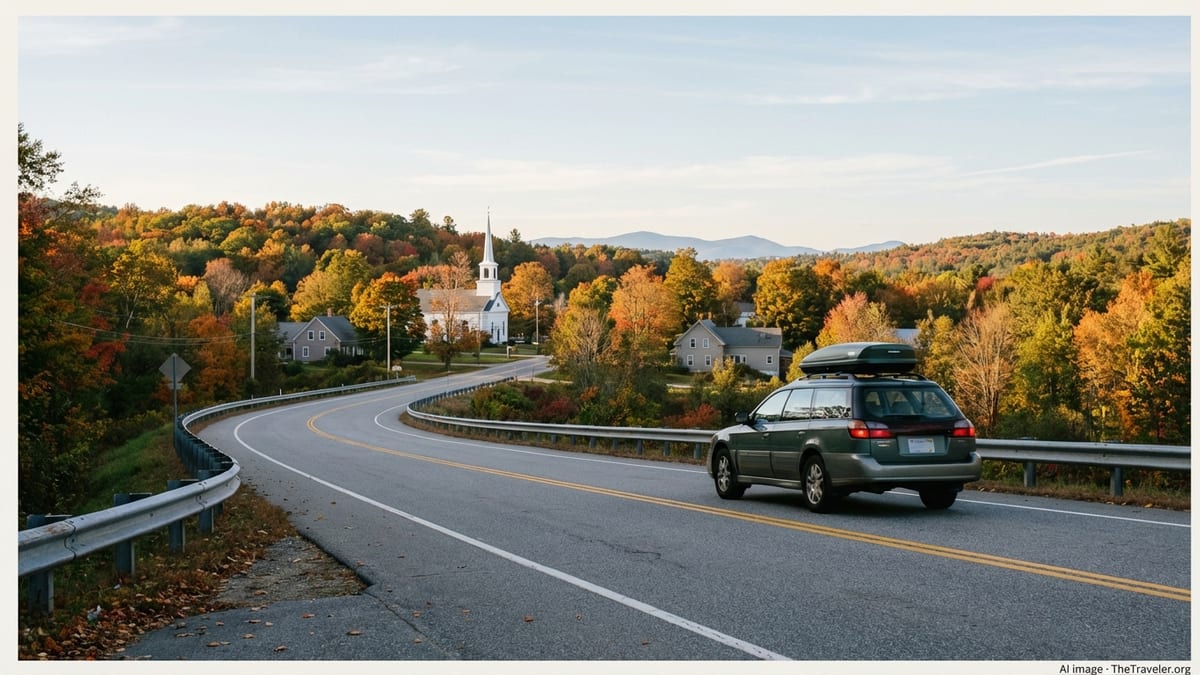
For sheer flexibility and access to smaller towns, driving remains the most versatile way to travel across New England. A car allows you to link coastal villages, mountain passes, covered bridges, and orchard lined backroads on a single itinerary. The region is famous for its scenic drives, especially in autumn when foliage colors peak from late September into October depending on latitude and elevation. Routes through the White Mountains in New Hampshire, around Stowe and the Green Mountains in Vermont, or along the Connecticut River Valley are among the most admired in the United States during this season.
Driving also lets you respond in real time to weather and crowds. If one area is fogbound or congested, you can simply adjust and head toward clearer skies or quieter byways. For a multi state loop, many travelers start and end in Boston, circling north through New Hampshire and Maine before swinging west into Vermont, then back through western Massachusetts and Connecticut or Rhode Island. Another popular pattern is a coastal drive from Mystic, Connecticut up through Rhode Island’s beaches and Newport, onward to Cape Cod, and finally into coastal Maine.
That said, there are considerations that matter in New England’s specific context. Older town centers often have narrow streets and limited parking, and toll roads and bridges can be concentrated around metropolitan Boston and some key river crossings. Winter driving can be challenging in the northern states from roughly late November through March, especially in mountain regions, where snow and ice are common. In high summer, traffic to Cape Cod, coastal Maine, and popular lake districts can lead to slow progress on Fridays and Sundays in particular.
The key to an enjoyable New England road trip is to avoid treating it like a race between major cities. Build in manageable daily distances, such as two to three hours of driving, and use secondary highways or designated scenic byways wherever possible. For example, Connecticut’s Route 169 has been recognized as a National Scenic Byway and praised in recent travel coverage as a quieter corridor of historic villages and rolling countryside. Such roads may add a little time compared with interstates but often deliver the most enduring memories of the trip.
Seasonal Trains, Ferries, and Coastal Connections
In addition to year round intercity rail, New England offers a patchwork of seasonal services that shine during the warm months and especially on weekends. One of the best known examples is the CapeFlyer, a summer weekend train operating between Boston’s South Station and Hyannis on Cape Cod. The service runs from Memorial Day weekend through Labor Day, typically on Fridays, Saturdays, and Sundays, and is designed to help travelers avoid heavy highway traffic onto the Cape. Onboard amenities such as Wi Fi, a café car, bike space, and pet allowances make it easy to roll into a beach weekend without ever getting behind the wheel.
Ferries are another essential tool for crossing New England, particularly when your itinerary includes islands and peninsulas off the main highway grid. In Maine, ferries connect Portland to the Casco Bay Islands and link the mainland to communities such as Vinalhaven and North Haven. In Massachusetts and Rhode Island, a network of services reaches destinations including Martha’s Vineyard, Nantucket, Block Island, and various Cape Cod and South Coast ports. Many of these routes accept both passengers and vehicles, but some are foot passenger only, encouraging a slower paced, walkable style of island exploration.
For travelers aiming to move between states primarily along the coastline, ferry routes can sometimes substitute for or complement driving segments. You might, for instance, pair a train journey from Boston to a coastal city with a local ferry onward to a smaller harbor town. Schedules are often more limited in shoulder seasons and may be reduced or suspended in winter, particularly on smaller routes. It is important to check current timetables and book vehicle spots in advance when traveling at peak times.
Because these seasonal and coastal connections do not always appear prominently in general mapping apps, building in time for local research can reward you with creative routing. Tourism offices in coastal towns and ports are usually well informed about smaller operators and interline connections. When stitched together, trains such as the CapeFlyer, regional ferries, and local buses can create an itinerary that feels like a classic New England voyage, hugging harbors and bays rather than rushing along the interstate.
Bus Networks and Car Free Itineraries
Travelers who prefer to avoid driving can still cover significant ground across New England by relying on regional and intercity bus services. Companies such as Concord Coach, Dartmouth Coach, Greyhound, and Peter Pan operate frequent routes linking major cities and university towns, including Boston, Portland, Bangor, Hanover, Burlington, Providence, Hartford, and New Haven. These services typically offer comfortable seating, Wi Fi, restrooms, and luggage handling, and often stop near central transit hubs where you can connect with local buses or trains.
In many corridors, bus travel is both faster and more frequent than rail, particularly between Boston and parts of New Hampshire and Maine that are not directly served by Amtrak. For example, buses from Boston to Portland operate regularly throughout the day and can be competitive with the train in travel time, especially outside rush hour. Similarly, express buses into Vermont’s college towns can be a pragmatic choice when your priority is simply to get from one hub to another without renting a car.
Within cities and larger towns, local transit systems provide additional flexibility for car free travelers. Boston’s MBTA network reaches deep into its suburbs and connects with commuter rail lines, while regional bus systems in Maine, Vermont, and Connecticut increasingly emphasize links between downtowns, hospitals, campuses, and park and ride lots. In some mountain and resort areas, seasonal shuttles operate during peak hiking or ski seasons to reduce congestion at trailheads and lift bases, offering an environmentally friendly alternative to individual car trips.
Successfully planning a car free journey across New England usually means accepting a slower, more deliberate rhythm. You might spend a night or two in each hub city along your route rather than attempting quick day trips into multiple states. The reward is a more relaxed experience, with transit time that can be used for reading, work, or simply watching the scenery, instead of concentrating on unfamiliar roads. Combining buses, trains, and the occasional rideshare for last mile segments can make an entirely car free exploration of the region not only possible but genuinely enjoyable.
Matching Transportation Choices to the Seasons
New England’s distinct seasons have a strong influence on the best ways to get around. In winter, especially from December through early March, snow and ice are common in northern and higher elevation areas. During these months, many travelers prefer to rely on trains and buses for long cross state segments, avoiding potentially challenging driving on mountain passes or rural roads. Ski areas and winter resorts often coordinate shuttle services from rail and bus stations, allowing you to reach slopes or snowshoe trails without renting a car for the entire duration of your stay.
Spring can be a mixed season in terms of travel logistics, with lingering snow in the mountains and wet conditions on secondary roads, but it is also a quieter and often more economical time to visit. During this period, combining rail or bus travel between major centers with short term car rentals at specific points in your itinerary can be effective. You might, for instance, take a train from New York to western Massachusetts, pick up a car for a few days of driving through the Berkshires and southern Vermont, then drop it before continuing north by coach or train.
Summer brings warm weather, longer days, and the fullest range of transportation choices. Seasonal trains like the CapeFlyer, expanded ferry timetables, and resort area shuttles all operate at their highest intensity. The tradeoff is congestion on popular routes, particularly on weekends to and from Cape Cod, coastal Maine, and lake districts in New Hampshire and Vermont. To keep travel days pleasant, consider scheduling longer drives on midweek days, traveling early in the morning or later in the evening, or letting the train handle the busiest corridors while you keep car usage for quieter inland segments.
Autumn is arguably the signature season for traveling across New England, drawing visitors with its foliage displays from late September through October. During peak weeks in hotspots such as Stowe in Vermont or the White Mountains in New Hampshire, both roads and accommodations can be busy, and parking at trailheads may be limited. Using park and ride lots, foliage shuttles where available, and choosing off peak driving hours can ease the experience. Trains and buses also become scenic experiences in their own right at this time of year, allowing you to focus on panoramas of color while someone else does the driving.
Designing Multi State Routes: Sample Approaches
When you sit down to plan a cross New England journey, it can be helpful to think in terms of corridors rather than individual attractions. One classic loop starts in Boston and heads north along the coast into Maine, reaching Portland and perhaps Brunswick by train or bus. From there, you might rent a car to explore inland lakes or smaller harbors before swinging west into New Hampshire’s White Mountains. Continuing into Vermont via one of the northern border crossings, you can then drive south through the Green Mountains, returning to Massachusetts and Connecticut before closing the loop back to Boston by rail.
Another pattern focuses on an inland spine along the Connecticut River Valley and western highlands. You could travel from New York to New Haven by rail, continue to Hartford and Springfield, then use trains and buses to reach Brattleboro and other Vermont towns along I 91. From there, a rental car allows you to branch into side valleys, historic villages, and scenic overlooks before returning to a rail linked town for your next long hop. This approach lends itself well to slower trips emphasizing small inns, farm visits, and walking in nature rather than coastal resorts.
Travelers who are short on time but eager to check multiple states off their list might prioritize efficient rail and bus connections between major cities. A three or four night itinerary could involve a sequence such as Boston to Providence to New Haven to Hartford and back, all without renting a car. From each stop, local transit or short rideshare trips can get you to nearby coastal walks, museums, or historic districts. While this style of travel sacrifices some rural charm, it excels at showcasing New England’s compact urban network, university culture, and dining scenes.
Whichever structure you choose, it is wise to build in at least one buffer day or flexible segment, particularly if your route relies on seasonal ferries or single daily train departures. Weather on the North Atlantic coast can prompt schedule adjustments, and infrastructure projects can affect rail timetables. Planning your most important commitments, such as flights home, the day after your longest connection rather than the same day gives you a margin of safety and peace of mind.
Navigating Practicalities: Tickets, Passes, and Logistics
Managing tickets and reservations efficiently can make a noticeable difference when you are crossing several states in one trip. For long distance segments on Amtrak, booking ahead often yields better fares and seat availability, especially on holiday weekends or during peak summer and foliage periods. Many regional bus operators also use dynamic pricing, with lower fares for early bookings. Keeping all your tickets in digital form, whether through operators’ apps or email confirmations, simplifies quick transfers between services.
If you plan extensive rail travel, it may be worth investigating whether any multi ride or route specific passes fit your plans. Regional trains sometimes offer discount passes that cover a set number of journeys within a defined period, which can be economical for travelers who expect to shuttle repeatedly between the same cities. For buses, loyalty programs are becoming more common on major carriers, and frequent travelers on particular routes may accumulate benefits or discounts over time.
Car rentals deserve particular attention, as prices and availability can vary widely by location and season in New England. Reserving early is advised for popular summer and foliage weeks, especially in smaller markets such as coastal towns or island gateways where fleets are limited. One way rentals can be extremely useful for linear routes, allowing you to pick up a vehicle in one state and drop it in another, though additional fees may apply. Checking opening hours and downtown versus airport locations can also prevent last minute surprises at pickup or return.
Finally, consider how you will stay informed about day to day conditions. Transit agencies in New England often update riders through text alerts, email lists, and social media feeds. Signing up for notifications from rail and bus operators on the specific routes you will use helps you react quickly to service changes. For drivers, real time traffic apps, weather services, and state transportation department updates provide valuable insight into road closures, construction zones, and storm related advisories, particularly during winter or heavy summer travel periods.
The Takeaway
Traveling across the New England states is less about covering great distances and more about choosing the right modes to match your style, season, and priorities. Trains and regional buses provide comfortable backbones for multi state journeys, especially along the coastal and inland corridors that link major cities and university towns. Driving opens up the scenic secondary roads, historic villages, and mountain passes that define many travelers’ mental picture of New England, particularly in autumn and summer.
Seasonal services such as the CapeFlyer and the region’s numerous ferries add a distinctly local flavor, turning what could be routine transfers into memorable segments of the trip. By combining these with thoughtful timing, modest daily distances, and an awareness of how weather and crowds shape conditions, you can craft an itinerary that feels relaxed, resilient, and rich in variety. Whether you are chasing foliage, beaches, ski slopes, or small town charm, the key is to let New England’s transportation tapestry work for you rather than against you.
In the end, the best way to travel across New England is rarely a single mode chosen in isolation. It is a customized blend of rail, road, and water adapted to your interests and comfort level. With a bit of advance planning and a willingness to look beyond default options, you can turn the journeys between destinations into some of the most enjoyable and memorable parts of your New England adventure.
FAQ
Q1. Can I visit all six New England states without renting a car?
Yes, it is possible using a combination of Amtrak trains, regional buses, and occasional rideshares, though you will likely focus on cities and larger towns rather than very rural areas.
Q2. What is the most scenic way to travel across New England in autumn?
Combining a rental car for secondary roads in Vermont, New Hampshire, and western Massachusetts with rail or bus links between major hubs gives you both foliage views and stress free long segments.
Q3. Are trains in New England reliable during winter?
Rail services generally aim to operate year round, and many travelers find them more predictable than driving during storms, although severe weather can still cause delays or adjustments.
Q4. How far in advance should I book transportation for peak foliage season?
For popular October weekends, booking trains, long distance buses, and any car rentals several weeks to a few months ahead is wise, especially for smaller markets and resort areas.
Q5. Is the CapeFlyer useful for a broader New England trip or just for Cape Cod?
The CapeFlyer primarily serves travelers between Boston and Cape Cod on summer weekends, but it can be a helpful building block in a larger multi state itinerary that begins or ends in Boston.
Q6. What is the best way to reach New England’s islands without a car?
Use rail or bus to reach coastal gateway towns, then transfer to passenger ferries that connect to islands such as Martha’s Vineyard, Nantucket, Block Island, and Maine’s Casco Bay communities.
Q7. Are there passes that cover multiple modes of transport across states?
There is no single pass covering all modes, but individual operators sometimes offer multi ride tickets or regional passes, so checking each rail and bus provider’s options can yield savings.
Q8. How much driving is comfortable in a day on New England roads?
For leisurely trips, planning on two to three hours of driving per day, with time for stops and detours on scenic byways, tends to keep the experience relaxed rather than rushed.
Q9. Is public transportation in New England cities good enough for visitors?
Cities such as Boston, Providence, and New Haven have workable transit systems for visitors, and pairing them with walking and occasional rideshares usually eliminates the need for a car in urban cores.
Q10. What should I consider when planning a winter road trip across New England?
Check weather forecasts closely, choose a vehicle appropriate for snow and ice, allow extra travel time, and be prepared to shift to rail or bus for certain segments if conditions deteriorate.