

More news on this day
Indonesia’s postcard-perfect beaches and volcanic skylines have long drawn global visitors to Bali and Java, but a quieter story is unfolding across the archipelago. From savannah-fringed islands in the east to highland cultures in Sulawesi and remote reef systems in Papua, a network of lesser-known destinations is emerging for travelers eager to escape the crowds while experiencing deep-rooted culture and spectacular landscapes.
As authorities push to spread tourism more evenly and communities invest in small-scale, locally led experiences, 2026 is shaping up to be a pivotal year for Indonesia’s “best-kept secrets.”
More News
- Caribbean Travel to U.S. Upended by New Visa Freezes and Expanded Bans
- Mexico Restores E-Visas for Brazilians, Paving the Way for Borderless Tourism
- Philippine Airlines Joins Regional Carriers Powering Southeast Asia’s Tourism Boom
Beyond Bali: A Strategic Shift Toward Less-Visited Islands
Indonesia’s government has been vocal about its ambition to diversify tourism beyond Bali, especially as visitor numbers rebound and overtourism concerns rise in popular hubs such as Canggu and Ubud. National tourism campaigns over the past few years have highlighted “10 New Balis,” a set of emerging destinations that include remote highlands, far-flung islands and cultural heartlands intended to spread economic benefits and reduce pressure on a handful of hotspots. The strategy reflects a wider, post-pandemic trend: international visitors are seeking authentic, less crowded places where nature and local life still set the rhythm.
Early data show that travelers are responding. In places like Raja Ampat in Southwest Papua and Flores in East Nusa Tenggara, small-scale operators report steady growth in bookings, with many visitors explicitly asking for itineraries that avoid heavily trafficked routes. New boutique eco-resorts, homestays and community-run guesthouses are opening in locations that were once the preserve of backpackers and divers in the know. Yet local authorities are moving cautiously, aware that rapid growth could damage precisely the marine ecosystems, traditional villages and sacred landscapes that set these places apart.
This careful balancing act has prompted closer collaboration between tourism officials, village leaders and conservation groups. In some regions, visitor caps, zoned marine parks and cultural etiquette briefings are increasingly common, ensuring that visitors can still find solitude while leaving a lighter footprint. For travelers, it means that escaping the crowds in Indonesia no longer requires sacrificing comfort or safety, but it does call for a willingness to look beyond familiar names on the map.
Raja Ampat: Pristine Reefs, Tight Protections
Among Indonesia’s most striking under-the-radar destinations, Raja Ampat has become a symbol of how remote tourism, conservation and cultural heritage can intersect. This far-flung archipelago in Southwest Papua, often reached via the city of Sorong, consists of more than 1,500 islands and islets scattered across cerulean seas. Marine biologists regularly cite Raja Ampat’s reefs as some of the richest on Earth, with an estimated three quarters of all known coral species and over 1,600 kinds of fish packed into its waters.
As awareness has grown, so have environmental concerns. In mid-2025, the Indonesian government moved to suspend several nickel mining operations linked to the broader Raja Ampat region, citing environmental violations and public pressure from local communities and environmental groups. Officials later stressed that tourist areas remain safe and open, while emphasizing that conservation would remain central to long-term plans in the archipelago. The episode has underscored how fiercely locals and authorities are prepared to guard Raja Ampat’s fragile ecosystems from extractive industries.
For visitors, that vigilance translates into a highly managed, low-density experience. Access to popular sites is often controlled by local village cooperatives, and visitors typically pay marine park fees that help fund patrolling, reef restoration and community projects. Liveaboard boats, dive lodges and homestays are spread across the islands, meaning that even in peak season it is easy to find a quiet lagoon or dive site where the loudest sound is the crackle of coral and the distant call of island birds. Travelers are encouraged to follow strict no-touch policies under water, minimize plastic use and respect community norms on land, where indigenous Papuan culture remains prominent.
Sumba: Wide-Open Savannahs and Crowd-Free Shores
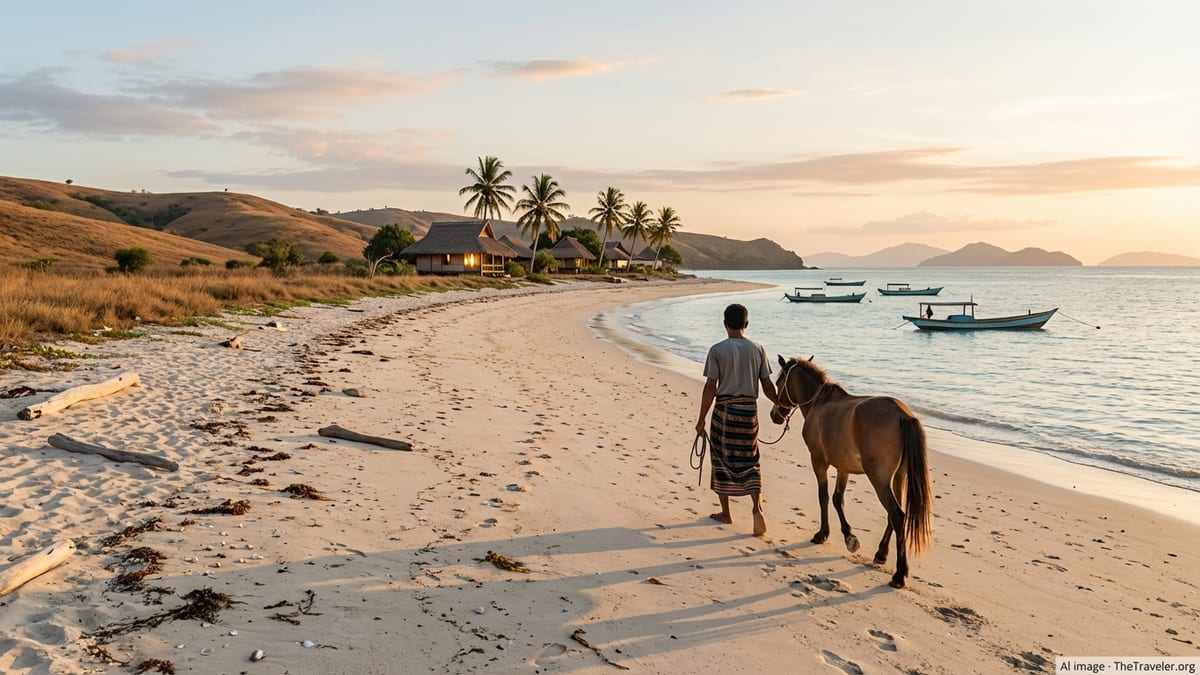
To the east of Bali, the island of Sumba has quietly evolved into a sanctuary for travelers weary of traffic jams and nightlife scenes. Long overshadowed by its famous neighbor, Sumba offers a starkly different landscape: dry grassland hills, wild horses roaming coastal plains, and villages crowned with megalithic tombs and peaked thatched roofs. On the southwest and west coasts, a handful of design-forward resorts and eco-lodges now pair high-end comfort with a deliberate emphasis on local culture and low visitor numbers.
In recent months, international lifestyle and travel publications have spotlighted Sumba as a “next frontier” for sustainable luxury. New properties, including farm-linked retreats and surf-focused hideaways, consciously limit guest capacity to keep beaches uncrowded and maintain a sense of remoteness. At some of the island’s most sought-after breaks, such as the left-hand waves near renowned private resorts, daily surfer numbers are capped to protect both safety and exclusivity. This controlled access has stirred debate about coastal rights but has also helped prevent the overcrowding familiar at many of Indonesia’s classic surf spots.
Away from the shoreline, Sumba’s interior remains profoundly traditional. Many villages still follow the Marapu belief system, and stone megaliths stand beside family homes, marking ancestral graves. Community-based tours are increasingly structured around respectful visits to these settlements, with guides explaining local rituals, weaving traditions and customary law. Visitors are often invited to observe ceremonies, purchase handwoven textiles directly from artisans, or ride Sumba’s iconic horses along empty beaches. For now, the sense of time standing still is a large part of the island’s appeal, and local leaders are weighing how much tourism growth their culture and environment can absorb.
Flores and Wae Rebo: Ancient Villages Above the Clouds
East of Sumba, the long, rugged island of Flores offers another vision of Indonesia far from the mainstream. While many travelers know Flores as the gateway to Komodo National Park and its famous dragons, a growing number are heading inland to seek cultural encounters in highland villages. One of the most striking is Wae Rebo, an isolated community perched about 1,200 meters above sea level and often described as a “village in the clouds.”
Accessible only by a several-hour trek through forested hills, Wae Rebo is home to the Manggarai people, who live in distinctive conical, multi-tiered thatched houses. Local tourism authorities describe the visit as an immersive homestay rather than a quick sightseeing stop. Guests are received in a formal welcoming ceremony inside the main communal house, where offerings and greetings honor ancestral spirits. Overnight stays involve simple shared sleeping spaces, meals of locally grown produce and coffee harvested in nearby gardens, and a sky strewn with stars far from urban glow.
Elsewhere in Flores, tiny coastal caves, jungle waterfalls and megalithic villages are being framed as alternatives to crowded boat tours around Komodo. The tourism office and regional operators have in recent years promoted destinations such as Rangko Cave, with its sunlit turquoise pool, and highland rice fields that fan out in spider web patterns created by traditional land-division systems. The trend reflects a pivot toward longer, more varied itineraries in Flores, giving communities beyond the gateway town of Labuan Bajo more opportunity to benefit from visitor spending while offering travelers a richer sense of the island’s history.
Tana Toraja: Ceremonies, Cliffs and Living Traditions
In the highlands of South Sulawesi, Tana Toraja has long been known among anthropologists and adventurous travelers for its elaborate funeral rites and uniquely sculpted houses. Now, as connectivity improves and domestic tourism grows, the region is re-emerging as a key cultural destination for those seeking experiences that cannot be replicated elsewhere. Tana Toraja’s landscape is defined by emerald rice terraces, mist-shrouded hills and soaring tongkonan houses with boat-shaped roofs and intricately carved wooden facades.
Central to Torajan culture are ancestral rituals, some of which draw visitors during specific times of year. Multi-day funeral ceremonies, involving buffalo sacrifices, processions and communal feasts, are considered vital for guiding the deceased to the afterlife. Another practice that has attracted worldwide attention is Ma’Nene, a periodic ritual in which families exhume, clean and redress the mummified bodies of relatives before parading them through the village in a gesture of respect. Local leaders and guides are increasingly taking care to frame these events for visitors, emphasizing that they are acts of devotion rather than spectacles.
Tourism in Tana Toraja today balances these intimate traditions with more conventional attractions. Many itineraries include visits to cliffside burial sites where wooden effigies, or tau-tau, gaze over valleys, as well as modern landmarks such as the towering statue of Christ on Buntu Burake hill, which offers panoramic views. Road access from Makassar has improved, and limited flights connect the region to provincial hubs, yet visitor numbers remain modest compared with Bali or Lombok. Homestays, small hotels and local tour operators dominate, keeping experiences grounded in community life and allowing travelers to explore markets, coffee farms and village ceremonies without overwhelming them.
Hidden Archipelagos: Togean Islands and Belitung’s Granite Shores
Beyond the big names of Raja Ampat and Komodo, smaller island groups across Indonesia are drawing independent travelers in search of genuine seclusion. In Central Sulawesi’s Gulf of Tomini, the Togean Islands remain relatively hard to reach, requiring boat connections from nearby coastal towns. Those who make the journey find a scattered chain of volcanic isles, white-sand atolls and calm bays where coral reefs still teem with life. Some islets are home to stingless jellyfish lakes, while others harbor small fishing villages that have only recently opened basic guesthouses to visitors.
With no large-scale resorts and limited infrastructure, the Togeans embody a slower, simpler style of travel. Electricity may run only part of the day, and mobile signal is patchy at best, but the trade-off is solitude: hammocks strung between coconut palms, reef drop-offs accessible by a few strokes from shore, and night skies unspoiled by artificial light. Environmental organizations and local authorities have discussed expanding marine protections, responding both to the potential for increased tourism and concerns over destructive fishing methods. For now, responsible visitors are encouraged to book with operators who follow waste-management protocols and respect local fishing grounds.
On the other side of the archipelago, off the coast of Sumatra, Belitung Island is gaining attention as a quieter alternative to Bali’s better-known beaches. Its coastline is studded with surreal granite boulders and smooth rock formations that rise from shallow turquoise waters, creating natural playgrounds for kayakers and photographers. Domestic travel media have praised Belitung’s pastel sunsets and relatively uncrowded bays, noting that outside peak holiday periods, visitors can wander long stretches of sand in near solitude. Efforts are under way to strengthen environmental safeguards around the island’s mangroves and offshore islets, even as new small hotels and cafes appear along main beaches.
How Indonesia Is Trying to Keep Its Secrets Sustainable
The growing profile of these lesser-known destinations raises an inevitable question: how can Indonesia keep its best-kept secrets from becoming the next victims of mass tourism? The answer, officials and community leaders say, lies in planning for limitations rather than limitless growth. In marine parks from Raja Ampat to lesser-known island chains, regional governments have introduced or expanded zoning rules that restrict fishing, anchoring and certain types of development. Tourist numbers to particular dive sites or trekking routes are sometimes capped on a daily basis, and operators that violate regulations risk losing their licenses.
At the village level, community-based tourism cooperatives are becoming more common. In Flores’ Wae Rebo, Toraja’s highland hamlets and many Papuan islands, residents collectively manage homestays, guide services and entrance fees, ensuring that income is spread and giving communities a stronger voice in deciding what kind of tourism they want. Training programs supported by non-governmental organizations and provincial authorities focus on hospitality skills, waste management and cultural interpretation, helping residents host visitors on their own terms.
Crucially, travelers themselves are being asked to play a more active role. Local tourism boards and operators now routinely brief visitors on dress codes around sacred sites, photography etiquette at ceremonies, and expectations regarding plastic use and reef-safe sunscreen. As Indonesia looks to hit ambitious national tourism targets in the coming years, success in places like Sumba, Tana Toraja, Flores and the Togean Islands may come to be measured less by sheer arrivals and more by how convincingly they can remain what many travelers seek: peaceful, culturally rich refuges far from the crowds.
FAQ
Q1. What are the best Indonesian destinations right now for avoiding crowds?
Some of the most appealing places for crowd-free travel include Sumba in East Nusa Tenggara, Flores beyond the Komodo Island circuit, the Togean Islands in Central Sulawesi, Tana Toraja in South Sulawesi, Raja Ampat in Southwest Papua and Belitung Island off Sumatra. These regions remain far less visited than Bali and Java while offering strong cultural and natural attractions.
Q2. Is Raja Ampat still safe to visit given recent mining controversies?
Authorities have stated that tourist areas in Raja Ampat remain safe and open, even as the government has taken action against several nickel mining operations linked to the broader region for environmental reasons. Marine parks and tourism zones are continuing to operate, with ongoing conservation measures to protect coral reefs and island ecosystems.
Q3. How difficult is it to reach Wae Rebo village in Flores?
Reaching Wae Rebo involves a road journey from the coastal town of Labuan Bajo or other parts of western Flores, followed by a trek of several hours through forested hills. The hike is considered moderately challenging and requires proper footwear and basic fitness, but it is not technical. Many travelers go with local guides who arrange transport, permits and overnight stays in the village.
Q4. Do I need special permits to visit Tana Toraja’s ceremonies?
Most travelers do not need formal government permits, but access to individual ceremonies is controlled by families and communities. Local guides usually arrange introductions and seek permission on behalf of visitors. It is important to be flexible, follow dress codes, avoid intrusive photography and make voluntary contributions when appropriate, as these events are religious and social obligations rather than staged performances.
Q5. Is Sumba suitable for budget travelers, or is it mainly luxury resorts?
While Sumba is known for a few high-end properties, there is a growing range of midrange guesthouses, simple beach bungalows and homestays, especially near smaller towns and surf breaks. Transport and food costs can be kept relatively low, but the island’s distances and limited public transport mean that hiring a driver or joining small-group tours is often necessary, which can raise overall expenses compared with Bali.
Q6. What is the best time of year to visit Indonesia’s lesser-known islands?
Conditions vary by region, but generally the dry season from around April to October offers calmer seas and clearer skies across much of the country. This period is ideal for trekking in Flores and Tana Toraja, and for diving or snorkeling in Raja Ampat and the Togean Islands. Shoulder months at the start or end of the dry season can offer fewer visitors and lower prices while still providing good weather.
Q7. How can I travel more sustainably in these remote areas?
Travelers can reduce their impact by choosing locally owned accommodations, bringing reusable water bottles and bags, using reef-safe sunscreen, minimizing flights within the country when possible and respecting local rules in marine parks and villages. Booking small-group tours, avoiding single-use plastics, keeping distance from wildlife and learning basic local phrases all help ensure tourism benefits communities while limiting environmental strain.
Q8. Are these destinations suitable for families with children?
Many lesser-known regions can be family-friendly, especially coastal areas with calm beaches and simple guesthouses. However, infrastructure is less developed than in Bali, and travel days can be long. Families should plan extra time between destinations, choose accommodations with reliable electricity and water, and be prepared for limited medical facilities. Older children who enjoy nature and culture may find visits to highland villages, reefs and waterfalls particularly memorable.
Q9. Do I need to speak Indonesian to explore these off-the-beaten-path places?
English is increasingly spoken in tourism-focused businesses, especially by guides and hotel staff, but it is less common in remote villages. Learning basic Indonesian phrases is very helpful and appreciated, and hiring local guides can bridge language gaps while deepening cultural understanding. Translation apps also make it easier to communicate with hosts and drivers in more isolated communities.
Q10. How far in advance should I book accommodation in these regions?
Because many remote destinations have limited room inventory, it is wise to book several weeks to a few months in advance, particularly for high season travel between June and September or around major holidays. Homestays and small eco-lodges in places like Wae Rebo, the Togean Islands and Raja Ampat may require early reservations, while larger regional towns often have more last-minute options.