

More news on this day
India’s tourism strategy is undergoing a visible reset, with policy documents, budget announcements and new state initiatives converging around one idea: travel in Bharat is no longer just about ticking off monuments, but about curated, seasonal circuits that immerse visitors in spiritual journeys, wild landscapes and local culture.
Get the latest news straight to your inbox!
From Sightseeing to Storytelling: Policy Signals a New Era
Recent national tourism planning places experiential travel at the centre of Bharat’s long-term growth ambitions. Draft policy frameworks describe tourism as a composite of culture, nature, food, festivals and local livelihoods, and emphasise “storytelling” as the glue that binds these elements into coherent visitor journeys rather than isolated stops. Publicly available information shows that this thinking is now reflected in programme design, marketing language and training initiatives for guides and facilitators.
The Swadesh Darshan scheme, originally launched in 2014 to develop theme-based tourism circuits, has been repositioned through an updated version often referred to as Swadesh Darshan 2.0. The revised approach moves beyond basic infrastructure to focus on interpretation, local experiences and digital information layers along circuits such as Buddhist, Himalayan, Desert, Tribal, Coastal, Rural and Spiritual routes. Government audit and policy documents outline how these circuits are expected to be developed as integrated experiences that can be marketed around seasons, narratives and niche interests rather than generic sightseeing.
At the same time, the long-running Incredible India brand has been steadily retooled from a pure marketing campaign into a broader development platform. Recent promotional material highlights niche themes like rural, wellness, eco and film tourism, supported by digital portals that package itineraries around specific experiences and seasons. Industry analysis notes that foreign visitor spending and domestic travel volumes have been recovering strongly after the pandemic period, creating momentum for the shift toward higher-value, longer-stay, experience-led travel.
Policy discussions now routinely link tourism with goals such as job creation, regional dispersal of visitors, and showcasing “Brand Bharat” through authentic local encounters. The emphasis on circuits, rather than standalone destinations, is central to that vision and is increasingly used as a planning unit for both central and state-level initiatives.
Seasonal Circuits: Matching Climate, Culture and Capacity
The move toward experience-driven travel in Bharat is closely tied to seasonality. Instead of pushing the same set of destinations year-round, planners are building circuits that align with local climate windows, festival calendars and carrying capacity. This is evident in the way Himalayan routes are framed as summer and shoulder-season escapes, while desert and coastal circuits are promoted in cooler months, and wildlife or rural stays are linked to specific viewing or harvest periods.
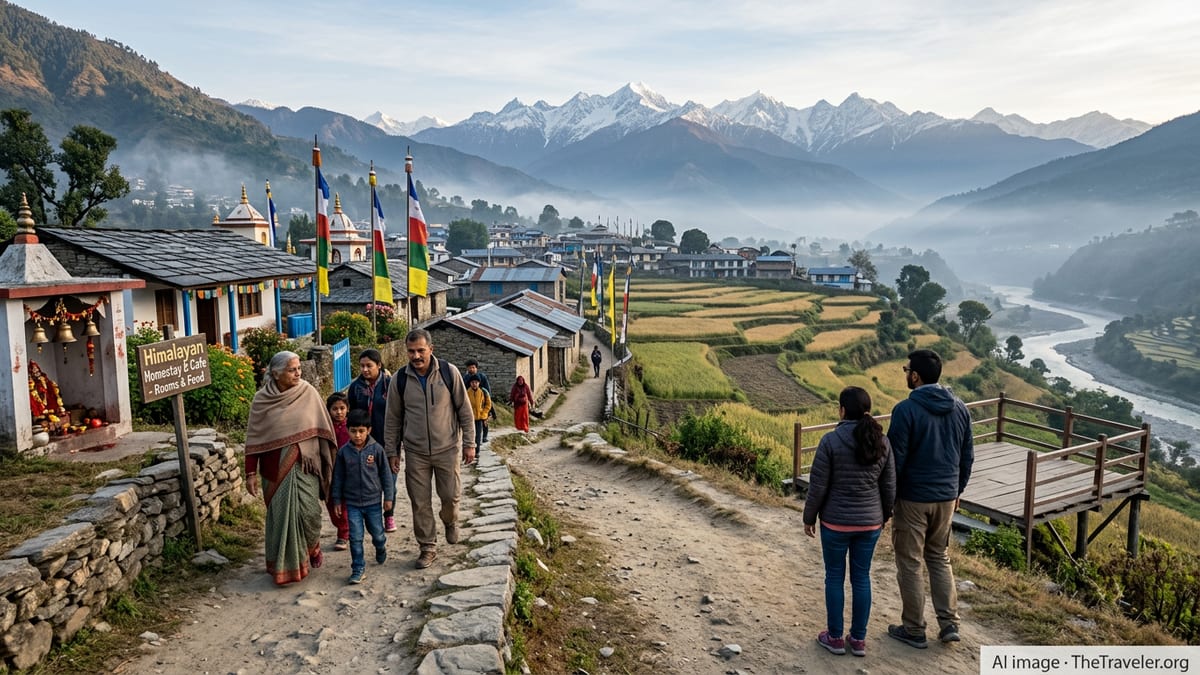
Documents on national tourism schemes list thematic circuits such as the Himalayan, Desert, Coastal and Eco circuits, which are explicitly designed to sequence destinations in ways that fit seasonal flows. In the Himalayan belt, for example, the focus is on all-weather connectivity and managed access to pilgrimage and trekking routes, allowing visitors to combine spiritual travel with high-altitude villages, homestays and nature-based experiences within defined time windows. In the desert regions, new routes pair heritage cities, salt flats and archaeological sites with cultural festivals that are concentrated in the winter months.
Further south, coastal itineraries from Gujarat to Odisha are being promoted as multi-stop journeys linking beaches, marine sanctuaries, heritage towns and temples. Individual projects such as scenic roads across the Rann of Kutch and planned underwater viewing experiences near Dwarka illustrate how infrastructure, storytelling and seasonality are being woven together to support more immersive travel. In each case, the aim is to smooth peaks and troughs, shift pressure away from a handful of saturated hotspots and encourage visitors to spend more nights across a wider geography.
Industry commentary suggests that this seasonal-circuit thinking also speaks to the changing preferences of domestic travellers, who are increasingly taking multiple shorter breaks spread through the year instead of a single long annual holiday. Curated, time-bound routes give this growing segment a ready-made framework for exploring new regions while matching school calendars, long weekends and festival holidays.
Spiritual, Rural and Eco Routes Anchor the New Map
One of the most striking shifts in Bharat’s tourism strategy is the central role given to spiritual and faith-based travel. Media reports drawing on tourism data indicate that religious tourism now accounts for more than half of all domestic trips, with temple circuits in states such as Uttar Pradesh, Uttarakhand, Tamil Nadu and Odisha drawing tens of millions of visitors annually. Rather than treating these flows as purely devotional, planners are building surrounding circuits that incorporate local crafts, cuisine, nature trails and cultural performances.
The Ramayana circuit, which links multiple sites associated with the epic across northern and central India, is a prominent example. Recent coverage notes that rail-based tourist products have been introduced to tie together far-flung locations, while infrastructure upgrades under thematic circuit schemes are intended to improve visitor services. Similar efforts can be seen around Char Dham routes and other major pilgrimage corridors, where accommodation, interpretation centres and last-mile connectivity are being positioned as entry points to wider regional exploration.
Parallel to this, rural and eco-tourism circuits are gaining ground as states look to spread tourism benefits beyond major cities. Policy documents from several regions describe integrated routes that thread together farm stays, village handicraft hubs, forest edges and minor heritage sites. In places such as tiger reserves and high-biodiversity landscapes, new visitor amenities like eco-lodges, tented camps and guided nature trails are being developed with an emphasis on low-impact design and conservation-linked revenue models.
The underlying logic is that by packaging spiritual, rural and eco experiences into coherent circuits, Bharat can appeal to travellers seeking meaning, nature and community connection, while also creating year-round economic opportunities for local residents. The approach aims to move tourism beyond a narrow set of peak-season destinations into a more distributed network of themed journeys.
States Compete With Niche Themed Itineraries
While national schemes provide the overarching framework, much of the experimentation with experience-driven seasonal circuits is happening at the state level. Tourism policies from states including Karnataka, Jharkhand and Telangana highlight circuit-based development as a core strategy, with detailed plans for thematic routes covering tribal culture, waterfalls, heritage towns, wildlife and adventure activities. These documents frequently reference integrated circuits that cluster attractions within a few hours’ drive, supported by incentives for private investment in stays and experiences.
Along the western coastline, tourism departments in states such as Karnataka and Gujarat are publicly foregrounding experiential coastal travel, with an emphasis on smaller beach towns, backwaters, mangrove zones and fishing communities rather than only well-known resorts. Stakeholder reports from regional industry events describe discussions around promoting destination weddings, water sports, wellness retreats and culinary trails as part of broader coastal circuits that can function across multiple seasons.
In central and eastern India, newer policies promote circuits that combine waterfalls, archaeological sites, forest landscapes and tribal cultural centres, often framed as weekend or long-weekend routes from major cities. Some of these circuits are being tied to specific festival calendars, local markets or harvest periods, adding a temporal dimension that encourages repeat visits at different times of the year. Fiscal incentives, streamlined approvals and marketing partnerships are being used to attract small and mid-sized tourism enterprises to plug gaps in accommodation and experiences along these routes.
The net effect is a competitive environment in which states seek to stand out not just through flagship monuments, but through distinctive, story-rich itineraries. This in turn reinforces the national narrative of Bharat as a mosaic of circuits, each offering a different blend of climate, culture and landscape across the calendar.
Balancing Growth With Sustainability and Capacity
The strategic pivot toward experience-driven circuits also reflects concerns about overtourism in legacy destinations. Commentaries on popular hill stations, pilgrimage towns and beaches increasingly highlight pressure on local infrastructure, air quality and ecosystems. By distributing visitors along wider circuits and promoting off-peak and shoulder-season travel, planners are seeking to ease these pressures while sustaining economic gains.
New policy language around “sustainable” and “responsible” tourism is particularly visible in the latest circuit-focused initiatives. Documents tied to national schemes describe efforts to integrate waste management, local employment, digital ticketing and capacity monitoring into circuit design. In sensitive landscapes such as high-altitude Himalayan zones, tiger reserves and marine ecosystems, there is growing emphasis on regulated access, guided experiences and interpretation that foregrounds conservation.
Technology is emerging as a key tool in managing this transition. Digital portals aggregate information on circuits, weather conditions, traffic advisories and festival dates, helping travellers plan trips that avoid peak congestion and align with seasonal highlights. Training programmes for local guides and facilitators aim to improve the quality of interpretation and ensure that the experiential promise of these circuits is delivered consistently on the ground.
As Bharat’s tourism economy expands, the success of this strategic shift will likely depend on how well these circuits can balance immersive experiences with environmental limits and community priorities. Early evidence from circuit-based wildlife, coastal and spiritual routes suggests that when planning, infrastructure and storytelling are aligned with seasons and local capacities, they can create a more resilient and diversified tourism landscape for both visitors and host communities.