

More news on this day
Caribbean tourism leaders are betting that a wave of new and expanded flights from American Airlines, Delta Air Lines, JetBlue, Air Canada and British Airways, reinforced by aggressive moves from Marriott, Hilton and Sandals, will trigger a powerful new travel boom linking the United States, Canada, the United Kingdom and dozens of island destinations.
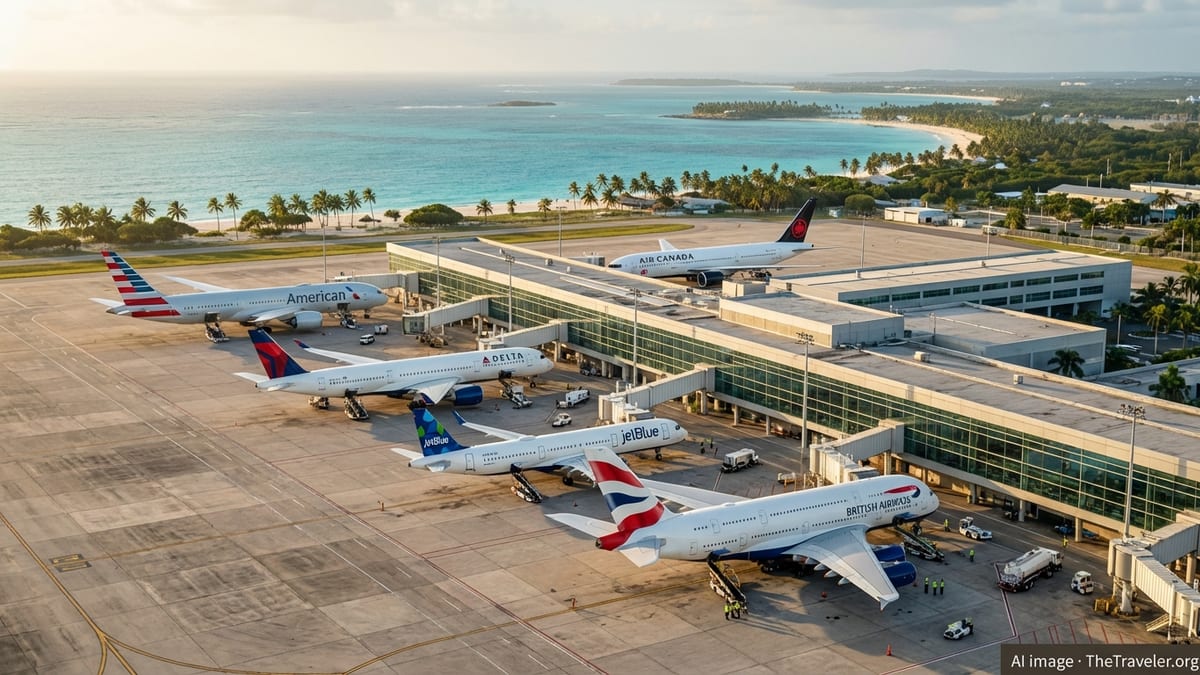
Caribbean Connectivity Moves to Center Stage
After several years of uneven recovery, the Caribbean is entering a new phase in which air connectivity is viewed as the single biggest lever for unlocking growth. The Caribbean Tourism Organization has formally made airlift a strategic priority, commissioning a regionwide connectivity study and creating an airlift committee to court airlines and optimize schedules and hubs. Governments and tourism boards, long focused on marketing, are now negotiating route incentives, streamlined approvals and joint promotions to secure more nonstop and one-stop options from North America and Europe.
This policy shift is meeting a surge in traveler demand. Pent-up interest in warm-weather, short- to medium-haul escapes out of major U.S. and Canadian cities remains strong, even as long-haul travel softens in other regions. Industry executives say the Caribbean, with its blend of established resort markets and emerging niche islands, offers airlines the kind of year-round leisure demand that justifies new capacity.
At the same time, hotel groups with deep regional footprints are pushing for better access. Large brands have made clear in recent earnings calls and industry forums that reliable lift is now a precondition for signing new resort deals and all-inclusive conversions. That alignment between aviation and hospitality is turning the islands’ long-standing airlift challenge into a coordinated commercial opportunity.
American, Delta, JetBlue, Air Canada and British Airways Add Seats
Across the major transatlantic and transborder carriers, the broad direction is the same: more seats into sun destinations, with the Caribbean at the heart of their winter and shoulder-season strategies. U.S. giants American Airlines and Delta Air Lines continue to leverage their East Coast and southern hubs to deepen connectivity into major islands, pairing year-round workhorse routes with seasonal boosts that match holiday and spring-break peaks.
JetBlue is sharpening its profile as a Caribbean specialist. The airline has laid out plans to significantly increase its Latin America and Caribbean schedule out of Boston, positioning itself as the dominant leisure carrier in New England to warm-water destinations. Newly announced services to islands such as St. Thomas, St. Maarten, Nassau, Grand Cayman and Barbados from Boston are designed to capture high-yield winter demand while feeding resort partners with predictable weekend traffic.
To the north, Air Canada is anchoring its Caribbean push not just in added frequencies but in the onboard experience. The carrier is rapidly rolling out enhanced connectivity and free Wi-Fi for loyalty members on flights within North America, Mexico and the Caribbean, promising travelers they can stay online gate to gate and stream content throughout their journey. Executives say that kind of seamless digital experience is increasingly a deciding factor for affluent leisure guests choosing between competing carriers to the same beach destination.
On the UK side, British Airways is leaning on its status as the Caribbean’s longest-serving British carrier while preparing a larger long-haul schedule for summer 2026. The airline has already flagged extra capacity into Jamaica and maintains a deep network into Barbados, St. Lucia and other key leisure markets, giving British and European holidaymakers more flexibility on dates and cabins. Additional flights on large widebody aircraft translate into tens of thousands of incremental seats that tour operators and hotel chains can package.
Hotel Heavyweights Put Their Weight Behind Airlift
For global hotel groups, the new airlift is not a happy accident but a strategic objective. Marriott and Hilton have each expanded their all-inclusive and resort portfolios across the Caribbean in recent years, adding branded properties in destinations from Jamaica and the Dominican Republic to smaller islands courting higher-spend visitors. Development executives routinely highlight air access as the critical factor in whether projects proceed on schedule and at scale.
With more aircraft and better schedules on the table, these brands are doubling down on co-marketing and joint sales with airlines. Typical initiatives include bonus miles or points for package bookings, targeted campaigns in key origin cities and shoulder-season promotions that keep occupancy up when aircraft seats are easiest to fill. Insiders say some new routes have been underpinned by guaranteed room blocks or coordinated launch timelines with flagship resort openings, giving airlines greater confidence to commit capacity.
Sandals Resorts, with its portfolio of adults-only all-inclusive properties across multiple islands, is also a visible player in the new connectivity game. The company is known for aligning closely with carrier partners whenever a new island or micro-destination comes onto the radar for upscale couples and honeymooners. By promising strong year-round demand and high on-property spending, Sandals can help justify service to airports that might otherwise struggle to secure nonstop flights from major hubs.
As these lodging giants bring marketing budgets, loyalty ecosystems and long planning horizons to the table, they effectively de-risk the Caribbean for airlines. That, in turn, encourages more experimentation with secondary cities in the United States, Canada and the UK, widening the funnel of potential visitors beyond traditional gateways like New York, Toronto and London.
Why the Islands Are Primed for a Tourism Surge
Multiple structural forces suggest the Caribbean could be on the cusp of another tourism upswing. One is simple geography: for millions of travelers in the eastern half of North America, large swaths of the Caribbean are reachable in three to five hours, making long weekends and short breaks feasible in ways that rival destinations cannot match. For British and European visitors, the region’s mix of English-speaking islands, shared history and well-established resort infrastructure remains a powerful draw.
Another factor is diversification. Many islands are moving beyond the traditional model of high-season, beach-only tourism toward a broader mix of soft adventure, culinary travel, heritage experiences and sports-related events. That creates more reasons to travel outside peak months and more niches for airlines and hotel brands to target with tailored products. New and returning carriers on intra-Caribbean routes are also starting to reconnect islands that lost regional service in recent years, making multi-island itineraries more realistic.
Digital connectivity is amplifying the effect. With airlines like Air Canada investing heavily in onboard Wi-Fi and app-based services and other carriers modernizing their digital channels, Caribbean trips are easier to research, book and share in real time. Social media visibility for lesser-known islands is growing, and the ability to work remotely from beach destinations for part of a trip is helping stretch stays.
Travel industry analysts caution that challenges remain, from airport capacity constraints and regulatory complexity to climate vulnerabilities and the need for more sustainable development. Yet the alignment now emerging between major airlines eager to deploy aircraft, hotel groups hungry for new resort openings and regional bodies focused on smarter airlift suggests that, for many Caribbean islands, the pieces are finally in place for a sustained tourism expansion.
Stakeholders Push to Lock In Long-Term Gains
Recognizing that today’s capacity additions could just as easily be redeployed elsewhere in a downturn, Caribbean governments and tourism boards are working to lock in long-term benefits. Negotiations increasingly focus on multi-year commitments, predictable incentive frameworks and shared data on demand patterns so that carriers can fine-tune rather than abruptly cancel routes. Regional meetings and trade events are dedicating entire tracks to air connectivity, reflecting how central the issue has become.
Hotel and resort groups are also advocating for infrastructure improvements that match the new airlift, from modernized terminals and immigration facilities to better ground transportation links to resort corridors. Their argument is that every delay or bottleneck at the airport undermines the value of increased frequencies and larger aircraft. Some destinations are responding with fast-track arrival services, digital immigration forms and investments in runway and apron upgrades to handle more widebodies at peak times.
For travelers across the United States, Canada and the United Kingdom, the practical effect of these moves will be felt in the form of more nonstop options, additional departure cities, sharper pricing in competitive markets and more integrated airline-hotel packages. For the islands, the stakes are higher: if the current wave of connectivity and investment is sustained, it could usher in a new era of tourism-led growth that reaches far beyond the main resort strips and spreads deeper into local economies.