

More news on this day
Hundreds of passengers were left stranded or facing hours-long disruptions at Toronto’s Billy Bishop Toronto City Airport this week as at least 24 flights were delayed and three were cancelled, affecting services operated by Porter Airlines, Jazz Aviation, Air Canada, WestJet and others on key routes to Ottawa, Montreal, Newark and additional regional destinations.
Get the latest news straight to your inbox!
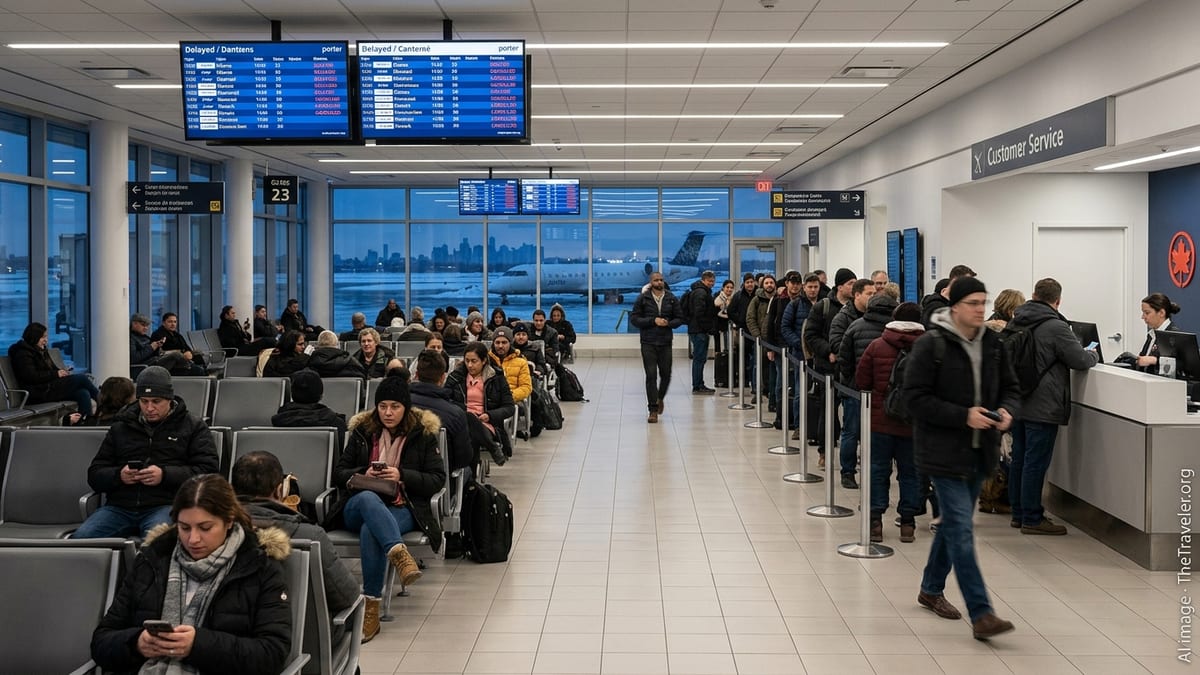
Disruptions Hit Downtown Toronto’s Island Airport
Reports from flight-tracking boards and publicly available airport information show an unusual concentration of delays and cancellations at Billy Bishop, the downtown Toronto hub that primarily handles short-haul regional traffic. The disruption affected both morning and evening peak periods, leaving many travelers waiting in the compact terminal or seeking last-minute alternatives at Toronto Pearson International Airport.
The issues involved at least 24 delayed departures or arrivals and three outright cancellations, disrupting the tightly timed shuttle-style network that connects Toronto’s core with cities such as Ottawa, Montreal and Newark. With many passengers relying on Billy Bishop for same-day business trips and onward connections, even short delays created cascading itinerary changes.
Travel advisories and operational updates referenced a combination of congestion in the regional network, aircraft flow challenges and weather-related constraints in Eastern Canada and the U.S. Northeast. The knock-on effects were felt across multiple carriers that use Billy Bishop as a significant gateway for both domestic and cross-border services.
Billy Bishop handles fewer flights than Toronto Pearson but serves a high proportion of frequent travelers drawn by its proximity to downtown. On busy days, any concentration of delays can quickly overwhelm available seating, customer service counters and alternative flight options.
Porter, Jazz, Air Canada and WestJet Among Affected Carriers
Publicly available schedules and tracking data indicate that Porter Airlines, the dominant carrier at Billy Bishop, saw repeated hold-ups across its core routes to Ottawa and Montreal, as well as select U.S. services. These short-haul flights typically operate at high frequency, and delays in one leg can rapidly ripple through the rest of the day’s rotations.
Jazz Aviation-operated flights under the Air Canada Express brand also experienced timetable disruptions, complicating travel plans for passengers booked through Air Canada on regional connections. Because many travelers on these routes are connecting to longer-haul services at other hubs, missed slots can result in substantial rebooking challenges and extended overnight stays.
WestJet and other carriers with limited but strategic presence in the Toronto market were also swept up in the operational turbulence. Even when their aircraft were not directly delayed at Billy Bishop, network congestion and weather or air traffic management measures at other airports contributed to irregular operations that ultimately affected flights linked to the city.
According to published coverage of recent Canadian aviation trends, on-time performance across multiple carriers has come under pressure during the past two winter seasons, with several airlines facing scrutiny over their handling of delayed and cancelled services. The Billy Bishop disruptions fit into that broader pattern of fragile regional schedules and limited spare capacity.
Key Routes to Ottawa, Montreal, Newark and Beyond Affected
Among the most heavily impacted routes were the high-frequency shuttles connecting Toronto’s downtown airport with Ottawa and Montreal, which are widely used by government officials, business travelers and commuters. Even relatively short delays on these routes can undermine plans built around same-day meetings and return trips.
Flights between Billy Bishop and Newark Liberty International Airport were also affected, adding complications for passengers bound for the New York area or connecting to onward U.S. and international services. Travel forums and recent commentary have highlighted that this corridor is particularly sensitive to weather and air traffic disruptions on both sides of the border, making it vulnerable when conditions tighten.
Some travelers sought to rebook via Toronto Pearson, where competing services to Ottawa, Montreal, New York and other cities are more frequent. However, higher demand during irregular operations can quickly absorb remaining seats, leaving stranded passengers facing overnight stays or multi-stop routings that significantly extend total travel time.
Other regional links, including select flights to secondary Canadian cities, also experienced schedule changes. For passengers in smaller markets that rely on one or two daily departures, a single cancellation can remove same-day travel options entirely, forcing multi-day delays in reaching their destinations.
Weather, Tight Turnarounds and Curfew Constraints
Recent weather patterns across southern Ontario and the U.S. Northeast have complicated flight operations, with earlier storms this winter already causing notable disruptions at Toronto airports. Historical data from previous severe weather episodes show that Billy Bishop’s operations can be particularly sensitive to visibility and snow, given its waterfront location and shorter runway compared with Toronto Pearson.
The island airport also operates under a strict nighttime curfew, which limits late-evening departures and arrivals. When delays accumulate through the day, airlines have less flexibility to operate after-hours services to clear backlogs. Publicly available guidance on airport operations indicates that carriers generally choose to cancel flights approaching the curfew window rather than risk infringing operating limits.
Tight aircraft turnarounds on short-haul flights further constrain recovery options. A delay on an early morning leg from Montreal or Ottawa into Toronto can echo through subsequent rotations, with each successive sector pushed back or forced into cancellation if the schedule can no longer be compressed.
Aviation analysts have noted that regional carriers in Canada often operate with limited spare aircraft and crews, a structure that improves efficiency in normal conditions but leaves little margin when weather, air traffic control measures or technical issues arise at multiple airports on the same day.
Passenger Impact and Guidance for Future Travel
The concentration of delays and cancellations at Billy Bishop left many passengers facing hours in terminal queues, uncertainty around rebooking options and challenges securing hotel rooms during peak disruption. Accounts documented in consumer forums for recent events at Canadian airports describe travelers waiting extended periods for updated departure times or alternative itineraries.
Publicly available information on Canada’s Air Passenger Protection Regulations outlines specific standards for communication, rebooking and compensation in cases of lengthy delays or cancellations, depending on the cause and the size of the airline. Travelers are encouraged to document their schedules, retain receipts for expenses and review airline policies after disruptions of this scale.
For upcoming trips through Billy Bishop, travel planners recommend allowing extra buffer time when connecting to critical events or onward flights, particularly in winter and during periods of forecast congestion in Eastern Canada and the U.S. Northeast. Booking earlier departures, monitoring flight status regularly and remaining flexible about routing through Toronto Pearson where necessary can provide more options if irregular operations recur.
As regional carriers continue to rebuild and adjust their networks, observers expect on-time performance at Canadian airports to remain a major point of focus for both travelers and regulators. The latest wave of disruptions at Billy Bishop underscores how quickly operational strains at a compact downtown airport can translate into widespread inconvenience across multiple airlines and routes.