

More news on this day
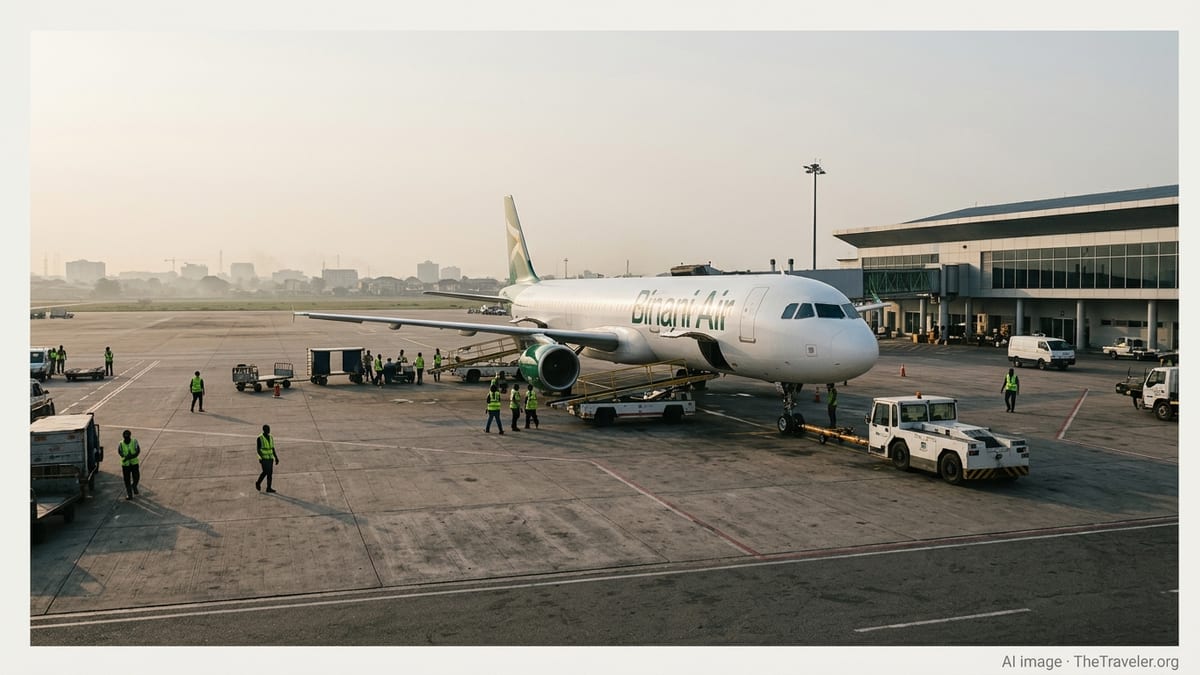
Binani Air, linked to Nigerian politician and entrepreneur Aishatu Dahiru Ahmed, widely known as Aisha Binani, is emerging as Nigeria’s first female‑founded airline, a development that observers say could reshape expectations for women’s leadership in West Africa’s aviation industry.
Get the latest news straight to your inbox!
A New Name Joins Nigeria’s Crowded Skies
Recent industry documents and aviation registries list Binani Global Air Services Limited with the telephony identifier "Binani," indicating that a new carrier branded as Binani Air is preparing to enter Nigeria’s domestic market. Publicly available information shows the company based in Nigeria, with early references placing its operational focus around the north‑eastern state of Adamawa.
While formal launch dates and detailed schedules have not yet been fully publicized, the appearance of Binani Air alongside established Nigerian carriers in updated fleet and call‑sign compilations suggests that regulatory groundwork and technical clearances are advancing. Aviation analysts note that the progression from regulatory recognition to full commercial service often unfolds in stages, beginning with charter or non‑scheduled services before expanding into scheduled passenger operations.
Reports indicate that Binani Air is positioning itself to serve domestic routes that connect Abuja and other key cities with underserved northern corridors. If realized, this network focus would place the newcomer in direct competition with existing operators while also responding to longstanding calls for improved connectivity between Nigeria’s political capital and its interior regions.
The entry of another airline comes at a time when Nigerian domestic aviation continues to battle high operating costs, currency pressures and infrastructure bottlenecks. Against that backdrop, the emergence of a fresh brand has drawn attention for both its commercial ambitions and its symbolic significance.
Aisha Binani’s Unusual Path from Politics to Aviation
Aishatu Dahiru Ahmed built her reputation in Nigerian public life as a legislator, serving first in the House of Representatives and later as senator for Adamawa Central. She became one of the most prominent women in northern Nigerian politics and, in 2022, gained national attention as a high‑profile governorship candidate in Adamawa State.
Before her political ascent, publicly available biographical information describes Binani as an entrepreneur with interests in engineering and industrial ventures. That background has made her move into aviation less of a surprise to observers who have followed her business activities alongside her political career.
Binani’s association with an airline project sets her apart in a sector that has historically been dominated by male founders and executives in Nigeria. While the country has produced pioneering female pilots and senior aviation professionals, ownership and airline creation have remained largely the preserve of male industrialists and political figures.
Industry watchers note that Binani’s dual profile as politician and airline founder could shape Binani Air’s early narrative. Her public visibility, extensive grassroots networks in Adamawa and established relationships with business stakeholders may help the airline access capital, talent and regional support as it prepares for operations.
First Female‑Founded Nigerian Airline Sets a Precedent
Available historical records of Nigerian commercial airlines show women achieving groundbreaking roles in cockpit and cabin operations, but they do not prominently feature a woman as the originating founder of a homegrown carrier until the emergence of Binani Air. This has led local commentators and aviation observers to describe the company as Nigeria’s first female‑founded airline.
The milestone is drawing attention in a region where women’s representation in transport and infrastructure sectors remains limited, particularly at ownership and board levels. Advocacy groups focused on women in business have long highlighted the absence of female founders in large, capital‑intensive industries, pointing to aviation as a prime example of structural barriers.
By stepping into this space, Binani Air sets a reference point that future entrants can cite when seeking investment or regulatory support. Analysts suggest that the presence of a female founder at the helm could influence decisions around recruitment, leadership development and corporate culture, even as the airline navigates the same commercial realities as its competitors.
The symbolism also extends beyond Nigeria’s borders. Within West Africa, female‑founded airlines are rare, and the visibility of such a carrier based in Africa’s most populous country may encourage broader conversations about gender, finance and access to high‑growth sectors across the region.
Potential Impact on Regional Connectivity and Tourism
Binani Air’s proposed focus on routes linking Abuja and northern Nigerian cities is viewed as particularly relevant for regional development and travel. Many of these destinations rely on limited daily services, with travelers often facing schedule disruptions and fare volatility driven by capacity shortages.
If the airline succeeds in offering reliable frequencies and competitive pricing, travel specialists anticipate improved mobility for business travelers, government officials, students and diaspora visitors returning to secondary cities. This could support conference tourism in Abuja and encourage more direct trips into the north rather than routing passengers through Lagos for onward connections.
Tourism promoters in the north‑east have long argued that air access is a critical barrier to unlocking the potential of cultural festivals, nature reserves and historic sites scattered across Adamawa and neighboring states. Improved connectivity could make it easier for domestic leisure travelers and foreign visitors to include these destinations in multi‑city itineraries that combine Abuja with lesser‑known attractions.
However, the scale of any tourism impact will depend on Binani Air’s ability to maintain consistent operations, invest in customer service and coordinate with local hospitality providers. Nigerian travelers have become particularly sensitive to delays and cancellations, and any new entrant is likely to be judged quickly on performance rather than branding.
A Test Case for Women’s Leadership in African Aviation
Beyond fleet size or route maps, Binani Air is emerging as a test case for how women’s leadership can shape corporate strategy in an African aviation context. Observers of the sector will be watching whether the airline’s governance structures, hiring policies and training programs reflect a commitment to greater gender balance at all levels.
Public discussions around women in leadership in Nigeria frequently highlight the gap between symbolic appointments and substantive power. In aviation, this distinction is especially visible in technical departments, safety oversight and executive decision‑making. A female‑founded carrier has the opportunity to showcase a different approach, particularly if women are visible in senior management, operations control and engineering roles.
The airline’s emergence also coincides with renewed scrutiny of safety and financial sustainability across Nigerian carriers. Market commentators emphasize that any long‑term impact on gender norms will depend on Binani Air’s operational track record and resilience through economic cycles. A successful, professionally run airline associated with a female founder would likely carry more influence than short‑lived ventures that struggle to survive.
As Binani Air moves from regulatory listings toward full commercial service, the project is being closely watched not only by aviation specialists but also by advocates of women’s economic participation. Its trajectory is expected to inform future debates about access to capital, regulatory support and mentorship for women seeking to build large‑scale enterprises in Nigeria and across the continent.