

More news on this day
Bird Academy, one of India’s leading aviation training providers, is rolling out a new competency-based course for dangerous goods instructors that industry experts say could set a higher benchmark for aviation safety education across South Asia and beyond.
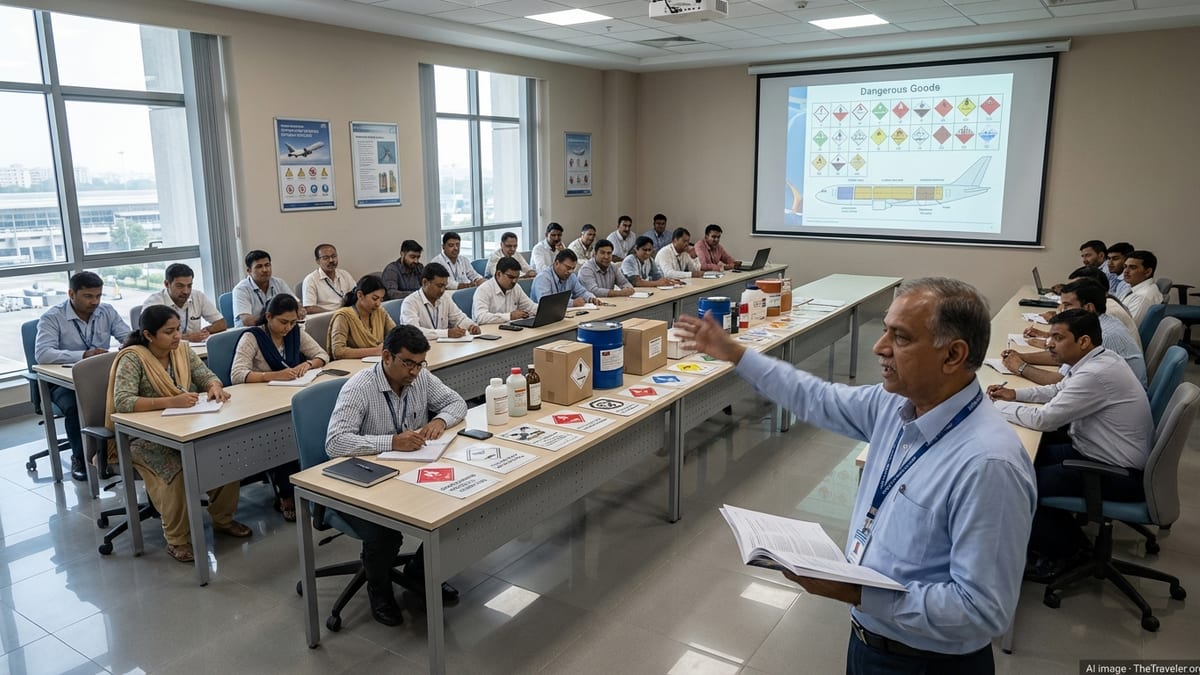
A Strategic Leap in Dangerous Goods Training
The new instructor-focused program builds on Bird Academy’s long-standing role as a specialist in Dangerous Goods Regulations training for airline, cargo and airport personnel. Based in New Delhi and backed by one of India’s largest travel and aviation groups, the academy has spent more than two decades developing courses for safety-critical functions in air transport.
What distinguishes the latest offering is its explicit alignment with the competency-based training and assessment model now being promoted worldwide for dangerous goods handling. The course is designed not simply to familiarize instructors with the IATA Dangerous Goods Regulations but to prepare them to develop, deliver and evaluate training that reflects how personnel actually work under pressure on the ramp, in cargo warehouses and in airline operations control rooms.
Bird Academy’s move comes as regulators tighten oversight of how hazardous materials are accepted, packed, loaded and monitored in the global air cargo chain. From lithium batteries in consumer electronics to industrial chemicals shipped in bulk, mishandled consignments can trigger in-flight smoke events, fires or toxic leaks. For civil aviation authorities and international bodies, raising the skills of instructors has become a critical lever to reduce those risks.
By framing the new course around instructor competence rather than rote regulatory content, the academy is responding to this shift in regulatory philosophy and positioning itself as a training partner for airlines and ground handling companies facing mounting compliance expectations.
Building on IATA CBTA Provider Certification
The instructor course follows Bird Academy’s recent recognition as a Competency-Based Training and Assessment Provider Center for Dangerous Goods Regulations by the International Air Transport Association. That certification, valid from October 2024 to October 2026, confirms that the academy’s DGR programs comply with Section 1.5 of the IATA framework and cover specific dangerous goods functions identified as safety-critical.
Industry observers note that this alignment is more than a branding exercise. IATA’s CBTA guidance has become the reference for regulators and airlines looking to move beyond generic classroom modules toward training paths that map directly to job roles, such as shippers, freight forwarders, ground handling agents, flight crew, load planners and aviation security personnel.
By obtaining CBTA Provider Center status and then introducing an advanced course focused on instructors, Bird Academy is effectively extending that philosophy up the training chain. Instead of assuming that subject-matter expertise alone qualifies someone to teach, the new program requires prospective instructors to demonstrate that they can analyze job tasks, design scenario-based exercises and conduct assessments that reveal whether trainees can safely perform real-world functions.
For operators that must demonstrate to regulators that their dangerous goods training programs are robust and current, sending staff to an academy that can document its adherence to the CBTA model offers both practical and reputational advantages.
Inside the New Dangerous Goods Instructor Course
According to course materials shared with partners, Bird Academy’s instructor track is structured around a blend of regulatory mastery, instructional design skills and practical assessment techniques. Participants are expected to arrive with a solid grasp of the Dangerous Goods Regulations and prior exposure to dangerous goods operations, reflecting the course’s focus on those who will lead training within airlines, cargo terminals or specialized logistics firms.
The curriculum walks participants through the latest IATA and national regulations governing the carriage of dangerous goods by air, highlighting changes that affect packaging, documentation, marking, labeling and segregation of high-risk articles. But equal attention is devoted to how instructors translate those technical requirements into engaging learning experiences that hold the attention of front-line staff working in fast-paced operational settings.
Role-based scenarios form a core element of the program. Instructors-in-training work through cases involving misdeclared batteries, leaking chemical drums, time-critical export shipments and passenger baggage containing undeclared hazardous items. They practice guiding trainees through hazard identification, control measures and escalation protocols, while also learning how to evaluate performance against defined competency statements.
Assessment methodology is another focal point. Participants examine how to design written tests, oral questioning and practical demonstrations that provide evidence of competence, as well as how to document training outcomes for audits by regulators or airline quality departments. The course reinforces that, under modern regulatory expectations, training records must show more than attendance; they must demonstrate that staff can do the job safely.
Regulatory Context: Why Instructor Quality Matters
The emphasis on developing dangerous goods instructors reflects a broader global trend in aviation safety oversight. Regulatory frameworks such as ICAO’s Technical Instructions and national rules derived from them, including India’s Aircraft (Carriage of Dangerous Goods) Rules, require that anyone involved in the transport of hazardous materials complete training commensurate with their responsibilities.
In practice, that requirement is only as effective as the instructors who deliver the training. If instructors rely on outdated slides, focus narrowly on theoretical provisions or fail to connect rules to daily operational realities, staff may leave the classroom with a certificate but without the decision-making skills needed to prevent a serious incident on the ground or in flight.
Bird Academy’s new program seeks to address that gap by professionalizing the role of dangerous goods instructors. Rather than treating training as an administrative obligation to be renewed every two years, the course positions instructors as safety leaders who can influence organizational culture, challenge unsafe practices and serve as a point of contact between operations teams and regulatory authorities.
For aviation stakeholders, the regulatory implications are significant. An airline or handling agent that can prove its instructors meet modern CBTA expectations is better placed to satisfy authority inspections, win cargo contracts from safety-conscious shippers and reassure insurers that it takes hazardous materials oversight seriously.
Digital Tools and Real-World Scenarios in the Classroom
Another hallmark of Bird Academy’s instructor course is its emphasis on combining digital training tools with hands-on exercises that mirror real operations. The academy has invested in multimedia content, virtual labeling and documentation simulations, and digital assessment platforms that support both in-person and blended delivery models.
Instructors-in-training are shown how to use these tools to bring regulatory text to life. For example, digital replicas of air waybills and shipper’s declarations allow learners to practice spotting common errors, while interactive diagrams of aircraft cargo compartments help them visualize segregation requirements and loading limitations.
At the same time, the program remains anchored in physical practice. Participants handle sample packaging, inspect mock consignments and rehearse emergency response steps for scenarios such as a leaking package discovered on the ramp or a smoke warning from a cargo hold. The academy’s trainers emphasize that while e-learning can effectively deliver foundational knowledge, dangerous goods instructors must be able to observe how personnel interact with real containers, labels and equipment.
This blend of digital and tactile training methods reflects the evolving expectations of airlines and logistics companies, many of which now operate across multiple locations and use a mix of classroom, virtual and on-the-job training to maintain compliance.
Regional Impact: Elevating South Asia’s Safety Footprint
Bird Academy’s decision to specialize in dangerous goods instructor training is likely to carry particular weight in South Asia, where rapid growth in e-commerce and manufacturing has driven a surge in air cargo volumes. Airports in India are handling increasing numbers of shipments that contain batteries, chemicals, pharmaceuticals and other regulated items that must be transported under strict conditions.
By offering an advanced instructor course anchored in CBTA principles, the academy is positioning Delhi, Mumbai and its other training locations as regional hubs for safety capacity-building. Airlines, freight forwarders and ground handling firms from neighboring markets can send staff to India for training that is aligned with global standards but tailored to local operational contexts, including infrastructure constraints and regional regulatory nuances.
Industry stakeholders say this could help close a skills gap that has historically separated some emerging markets from more mature aviation systems. In particular, smaller operators and handling companies, which may lack internal training departments, stand to benefit from access to externally trained instructors who can return home and build structured programs from the ground up.
The move also complements Bird Academy’s broader portfolio, which includes IATA-authorized courses across passenger services, cargo, airport operations and security. Graduates who understand how dangerous goods safety intersects with other parts of the aviation value chain may be better equipped to manage the complex interfaces between check-in counters, cargo docks and aircraft loading teams.
Opportunities and Challenges Ahead for Aviation Safety
Despite the enthusiasm surrounding Bird Academy’s new course, the challenge of transforming dangerous goods training culture should not be underestimated. For many organizations, updating material, adopting competency-based frameworks and freeing staff to attend multi-day instructor programs requires investment and senior-level commitment.
Training specialists note that one of the most persistent obstacles is the perception of dangerous goods courses as a compliance cost rather than a strategic safety tool. Changing that mindset will require not only well-designed curricula but also data showing reductions in incidents such as rejected shipments, cargo irregularities and inflight smoke events when organizations invest in stronger instructor capacity.
Bird Academy’s leadership argues that the economics ultimately favor a more advanced approach. The cost of a fire, diversion or regulatory enforcement action triggered by mishandled hazardous materials can quickly eclipse the expense of sending key staff for high-quality training. As insurers and customers place greater emphasis on safety performance, being able to demonstrate that instructors themselves have been rigorously trained becomes a differentiator in a competitive market.
In the near term, the academy is expected to expand its instructor offerings through additional sessions and specialized modules that address emerging risks, such as new battery chemistries and complex multi-modal supply chains. For a sector defined by constant change and global interconnectedness, the initiative underscores how one training provider in India is seeking to influence aviation safety far beyond its national borders.