

More news on this day
Flight operations at United Nigeria Airlines have faced fresh disruption after a reported bird strike involving one of the carrier’s aircraft, prompting cancellations, delays and renewed scrutiny of wildlife risks in Nigerian aviation.
Get the latest news straight to your inbox!
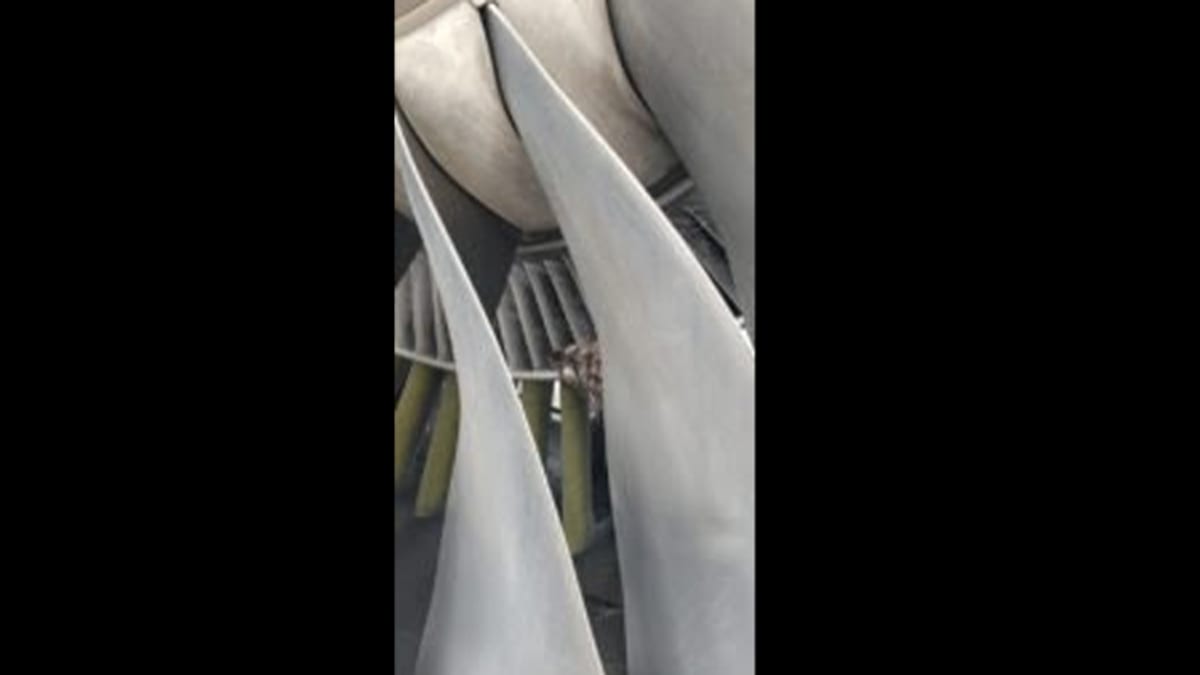
Image by Peoples Gazette Nigeria
Incident Triggers Operational Disruptions
According to Nigerian aviation coverage and flight-tracking data cited in local media, a United Nigeria Airlines service experienced a bird strike during take-off, forcing the aircraft to be withdrawn from service and disrupting subsequent rotations. The incident affected passengers booked on the impacted flight as well as those on later services that relied on the same aircraft and crew.
Publicly available information shows that the airline responded by grounding the affected jet for inspections and safety checks in line with standard procedures. As a result, a number of flights were either delayed or canceled while engineers assessed potential engine and airframe damage and arranged any required maintenance.
Reports indicate that passengers at the departure airport faced extended waits as revised schedules were drawn up. Check-in counters and airline communication channels were tasked with reallocating travelers to later departures or alternative routes, adding further pressure to an already busy operating day.
Industry observers note that while bird strikes are a known hazard, the operational impact can be severe for a regional carrier operating a relatively small fleet, where the temporary loss of a single aircraft can cascade quickly across the network.
Safety Protocols After a Bird Strike
Bird strikes typically require immediate inspection of an aircraft before it can return to service, particularly when contact is suspected with engines or leading-edge surfaces. In the case of United Nigeria Airlines, publicly available reports suggest that engineers were deployed promptly to conduct a detailed examination and determine whether repairs or component changes were necessary.
Standard practice in such situations involves close coordination between the airline’s operations control, maintenance teams and air traffic management. Crews file technical reports, maintenance control reviews flight crew observations and cockpit indications, and the aircraft is kept out of commercial service until airworthiness is fully verified.
Aviation analysts point out that these precautions can result in significant schedule disruption but are central to the industry’s layered safety culture. For carriers like United Nigeria Airlines, any short-term inconvenience is generally viewed as an acceptable trade-off for maintaining safety margins and regulatory compliance.
Published commentary from Nigerian aviation specialists also underscores that bird strikes, while often minor in terms of physical damage, can escalate into more serious events if not thoroughly investigated. This drives conservative decision-making when there is any uncertainty about the scale of impact.
Wildlife Hazards Around Nigerian Airports
Available data from Nigerian aviation reports over recent years indicate that bird activity around several of the country’s airports remains a concern, particularly at facilities bordered by open landfills, water bodies or agricultural zones. Such environments tend to attract flocks that can cross active approach and departure paths.
Past coverage of Nigeria’s wider airline sector has documented multiple bird strike incidents affecting different carriers, with some leading to aborted take-offs, precautionary returns to the gate or diversions back to origin airports. These events have periodically disrupted operations across the domestic network and prompted calls for stronger wildlife management policies.
Airport operators in Nigeria have previously outlined measures such as habitat modification, improved waste management, use of auditory and visual deterrents, and closer collaboration with local authorities. Nonetheless, recent incidents show that risk mitigation remains an ongoing process rather than a one-off fix, especially as air traffic continues to grow.
In this context, the disruption at United Nigeria Airlines illustrates how a single wildlife encounter can test the resilience of scheduling and contingency planning, particularly in markets where infrastructure and resources are already stretched.
Impact on Passengers and Network Recovery
The immediate impact of the bird strike on travelers included missed connections, altered itineraries and extended time at airports as staff worked to rebook disrupted passengers. Public comments captured in local news coverage describe travelers waiting for updated information while the airline adjusted its schedules and repositioned aircraft where possible.
For a carrier operating dense domestic routes, a shortfall of one aircraft can quickly lead to knock-on effects across several cities. Industry watchers suggest that restoring normal operations after such an event often requires a combination of schedule thinning, swapping aircraft types and, in some instances, operating additional recovery flights when capacity becomes available.
Travel advisories issued in response to the disruption have encouraged passengers flying with United Nigeria Airlines to monitor their flight status closely, arrive at the airport early and maintain flexibility regarding connection times. This mirrors best practices seen globally when wildlife-related incidents or technical issues lead to sudden changes in operations.
Although many affected passengers eventually reach their destinations the same day, the broader effect on the airline’s network can extend beyond the initial incident, particularly if maintenance work continues or if spare capacity is limited in the days that follow.
Growing Focus on Mitigation and Preparedness
The United Nigeria Airlines disruption is contributing to a wider conversation about how Nigerian carriers and airports can enhance resilience against bird strikes. Aviation professionals interviewed in previous industry analyses have emphasized the importance of data-driven wildlife management, regular risk assessments and closer coordination between airlines and airport wildlife control units.
Observers note that insurers, regulators and safety auditors are increasingly focused on how operators track bird activity, report strike incidents and incorporate that information into route planning and airport procedures. This emphasis is intended to reduce the likelihood of serious events while also minimizing the operational fallout when incidents do occur.
For travelers, the recent disruption serves as a reminder that wildlife encounters remain an unpredictable element of air travel, even as technology and procedures improve. Flexible booking options, adequate connection buffers and monitoring of real-time updates can help reduce the stress associated with sudden schedule changes linked to bird strikes or other operational issues.
As United Nigeria Airlines works to stabilize its schedules and complete any required maintenance on the affected aircraft, the episode underscores the delicate balance between operational efficiency and safety, and the continuing need for investment in wildlife hazard management across Nigeria’s growing aviation sector.