

More news on this day
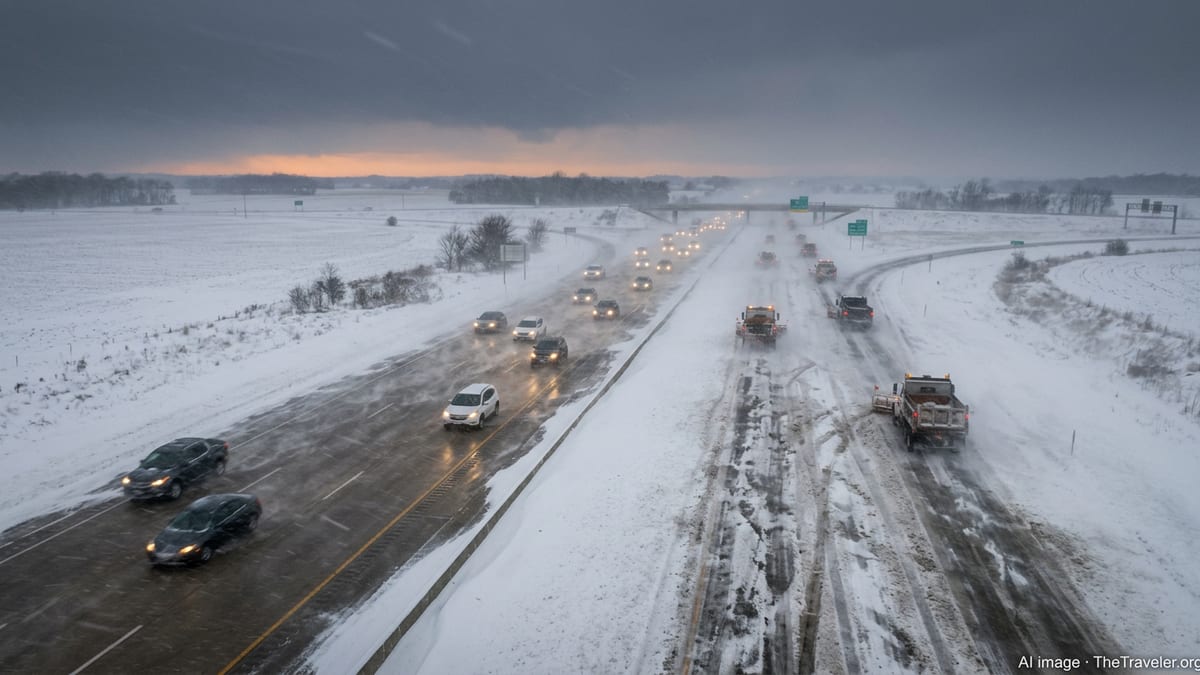
A powerful late-season storm system is hammering Wisconsin and neighboring Midwest states with a volatile mix of blizzard conditions, violent thunderstorms and rapidly deteriorating travel, snarling flights and closing key road corridors just as forecasters warn the worst may still be ahead.
Get the latest news straight to your inbox!
Wisconsin Braces for Major Blizzard as Storm Intensifies
Wisconsin is at the heart of the evolving storm, with National Weather Service offices warning that heavy, wind‑driven snow and plunging temperatures will turn late‑week and weekend travel "hazardous to impossible" across large portions of the state. Forecasters in Green Bay and Duluth have highlighted rapidly deepening low pressure tracking into the Upper Midwest, a classic setup for near‑whiteout conditions from central and northern Wisconsin into the Lake Superior snow belt.
After days of unseasonably mild weather, rain and thunderstorms began sweeping across southern Wisconsin earlier in the week before transitioning to a wintry mix and then heavy snow as colder air wrapped into the storm. Meteorologists are cautioning that sharp temperature gradients will produce a narrow but intense band where snowfall rates could top 2 inches per hour, especially from around Eau Claire through the Wisconsin Dells toward Green Bay.
Local officials are urging residents to complete essential travel early, warning that Saturday night into Sunday could see rapidly drifting snow and near‑zero visibility on open stretches of interstate and rural highways. State agencies are also reminding drivers that even briefly exposed skin can be at risk when blizzard‑strength winds combine with single‑digit wind chills, an unwelcome reminder of mid‑winter in what should be the first weeks of spring.
Michigan, Minnesota and Iowa See Whiteouts and Road Closures
To the north and west, Michigan, Minnesota and Iowa are already dealing with the storm’s wintry punch. Along Minnesota’s North Shore, where a blizzard warning was hoisted earlier this week, powerful wind gusts whipping off Lake Superior have been blowing snow into deep drifts, forcing temporary road closures and prompting state troopers to discourage nonessential travel. Reports of stranded vehicles and jackknifed semis have increased on exposed stretches of Highway 61 and nearby county roads.
Across northern Michigan, heavy, wet snow has been piling up on power lines and tree limbs, leading to scattered outages and slick conditions on routes connecting the Upper Peninsula to Wisconsin. Transportation officials have warned that bridges and higher‑elevation passes are particularly vulnerable as strong crosswinds buffeting the region make it difficult for high‑profile vehicles to stay in their lanes.
In Iowa, where many residents still remember last year’s spring blizzard that shut down interstates, law enforcement agencies are once again fielding calls about deteriorating conditions. Bands of snow on the backside of the current system have swept across central and western counties, briefly reducing visibility to near zero and forcing plow crews into around‑the‑clock operations to keep Interstate 35 and other key north‑south routes passable.
Violent Thunderstorms Lash Illinois and Southern Great Lakes
On the warm side of the storm, a powerful cold front racing east has ignited severe thunderstorms from eastern Iowa through Illinois into the southern Great Lakes, setting up a dangerous clash of seasons over the Midwest. The Storm Prediction Center has highlighted portions of Illinois and Indiana for an elevated severe weather risk, with damaging winds, large hail and isolated tornadoes all possible as the front sweeps through.
In the Chicago area, Tuesday and Wednesday brought repeated rounds of strong to severe storms, prompting multiple severe thunderstorm warnings and at least one tornado watch as towering supercells developed along the boundary. Residents reported intense lightning, brief torrential downpours and pockets of wind damage, including downed tree limbs and minor structural damage to outbuildings and billboards along major highways.
The unusual pairing of blizzard conditions to the north and mid‑spring thunderstorms to the south has underscored the storm’s intensity, as warm, humid air from the Gulf of Mexico surges northward and collides with much colder Canadian air diving into the Upper Midwest. Meteorologists note that such "battle zone" setups are characteristic of March, when the jet stream often carves a sharp divide between lingering winter and the first surges of springtime warmth.
Airports from Milwaukee to Chicago Hit by Delays and Cancellations
The volatile weather has rippled across the Midwest’s air travel network, with major hubs from Minneapolis to Detroit bracing for cascading delays. In Chicago, where thunderstorms and low clouds rolled through ahead of the colder air, air traffic managers implemented temporary ground stops at both O’Hare and Midway, forcing airlines to slow arrivals and departures and leaving passengers crowding terminal departure boards filled with yellow and red alerts.
By midweek, hundreds of flights through Chicago had been delayed or canceled as storms parked over key approach corridors, disrupting connections across the country. Airlines serving O’Hare, one of the nation’s busiest hubs, issued weather waivers allowing travelers to rebook away from the peak of the storm, hoping to ease pressure on already stressed schedules.
Further north, Milwaukee’s Mitchell International has warned travelers to expect rapidly changing conditions as rain gives way to snow and crosswinds increase. Even where runways remain operational, airlines have been preemptively trimming schedules, mindful of the risk that worsening visibility, icy taxiways and high winds could quickly trigger further ground delays.
With the storm tracking directly across traditional flight lanes linking the Great Lakes and the Plains, ripple effects are also being felt at secondary airports across Wisconsin, Minnesota and Michigan. Travelers are being urged to check flight status frequently, allow extra time for icy roads to and from airports and prepare for extended waits as carriers work through weather‑related backlogs.
Highways Jam as States Warn Against Nonessential Travel
On the ground, highway departments from Wisconsin to Iowa and Minnesota have shifted into emergency mode as the storm evolves. Plow operators are being deployed in waves to stay ahead of rapidly falling snow, while state patrols brace for the familiar surge of spinouts and fender‑benders that arrive with the first flush of ice and slush on heavily traveled routes.
In Wisconsin, transportation officials are warning that travel could become "treacherous to impossible" on stretches of Interstate 39, 90 and 94 where heavy snow bands and strong crosswinds converge. Temporary speed reductions and rolling closures are likely as visibility drops, particularly in open country where there is little to block the wind from whipping snow across the roadway.
Neighboring states are issuing similar alerts. In Minnesota and northern Iowa, rural two‑lane highways have already seen periods of virtual whiteout, prompting counties to pull plows from the roads until conditions improve. In Michigan’s Upper Peninsula, sheriff’s offices are asking residents to stay off the roads entirely during the height of the storm, both to reduce crash risk and to ensure emergency crews can reach those who truly need help.
With the brunt of the system expected to linger into the weekend, travel experts advise postponing nonessential trips through the region, packing winter survival kits if driving is unavoidable and keeping fuel tanks near full in case of lengthy closures or detours. For many in the Midwest, it is shaping up to be a long, difficult few days on the move as winter delivers a final, ferocious blow.