

More news on this day
Thousands of travelers were left stranded at Boston Logan International Airport on Monday as a powerful nor’easter buried Massachusetts in snow, forcing the cancellation of roughly 973 flights and delaying 17 more, crippling operations for major U.S. carriers and rippling disruption across the national air network.
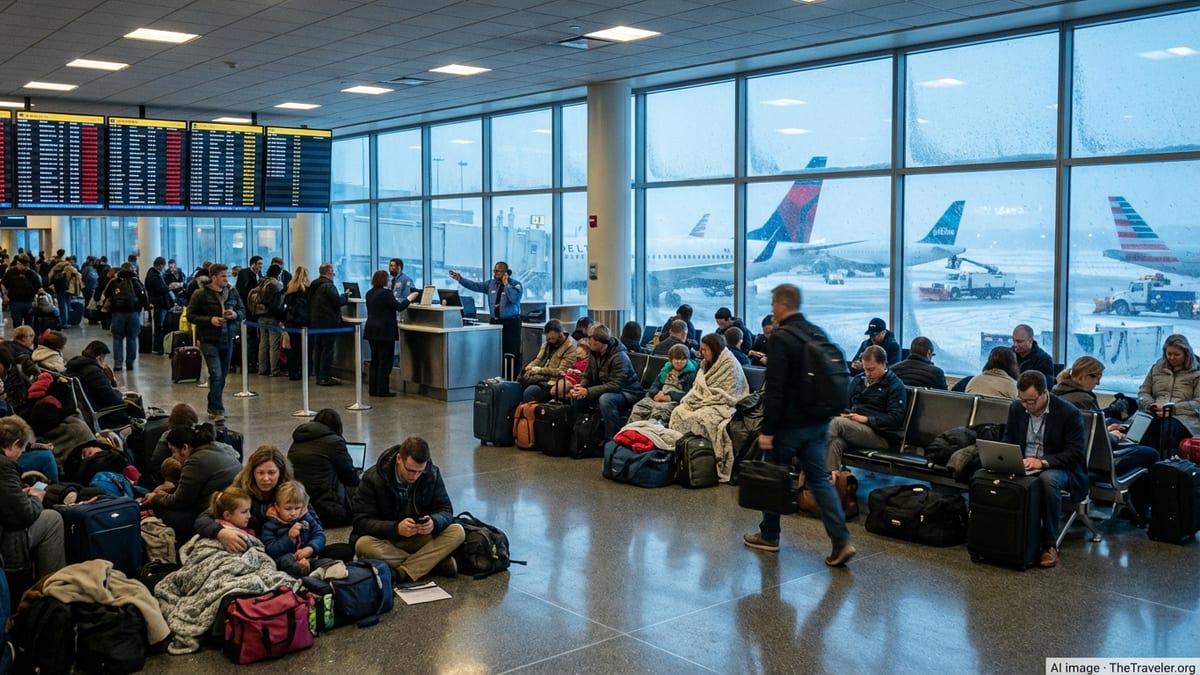
Nor’easter Turns Boston Logan Into a Sea of Cots and Queues
Boston Logan International Airport awoke Monday, February 23, 2026, to departure boards awash in red as a fast-intensifying nor’easter swept across New England. By mid-morning, data from flight-tracking services showed close to 1,000 cancellations in and out of Logan, representing more than 90 percent of the day’s scheduled operations and leaving terminals packed with passengers seeking answers, power outlets and somewhere to sleep.
Airport officials had warned over the weekend that the storm could halt most flying, and by daylight their projections had become reality. With visibility dropping, winds gusting past 60 miles per hour and heavy, drifting snow piling up on runways and taxiways, crews focused on safety and essential snow removal while airlines pulled flights from the schedule in rapid succession.
Inside the terminals, lines snaked from ticket counters and rebooking desks into concourses as travelers tried to salvage business trips, vacations and international connections. Many were handed meal vouchers and thin blankets as airlines acknowledged that, for thousands, the journey would not resume until at least Tuesday or later.
Major U.S. Carriers Slash Schedules as Cancellations Mount
The operational impact at Boston Logan cut across nearly every major U.S. airline, turning one of the Northeast’s busiest hubs into a case study in weather-driven gridlock. JetBlue, one of Logan’s largest tenants, scrubbed virtually its entire schedule, while Delta Air Lines, American Airlines, United Airlines and Southwest reported cancellation rates that reached well into the 90 percent range on their Boston operations.
Regional partners such as Republic Airways, Endeavor Air and Envoy Air, which feed traffic into the big carriers’ networks, also saw their operations gutted. With short-haul routes particularly exposed to weather and airspace restrictions, some carriers reported cancellation percentages near total, removing the connective tissue that links Boston to smaller cities throughout New England and the Mid-Atlantic.
The 17 flights that remained merely delayed rather than canceled underscored how little slack remained in the system. A handful of departures were pushed back repeatedly as airlines weighed evolving forecasts against crew duty limits and the capacity of ground teams to keep deicing operations running in low visibility and punishing winds.
For the big four U.S. airlines, the disruption extended well beyond Boston. With aircraft and crews out of position, ripple effects were quickly felt at hubs in New York, Philadelphia, Washington and across the Midwest, where otherwise clear skies offered little relief from the cascading schedule changes triggered in the Northeast.
Systemwide Shockwaves Across Major U.S. Cities
As Logan’s cancellations climbed, the storm’s reach tightened its grip on the broader U.S. network. New York’s trio of major airports reported that nearly all departures were grounded, while Philadelphia and other East Coast hubs posted cancellation rates approaching or exceeding 80 percent. Nationally, more than 5,000 flights were canceled and hundreds more delayed, according to aviation data providers tracking the unfolding chaos.
In practical terms, a grounded departure in Boston often meant a missing arrival in Chicago, Atlanta or Dallas hours later. Aircraft scheduled to reposition from Logan never left the gate, leaving crews idling and passengers stranded far from the snowbound Northeast. Airlines rushed to reconfigure their networks, but with so many key East Coast nodes simultaneously constrained, options for rerouting were limited.
Travelers with connections through Boston, New York or Philadelphia found that rebooking often required days rather than hours. Some accepted routings through secondary airports in the Midwest or South, while others were forced to abandon trips altogether. For transatlantic passengers, cancellations in Boston combined with widespread shutdowns at other Northeast gateways disrupted flights to London, Dublin and major European capitals, severing business and leisure links at the peak of the winter storm.
The Federal Aviation Administration issued ground delay programs and intermittent flow restrictions across the region, further constraining airspace even when local conditions briefly improved. Air traffic managers attempted to balance safety with limited throughput, but the storm’s sheer geographic footprint and intensity left little room for flexibility.
Inside the Terminals: Frustration, Fatigue and Makeshift Plans
On the concourse floors of Boston Logan, the human cost of the disruption was on full display. Families with young children camped beside their luggage, business travelers held impromptu meetings on laptop screens, and international visitors queued at customer service desks armed with translation apps and patience that grew thinner by the hour.
Announcements echoed throughout the terminals, urging passengers to stay in close contact with their airlines and discouraging those without confirmed flights from heading to the airport at all. Despite the warnings, ride-hail vehicles continued to drop off would-be travelers who had either missed online alerts or hoped their departure might be among the rare survivors of the day’s schedule.
Local hotels near the airport and in downtown Boston reported a surge in last-minute bookings as airlines handed out limited hotel vouchers and passengers opened travel apps seeking any available room. Those unable to secure accommodation settled into gate areas, where airport staff distributed extra seating, charging stations and, in some cases, cots and bottled water.
Airport and airline employees bore the brunt of passenger frustration. Gate agents and call center staff spent hours explaining weather waivers, rebooking rules and the limits of what could be done while runways remained choked with snow. Many travelers described sympathy for frontline workers even as they voiced anger at the pace of communication and the scarcity of clear timelines.
Storm Conditions Leave Safety Crews in a Race Against Time
The scale of cancellations at Boston Logan reflected not only airline schedule decisions but also the fundamental challenge of keeping airport operations safe during a storm of this magnitude. The nor’easter brought intense bands of snow, fierce crosswinds and rapidly falling temperatures, combining to create low visibility and slick surfaces that pushed operating limits.
Snowplow convoys, sand trucks and deicing rigs worked in continuous rotation along runways and taxiways as long as conditions allowed. However, with the snow rate outpacing removal efforts at peak periods, aviation authorities and airlines opted to minimize movements rather than risk takeoffs and landings in conditions that could quickly deteriorate.
Meteorologists warned that travel in the region would be extremely treacherous to nearly impossible, language that resonated at the airport as well as on local roadways and rail lines. The Massachusetts Port Authority, which operates Logan, advised passengers to stay home and check flight status online, stressing that the safest response to the storm was to reduce travel demand until the system could dig out.
While no major incidents were reported at the airport itself, officials emphasized that the lack of dramatic headlines was precisely the point. By curtailing operations, they argued, airlines and regulators had preserved safety at the expense of convenience, a trade-off likely to be repeated as climate-driven extreme weather events become more frequent and intense.
Knock-On Effects for Regional and International Travel
The concentrated disruption at Boston Logan carried outsized consequences for New England and beyond because the airport serves as a key regional hub. Cancellations on short-haul routes to cities like Portland, Bangor, Providence and Hartford left those localities effectively cut off from the wider U.S. air network for much of the day, complicating medical travel, business activity and winter tourism.
Regional carriers, which operate smaller aircraft and often have tighter weather operating envelopes, saw their schedules gutted. For communities that rely on multiple daily frequencies to Boston for onward connections, the loss of even a few flights can strand travelers for 24 hours or more, particularly when alternative ground transport is also hampered by blizzard conditions.
Internationally, the storm contributed to a wave of cancellations and diversions on transatlantic and transborder routes. Flights linking Boston to Canadian cities and major European hubs were canceled or rescheduled, in some cases leaving aircraft and crews marooned overseas. Travelers reported long waits to rebook on later departures, as seat availability shrank and some carriers opted to consolidate services for several days after the storm.
Airlines stressed that passengers would be eligible for fee waivers and flexible rebooking options, though compensation policies varied among carriers and by route. For many travelers, particularly those on complex itineraries, the immediate priority was simply finding a path home, even if it meant zigzagging across the continent.
Travelers Weigh Options as Recovery Timeline Stretches
As the worst of the snowfall was expected to taper Monday night, aviation analysts cautioned that the operational fallout would linger. With nearly a full day’s worth of flights wiped from the schedule at Logan and other Northeast hubs, carriers faced the challenge of repositioning aircraft and crews while also handling the pent-up demand from stranded passengers.
Some airlines began adding extra sections and upgauging aircraft where possible to move volume more quickly once conditions improved. Yet with crew duty time regulations and existing maintenance schedules in place, rebuilding the network would be more marathon than sprint. Even passengers with flights scheduled several days later were advised to monitor their bookings closely in case of further adjustments.
For those still stuck in terminals, decisions became deeply personal: whether to hold out for a rebooked flight from Boston, seek a rental car or train ticket to another city, or abandon travel plans altogether. Rental car agencies near the airport reported brisk business as customers pooled resources to drive toward clearer skies and open airports farther south and west.
Veteran travelers and airline staff urged patience, emphasizing that while the scale of disruption was historic, it was also fundamentally weather-driven and temporary. With safety protocols observed and snow crews working around the clock, they said, the system would gradually unfreeze, even if memories of this particular travel day at Boston Logan lingered far longer.
What Airlines and Officials Are Advising Passengers Now
As of late Monday, the core advice from airlines and airport officials remained consistent: do not travel to the airport without a confirmed, operating flight; use official airline apps and text alerts for real-time updates; and take advantage of fee waivers to adjust plans as needed. Many carriers extended travel advisories through midweek for Boston and other affected cities, allowing customers to move itineraries without penalty.
Passengers were urged to verify not only their departure but also the status of any connecting flights, given the widespread nature of the storm’s impact. With blizzard conditions affecting everything from ground transport to airport staffing, officials noted that a green light on one leg of a journey did not guarantee smooth sailing across the rest of the route.
For future winter trips, aviation experts recommended booking earlier flights in the day, building in longer connection times through weather-prone hubs and considering travel insurance that covers weather disruptions. While such steps cannot prevent cancellations, they can create more options when storms like this nor’easter bring the nation’s busiest air corridors to a standstill.
At Boston Logan, the departing crowds will eventually thin and the departure boards will once again glow mostly green. For now, though, the airport remains a stark illustration of how one powerful storm can ground nearly an entire day of air travel, leaving thousands of journeys paused and underscoring the vulnerability of modern mobility to the forces of nature.