

More news on this day
Thousands of air travelers across the United States were stranded on Monday as a powerful blizzard sweeping up the East Coast forced major airlines to cancel and delay flights at Washington’s Reagan National Airport and other key hubs from Boston to New York City and Newark.
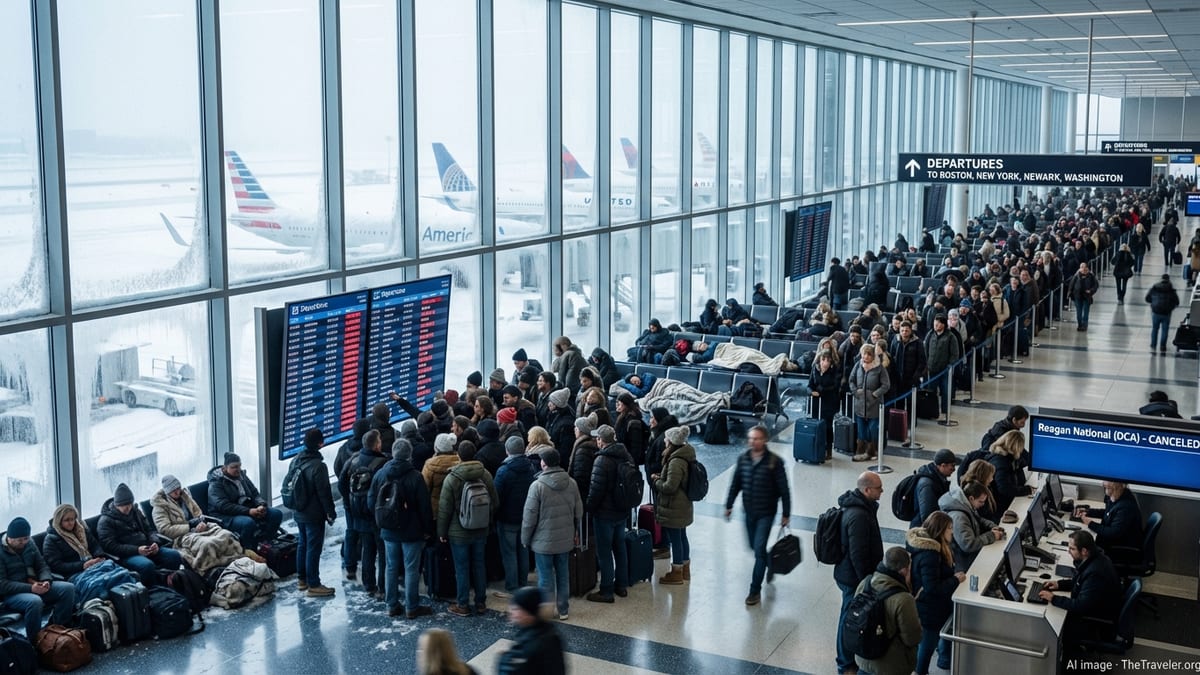
Reagan National Hit Hard as Blizzard Slams Northeast Corridor
At Ronald Reagan Washington National Airport outside the U.S. capital, operations slowed to a crawl as snow bands and strong crosswinds moved north from the mid Atlantic. By midday Monday, airlines including Republic Airways, PSA Airlines, American Airlines, JetBlue, Delta Air Lines and Southwest had canceled approximately 375 flights and delayed at least 57 more, according to airport and industry estimates, leaving concourses filled with passengers searching for answers and alternative routes.
The disruption at Reagan National, a critical business and political gateway, rippled through the domestic network. Many of the impacted flights were short haul links to New York, Boston, Philadelphia and smaller East Coast cities that serve as feeders into larger hubs. With crews and aircraft unable to position as planned, cancellations cascaded through the afternoon schedules, compounding delays for travelers attempting to connect to the Midwest, South and West Coast.
The conditions came on top of air traffic restrictions and de-icing bottlenecks that slowed departures. Ground crews struggled with reduced visibility and intensifying snowfall, forcing longer turnaround times between arriving and departing aircraft. Airports in the Washington region urged passengers to arrive early, prepare for extended waits and consider rebooking if their trips were not essential.
Boston, New York City and Newark Suffer Near Standstill
Farther north, the storm’s full force was felt at some of the country’s busiest airports, where flight boards turned almost solid red. Boston Logan International reported hundreds of cancellations as blizzard conditions intensified, with heavy snow, drifting and wind gusts cutting visibility to near zero. Airlines sharply curtailed operations, focusing on limited repositioning and essential flights needed to keep their networks viable once conditions improve.
In the New York City area, nearly all flights at John F. Kennedy International, LaGuardia and Newark Liberty were canceled or significantly delayed as the region hunkered down under a rare citywide blizzard warning. Runways were repeatedly plowed only to be quickly re-covered by blowing snow, while strong crosswinds and low ceilings left air traffic controllers and airlines little choice but to keep most aircraft on the ground.
For travelers, that meant long queues at customer service counters, crowded terminal seating areas and overnight stays on cots or terminal benches as hotels near the airports quickly filled. Some passengers reported multiple rebookings as rolling cancellations wiped out flights they had been moved to only hours earlier, a reflection of how rapidly conditions were changing along the Boston to Washington corridor.
Airlines Scrap Schedules and Activate Weather Waivers
Major carriers responded by slashing schedules and issuing broad travel waivers for affected airports throughout the Northeast. American, Delta, JetBlue, Southwest and regional operators such as Republic and PSA encouraged passengers to postpone non essential trips, offering fee free changes and, in some cases, fare differences waived for rebooked travel within a specified window.
JetBlue, which relies heavily on its hubs in New York and Boston, saw some of the deepest cuts to its operation, with a significant share of flights grounded as the storm closed in on both cities. Delta and American trimmed departures across Washington, New York and Boston, while Southwest reduced its schedule at Reagan National and other affected airports to a bare minimum, concentrating on maintaining enough flying to recover quickly once conditions improve.
Regional feeders operated by Republic and PSA bore the brunt of cancellations on shorter routes. These airlines connect smaller communities to large hubs, so suspending their operations meant many travelers faced not just delays but complete loss of same day options. Airline representatives said prioritizing safety was paramount in the face of rapidly deteriorating conditions, citing low visibility, icy taxiways and high winds that made landing and takeoff hazardous.
Carriers also ramped up staffing at call centers and digital support channels as hold times lengthened. Passengers were urged to use airline apps and text based tools to rebook and track their flights, both to reduce congestion at airport counters and to receive the most current information as schedules were revised in real time.
National Weather Service Warns of “Nearly Impossible” Travel
The widespread aviation disruption was driven by a powerful late winter system that forecasters said had intensified rapidly off the coast, drawing cold air southward and creating classic nor’easter conditions. The National Weather Service placed roughly 40 million people under blizzard warnings from the mid Atlantic into New England, with some coastal areas facing wind gusts approaching hurricane force and snowfall rates of several inches per hour.
Meteorologists warned that the combination of heavy snow, blowing and drifting, and strong winds would make travel by air and road alike extremely hazardous, and in some locations nearly impossible. Several states, including New York, New Jersey and parts of New England, enacted temporary travel bans or restrictions on non essential vehicle movement to keep highways clear for emergency services and snow removal equipment.
In addition to aviation impacts, the storm knocked out power to hundreds of thousands of customers across multiple states as tree limbs and power lines succumbed to the weight of wet snow and high winds. Transit agencies curtailed or suspended some commuter rail and bus services, and many schools and government offices announced closures or remote operations, tightening the grip of the storm on daily life throughout the region.
Inside the Terminals: Frustration, Fatigue and Acts of Kindness
At airports from Washington to Boston, the human toll of the disruption played out in crowded gate areas and baggage halls. Families returning from school vacations, business travelers aiming for critical meetings and international passengers connecting through East Coast gateways all faced hours long waits and the prospect of unplanned overnight stays.
Announcements about cancellations and gate changes blended into a steady background hum, punctuated by audible sighs and occasional applause when a rare on time departure was called. Airport concessions did steady business as stranded travelers queued for hot food and coffee, while charging stations and quiet corners became prized real estate for those trying to work or rest.
Despite the stress, many passengers and staff described scenes of cooperation and small kindnesses. Airline agents handed out snacks and water, airport staff distributed blankets and pillows, and fellow travelers helped watch children or share information gathered from apps and airline messages. For some, the shared experience eased the frustration of missed connections and upended plans.
Still, others expressed concern about limited communication and long lines at customer service desks. Some travelers reported waiting hours for clarity on rebooking options or compensation, a reminder of how quickly aviation systems can become overloaded when a major weather event hits a densely populated, heavily traveled region.
Broader Ripple Effects Across the U.S. Network
While the storm’s most intense impacts were concentrated in the Northeast, the effects on the national aviation system spread far beyond the blizzard zone. With aircraft and crews stranded in Washington, New York and Boston, flights across the country experienced knock on delays, particularly for carriers with large East Coast operations such as American, Delta, JetBlue and Southwest.
Travelers departing from cities as far flung as Chicago, Dallas, Atlanta and Los Angeles encountered delays tied directly to aircraft awaiting clearance to depart hard hit airports or to reposition from out of service routes. Airlines attempted to shuffle available planes and crews to minimize the damage, but the sheer number of cancellations in the Northeast made it difficult to prevent disruptions from spreading through the day’s schedules.
Industry analysts noted that the timing of the storm, overlapping with the busy Monday business travel period and the tail end of winter school breaks in some states, intensified the pressure on airline operations. Many flights were already running close to capacity before the weather hit, leaving limited flexibility to absorb displaced passengers when cancellations began.
What Stranded Travelers Can Do Now
For passengers stuck in terminals or facing imminent cancellations, experts stressed the importance of acting quickly and using multiple channels to secure rebooked flights. Checking flight status frequently, confirming gate information and rebooking through airline apps or websites can often be faster than waiting in line at the airport. Some travelers might find better options by considering alternate airports within driving distance once road conditions improve.
Airlines advised customers to monitor their email and mobile notifications closely, as schedule changes and rebooking options were being pushed out automatically in many cases. Where possible, travelers were encouraged to accept rebooked itineraries even if they involved longer routings or overnight connections, on the grounds that seats on later flights were filling rapidly as the storm’s impact widened.
Consumer advocates reminded passengers that in the United States, travelers are typically entitled to a refund if their flight is canceled and they choose not to travel, even on nonrefundable tickets. Hotel vouchers and meal assistance policies vary by carrier and circumstance, but weather related disruptions usually trigger fewer obligations for airlines compared with crew shortages or mechanical issues, making it important for travelers to understand the specific policies of the airline they are flying.
With forecasts calling for lingering snow and wind, authorities and industry officials cautioned that it could take at least a day or more after the storm’s peak for full operations to resume. For now, airports along the Northeast corridor remain emblematic of a travel system at the mercy of a powerful winter storm, as thousands of would be passengers wait for skies and schedules to clear.