

More news on this day
A powerful nor’easter dubbed Winter Storm Hernando is pounding the U.S. Northeast this weekend, blasting New York City, Boston and Washington D.C. with heavy snow, fierce winds and whiteout conditions that have triggered a surge in flight cancellations for low-cost carrier Spirit Airlines and other major U.S. airlines, stranding thousands of travelers at key East Coast hubs.
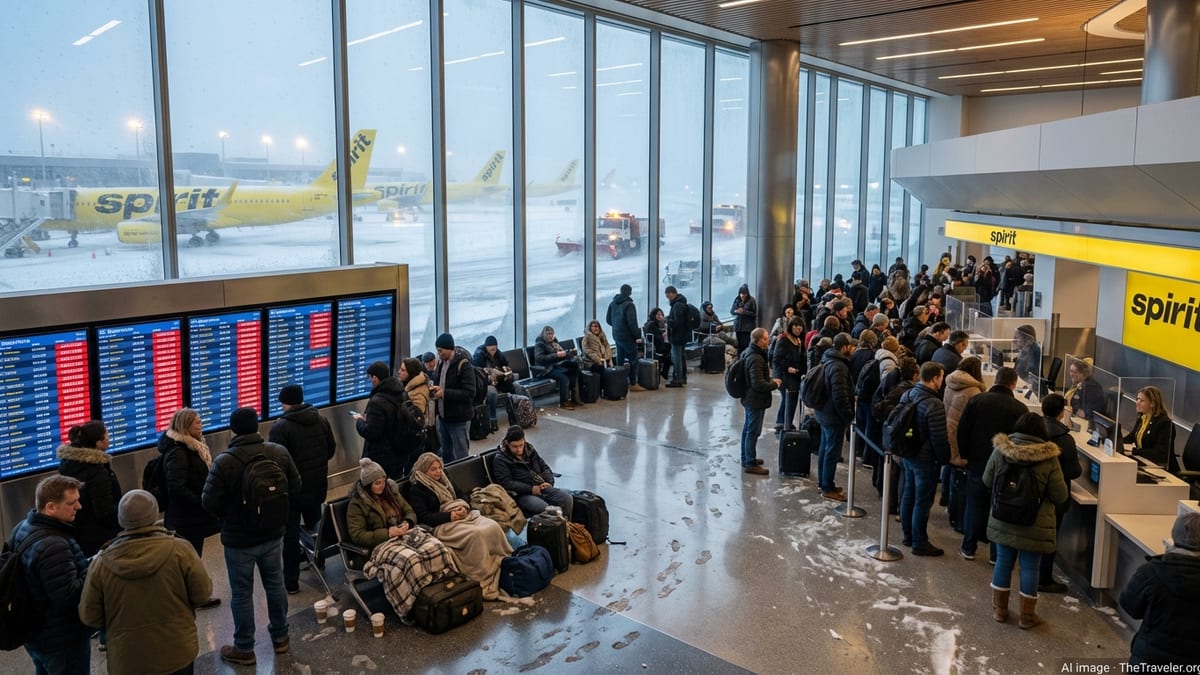
Blizzard Hernando Batters Major East Coast Travel Hubs
Winter Storm Hernando, part of a potent February 2026 nor’easter, is ripping up the Interstate 95 corridor from Washington D.C. through New York City and into Boston, bringing near-zero visibility, rapidly deepening snowpack and dangerous crosswinds at some of the nation’s busiest airports. Blizzard warnings and winter storm alerts are in place from the Mid-Atlantic to New England as the system intensifies off the Atlantic coast and pushes bands of heavy, wet snow inland.
In New York City, forecasters expect more than a foot of accumulation across the five boroughs, with higher totals possible in outlying suburbs and on Long Island as the storm stalls and pivots colder air over the region. Boston is bracing for similar amounts, with forecasters warning of localized totals approaching two feet in coastal Massachusetts. Washington D.C. and Baltimore are likely to see lower snow totals but still face hours of hazardous conditions as snow bands pivot through and winds pick up.
The combination of snow and wind has turned runways, taxiways and access roads into moving sheets of white. Officials across the corridor are urging residents to stay off the roads, while airport authorities work to keep at least some operations running through the height of the storm. Even where plows can keep up, crosswinds and blowing snow are making safe takeoffs and landings increasingly difficult, forcing airlines to thin schedules and cancel flights in advance of the worst conditions.
Authorities are also preparing for potential power outages and coastal flooding, especially along exposed shorelines in New Jersey, Long Island and southeastern New England. For travelers, that translates not only into grounded flights, but also into challenges reaching the airport safely, finding open hotel rooms near major hubs and staying connected to rapidly changing airline operations.
Spirit Airlines Cancellations Spike at New York, Boston and D.C. Airports
As Hernando tightened its grip on the Northeast on Sunday, Spirit Airlines saw a sharp rise in cancellations and lengthy delays across its network, with the most severe disruption concentrated at New York-area airports, Boston Logan and Washington’s Reagan National and Dulles International. The ultra-low-cost carrier, which operates dense schedules with limited spare aircraft, has been particularly exposed to cascading operational issues as aircraft and crews end up out of position.
At New York’s LaGuardia and Newark Liberty International, Spirit’s bright yellow jets have been a familiar sight parked at gates and remote stands as ground crews battle snow and ice. Flight trackers showed dozens of Spirit departures scrubbed or pushed back by several hours as visibility dropped and winds gusted along the runways, while remaining flights filled to capacity as passengers tried to salvage their travel plans.
Boston Logan, another key node in Spirit’s East Coast network, has experienced similar turmoil, with early cancellations rippling through the day’s schedule. As the storm’s heaviest snow bands shifted over coastal New England, de-icing queues stretched and runway capacity shrank, forcing Spirit and fellow carriers to cancel clusters of departures rather than risk having aircraft and crews trapped on taxiways or diverted to alternate airports.
In Washington, a mix of snow and lower visibility has led to targeted cancellations rather than a full shutdown, but Spirit customers are still facing significant schedule changes. Because many of the carrier’s Washington flights feed into New York and Boston rotations, even a single canceled leg can disrupt multiple subsequent sectors, amplifying the impact of each operational decision. For travelers, the upshot is that even flights from cities with lighter snow may be scrubbed because the incoming aircraft or crew is stranded elsewhere in Hernando’s path.
How Spirit Is Handling Rebooking and Weather Waivers
In anticipation of Hernando’s impact, Spirit has issued weather-related travel waivers for select dates and airports in the storm zone, allowing affected customers to change their travel plans without standard change fees. While fare differences can still apply outside the protected travel window, many customers whose flights are canceled outright are being rebooked on the next available Spirit flight in the same cabin at no additional cost.
Customers with upcoming trips into or out of hard-hit airports such as New York, Boston or Washington are being encouraged to monitor their reservations closely through Spirit’s mobile app or website. When the airline cancels a flight proactively, many passengers are automatically rebooked onto a later departure on the same route, though availability can be limited at peak times and on popular leisure corridors to Florida and the Caribbean.
At airport counters, Spirit agents are prioritizing same-day rebooking for travelers whose journeys have already begun, while those with trips scheduled further out are urged to use digital tools to avoid long lines. For some customers, Spirit is offering the option to move travel to later in the week or to shift to nearby airports within the same metropolitan area, when seats are available. In a storm of this scale, however, alternative flights often fill quickly, leaving travelers with reduced schedules and limited flexibility.
Because Spirit operates as an ultra-low-cost carrier with fewer interline agreements than larger network airlines, it typically does not rebook passengers on other airlines when weather is to blame. That makes it especially important for Spirit customers to act quickly once waivers are issued and to have backup plans, such as alternate travel dates or routes, ready in case original itineraries become unworkable.
What Stranded Spirit Passengers Should Expect at the Airport
For travelers who have already arrived at the airport or are mid-journey as Hernando disrupts operations, the experience is likely to be marked by crowded gate areas, limited seating and long waits at customer service counters. At major hubs like LaGuardia, Newark and Boston Logan, cancellations from multiple airlines, including Spirit, are converging into packed concourses as passengers compete for scarce seats on remaining flights and for a finite pool of airport amenities.
Spirit’s model of high aircraft utilization and lean staffing means that large weather systems can leave fewer personnel available to assist each passenger compared to some larger competitors. Flyers can expect triage-style service, where those with imminent departures or missed connections are helped first, and where agents rely heavily on text alerts and self-service rebooking via mobile devices to move the largest number of customers as efficiently as possible.
Airport hotels near major Northeast airports are already reporting elevated demand as cancellations mount, and rooms closest to terminals are filling quickly. While airlines sometimes provide hotel or meal vouchers for disruptions within their control, weather-related cancellations are typically treated differently, and Spirit, in line with industry practice, is generally not obligated to cover accommodation or incidental costs when the root cause is a storm like Hernando.
Passengers should also prepare for limited dining and retail options, particularly during the overnight hours when many concessions curtail operations. With road conditions deteriorating around the region, leaving the airport to seek alternative lodging or food may be impractical until plows and salt trucks can catch up. Travelers relying on public transportation to and from airports may encounter further delays or suspensions as city transit agencies pivot to emergency schedules.
Practical Steps to Rebook and Minimize Disruption
Travel experts consistently advise that in fast-moving weather events, the most successful passengers are those who act early and use multiple channels to manage their bookings. For Spirit customers, that starts with enrolling in flight status alerts, downloading the carrier’s app and ensuring contact details are up to date so that any automatic rebooking or cancellation notices reach them promptly.
When a Spirit flight is canceled, customers typically have several options: accept the automatic rebooking proposed by the airline, search for an alternative same-day flight on a nearby route, or move their trip to a later date within the waiver period. Because call centers and airport counters can quickly become overwhelmed, using digital tools to confirm or modify itineraries often yields faster results. Travelers who see only undesirable options initially may want to check back periodically, as additional seats can open up when other passengers change plans or when the airline adjusts its storm schedule.
For those whose trips are time-sensitive, such as connecting to international flights or attending critical events, it may be worth exploring separate tickets on other airlines or even alternative modes of transport, knowing that these costs may not be reimbursed. Passengers should keep detailed records of expenses and communications with Spirit in case future goodwill credits or policy adjustments are announced once operations normalize.
Regardless of the rebooking path chosen, flyers are encouraged to build in extra buffer time when traveling to and through the storm-affected region. That means arriving at airports earlier than usual, anticipating longer security and de-icing queues, and keeping essentials such as medications, chargers, snacks and extra layers in carry-on bags in case of extended tarmac waits or last-minute gate changes.
How Hernando Is Rippling Through the Wider U.S. Air Network
While the most dramatic scenes are unfolding in New York, Boston and Washington, Hernando’s impact on Spirit and other airlines extends far beyond the snow line. Because aircraft and crews are constantly cycling between hubs, disruptions in the Northeast can quickly cascade into delays and cancellations at airports thousands of miles away, including in the Southeast, Midwest and even the West Coast.
Spirit flights that were scheduled to position aircraft from Florida or the Caribbean into Northeastern cities ahead of the storm have been adjusted or canceled, leading to downline disruptions when those aircraft would have turned back south later in the day. That pattern is being repeated across the U.S. airline system, as carriers attempt to keep planes and crews in locations where they can still operate safely, even at the cost of canceling entire rotations into and out of the storm zone.
For travelers in unaffected regions, this can be a source of confusion and frustration: skies may be clear and roads dry, yet their flights are still delayed or canceled. In many cases, the explanation lies in Hernando’s effect on the aircraft or crew scheduled to operate those flights. As a result, passengers flying Spirit on domestic routes far from the Northeast are being advised to check their flight status frequently, especially if their aircraft is arriving from an airport in the storm’s path.
These ripple effects also mean that it may take several days after the snow stops falling for airline operations to fully recover. Aircraft and crews need to be repositioned, maintenance checks must be completed on planes that have endured harsh conditions, and backlogs of stranded passengers must be cleared before schedules can return to normal levels of reliability.
What Travelers Should Watch for in the Hours Ahead
As Hernando continues to churn off the East Coast through late Sunday and into Monday, travelers can expect additional rounds of cancellations and schedule changes, particularly during the storm’s peak intensity. Meteorologists warn that snowfall rates could briefly reach several inches per hour in some bands, which can quickly overwhelm snow removal efforts at airports and force air traffic controllers to slow or halt arrivals and departures for safety.
In New York City, where the storm is expected to deliver some of its most punishing conditions, officials have already urged residents to stay indoors and off the roads as plows focus on key arteries. For air travelers, that guidance underscores the risk of attempting to reach the airport during the worst of the weather, only to find flights already canceled or delayed. Similar warnings are in place around Boston and along parts of the New Jersey and New England coasts.
Travelers booked on Spirit flights over the next 48 to 72 hours should pay close attention to both weather forecasts and airline communications, recognizing that conditions on the ground can shift quickly as the storm evolves. Even as skies begin to clear in some locations, lingering wind gusts and cleanup operations can keep runway and taxiway capacity constrained, prolonging the period of disruption.
For those who can afford to wait, experts suggest considering postponing nonessential trips until midweek, when the bulk of Hernando’s snow will have been cleared and airlines, including Spirit, will have had more time to reset their networks. For the many passengers who have no choice but to travel, careful planning, patience and a clear understanding of their rights and options remain the most valuable tools in navigating this latest test of winter resilience along the Northeast corridor.