

More news on this day
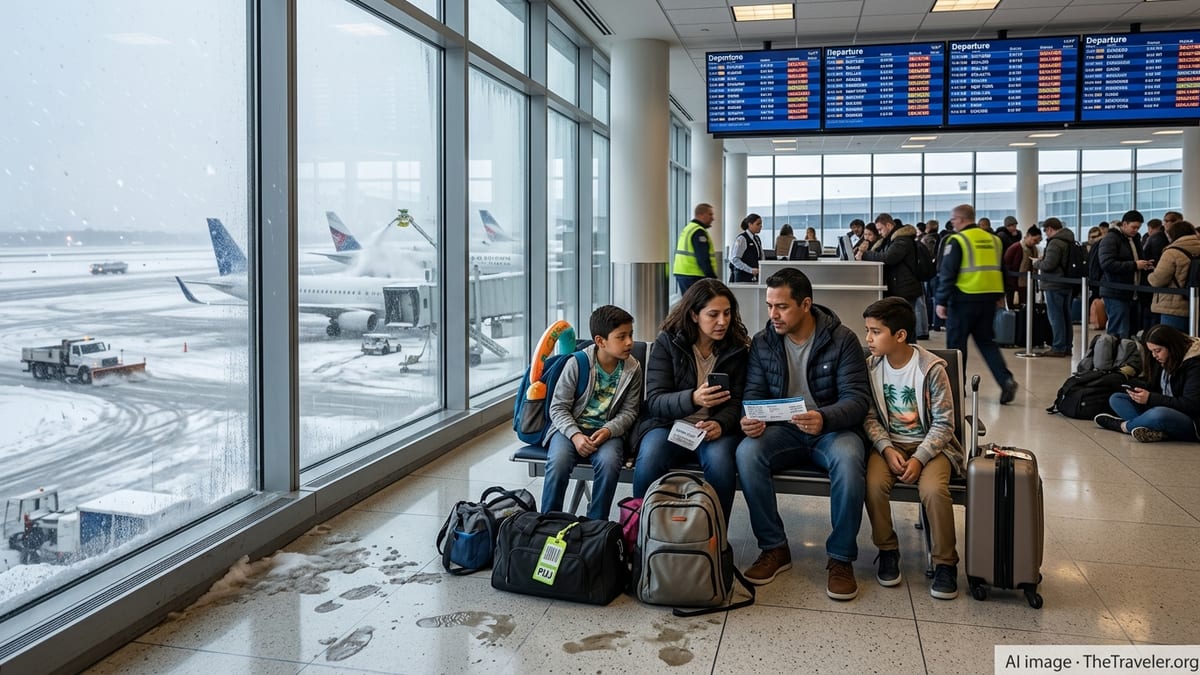
What began as a straightforward family escape to the Dominican Republic collided with a historic winter season in the United States, as one blizzard, two separate tornado episodes and a missed connection turned a simple beach holiday into a crash course in navigating extreme-weather travel disruptions.
Get the latest news straight to your inbox!
Severe Winter Weather Collides With Peak Travel Plans
The 2025–26 winter across the United States has produced multiple large storm systems that disrupted aviation on a national scale, creating the backdrop for this family’s complicated journey to the Dominican Republic. In late January, a sprawling winter storm commonly referred to in media coverage as Winter Storm Fern swept from northern Mexico to New England, bringing snow, ice and freezing rain across more than 2,000 miles and prompting thousands of flight cancellations in a single weekend. Publicly available data from flight trackers and federal agencies indicates that on some days more than 10,000 flights were delayed or canceled as airlines attempted to manage the weather and reposition aircraft and crews.
By early March, forecasters were tracking another powerful system over the central United States. Meteorological summaries describe the March 2026 North American blizzard as a large extratropical cyclone delivering blizzard conditions to the High Plains and Upper Midwest while simultaneously fueling severe thunderstorms further south. That combination of snow, low visibility and high winds on one side of the storm, and high-impact thunderstorms on the other, left airlines balancing runway closures, deicing backlogs and lightning ground stops at airports hundreds of miles apart.
For families traveling to Caribbean destinations during spring break, including the popular resorts of Punta Cana and La Romana in the Dominican Republic, this meant that the first leg of a trip could be affected by snow and ice in the north, while later connections were exposed to fast-developing severe weather in the Midwest or Southeast. As the blizzard intensified, airlines issued weather waivers on key routes, encouraging travelers to rebook voluntarily before conditions deteriorated and scheduled flights were proactively canceled.
Against that national backdrop, the family heading to the Dominican Republic found their original departure city effectively shut down by whiteout conditions. Their first flight to a major U.S. hub was canceled as airport operations scaled back, sending them into the same scramble faced by thousands of other passengers seeking scarce seats on remaining departures.
Two Tornado Outbreaks Add a New Layer of Disruption
Even as snow and ice shut down runways in northern states, severe convective storms were building across the central and eastern United States. Storm reports compiled by federal weather agencies show that during early and mid March 2026, two separate tornado outbreaks affected parts of the Midwest, Southern Plains and Lower Mississippi Valley, each associated with strong frontal systems and sharp contrasts between warm, moist air to the south and cold air to the north.
One early March outbreak produced damaging tornadoes from Oklahoma into the Midwest, with some communities reporting fatalities and widespread structural damage. A second episode, embedded within the broader March blizzard system, affected the Lower Mississippi Valley and Southeast, generating a mix of straight-line wind damage and tornadoes. In both cases, the same dynamics that produced severe storms also affected air travel, as airlines routed flights around convective cells and air traffic controllers imposed flow restrictions through crowded corridors.
For the family bound for the Dominican Republic, this translated to cascading delays on their rebooked itinerary. After securing seats on a substitute flight out of a different airport once the blizzard eased, they connected through a major hub located near the corridor of severe weather. As thunderstorms intensified and tornado watches expanded, departures from that hub were paused or slowed so that ground crews could clear lightning and hail, and arriving aircraft were placed into holding patterns or diverted.
The family’s onward flight to the Caribbean remained on the board for several hours, shifting from minor delay into a rolling series of new estimated departure times as the storms evolved. Eventually, by the time the aircraft was ready to board, the cumulative delay from the blizzard-related disruption and two rounds of severe weather had pushed the schedule beyond the family’s minimum connection window to their final resort transfer on arrival.
One Missed Flight and the Long Road to Rebooking
The turning point in this itinerary was not the blizzard or the tornado warnings themselves but a missed connection at a U.S. hub airport. According to published consumer travel guidance, when a flight is canceled or significantly delayed for reasons within the airline’s control, passengers may be eligible for meal vouchers or hotel accommodations. In cases of weather-related disruption, however, federal rules still primarily guarantee a refund when a flight is canceled outright, but compensation for incidental costs is at the discretion of individual carriers.
In this instance, the family’s original outbound leg was canceled in advance of the blizzard, enabling a rebooking at no additional fare. However, once their replacement itinerary became entangled with the subsequent severe weather and rolling delays, they faced the more complex problem of a missed onward flight to the Dominican Republic. Publicly available airline policies show that if a missed connection is caused by the same ticketed airline, carriers often attempt to re-accommodate passengers on the next available flight to their destination, but limited capacity to leisure destinations during peak school holidays can mean waits of a day or more.
Travel accounts from the current winter and early spring describe passengers in similar situations sleeping on terminal floors, queueing for hours at service desks or attempting to rebook via mobile apps while also checking hotel availability and monitoring changing weather forecasts. The family in this case joined those crowds, navigating rebooking options that included rerouting through alternate hubs, shifting to a different carrier’s codeshare flight or, in the most extreme scenario, postponing the Dominican Republic vacation entirely and requesting a refund.
Ultimately, the combination of a blizzard, two severe weather outbreaks and limited open seats resulted in a drastically shortened trip. By the time the family secured confirmed seats to Punta Cana on a later date, several nights at their all-inclusive resort had already passed, and they had incurred unplanned expenses for food, ground transportation and a stopover hotel en route.
Broader Lessons for Planning Caribbean Travel in an Unstable Season
Travel industry analysis for early 2026 notes that climate variability and an active storm track have increased the risk of multi-hazard events, including days when snowstorms, severe thunderstorms and high winds affect aviation simultaneously in different regions of the country. For travelers heading to Caribbean destinations like the Dominican Republic during late winter and early spring, this means that the weather at home, at connecting hubs and along the flight path may matter as much as the forecast at the beach.
Consumer advocates recommend several strategies that align with the challenges seen in this family’s experience. Booking the first flight of the day can reduce exposure to knock-on delays from earlier disruptions, while choosing longer connection times can provide a buffer when storms slow operations. Purchasing travel insurance or disruption coverage that specifically lists weather-related delays and missed connections as covered events may help recoup some costs when itineraries unravel.
Publicly available airline information also underscores the importance of watching for weather waivers, which carriers often publish in advance of major storms. These waivers may allow travelers to move a trip by several days without additional change fees or fare differences, potentially avoiding the most disruptive period of a blizzard or tornado outbreak. For trips to the Dominican Republic or other Caribbean islands, it can also be useful to research multiple potential departure airports and connecting hubs, increasing flexibility if one region is heavily affected by snow or severe weather.
The Dominican Republic remains one of the most accessible warm-weather escapes for U.S. families, with numerous nonstop and connecting options from major cities. Yet the experiences of travelers caught between a blizzard, two tornado events and a missed flight highlight how fragile complex itineraries have become in an era of crowded skies and increasingly volatile weather patterns. For many, the key to reaching the beach now involves as much focus on contingency planning as on choosing the right resort.